
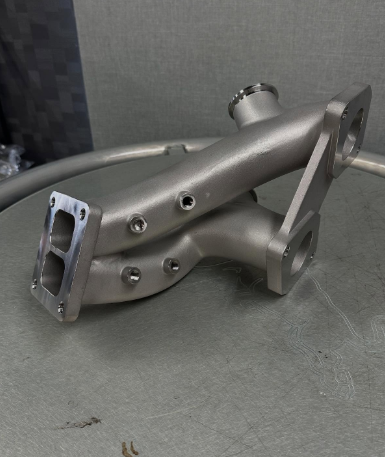
17 -4 stainless steel from Vastmaterial Grade 630 UNS S17400 high strength corrosion resistant bars plates and forgings with heat treatment options.
Product Overview
What is 17-4 PH Stainless Steel (UNS S17400 / Grade 630)?
At Hao Yu Material, we specialize in supplying high-performance alloys that bridge the gap between standard stainless steels and exotic superalloys. 17-4 stainless steel, also designated as AISI 630 or UNS S17400, is the most widely used precipitation-hardening stainless steel in the industrial market.
This chromium-nickel-copper grade is a martensitic stainless steel known for its unique combination of high strength, good corrosion resistance, and toughness. The “17-4” name derives from its chemical composition: approximately 17% chromium and 4% nickel. Unlike standard 300-series grades, 17-4 PH gains its superior mechanical properties through a heat treatment process (precipitation hardening), making it an ideal choice for components requiring high tensile strength and moderate corrosion resistance.
Quick Specs Snapshot: Standards and Key Attributes
We ensure our 17-4 PH inventory meets rigorous international standards to support critical engineering applications.
| Attribute | Specification |
|---|---|
| Common Names | 17-4 PH, Grade 630, Type 630, UNS S17400 |
| Material Type | Precipitation Hardening Martensitic Stainless Steel |
| Key Standards | ASTM A564, AMS 5643, ASME SA564 |
| Primary Alloy Elements | Chromium (15-17.5%), Nickel (3-5%), Copper (3-5%) |
| Magnetic Permeability | Magnetic in all conditions |
| Corrosion Resistance | Superior to 400-series; comparable to 304 in most environments |
Available Forms: Round Bar, Flat Bar, Plate, Sheet, Forged Rings
We maintain a comprehensive stock of 17-4 stainless steel ready for immediate processing and global shipment. Our inventory is designed to meet diverse manufacturing needs, from heavy machining to precision fabrication.
- Round Bars: Available in various diameters, often supplied in Condition A (Solution Annealed) or pre-hardened conditions (H900, H1150).
- Flat Bars & Blocks: Cut from plate or forged for structural components.
- Plates & Sheets: Stocked in multiple thicknesses for aerospace and chemical processing applications.
- Custom Forgings: We provide forged rings and custom shapes tailored to specific project blueprints.
Our facility offers professional cutting services, ensuring you receive materials sized to your exact requirements, minimizing waste and lead time.
Key Features & Benefits
Why Choose 17-4 PH Stainless Steel?
When your project demands a material that doesn’t compromise on either durability or environmental resilience, 17-4 PH (AISI 630) is often the top contender. We stock this precipitation-hardening grade because it uniquely bridges the gap between the corrosion resistance of standard austenitic steels (like 304) and the high strength of martensitic stainless steels (like 410). It is the go-to choice for engineers who need components to withstand heavy loads without succumbing to rust in harsh industrial atmospheres.
High Strength & Hardness Capabilities
The “PH” stands for Precipitation Hardening, which is the secret behind this alloy’s performance. Through simple heat treatments, we can significantly alter the mechanical properties to fit specific stress requirements.
- Tensile Strength: Can reach up to 1100-1300 MPa (160-190 ksi) depending on the heat treatment condition.
- Yield Strength: Exceptionally high, maintaining structural integrity under heavy pressure.
- Hardness: Achieves high Rockwell C hardness levels, making it resistant to wear and abrasion in moving parts.
Corrosion Resistance Compared to 304 and 416
One of the most frequent questions we get is how 17-4 holds up against other common grades.
- Vs. 304 Stainless: In most mild environments, 17-4 PH offers corrosion resistance comparable to Grade 304. It resists attack in standard atmospheric conditions and diluted acids.
- Vs. 416/410 Stainless: It is vastly superior to the 400-series martensitic steels. While 416 is easier to machine, it lacks the protective qualities of 17-4, especially in marine or chemical settings.
Fabrication & Machinability Characteristics
Despite its high strength, 17-4 stainless steel is surprisingly workable.
- Machining: It can be machined in both the solution-treated and precipitation-hardened conditions. However, machining in the solution-treated state is generally preferred before final hardening to minimize tool wear.
- Welding: This grade has excellent weldability compared to other high-strength stainless steels. It generally does not require pre-heating and can be welded using standard fusion and resistance methods.
- Processing: For complex components requiring precise shaping, we often recommend exploring our investment cast part guide for engineers to see how casting might offer a more efficient production route for intricate 17-4 designs.
Magnetic Properties of 17-4 PH
Unlike the 300-series (austenitic) stainless steels which are typically non-magnetic, 17-4 PH is magnetic. This magnetic permeability exists in all heat-treated conditions. This characteristic is crucial for applications where magnetic attraction is either required (like in magnetic sorters) or needs to be accounted for in electromagnetic environments.
Technical Specifications
Technical Data & Properties
When you are sourcing 17-4 stainless steel (AISI 630), precision is everything. This precipitation-hardening grade is defined by its ability to achieve varying mechanical properties through heat treatment. Below, we break down the exact chemical makeup and performance metrics you can expect from our inventory.
Chemical Composition (Weight %)
The unique chemistry of UNS S17400 balances corrosion resistance with high strength. The addition of Copper is key to its precipitation hardening capabilities.
| Element | Symbol | Min % | Max % |
|---|---|---|---|
| Chromium | Cr | 15.00 | 17.50 |
| Nickel | Ni | 3.00 | 5.00 |
| Copper | Cu | 3.00 | 5.00 |
| Manganese | Mn | – | 1.00 |
| Silicon | Si | – | 1.00 |
| Niobium + Tantalum | Nb + Ta | 5x Carbon | 0.45 |
| Carbon | C | – | 0.07 |
| Phosphorus | P | – | 0.04 |
| Sulfur | S | – | 0.03 |
| Iron | Fe | Balance | – |
Mechanical Properties by Heat Treatment Condition
The versatility of 17-4 PH lies in its response to aging treatments. We supply material in Condition A (Solution Annealed) or pre-hardened to specific “H” conditions. The following table illustrates how tensile strength and hardness shift based on the heat treatment temperature.
| Condition | Tensile Strength (ksi / MPa) | Yield Strength 0.2% (ksi / MPa) | Elongation (%) | Hardness (Rockwell C) |
|---|---|---|---|---|
| H900 | 190 / 1310 | 170 / 1170 | 10 | 40-47 HRC |
| H1025 | 155 / 1070 | 145 / 1000 | 12 | 35-42 HRC |
| H1075 | 145 / 1000 | 125 / 860 | 13 | 32-38 HRC |
| H1150 | 135 / 930 | 105 / 725 | 16 | 28-37 HRC |
Note: H900 offers maximum strength, while H1150 provides better ductility and impact toughness.
Physical Properties
Understanding the physical constants is critical for engineering applications, especially in high-stress environments like oil and gas sectors where thermal stability matters.
- Density: 0.280 lb/in³ (7.75 g/cm³)
- Melting Range: 2560 – 2625°F (1404 – 1440°C)
- Modulus of Elasticity: 28.5 x 10⁶ psi (196 GPa)
- Thermal Conductivity (at 212°F / 100°C): 10.6 BTU/hr/ft²/ft/°F (18.3 W/m·K)
- Specific Heat (32–212°F): 0.11 BTU/lb/°F (460 J/kg·K)
These properties make Grade 630 stainless a reliable choice for components requiring dimensional stability under varying thermal loads.
Heat Treatment & Processing Guide
Achieving the right mechanical properties in 17-4 stainless steel relies entirely on precise heat treatment. While the alloy is valuable for its corrosion resistance, its true strength is unlocked through specific thermal cycling. At Hao Yu Material, we ensure every bar and plate meets strict processing standards before it leaves our facility.
Heat Treatment Conditions for 17-4 PH
The versatility of 17-4 PH lies in its ability to be heat treated to a wide range of strength levels. By adjusting the temperature of the aging process, we can tailor the material’s hardness and ductility to fit specific engineering requirements.
Common conditions include:
- H900: High strength and hardness.
- H1025 & H1075: Balanced toughness and strength.
- H1150 & H1150D: Maximum ductility and impact strength.
Condition A: Solution Annealed State
Most 17-4 stainless steel is supplied in Condition A (Solution Annealed). In this state, the material has been heated to approximately 1900°F (1040°C) and air-cooled.
- Characteristics: Condition A offers the lowest hardness and tensile strength for this grade but provides the best machinability prior to hardening.
- Usage: It is rarely used in service in this condition due to susceptibility to stress corrosion cracking. It serves as the starting point for subsequent aging treatments.
Aging and Precipitation Hardening Processes
To reach peak performance, the material undergoes precipitation hardening (aging). This involves heating the Condition A material to a specific temperature (between 900°F and 1150°F) for a set duration, usually 4 hours, followed by air cooling.
- Low-Temperature Aging (e.g., H900): Results in higher tensile strength and hardness but lower ductility.
- High-Temperature Aging (e.g., H1150): Increases ductility and toughness while slightly reducing overall strength.
This flexibility allows engineers to use the same alloy for diverse applications, from high-stress aerospace components to heavy-duty marine shafts.
Vastmaterial Heat Treatment Services
We understand that sourcing raw material is only half the battle. Hao Yu Material provides comprehensive heat treatment services to deliver 17-4 PH in the exact condition your project requires. Whether you need the machinability of Condition A or the extreme durability of Condition H900, we handle the thermal processing so your material arrives ready for immediate use.
Our capabilities include:
- Custom Aging: Processing to specific H-conditions (H900 through H1150).
- Quality Verification: Hardness testing to confirm mechanical properties post-treatment.
- Consistent Results: Strict temperature control to ensure uniform properties across the entire batch.
Industrial Applications
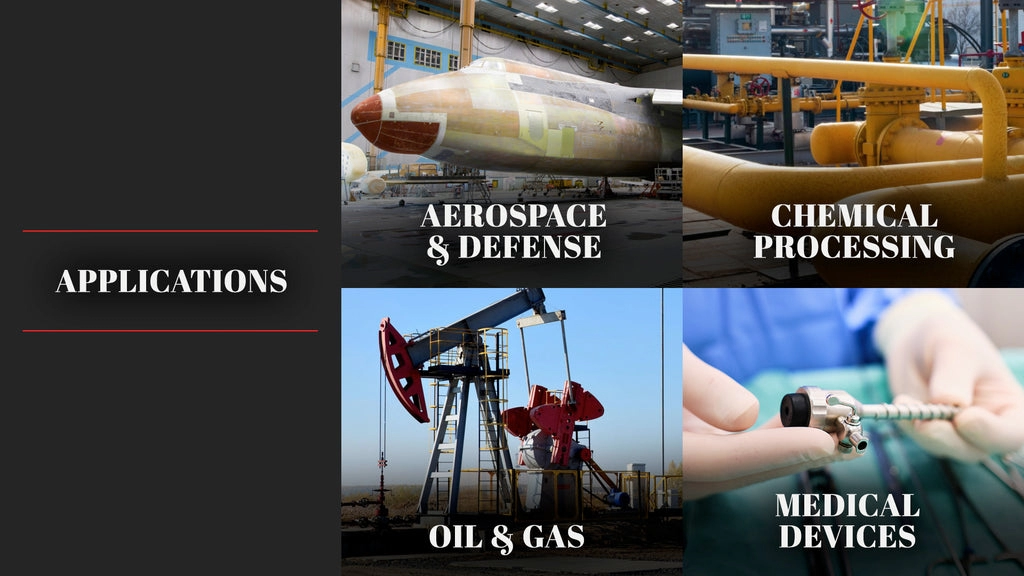
When you need a material that balances high strength with solid corrosion resistance, 17-4 stainless steel (Grade 630) is often the go-to choice across major industries. We see this alloy deployed in environments where standard stainless grades just can’t handle the mechanical stress, or where high-strength carbon steels would fail due to corrosion.
Typical Applications of Grade 630
Because 17-4 PH can be heat-treated to various hardness levels, it is incredibly versatile. We supply this material to manufacturers who need reliability in critical components.
- Aerospace Structural Parts and Turbine Blades: The high strength-to-weight ratio makes UNS S17400 ideal for aircraft structures, engine mounts, and turbine blades that operate under high stress.
- Oil & Gas Valve Stems and Pump Shafts: In the energy sector, equipment faces high pressure and corrosive fluids. 17-4 stainless steel provides the necessary durability for valve stems, pump shafts, and offshore platform components.
- Food Processing Equipment: While 304 is common, 17-4 is used for parts requiring higher hardness and wear resistance, such as processing blades and high-torque drive shafts, ensuring longevity in wash-down environments.
- Marine Propeller Shafts: The marine environment is harsh. We frequently supply 17-4 PH round bars for propeller shafts and rudder stocks because they resist saltwater corrosion better than standard martensitic grades while maintaining the strength needed to drive heavy vessels.
For complex geometries needed in these industries, understanding the fabrication method is key. While we supply the raw stock, many of our clients utilize precision metal casting techniques to achieve near-net shapes before final machining and heat treatment.
Supply Forms & Dimensions
At Vastmaterial, we understand that finding the exact size and shape for your project is just as critical as selecting the right grade. We maintain a robust inventory of 17-4 stainless steel to ensure we can meet diverse industrial requirements immediately. Whether you need standard stock for machining or custom dimensions for specialized components, our supply chain is built for flexibility and speed.
Available Sizes and Forms at Vastmaterial
We stock 17-4 PH in a wide variety of forms to support manufacturing across the US market. Our inventory management system ensures that popular sizes are always ready for dispatch, minimizing downtime for your operations.
- Round Bars: This is our most common form, widely used for fasteners, shafts, and valve components.
- Flat Bars & Blocks: Ideal for structural applications and heavy machining.
- Plates & Sheets: Available for cutting into complex geometries.
- Custom Forgings: For projects requiring specific grain flow and superior strength properties.
Round Bar Diameter Ranges
Our 17-4 PH round bar selection covers a broad spectrum of diameters to suit precision machining needs:
- Small Diameters: Starting from 6mm (approx. 0.25 inches) for precision parts.
- Large Diameters: Up to 500mm (approx. 20 inches) for heavy industrial equipment.
- Tolerance: We adhere to strict ISO h9, h11, and k12 tolerances to ensure compatibility with your machining setups.
Plate and Sheet Thicknesses
For flat products, we offer a range of thicknesses suitable for everything from aerospace panels to heavy chemical processing equipment:
- Cold Rolled Sheets: Typically available from 0.5mm to 6.0mm.
- Hot Rolled Plates: Ranging from 3.0mm up to 100mm thick.
- Width & Length: Standard widths include 1000mm, 1219mm, and 1500mm, with lengths customizable based on your cutting requirements.
Custom Forging Capabilities
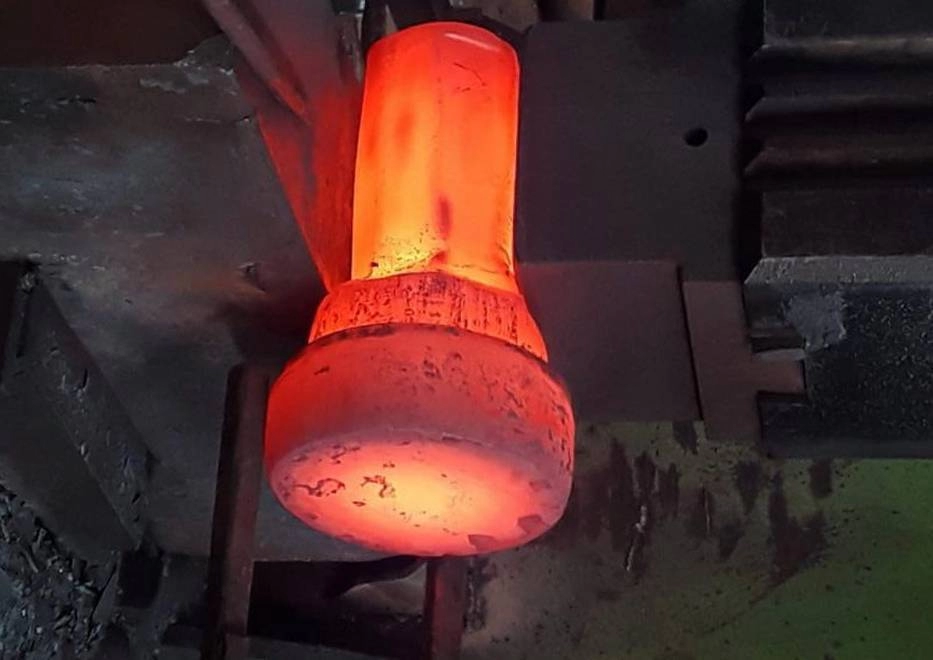
When standard stock sizes don’t fit the bill, our custom forging services provide the solution. We can produce AISI 630 rings, discs, and shaped blocks tailored to your blueprints. While many of our products are rolled, we also utilize advanced techniques similar to the stainless steel casting process for complex near-net shapes when forging isn’t the optimal route. This flexibility allows us to deliver materials that reduce your machining time and material waste.
Surface Finishes
The surface condition of the material impacts both aesthetics and subsequent processing. We offer several finish options:
- Black Surface: Hot rolled or forged condition, suitable for initial rough machining.
- Peeled/Rough Turned: Removes the surface oxide layer and defects, ready for immediate machining.
- Centerless Ground: High-precision finish for tight tolerance applications like pump shafts.
- HRAP (Hot Rolled Annealed and Pickled): Clean, matte finish standard for plates and sheets.
Quality Assurance & Logistics
When you source 17-4 stainless steel from us, you aren’t just buying metal; you are buying certainty. We understand that for industries like aerospace and oil & gas, a material failure isn’t an option. That is why our quality control protocols are rigorous and transparent.
Quality Control & Shipping Protocols
Every batch of 17-4 PH that leaves our facility undergoes a strict inspection process. We don’t just rely on mill certificates; we verify the data. Our logistics team is experienced in international trade, ensuring that documentation, customs clearance, and shipping schedules align perfectly with your project timelines. We handle the heavy lifting of logistics so you can focus on production.
Testing Methods
To ensure the material meets AMS 5643 or ASTM A564 standards, we employ advanced testing methods:
- Ultrasonic Testing (UT): We scan for internal flaws or voids that could compromise structural integrity.
- Charpy Impact Testing: This verifies the toughness of the steel, ensuring it can withstand sudden stress without fracturing.
- Hardness Testing: Whether you need Condition A or H900, we verify the Rockwell hardness (HRC) to confirm the heat treatment was successful.
Certifications: ISO 9001 and MTRs
Trust is built on documentation. We operate under ISO 9001 quality management systems. Every shipment includes a full Material Test Report (MTR). This document traces the heat number, chemical composition, and mechanical properties, giving you full traceability from the melt to your loading dock.
Export-Standard Packaging
Shipping heavy steel across the ocean requires robust protection. We use export-standard packaging designed to prevent moisture damage and physical impact during transit.
- Wooden Crates: Fumigated and sturdy for heavy bars and plates.
- Waterproof Wrapping: Prevents rust and corrosion from sea air.
- Secure Strapping: Keeps bundles tight and safe for forklift handling.
Frequently Asked Questions (FAQ)
FAQ about 17-4 Stainless Steel
Is 17-4 stainless steel magnetic?
Yes, 17-4 stainless steel is magnetic. Unlike the 300-series austenitic stainless steels (like 304 or 316) which are generally non-magnetic, 17-4 PH is a martensitic precipitation-hardening grade. It retains its magnetic properties in both the solution-annealed (Condition A) and heat-treated (aged) conditions.
What is the difference between 17-4 and 316?
The primary tradeoff is between strength and corrosion resistance.
- 17-4 PH: Delivers superior tensile strength and hardness, making it the go-to for high-stress structural components. Its corrosion resistance is comparable to 304 but slightly less than 316 in chloride environments.
- Grade 316: Offers better corrosion resistance, especially in marine settings, but cannot be hardened by heat treatment to the same levels as 17-4.
Can you weld 17-4 PH?
Absolutely. This grade is known for having excellent weldability compared to standard martensitic stainless steels. It can be welded using most standard fusion and resistance methods. For the best mechanical properties, we often recommend post-weld heat treatment to ensure the weld area matches the strength of the base metal.
What does “PH” stand for?
“PH” stands for Precipitation Hardening. This designation refers to the heat treatment process where specific alloying elements (like copper in 17-4) form precipitates within the metal matrix. This reaction is what gives 17-4 stainless steel its exceptional yield strength and hardness capabilities.

Reviews
There are no reviews yet.