Whether you are designing for aerospace, automotive, or heavy infrastructure, understanding the tensile strength of steel ensures your components withstand massive loads and deliver long-term reliability. Read on to master this critical engineering benchmark.
Here is what we will cover:
The Fundamentals: Demystifying Ultimate Tensile Strength (UTS), Yield Strength, and how steel behaves under extreme stress.
Ductile vs. Brittle Behavior: How to predict and prevent sudden structural cracking.
Grade Comparison: Real-world tensile ranges for Carbon, Stainless, HSLA, and Alloy steels.
Sourcing Insights: A metal buyer's guide to balancing strength, ductility, and manufacturing costs.
What Is Tensile Strength of Steel?
The tensile strength of steel is a fundamental mechanical property that defines a material's resistance to breaking under tension. For global manufacturers, structural engineers, and metal buyers, understanding this metric is critical to ensuring structural integrity, safety, and component longevity in high-stress applications.
Definition of Ultimate Tensile Strength
Ultimate Tensile Strength (UTS) is the maximum stress that a steel specimen can withstand while being stretched or pulled before necking occurs. Measured in MPa (Megapascals) or psi (pounds per square inch), UTS marks the peak point on the engineering stress-strain curve.
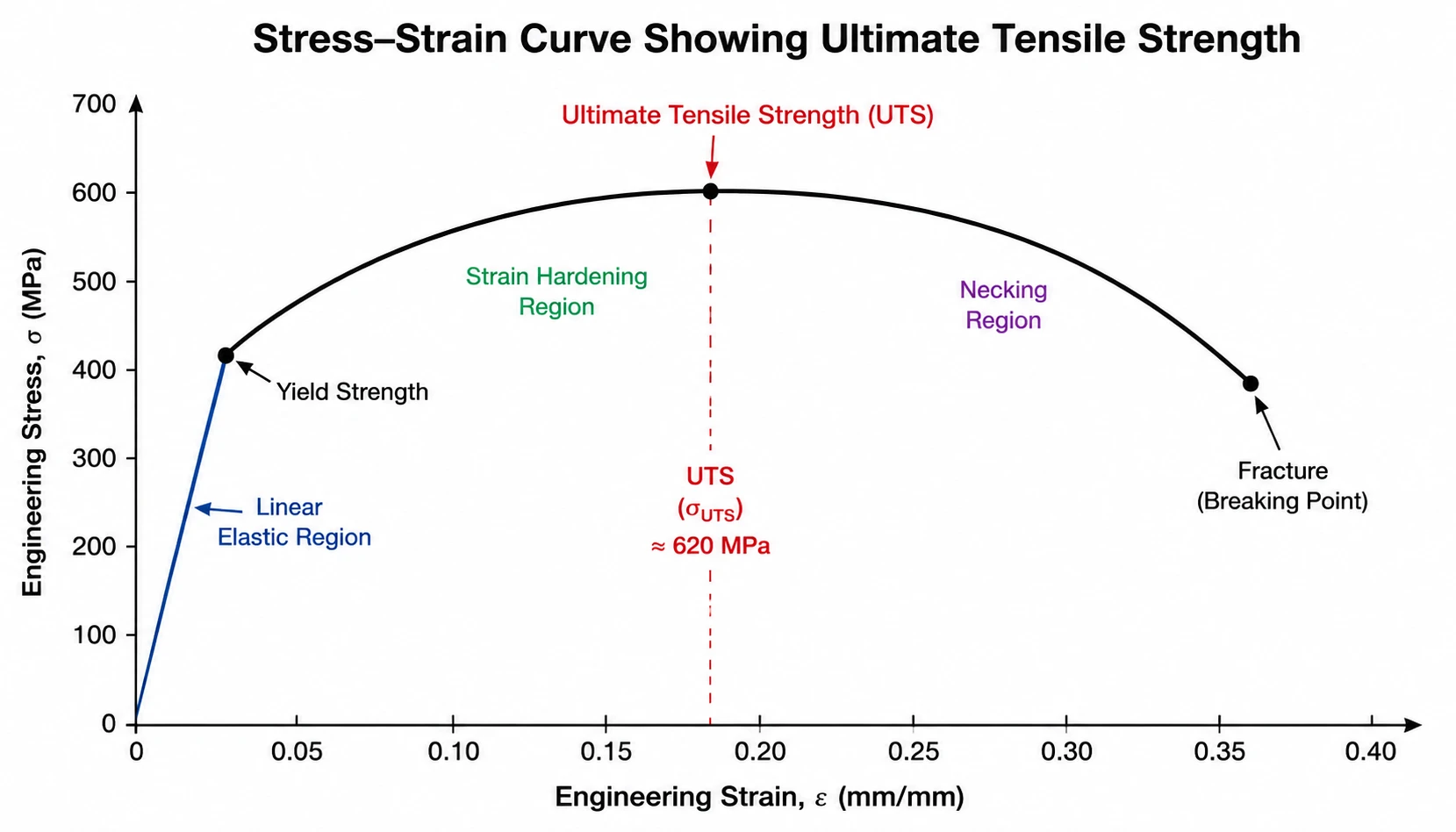
- Maximum Stress: The absolute peak load-bearing capacity of the steel.
- Significance: It dictates how much tension a component can handle before failing completely, acting as a baseline metric for material selection in precision casting and structural fabrication.
The Concept of Elastic and Plastic Behavior
When steel is subjected to a tensile load, it undergoes two distinct phases of deformation:
- Elastic Behavior: In this initial stage, the steel deforms but returns to its original shape once the load is removed. The atomic bonds stretch but do not break. This linear relationship is governed by Hooke's Law.
- Plastic Behavior: Once the applied stress exceeds the yield point, the steel enters the plastic deformation zone. At this stage, the changes are permanent; the material will remain stretched even after the load is fully released.
Ductile vs. Brittle Material Behavior
Understanding how steel behaves under extreme tension allows engineers to predict and prevent catastrophic field failures.
| Material Behavior | Characteristics | Structural Impact | Common Steel Examples |
|---|---|---|---|
| Ductile Behavior | Exhibits significant plastic deformation and "necking" before final fracture. | Provides visual warning signs prior to total failure. | Mild steel, AISI 1020, S355 |
| Brittle Behavior | Experiences little to no plastic deformation; fails suddenly under peak load. | High risk of sudden, catastrophic cracking without warning. | High-carbon steels, quenched alloys without proper tempering |
As professional precision casting service providers, we engineer components with the precise balance of ductility and ultimate tensile strength required to meet rigid global industrial standards.
Key Tensile Strength Terms for Steel
Understanding the mechanical properties of steel requires a clear grasp of specific terminology. When we evaluate materials for high-stress applications, we look at several critical metrics that define how a metal responds to external forces.
Ultimate Tensile Strength (UTS)
Ultimate tensile strength is the maximum stress a material can withstand while being stretched or pulled before necking occurs. Measured in MPa (megapascals) or psi, this value indicates the peak load-bearing capacity of the steel on a standard stress-strain curve.
Yield Strength
Yield strength marks the transition point where a material permanently deforms. Below this limit, the steel exhibits elastic behavior, meaning it will return to its original shape once the load is removed. Once the yield point is crossed, plastic deformation begins.
Breaking Strength
Also known as rupture strength, breaking strength is the actual stress recorded at the exact moment the steel fractures. For ductile materials like mild steel, this point occurs after significant necking and is typically lower than the ultimate tensile strength.
Key Units and Metrics Table
| Term | Common Units | Engineering Definition |
|---|---|---|
| Ultimate Tensile Strength | MPa, psi, N/mm² | The absolute maximum stress a steel grade can handle before failing. |
| Yield Strength | MPa, psi, N/mm² | The stress level where permanent, irreversible deformation starts. |
| Breaking Strength | MPa, psi | The stress value at the precise moment of physical separation or fracture. |
Elongation and Ductility
- Elongation Percentage: Measures how much the steel stretches before breaking, indicating its overall ductility.
- Alloying Elements: The addition of carbon, manganese, or chromium directly alters these core strength metrics.
- Manufacturing Impacts: Processes like cold working or specialized heat treatment significantly increase yield and tensile limits while reducing total elongation.
In precision manufacturing, choosing the right material involves balancing these specific thresholds. For example, when manufacturing intricate components, understanding the difference between forging and casting helps engineers select the right structural grade—whether utilizing standard AISI 1020 or high-strength S355 alloys—to ensure the final product withstands its intended operational stresses without premature failure.
Tensile Strength vs. Yield Strength of Steel
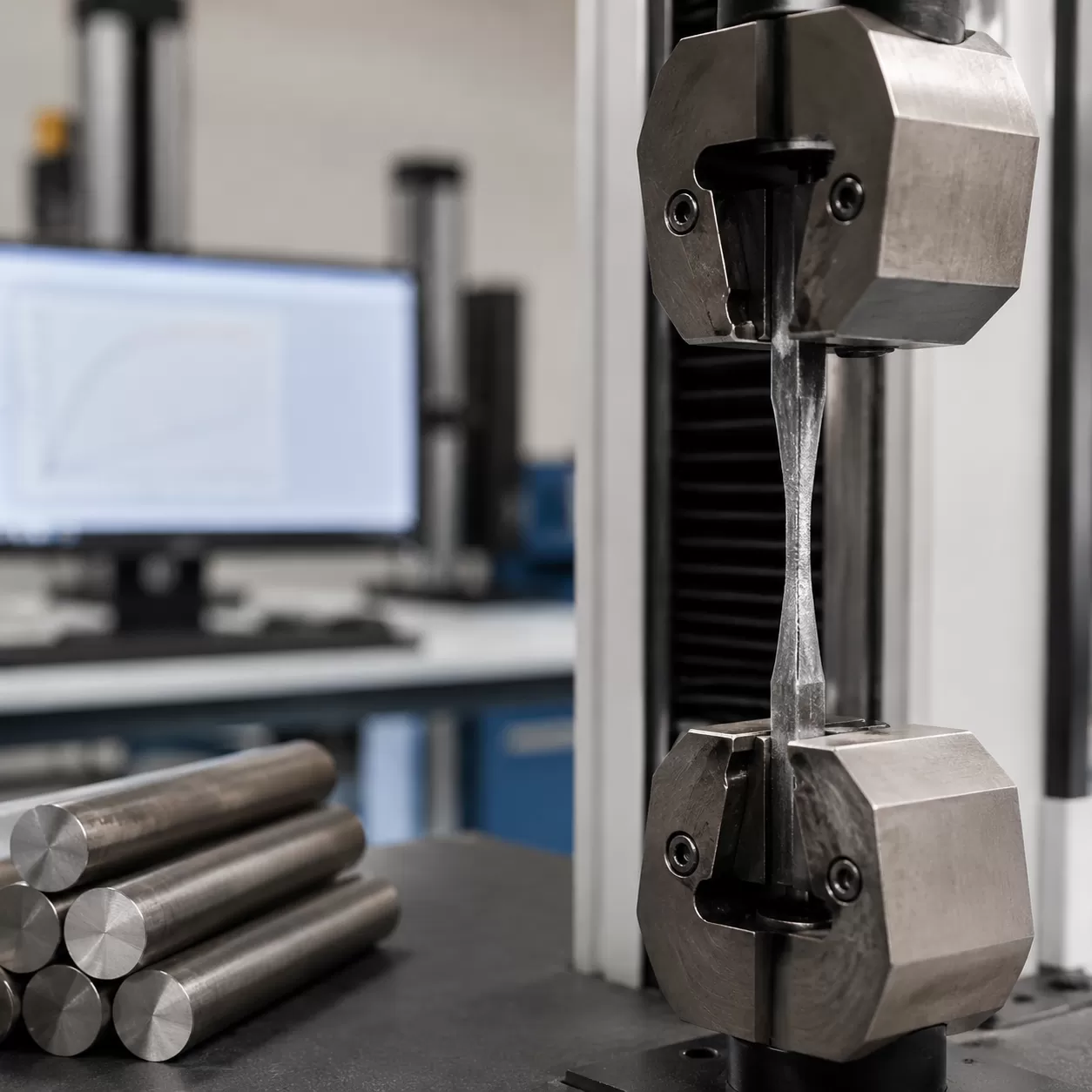
When designing components, you cannot just look at a single strength metric. To select the right material, you must understand how steel handles load before it permanently deforms versus when it actually breaks.
What Is Yield Strength?
Yield strength is the maximum stress a material can handle before it begins to plastically deform. Up to this point, the steel behaves elastically—meaning if you remove the load, it snaps back to its original shape. Once the stress passes the yield point, the shape change becomes permanent. For structural applications, this is often the most critical limit because engineers want to avoid any lasting deformation.
Key Differences Between Tensile and Yield Strength
While yield strength marks the limit of elastic behavior, the tensile strength of steel (specifically ultimate tensile strength) measures the absolute maximum stress a material can withstand while being stretched or pulled before necking and fracturing.
| Feature | Yield Strength | Tensile Strength (Ultimate) |
|---|---|---|
| Definition | Stress where permanent deformation begins. | Maximum stress the material can withstand. |
| Material Behavior | Transition from elastic to plastic zone. | Peak point before the material fractures. |
| Engineering Focus | Used to prevent functional failure/bending. | Used to prevent catastrophic breaking. |
| Typical Units | MPa, psi, or $N/mm^2$ | MPa, psi, or $N/mm^2$ |
Understanding the Stress-Strain Curve
The relationship between these two metrics is best visualized on a stress-strain curve. When a sample undergoes testing, it passes through distinct phases:
- Elastic Region: The initial straight line where stress and strain are proportional. The steel will return to its original dimensions.
- Yield Point: The distinct bend in the curve where the material transitions to plastic behavior.
- Plastic Region: The material continues to deform permanently while absorbing more load.
- Ultimate Tensile Strength: The highest peak of the curve.
- Breaking Strength: The final point where the steel completely separates.
Understanding this curve helps us optimize our manufacturing and equipment manufacturing processes, ensuring that every cast or machined steel part meets exact structural engineering tolerances.
Typical Tensile Strength Ranges Across Steel Grades
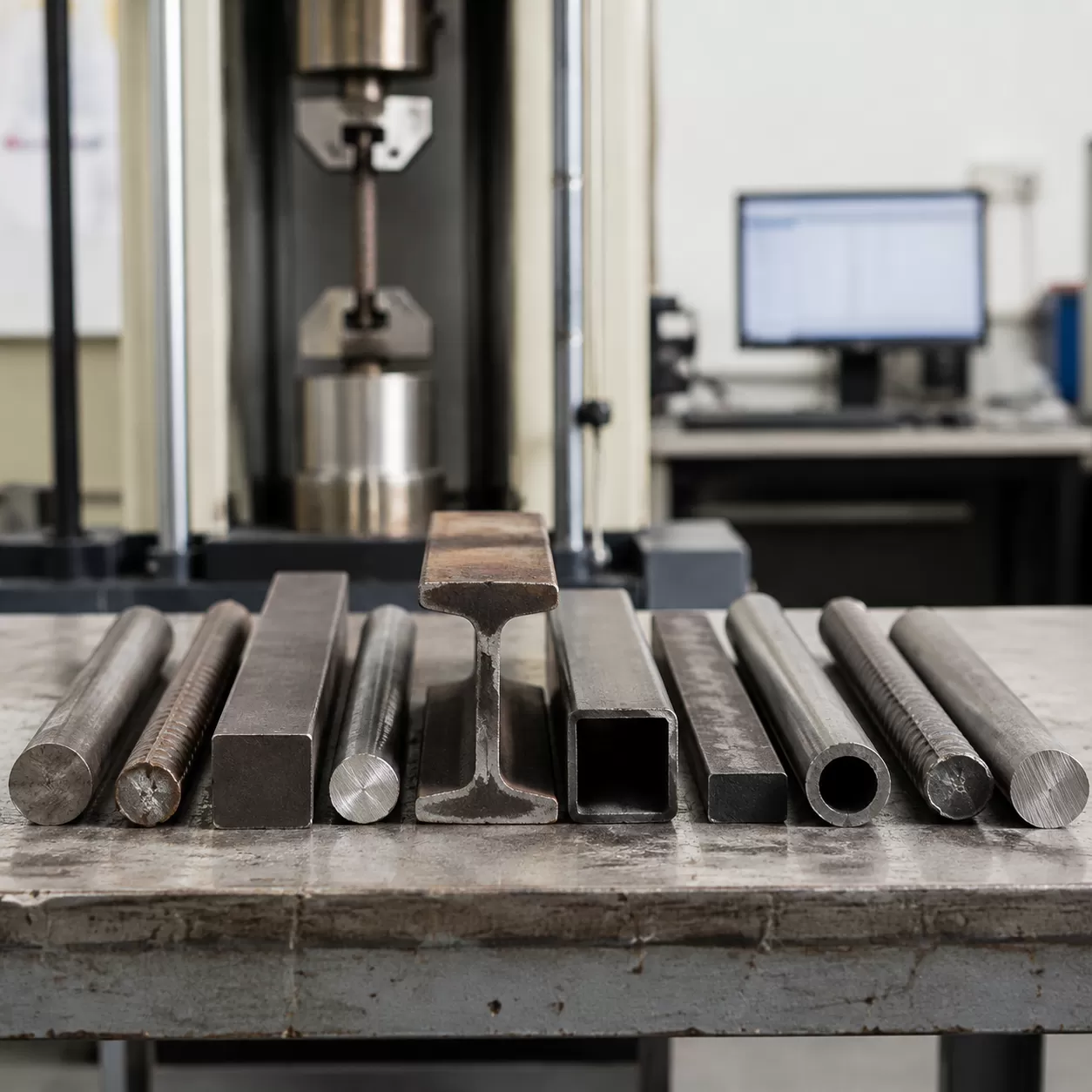
When you are sourcing materials for a project, understanding the tensile strength of steel across different grades is essential. Different applications require different mechanical properties, and selecting the right grade ensures your components won't fail under load.
Carbon Steel and Structural Steel (S235, S275, S355)
Structural steel grades like S235, S275, and S355 are the backbones of construction and general manufacturing. As a trusted partner in the industry, we often supply these materials for high-stress applications. Mild steel (like AISI 1020) sits on the lower end of this spectrum, offering excellent machinability and weldability.
| Steel Grade | Yield Strength (Min) | Ultimate Tensile Strength |
|---|---|---|
| S235 / AISI 1020 | 235 MPa | 360 – 510 MPa (52,000 – 74,000 psi) |
| S275 | 275 MPa | 410 – 560 MPa |
| S355 | 355 MPa | 470 – 630 MPa ($N/mm^2$) |
Stainless Steel and Alloy Steel
Stainless steel and alloy steel grades are engineered for environments demanding corrosion resistance and high-performance maximum stress handling. By introducing alloying elements like chromium, nickel, and molybdenum, these metals achieve superior strength profiles.
- Austenitic Stainless (e.g., 304/316): Offers a tensile strength of 515 to 700 MPa. They provide great ductility but lower yield points unless cold-worked.
- Alloy Steels (e.g., 4140 / 4340): These respond exceptionally well to heat treatment. When quenched and tempered, their ultimate tensile strength can easily skyrocket past 900 to 1200 MPa.
For projects requiring specialized metallurgical performance beyond standard steel, exploring a top casting supplier for high performance refractory solutions can help you secure custom-engineered components built to withstand extreme operational environments.
Reinforcement Steel (B500B and B500C)
Specifically manufactured for structural engineering and concrete reinforcement, rebar grades like B500B and B500C are highly standardized.
- Minimum Yield Strength: 500 MPa
- Tensile/Yield Ratio: B500B requires a ratio of at least 1.05, while B500C requires a higher ratio of 1.15 to 1.35.
- Application: B500C is highly preferred in seismic zones because it provides the necessary ductility to withstand cyclic loading without sudden breaking strength failure.
High-Strength Low-Alloy (HSLA) Steel
High-strength alloys (HSLA) are designed to deliver higher tensile strength than standard carbon steel while keeping weight to a minimum. They achieve their properties through precise chemistry rather than expensive post-heat treatments.
- Tensile Range: Typically 550 to 800 MPa.
- Key Benefit: Exceptional strength-to-weight ratio, making them the default choice for heavy transport vehicles, cranes, and large-scale bridges where saving weight directly cuts operational costs.
Factors Affecting the Tensile Strength of Steel
Understanding what drives the mechanical properties of metals helps us deliver dependable results for demanding global applications. The tensile strength of steel isn't a fixed number; it is highly customizable and depends on several critical factors during metallurgical formulation and processing.
Chemical Composition and Carbon Content
Carbon is the primary hardening element in steel. Raising the carbon percentage directly increases the ultimate tensile strength and hardness, though it reduces ductility. Beyond carbon, strategic alloying elements change the game:
- Chromium and Nickel: Enhance both strength and corrosion resistance.
- Manganese and Molybdenum: Improve deep hardenability and structural integrity under heavy loads.
- Vanadium: Refines grain structure for a tougher, stronger metal matrix.
For specialized industrial applications requiring precise chemistry and high strength, we often utilize advanced 4340 steel casting to achieve the ideal balance of toughness and tensile performance.
Heat Treatment and Manufacturing Processes
Raw chemistry only tells half the story. The manufacturing method and subsequent thermal processing dictate the final grain structure and mechanical limits of the metal.
- Quenching and Tempering: Heating the steel and rapidly cooling it alters the crystalline structure, dramatically boosting yield and tensile limits.
- Work Hardening (Cold Working): Mechanically deforming steel at room temperature increases dislocations in the crystal lattice, making the mild steel or alloy significantly stronger.
- Annealing: Softens the material to relieve internal stresses, trading raw strength for improved machineability.
Environmental and Temperature Effects
Operating conditions change how steel handles stress. High-temperature environments cause thermal activation, allowing atoms to move more freely. This lowers the overall tensile capacity and increases the risk of creep deformation over time. Conversely, sub-zero temperatures can spike tensile strength but drastically lower impact toughness, shifting the material from a ductile to a brittle state. Engineers must account for these thermal shifts during the initial material selection phase to avoid unexpected structural failures in the field.
How Is the Tensile Strength of Steel Tested?
To guarantee that the steel we supply meets your project’s safety requirements, we perform rigorous standardized testing. This isn't just about pulling metal apart; it’s a precise scientific measurement of how the material reacts under extreme stress.
The Tensile Testing Process
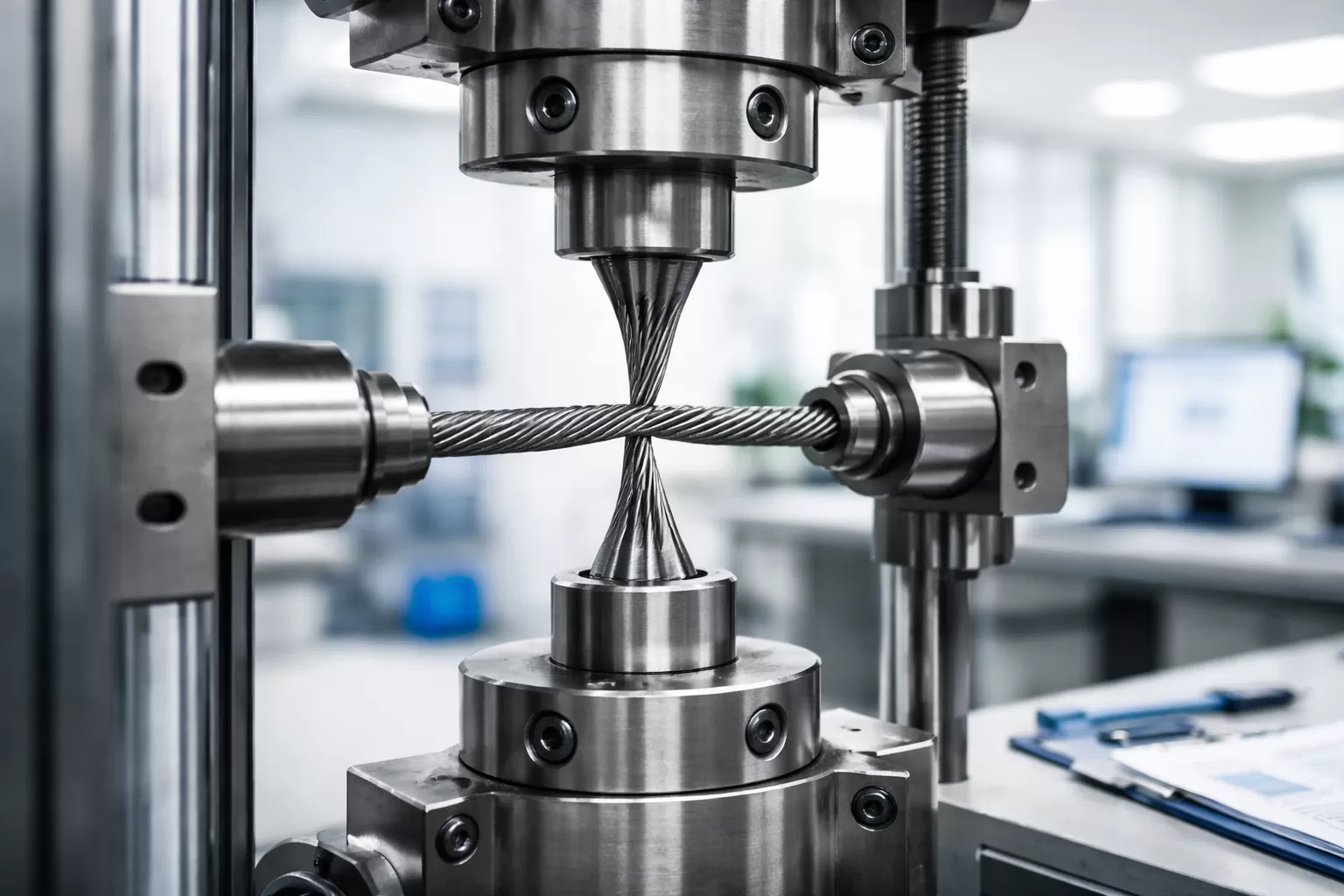
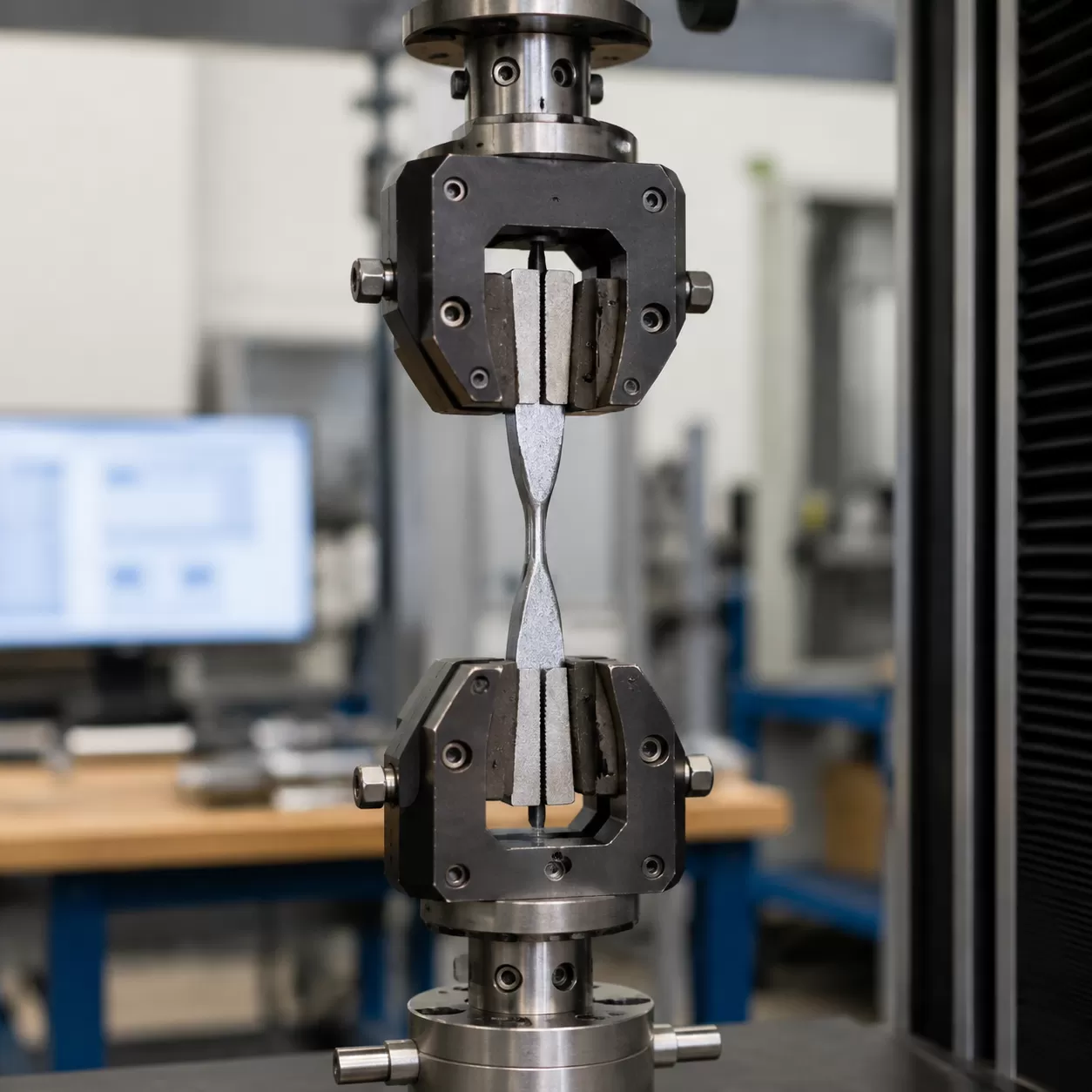
The most common method is the uniaxial tensile test. We take a "dog-bone" shaped specimen of the steel and secure it into a specialized machine. The machine applies a controlled, increasing load (pulling force) until the steel deforms and eventually snaps. During this process, we monitor exactly how much the material stretches relative to the force applied.
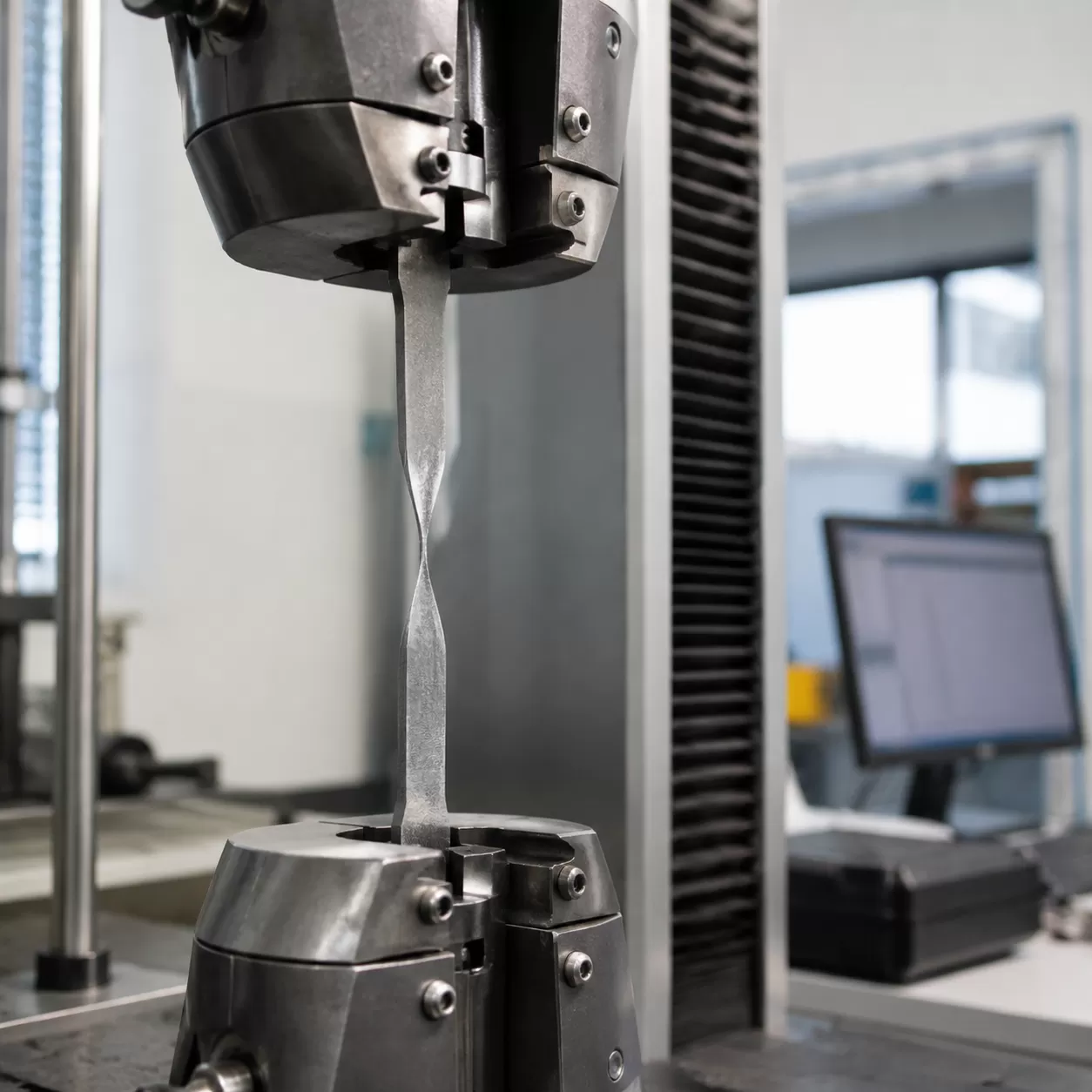
Key Metrics: Ultimate Tensile Strength, Yield Point, and Elongation
When we analyze the results, we focus on three critical data points that define the performance of the metal:
- Yield Point: The exact moment the steel stops being "springy" (elastic) and starts permanently deforming.
- Ultimate Tensile Strength (UTS): The maximum stress the steel can withstand before it begins to fail or "neck" down.
- Elongation: Measured as a percentage, this tells us how much the steel stretched before breaking, which is a key indicator of ductility.
For high-performance applications, we often test 4340 metal high-strength alloy steel bar properties to ensure these metrics align with international standards like AISI or ASTM.
Standard Testing Instruments and Equipment
We utilize Universal Testing Machines (UTM) equipped with high-precision extensometers. These sensors capture data in real-time, often outputting measurements in MPa (megapascals), N/mm², or psi.
| Equipment Component | Function |
|---|---|
| Load Cell | Measures the exact force applied in Newtons or pounds. |
| Extensometer | Tracks the minute stretching of the steel specimen. |
| Grips/Chucks | Ensures the steel doesn't slip during the high-pressure pull. |
By maintaining strict testing protocols, we ensure that every batch of custom precision parts or structural bars provides the reliable tensile strength of steel your engineering team expects.
Industrial Applications and Importance in Engineering
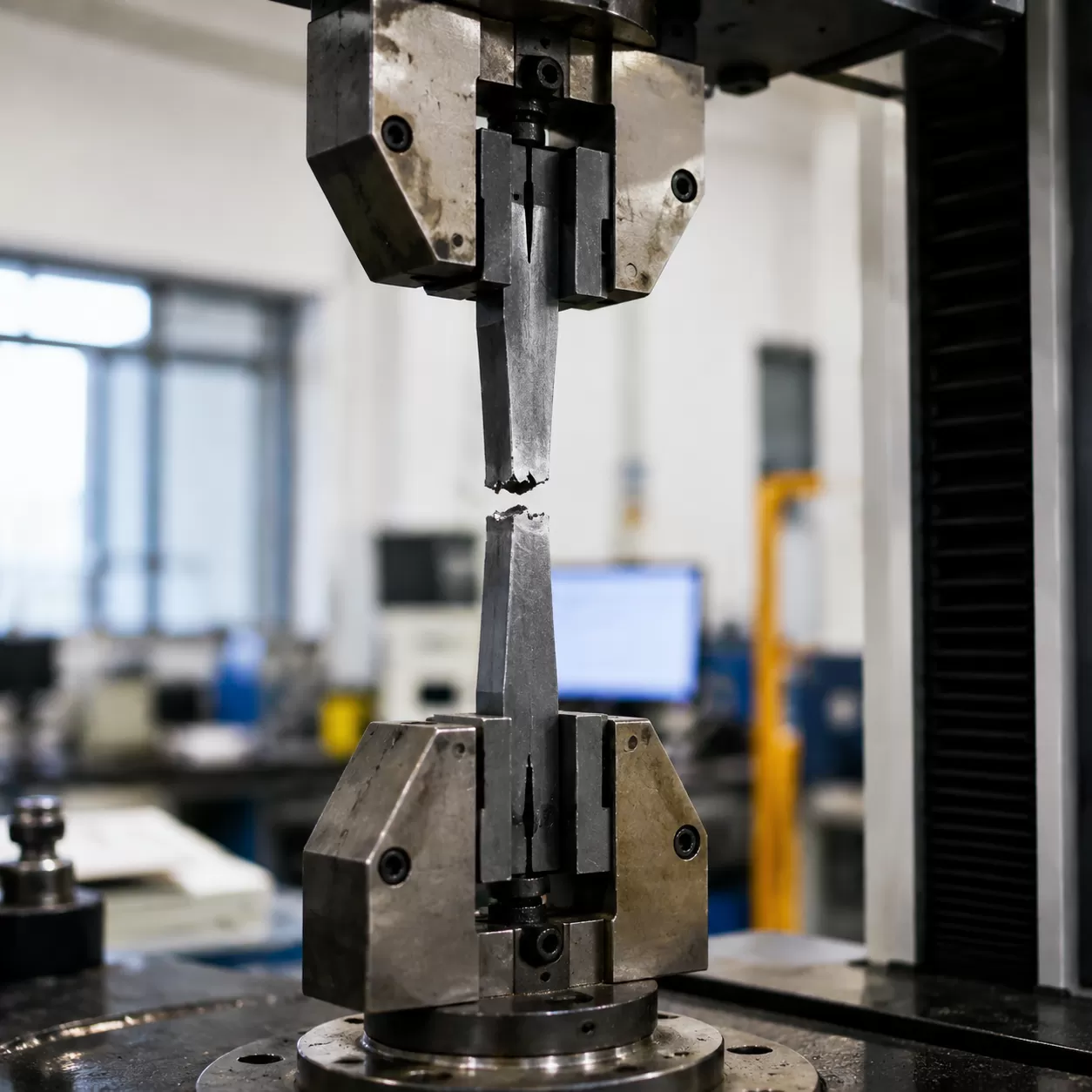
The tensile strength of steel dictates how well a component withstands pulling forces without stretching to failure. In heavy industries, choosing the right material grade ensures structural integrity and operational safety under massive loads.
Civil Engineering and Infrastructure Construction
Modern infrastructure relies heavily on the high ultimate tensile strength of structural steel and reinforcement bars. Skyscrapers, bridges, and stadium roofs depend on materials like S355 and B500B to support immense dead loads and resist environmental forces like wind and seismic activity. Using steel with a guaranteed yield strength prevents catastrophic collapse, ensuring that large-scale structures remain safe throughout their operational lifespans.
Aerospace and Automotive Engineering
In the transportation sector, balancing weight and high-strength alloys is critical.
- Automotive: Car frames, crash zones, and pillars utilize High-Strength Low-Alloy (HSLA) steel to maximize passenger safety during impacts while reducing overall vehicle weight for better fuel efficiency.
- Aerospace: Landing gears, fastening systems, and structural brackets require high tensile strength to handle extreme stress cycles during takeoff and landing.
For critical, high-stress applications requiring complex geometries, we often utilize our advanced steel casting company capabilities to deliver components that meet strict aerospace and automotive tolerances.
Manufacturing and Component Design
Industrial machinery, hydraulic systems, and manufacturing equipment operate under constant, repetitive loads. Engineers utilize specific AISI grades, such as 1020 for mild steel applications or high-strength alloys for heavy-duty gears, shafts, and crankshafts. For specialized machinery parts that require corrosion resistance alongside mechanical durability, implementing a stainless steel sand casting process provides the ideal blend of high ultimate tensile strength and long-term wear resistance.
| Industry | Typical Steel Grade Used | Primary Stress Type |
|---|---|---|
| Civil Engineering | S355, B500B / B500C | High static loads, tension, bending |
| Automotive | HSLA, Dual-Phase Steel | Dynamic impact, energy absorption |
| Aerospace | High-Strength Alloy Steels | Cyclic loading, extreme tension |
| Manufacturing | AISI 1020, AISI 4140 | Torsion, continuous mechanical fatigue |
A Metal Buyer's Guide to Selecting Tensile Strength
How to Use Tensile Strength in Purchasing Decisions
When sourcing materials for your projects, understanding the tensile strength of steel ensures you don't overpay for unnecessary specs or risk component failure. You must match the maximum stress requirements of your application with the right steel grade.
For high-load structural applications, relying on a trusted precision casting service helps ensure that the material's mechanical properties, like ultimate tensile strength and yield point, perfectly hit your design targets.
- Assess the Load Type: High tensile strength is crucial for parts facing extreme pulling forces, but unnecessary for components under basic compression.
- Evaluate Machinability: High-strength alloys are tougher to machine and shape. Balance your strength needs with manufacturing costs.
- Check the Standards: Always verify material certificates (like AISI or ASTM) to ensure the MPa or psi ratings match your engineering blueprints.
Common Misconceptions About Ultimate Tensile Strength
Many buyers mistake a high ultimate tensile strength for overall durability. This misunderstanding often leads to poor material selection and premature part failure.
- Misconception 1: Higher Tensile Strength Always Means a Better Material. The Reality:* As tensile strength goes up, ductility usually goes down. Steel that is too hard becomes brittle and can snap unexpectedly under sudden shock loads.
- Misconception 2: Tensile Strength and Yield Strength Are the Same Thing. The Reality:* Yield strength tells you when the steel will permanently deform. Ultimate tensile strength tells you when it will actually break. For most engineering designs, the yield strength is the more critical limit.
- Misconception 3: Heavy Materials Automatically Have Higher Strength. The Reality:* Mass does not equal performance. Advanced high-strength low-alloy (HSLA) steels provide massive load-bearing capacity without adding dead weight to your components.
Frequently Asked Questions About Steel Tensile Strength
Is Yield Strength Always Lower Than Tensile Strength?
Yes, for all structural and engineering steels, yield strength is always lower than the ultimate tensile strength. Yield strength marks the point where the steel begins to permanently deform, while ultimate tensile strength represents the maximum stress the material can withstand before breaking. As trusted precision casting service providers, we carefully monitor this gap to ensure components handle working loads safely without permanent distortion.
What Happens if Steel Exceeds Its Yield Strength?
When steel exceeds its yield strength, it enters the plastic deformation zone. It will no longer return to its original shape once the load is removed. The material stretches and hardens until it hits its ultimate tensile strength, eventually leading to necking and failure. Understanding this transition is vital when selecting robust materials, such as our high-durability 2507 duplex stainless steel, to prevent catastrophic structural failure under extreme pressure.
Can a Material Have High Tensile Strength But Low Yield Strength?
Yes, certain materials exhibit this specific mechanical profile. Annealed metals and specific high-ductility alloys can possess a relatively low yield point but undergo significant work-hardening as they stretch, ultimately reaching a high ultimate tensile strength. This behavior allows the metal to deform heavily before actually breaking, which is a critical safety consideration in crash protection and metal forming applications.