
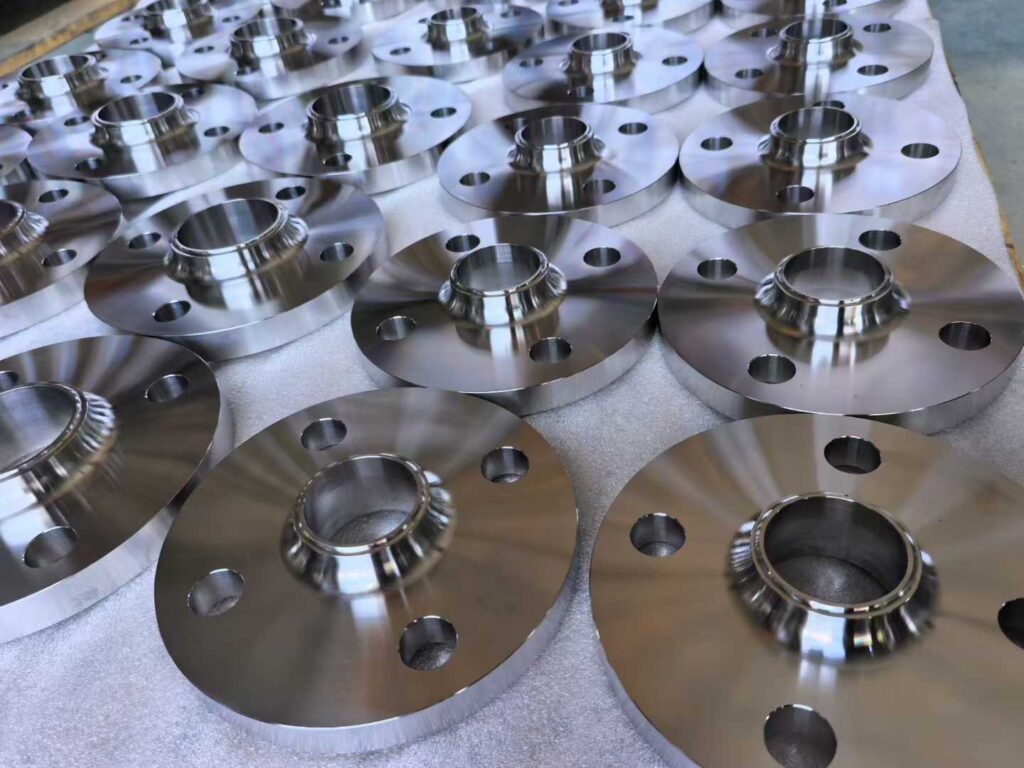
At Vastmaterial, we understand that even the most advanced precision casting methods can occasionally result in microscopic porosity. To ensure your components meet the rigorous demands of aerospace and automotive applications, we integrate a highly specialized casting impregnation workflow into our surface treatment capabilities.
This four-step process permanently seals leaks without altering the physical dimensions or appearance of your parts, ensuring flawless performance.
Our 4-Step Vacuum Impregnation Workflow
- Step 1: Vacuum ImpregnationThe process begins by placing the machined castings into a sealed process vessel. We draw a deep vacuum to evacuate all air trapped within the metal’s micropores. Once the air is removed, a low-viscosity sealant is introduced. Releasing the vacuum allows atmospheric pressure to force the sealant deep into the pores, ensuring complete penetration—even in complex geometries like hydraulic manifolds or engine blocks.
- Step 2: Recovery and CentrifugingEfficiency and cleanliness are key. After the impregnation cycle, we remove the parts and drain the excess sealant. A centrifuge spins the basket of parts, reclaiming the majority of the resin. This minimizes waste to keep material costs low and prevents heavy resin buildup, simplifying the washing phase.
- Step 3: Precision WashingMaintaining tight tolerances is non-negotiable in our CNC machining and casting operations. We wash the parts in water to remove residual sealant from external surfaces, tapped holes, and internal passages. Because surface tension traps the sealant inside the pores, the wash only cleans the exterior. This guarantees zero dimensional change.
- Step 4: Hot Cure PolymerizationTo lock in durability, components undergo a controlled hot cure cycle. Heat triggers a chemical reaction that polymerizes the liquid resin inside the pores, converting it into a solid, chemically resistant plastic. The sealant becomes an integral part of the metal casting, providing a 100% pressure-tight seal capable of withstanding extreme temperatures and pressures.
Process Comparison: Wet Vacuum vs. Dry Vacuum Pressure (DVP)
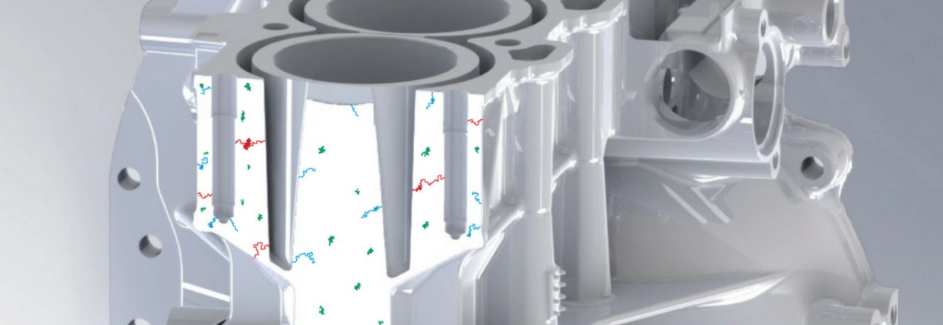
Choosing the right casting impregnation method is critical for component reliability. At Vastmaterial, we match our vacuum techniques to the severity of the porosity and your specific performance requirements.
Wet Vacuum Impregnation
Ideal for sealing larger, “loose” porosity where deep microscopic penetration isn’t the primary concern. Parts are submerged in the sealant cURL Too many subrequests. the vacuum is pulled.
- cURL Too many subrequests. General commercial castings, powder metal parts, and non-critical sealing.
- cURL Too many subrequests. Faster cycle times and highly cost-effective.
- cURL Too many subrequests. Less effective on deep, complex micro-porosity due to air struggling to escape through the liquid.
Dry Vacuum Pressure (DVP)
For critical components in aerospace or high-pressure automotive systems, DVP is our standard. Parts are placed in a dry chamber prima to evacuate air. Sealant is introduced only after the air is gone, followed by high pressure to force the resin deep into the casting walls.
- cURL Too many subrequests. High-pressure hydraulic systems, aerospace casting manufacturing, and zero-leakage assurance.
- cURL Too many subrequests. Superior resin penetration; effectively seals the finest micro-porosity.
- cURL Too many subrequests. Slightly longer cycle time.
Comparison at a Glance
| Caratteristica | Wet Vacuum | Dry Vacuum Pressure (DVP) |
| Air Removal | Moderate (through liquid) | Superior (dry evacuation) |
| cURL Too many subrequests by single Worker invocation. To configure this limit, refer to https://developers.cloudflare.com/workers/wrangler/configuration/#limits | cURL Too many subrequests by single Worker invocation. To configure this limit, refer to https://developers.cloudflare.com/workers/wrangler/configuration/#limits | cURL Too many subrequests by single Worker invocation. To configure this limit, refer to https://developers.cloudflare.com/workers/wrangler/configuration/#limits |
| cURL Too many subrequests. | cURL Too many subrequests by single Worker invocation. To configure this limit, refer to https://developers.cloudflare.com/workers/wrangler/configuration/#limits | cURL Too many subrequests by single Worker invocation. To configure this limit, refer to https://developers.cloudflare.com/workers/wrangler/configuration/#limits |
| Efficienza dei Costi | cURL Too many subrequests by single Worker invocation. To configure this limit, refer to https://developers.cloudflare.com/workers/wrangler/configuration/#limits | cURL Too many subrequests by single Worker invocation. To configure this limit, refer to https://developers.cloudflare.com/workers/wrangler/configuration/#limits |
cURL Too many subrequests by single Worker invocation. To configure this limit, refer to https://developers.cloudflare.com/workers/wrangler/configuration/#limits cURL Too many subrequests by single Worker invocation. To configure this limit, refer to https://developers.cloudflare.com/workers/wrangler/configuration/#limits.
cURL Too many subrequests by single Worker invocation. To configure this limit, refer to https://developers.cloudflare.com/workers/wrangler/configuration/#limits
cURL Too many subrequests by single Worker invocation. To configure this limit, refer to https://developers.cloudflare.com/workers/wrangler/configuration/#limits.
| Vantaggio | cURL Too many subrequests by single Worker invocation. To configure this limit, refer to https://developers.cloudflare.com/workers/wrangler/configuration/#limits |
| cURL Too many subrequests by single Worker invocation. To configure this limit, refer to https://developers.cloudflare.com/workers/wrangler/configuration/#limits | cURL Too many subrequests by single Worker invocation. To configure this limit, refer to https://developers.cloudflare.com/workers/wrangler/configuration/#limits. |
| cURL Too many subrequests by single Worker invocation. To configure this limit, refer to https://developers.cloudflare.com/workers/wrangler/configuration/#limits | cURL Too many subrequests by single Worker invocation. To configure this limit, refer to https://developers.cloudflare.com/workers/wrangler/configuration/#limits. |
| Stabilità dimensionale | cURL Too many subrequests by single Worker invocation. To configure this limit, refer to https://developers.cloudflare.com/workers/wrangler/configuration/#limits. |
| cURL Too many subrequests by single Worker invocation. To configure this limit, refer to https://developers.cloudflare.com/workers/wrangler/configuration/#limits | cURL Too many subrequests by single Worker invocation. To configure this limit, refer to https://developers.cloudflare.com/workers/wrangler/configuration/#limits. |
cURL Too many subrequests by single Worker invocation. To configure this limit, refer to https://developers.cloudflare.com/workers/wrangler/configuration/#limits
cURL Too many subrequests by single Worker invocation. To configure this limit, refer to https://developers.cloudflare.com/workers/wrangler/configuration/#limits
- cURL Too many subrequests by single Worker invocation. To configure this limit, refer to https://developers.cloudflare.com/workers/wrangler/configuration/#limits cURL Too many subrequests by single Worker invocation. To configure this limit, refer to https://developers.cloudflare.com/workers/wrangler/configuration/#limits.
- Automobilistico: cURL Too many subrequests by single Worker invocation. To configure this limit, refer to https://developers.cloudflare.com/workers/wrangler/configuration/#limits.
- Aerospaziale: cURL Too many subrequests by single Worker invocation. To configure this limit, refer to https://developers.cloudflare.com/workers/wrangler/configuration/#limits.
- Petrolio e Gas: cURL Too many subrequests by single Worker invocation. To configure this limit, refer to https://developers.cloudflare.com/workers/wrangler/configuration/#limits.
- cURL Too many subrequests by single Worker invocation. To configure this limit, refer to https://developers.cloudflare.com/workers/wrangler/configuration/#limits cURL Too many subrequests by single Worker invocation. To configure this limit, refer to https://developers.cloudflare.com/workers/wrangler/configuration/#limits.
cURL Too many subrequests by single Worker invocation. To configure this limit, refer to https://developers.cloudflare.com/workers/wrangler/configuration/#limits
cURL Too many subrequests by single Worker invocation. To configure this limit, refer to https://developers.cloudflare.com/workers/wrangler/configuration/#limits.
| Caratteristica | Specification / Standard |
| cURL Too many subrequests. | cURL Too many subrequests by single Worker invocation. To configure this limit, refer to https://developers.cloudflare.com/workers/wrangler/configuration/#limits |
| cURL Too many subrequests by single Worker invocation. To configure this limit, refer to https://developers.cloudflare.com/workers/wrangler/configuration/#limits | cURL Too many subrequests by single Worker invocation. To configure this limit, refer to https://developers.cloudflare.com/workers/wrangler/configuration/#limits |
| Stabilità termica | cURL Too many subrequests by single Worker invocation. To configure this limit, refer to https://developers.cloudflare.com/workers/wrangler/configuration/#limits |
| cURL Too many subrequests by single Worker invocation. To configure this limit, refer to https://developers.cloudflare.com/workers/wrangler/configuration/#limits | cURL Too many subrequests by single Worker invocation. To configure this limit, refer to https://developers.cloudflare.com/workers/wrangler/configuration/#limits |
Domande frequenti (FAQ)
cURL Too many subrequests by single Worker invocation. To configure this limit, refer to https://developers.cloudflare.com/workers/wrangler/configuration/#limits
cURL Too many subrequests by single Worker invocation. To configure this limit, refer to https://developers.cloudflare.com/workers/wrangler/configuration/#limits cURL Too many subrequests by single Worker invocation. To configure this limit, refer to https://developers.cloudflare.com/workers/wrangler/configuration/#limits cURL Too many subrequests by single Worker invocation. To configure this limit, refer to https://developers.cloudflare.com/workers/wrangler/configuration/#limits cURL Too many subrequests by single Worker invocation. To configure this limit, refer to https://developers.cloudflare.com/workers/wrangler/configuration/#limits cURL Too many subrequests by single Worker invocation. To configure this limit, refer to https://developers.cloudflare.com/workers/wrangler/configuration/#limits.
Will impregnation affect the appearance or dimensions of my parts?
No. The process results in zero dimensional change. The sealant penetrates the micro-porosity but does not add thickness to the surface. Our precision wash cycle removes all excess resin from the exterior before curing, ensuring your tight tolerances and aesthetics remain exactly as machined. Once cured, the sealant is invisible.
Is the cured resin resistant to chemicals and high temperatures?
Yes. Following the hot cure cycle, the resin polymerizes into a chemically inert, solid plastic. It easily withstands exposure to hydraulic fluids, coolants, fuels, solvents, and lubricants. It also maintains thermal stability under extreme heat, making it perfect for high-stress aerospace and automotive environments.