

Titanium Casting for High-Performance Industrial Components
High-precision titanium and titanium alloy casting engineered for complex, thin-walled parts. Vastmaterial delivers reliable, precision casting and investment-cast solutions tailored for aerospace, medical implants, and high-corrosion industrial environments.
Vastmaterial Titanium Casting Capabilities & Custom Component Manufacturing Overview
As an expert titanium casting manufacturer, Vastmaterial specializes in pouring industrial pure titanium (Grade 1 & Grade 2) and high-performance titanium alloys like Ti-6Al-4V (Grade 5). Our advanced vacuum titanium casting services deliver components with exceptional strength-to-weight ratios, extreme fatigue resistance, and superior corrosion performance, specifically engineered for critical lightweighting and high-cleanliness applications.
- · Precision casting for complex small- to medium-sized custom titanium components featuring intricate internal geometries and optimized thin-wall structures.
- · Flexible, scalable production capabilities that seamlessly adapt from low-volume functional prototyping to consistent medium-scale batch manufacturing supported by downstream machining services.
- · Rigorous quality assurance tailored to demanding industry specifications for aerospace structural parts, medical implants, and marine hardware.
Dimensional Scope & Production Capacity:
- Single Part Weight Range: Approximately 10 grams to 15 kilograms, accommodating varying geometric complexities and cross-sections.
- Annual Manufacturing Capacity: Structured to dependably support both project-based specialty orders and continuous contract batch supply.
- Prototype Lead Times: Typically start from 4 to 8 weeks, depending on design complexity, DFM optimizations, and specific tooling requirements.
Aerospace Structures & Engine Components
High-strength structural connectors, brackets, housing assemblies, and engine accessories optimized for flight-critical weight reduction and performance.
Medical Implants & Surgical Instruments
Biocompatible joint replacement bodies, spinal fixation components, dental abutments, and specialty surgical tools requiring precise dimensional tolerances.
Chemical & Marine Corrosion-Resistant Parts
Industrial valve bodies, heavy-duty pump impellers, subsea manifolds, and pipeline fittings engineered to withstand aggressive chemical media and saltwater.
High-End Sports & Precision Mechanical Components
Lightweight robotic arm linkages, automation fixtures, racing chassis brackets, and high-performance machinery components optimized for fast cycle times.
Titanium Casting Process: Advanced Investment Casting & Vacuum Pouring
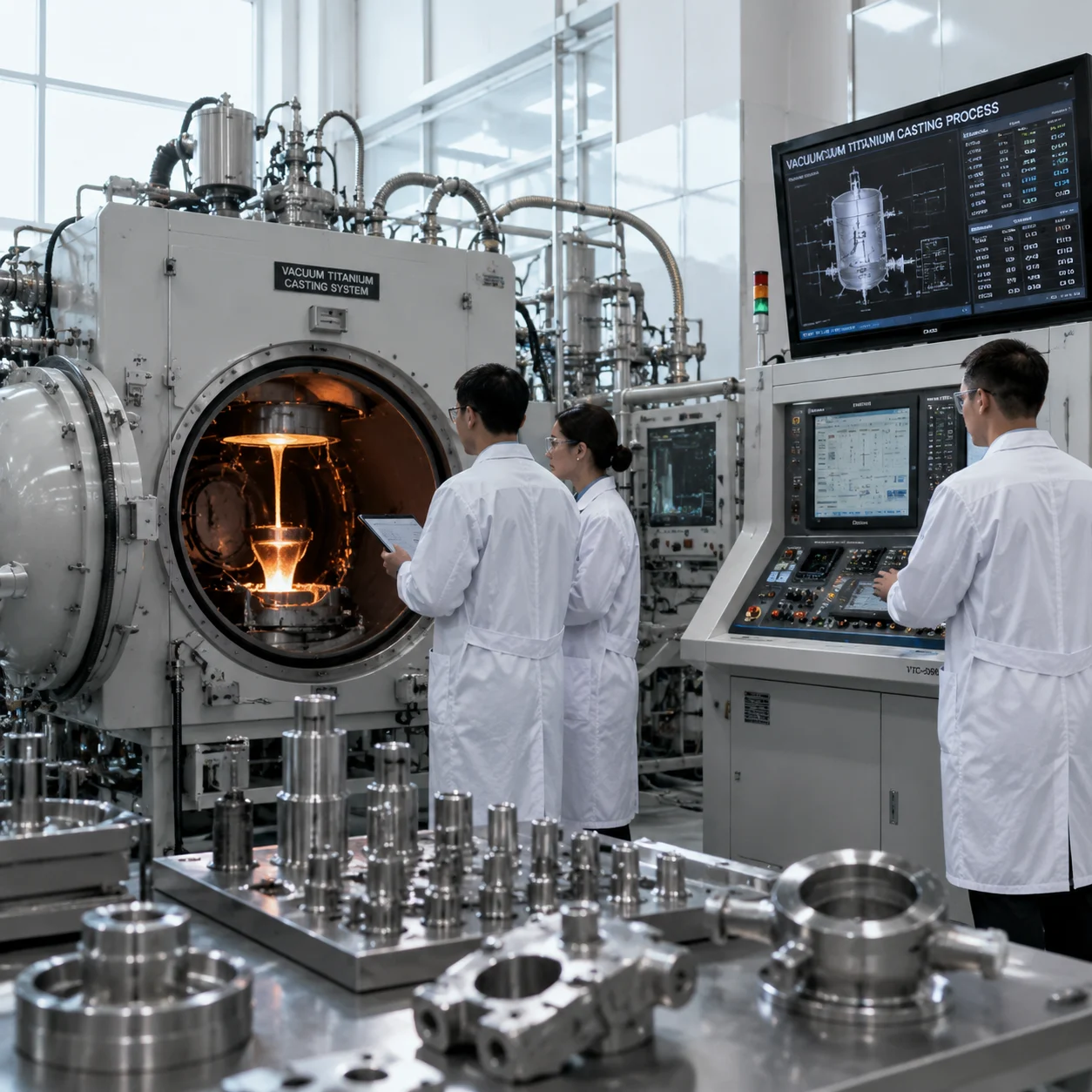
Vastmaterial utilizes a fully integrated titanium casting process that combines precise investment casting with advanced vacuum skull melting. By rigorously controlling environmental conditions and metallurgical parameters, we eliminate structural defects, prevent alpha-case contamination, and maximize the mechanical properties of high-performance titanium alloy components. For complex, high-precision parts, our vacuum investment casting capabilities ensure exceptional dimensional accuracy and repeatable quality.
- Phase 011
DFM Engineering & Tooling Design
Comprehensive Design for Manufacturability (DFM) analysis to optimize gating systems, simulate thermal solidification, and select appropriate thermal treatments for complex geometries.
Key Control
Shrinkage compensation and gas venting paths
- Phase 022
Wax Pattern & Prototype Fabrication
Production of high-precision wax patterns via custom injection molds or rapid 3D printing for intricate internal channels, thin-walled structures, and tight dimensional tolerances.
Key Control
Volumetric stability and surface finish integrity
- Phase 033
Refractory Ceramic Shell Building
Multi-layered coating utilizing premium, non-reactive refractory materials. This specialized slurry ensures high hot strength, excellent permeability, and zero chemical reactivity with molten titanium.
Key Control
Shell mold inertness to eliminate interstitial oxygen pick-up
- Phase 044
Vacuum Induction Melting & Pouring
Melting and pouring are executed within a strictly controlled vacuum atmosphere. This prevents gas entrapment, maintains exact chemical composition, and ensures pristine metallurgical purity.
Key Control
Vacuum depth, melt temperature, and rapid pouring kinetics
- Phase 055
Knockout, De-gating & Blasting
Mechanical removal of the ceramic shell followed by precise cutting of gates and risers. Targeted sandblasting and chemical etching are used to remove any residual scale or alpha-case layers.
Key Control
Complete alpha-case removal and structural preservation
- Phase 066
CNC Machining & Non-Destructive Testing
Secondary precision CNC machining achieves net-shape tolerances. quality assurance includes Hot Isostatic Pressing (HIP), X-ray radiography, and dye penetrant inspection to guarantee zero defects.
Key Control
Micro-porosity elimination and final dimensional verification
Our manufacturing engineers work closely with your technical team during blueprint submission to streamline production, reduce material waste, and optimize cost efficiency. By continually monitoring every phase of our vacuum titanium casting workflow, Vastmaterial delivers repeatable, high-integrity components that comply with stringent aerospace, medical, and defense standards.
High-Performance Titanium Alloys and Metallurgical Properties
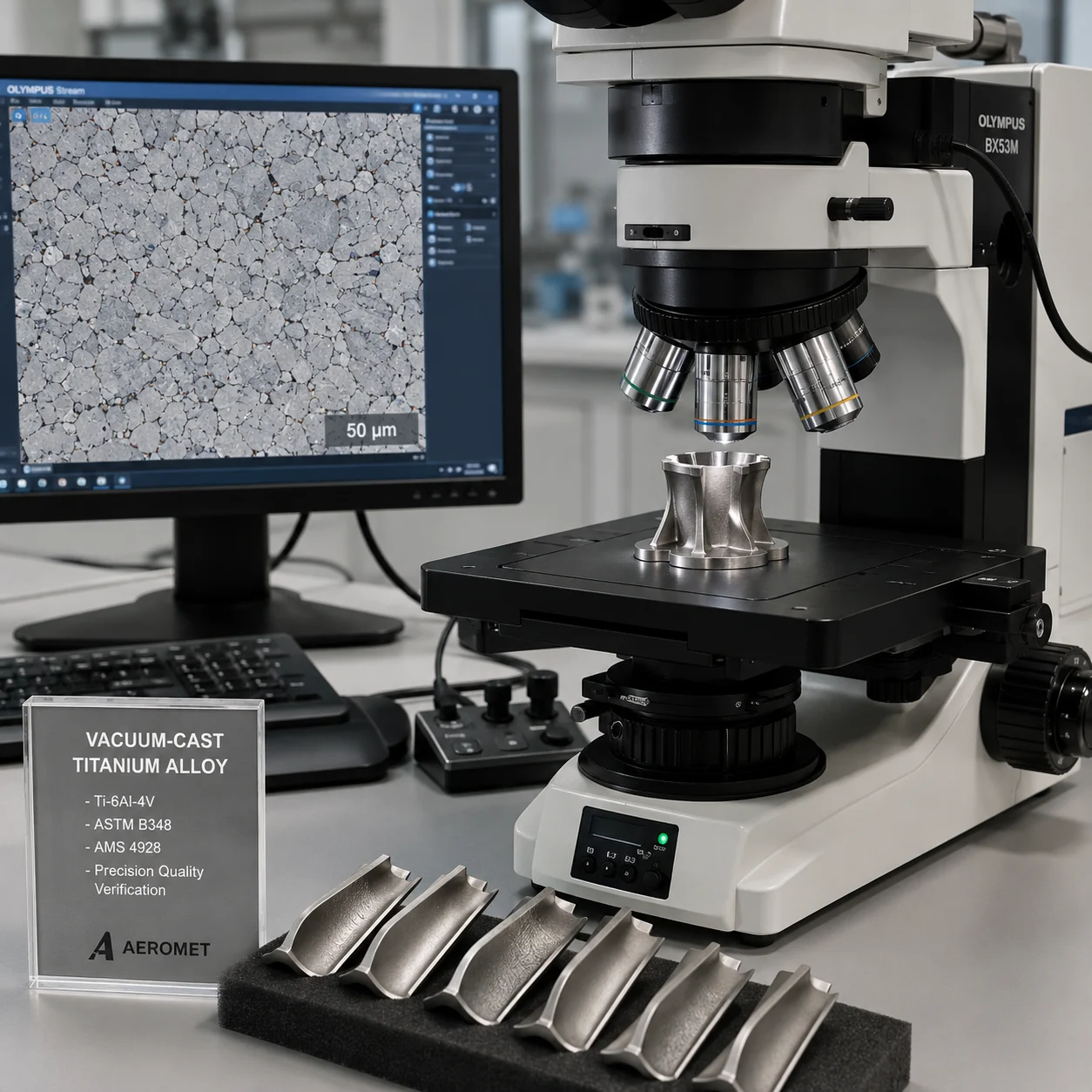
Vastmaterial provides comprehensive titanium casting services utilizing commercial pure titanium and advanced titanium alloys optimized for severe operating environments. Each material grade is cast under precise vacuum-induction melting and controlled atmospheric conditions to deliver the mechanical integrity, corrosion resistance, and strength-to-weight ratios demanded by high-stakes industrial applications. For components requiring elevated temperature stability, we also support complementary high-temperature alloy solutions.
Evaluating specific titanium material properties is critical for engineers developing components for aerospace structures, medical implants, subsea chemical processing, and lightweight high-stress machinery. Selecting the ideal grade ensures your custom titanium components resist catastrophic failure, optimize weight distribution, and prolong equipment service life.
| Alloy Grade | Key Properties | Typical Applications |
|---|---|---|
| Commercially Pure Titanium (Grade 1 & Grade 2) |
| Chemical process equipment, marine plumbing systems, desalinization heat exchangers, and chlor-alkali valves |
| Ti-6Al-4V (Grade 5 Titanium Alloy) |
| Aerospace structural components, jet engine brackets, orthopedic medical implants, and high-end automotive racing parts |
| Specialty Titanium Alloys | Custom-formulated alpha, near-alpha, and beta titanium alloys evaluated individually for precise yield strengths, elevated temperature performance, or specialized corrosion profiles. | Niche defense systems, deep-sea exploration enclosures, and tailored surgical instruments requiring specific metallurgical compliance |
Vastmaterial’s dedicated metallurgy and materials engineering team provides expert guidance during the Design for Manufacturability (DFM) phase to determine the most cost-effective and reliable titanium grade for your project's unique load profiles and environmental exposure. By controlling interstitial elements during vacuum investment casting, we ensure the structural uniformity of every pour.
While commercial pure titanium and Ti-6Al-4V represent the vast majority of all titanium alloy casting requirements globally, our foundry operations are fully scalable to handle specialized material standards. Every batch is supported by full material traceability reports, chemical composition analyses, and certified destructive or non-destructive testing options to guarantee strict compliance with ASTM, ISO, and aerospace quality standards.
Core Metallurgical Performance Characteristics
- Immunity to Severe Corrosion: Titanium forms a stable, instantaneous oxide passivation layer that withstands aggressive acids, marine saltwater, and extreme organic chemicals.
- Extreme Strength-to-Weight Efficiency: Delivers the mechanical yield strength of heavy carbon steel alloys while stripping away roughly 45% of the total component mass.
- High Fatigue Life: Resistant to structural micro-cracking and material fatigue caused by continuous stress cycles, making it irreplaceable for aerospace and long-term medical implants.
- Optimized Post-Cast Processing: Microstructures are refined through controlled hot isostatic pressing (HIP) and thermal treatments to maximize both weldability and downstream precision CNC machining characteristics.
- Certified Biocompatibility: Chemically inert properties ensure that designated implant grades naturally integrate with human tissue and bone without triggering adverse immune responses.
Titanium Casting Applications Across Critical High-Performance Industries
Titanium casting delivers an unparalleled strength-to-weight ratio, exceptional corrosion resistance, and structural integrity that alternative metals cannot match. These distinct mechanical properties make custom titanium components indispensable for advanced industrial sectors. Our precision titanium alloy casting services support demanding applications from mission-critical aerospace structures to sterile medical environments, ensuring reliable field operation under extreme stress and thermal fluctuations.
By combining high tensile strength with biological compatibility and chemical inertness, high-precision titanium castings meet the rigid regulatory and safety standards of modern engineering. Vastmaterial utilizes state-of-the-art vacuum investment casting technology to manufacture complex, thin-walled titanium components optimized for durability, weight reduction, and long-term lifecycle cost-efficiency.
Aerospace & Aviation
Structural fuselage connectors, engine accessory brackets, hydraulic housing units, and fuel system components utilizing Ti-6Al-4V to minimize weight while ensuring high fatigue resistance for critical flight operations.
Medical & Biomedical Implant
Highly biocompatible orthopedic implants, hip joint replacements, spinal fixation cages, specialized surgical instruments, and dental abutments that require precision tolerances and pristine, contaminant-free surfaces. Explore our dedicated medical investment castings services for more specialized solutions.
Chemical Processing & Marine
Corrosion-resistant industrial valve bodies, heavy-duty pump housings, marine piping connectors, and heat exchanger elements engineered to withstand aggressive chemical media, acids, and continuous saltwater exposure.
Robotics & High-End Equipment
Lightweight robotic joint brackets, precision armatures, high-speed automated machinery fixtures, and specialized manufacturing tools where reducing inertial mass directly optimizes system performance and speed.
Motorsport & Automotive
High-performance engine valvetrain parts, suspension uprights, turbocharger impellers, and custom chassis structural linkages designed to optimize power-to-weight ratios and endure extreme thermal environments.
Don't see your specific sector listed above? Vastmaterial pairs deep metallurgic expertise with a highly versatile casting infrastructure to tailor specialized titanium alloy solutions for unique, emerging industry requirements. Our advanced non-destructive testing (NDT) protocols guarantee that every custom component adheres strictly to your application's precise regulatory specifications and performance benchmarks.
When to Choose Titanium Casting Instead of Other Solutions
Selecting the right material and manufacturing process requires a careful balance of mechanical performance, weight targets, component complexity, and long-term operating costs. For high-performance applications, custom titanium casting provides an unmatched strength-to-weight ratio and exceptional corrosion resistance that traditional alloys simply cannot deliver at a comparable total cost of ownership.
This engineering analysis highlights the specific technical thresholds and operating conditions where investment titanium casting outclasses stainless steel casting, aluminum components, and multi-axis CNC machining from solid billet. For complex near-net-shape parts where tight tolerances and repeatability are critical, many teams rely on advanced vacuum investment casting services to achieve both performance and cost targets.
| Evaluation Criteria | Titanium Alloy Casting (e.g., Ti-6Al-4V) | Stainless Steel Investment Casting | Aluminum Casting / Billet Machining |
|---|---|---|---|
| Strength-to-Weight Ratio | Superior – Delivers exceptional tensile and fatigue strength at nearly half the weight of steel. | Moderate – High absolute strength but carries severe weight penalties for structural applications. | Good – Highly lightweight but yields significantly lower tensile strength and temperature limits. |
| Corrosion & Chemical Resistance | Exceptional – Instantly forms a stable passive oxide film; immune to seawater, chlorides, and nitric acids. | Good – Resists general atmospheric corrosion but vulnerable to pitting and crevice corrosion in marine environments. | Limited – Requires specialized anodizing or protective coatings to prevent galvanic and atmospheric oxidation. |
| Material Yield & Initial Cost | Premium raw material costs, but casting minimizes expensive scrap compared to hog-out machining. | Economical – Moderate material and processing costs for standard commercial applications. | Lowest – Highly abundant and cost-effective material pricing, though tool wear varies. |
| Manufacturing Complexity | Advanced – Demands specialized vacuum skull melting and inert gas control to eliminate oxygen contamination. | Standard – Well-established atmospheric melting and conventional investment foundry tooling. | Variable – Straightforward die casting or high-speed CNC milling for low-to-medium complexity shapes. |
| Primary Application Fields | Aerospace structural components, biomedical implants, deep-sea exploration, and high-end racing. | Industrial valve bodies, pump impellers, chemical processing equipment, and heavy machinery. | Automotive housings, consumer electronics, consumer goods, and low-stress brackets. |
Transitioning to titanium alloy casting is the optimal choice when component weight reduction directly impacts system efficiency and when premature failure from corrosion is completely unacceptable. Aerospace flight hardware, orthopedic medical implants, and subsea oil and gas components routinely rely on titanium to perform under extreme operational stress.
When compared directly to machining complex titanium parts from solid bar or billet, Vastmaterial's vacuum casting method offers unparalleled geometric freedom. It eliminates expensive material waste, minimizes multi-axis setup time, and achieves intricate thin-walled configurations or hollow interior passageways that are economically unfeasible to machine.
While the upfront tooling and specialized processing of titanium demand a higher initial investment, the dramatic reduction in replacement cycles, downtime, and fuel or energy consumption delivers a significantly lower lifetime cost in critical environments.
- Ideal Scenarios for Titanium Casting: High sensitivity to structural weight, continuous exposure to harsh marine or chemical media, strict biocompatibility mandates, and complex near-net shapes requiring tight tolerances.
- When Alternatives are Preferred: Purely cost-driven commercial projects lacking demanding mechanical stresses, or high-volume consumer applications that can safely utilize aluminum or commercial-grade stainless steel.
Vastmaterial's metallurgy specialists will analyze your 2D/3D drawings to help you optimize performance and production costs.
Titanium Casting Tolerances, Defect Control & Quality Standards
Achieving exceptional dimensional precision and structural integrity in titanium alloy casting is mandatory for high-stress industrial applications. At Vastmaterial, our advanced vacuum titanium casting foundry operates under strict quality management systems to ensure that every finished component meets your exact engineering prints, mechanical specifications, and international regulatory compliance.
Our specialized titanium casting quality control infrastructure integrates rigorous non-destructive testing (NDT) with state-of-the-art metallurgical verification. By controlling interstitial elements such as oxygen and nitrogen during the vacuum melting and pouring phases, we minimize sub-surface defects, delivering high-purity titanium parts with optimal fatigue strength and reliable performance through our precision casting services.
Dimensional Precision & Surface Finishing Capabilities
- ● Casting Tolerances: Standard linear dimensional tolerances range from ±0.1 mm to ±0.3 mm, conforming closely to precision investment casting standards like ISO 8062 and standard specifications for titanium alloy components.
- ● Surface Roughness: Typical as-cast surface finishes range from Ra 1.6 μm to 3.2 μm, which can be further refined down to Ra 0.8 μm or better via secondary CNC machining and precision polishing.
- ● Thin-Wall Configurations: Advanced shell-building techniques support net-shape or near-net-shape complex profiles with thin-wall sections down to 1.5 mm, minimizing overall component weight.
Defect Management & Non-Destructive Inspection (NDT)
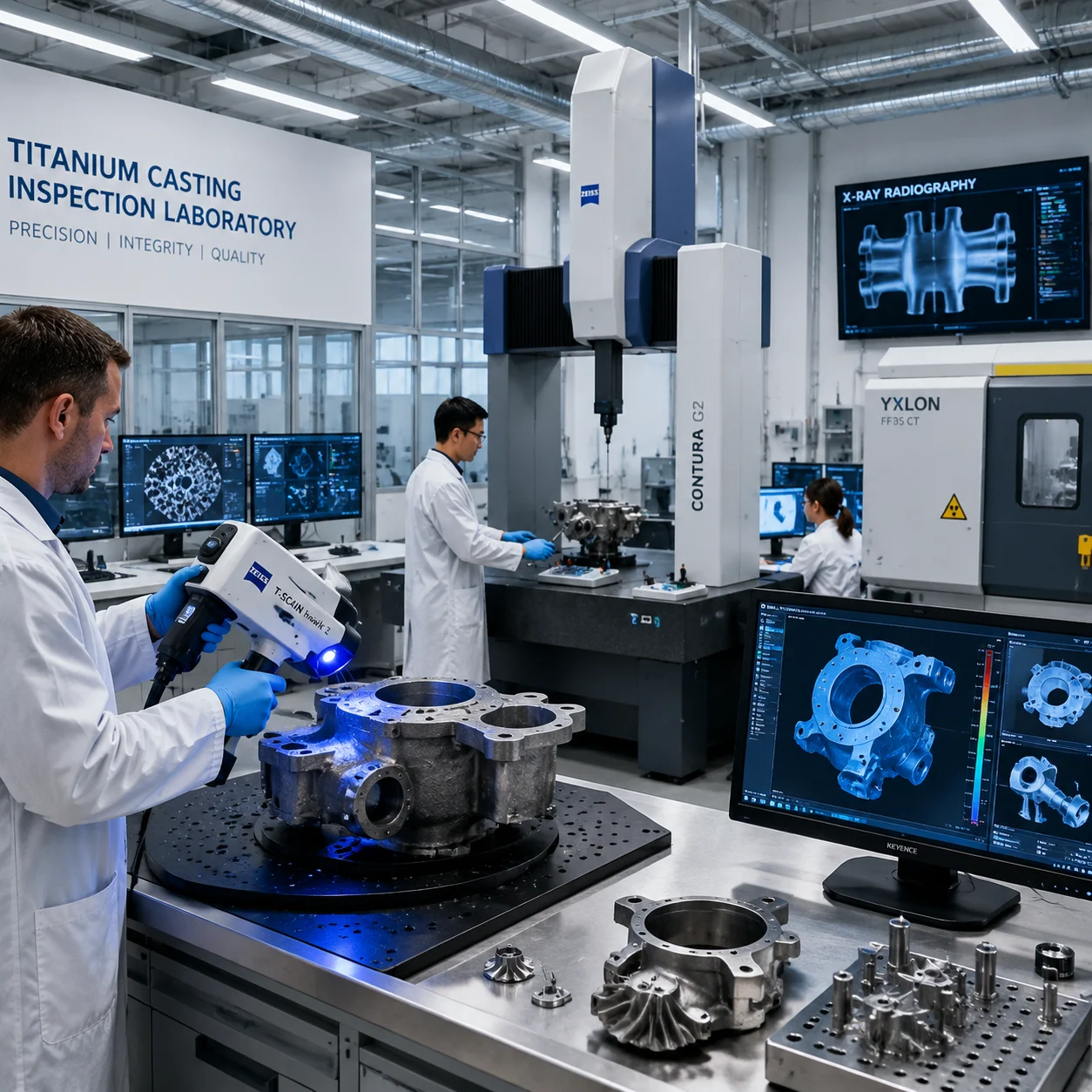
- ● NDT Defect Detection: Comprehensive digital X-ray radiography, ultrasonic testing, and liquid penetrant testing (LPI) isolate micro-porosity, cracks, and alpha-case contamination.
- ● Metrology & 3D Scanning: Automated Coordinate Measuring Machines (CMM) and high-resolution 3D blue-light scanners cross-reference physical dimensions directly against your native CAD models.
- ● Metallurgical & Mechanical Testing: In-house optical emission spectrometry (OES) verifies exact chemical composition (such as Ti-6Al-4V Grade 5), supplemented by tensile, hardness, and microstructural analysis.
- ● Process Control & FAI: Strict First Article Inspection (FAI) and statistical process control (SPC) ensure process stability and part-to-part repeatability across high-volume production runs.
International Standards & Industry Compliance
Vastmaterial’s custom titanium casting services are developed to align with major international material specifications, including ASTM B367, AMS 4928, and ISO 9001 quality guidelines, ensuring complete compliance for safety-critical components.
Whether manufacturing for aerospace assemblies, medical implants, deep-sea marine hardware, or corrosive chemical processing equipment, we easily adapt our testing protocols to fulfill your project’s specific regulatory documentation requirements.
Addressing critical tolerances and non-destructive testing benchmarks during the early design-for-manufacturing (DFM) phase allows our engineering team to optimize tool gating, shell parameters, and pouring parameters. Vastmaterial provides full material traceability, supplying certified material test reports (MTRs), chemical analysis logs, and NDT compliance certificates with each shipment.
Our quality assurance framework covers the entire lifecycle of your project, from tool design and raw alloy sourcing to vacuum casting, hot isostatic pressing (HIP) if required, final precision machining, and surface treatment.
Please include your required inspection criteria, international standards, and tolerance specs in your RFQ to leverage Vastmaterial’s robust quality control capabilities.
From Blueprint to Batch: Our Titanium Casting Project Workflow
At Vastmaterial, our standardized engineering process bridges the gap between complex geometries and flawless component performance. By combining meticulous DFM analysis with vacuum investment casting protocols, we mitigate risk and accelerate your time-to-market, leveraging the same disciplined workflow we apply to our low-carbon-steel casting workflow.
1. RFQ & Engineering Consultation
Submit your 3D CAD files, alloy specifications (e.g., Ti-6Al-4V or CP-Ti), and testing standards. Our engineering team reviews the geometry within 24 hours to assess thin-wall feasibility and optimize gating locations.
2. Tooling Fabrication & Pattern Making
We precision-engineer high-durability wax injection molds or deploy ultra-precise 3D-printed patterns. This stage forms the backbone of complex internal channels and fine surface features, typically taking 2–4 weeks.
3. Ceramic Shelling & First-Article Approval
We build robust, non-reactive refractory shells to withstand reactive molten titanium. Following controlled atmosphere vacuum pouring, initial samples undergo comprehensive NDT inspection and are shipped for your final validation (3–5 weeks).
4. Controlled Mass Production Setup
Upon receiving sample approval, we freeze the process parameters, source certified ingot lots, and calibrate our automated shelling and vacuum-melting systems to ensure repeatable chemical homogeneity and structural integrity.
5. Precision Machining & Quality Control
As-cast components undergo high-vacuum gating removal, gating-area blend grinding, multi-axis CNC machining for critical tolerances, and meticulous quality validation (including X-ray and dye penetrant testing) to meet ASTM or ISO standards.
6. Traceable Delivery & Supply Chain Scaling
Every shipment includes complete material composition and mechanical performance reports. Vastmaterial offers scalable batch runs and flexible delivery schedules to align perfectly with your ongoing assembly demands.
Optimized Lead Times for Demanding Schedules
While exact timelines scale based on custom geometric complexity, gate configurations, and non-destructive testing requirements, our typical prototype-to-production lifecycle ranges from 8 to 14 weeks. Early technical alignment remains key to compressing development timelines.
Advanced Foundry Infrastructure for High-Precision Titanium Casting
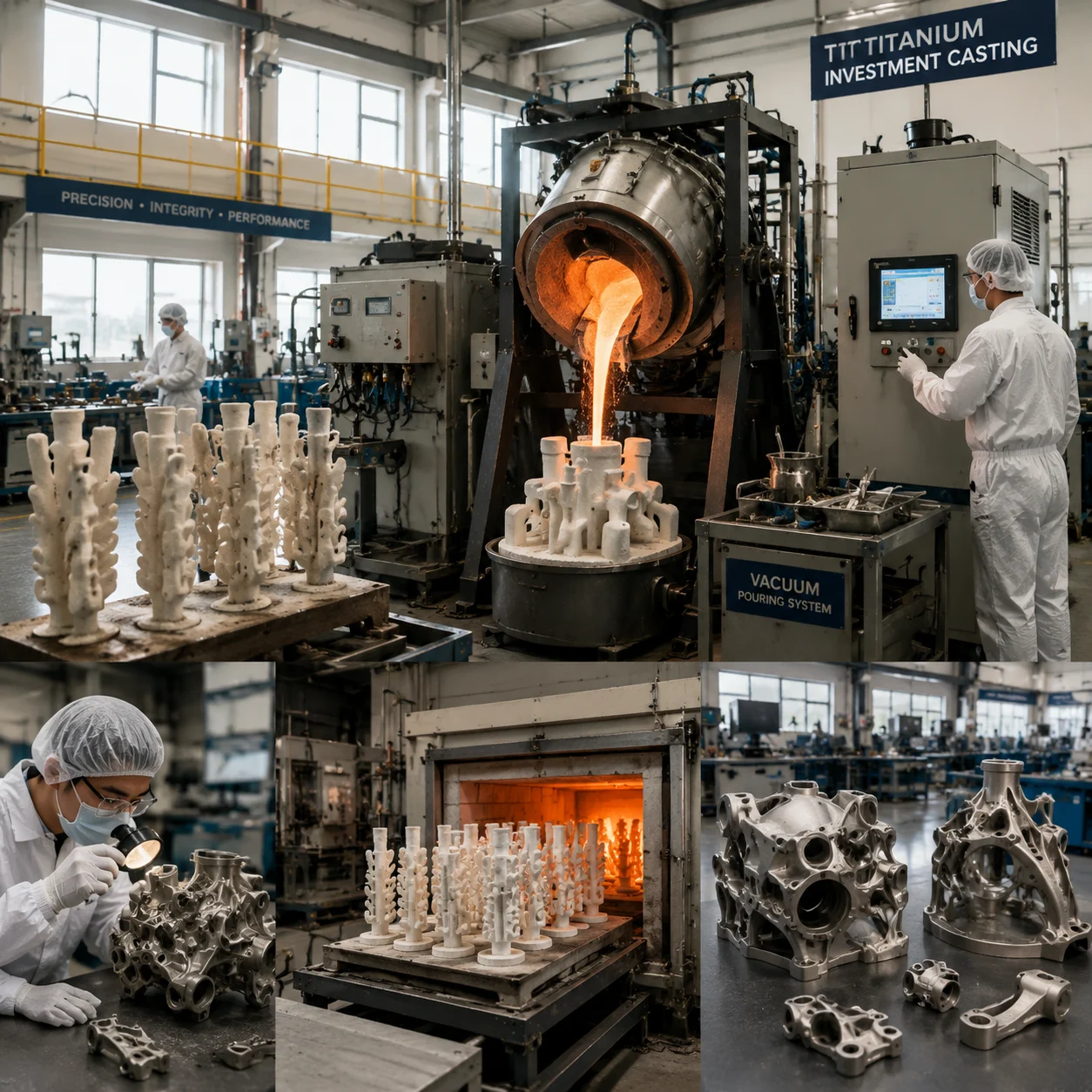
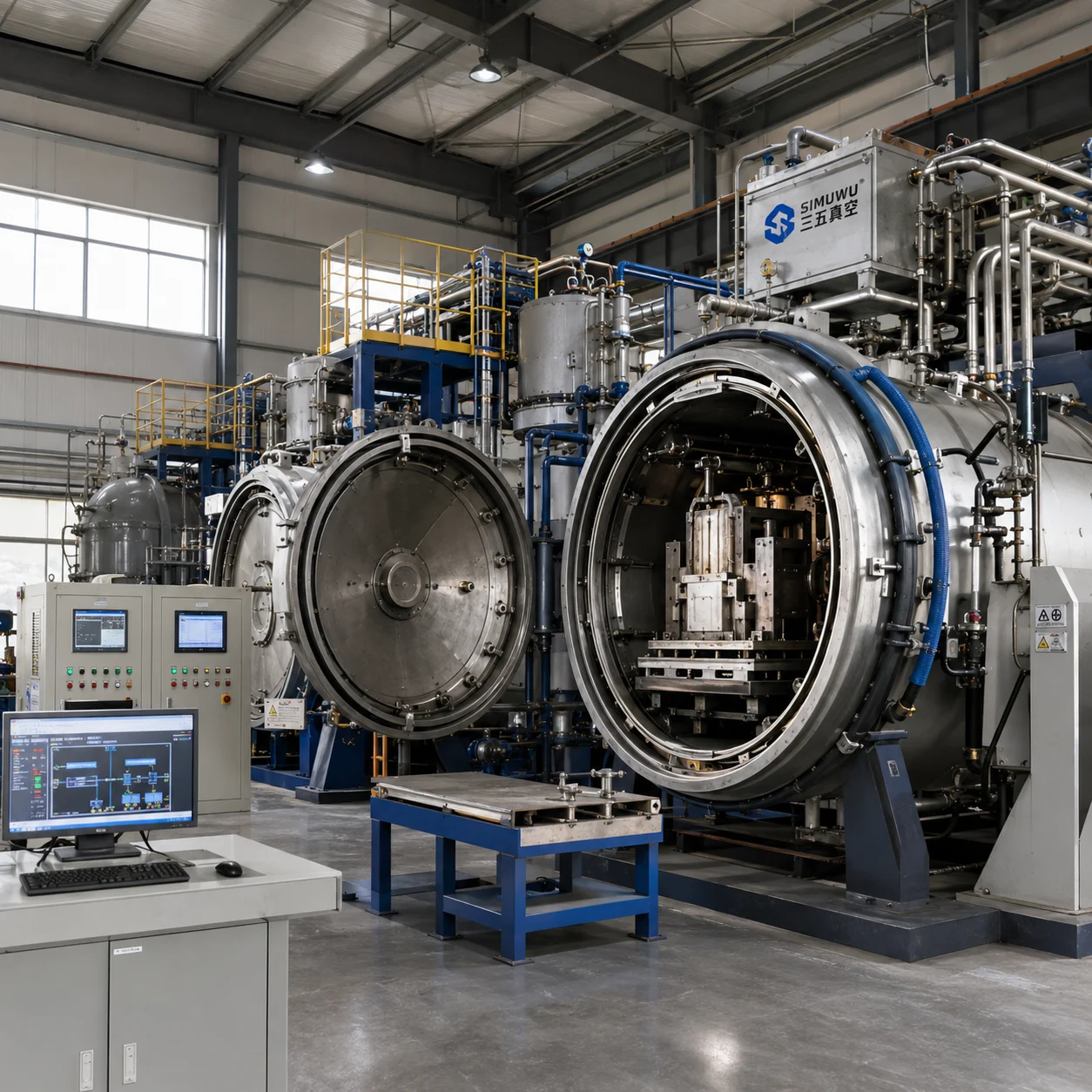
Vastmaterial backs your critical projects with a dedicated titanium alloy casting line, integrating vacuum investment casting and advanced metallurgy. Our infrastructure is engineered to prevent atmospheric contamination, control gas inclusions, and deliver stable, repeatable mechanical properties for demanding industrial applications in equipment manufacturing and related sectors.
- Controlled-Atmosphere Equipment: Equipped with advanced vacuum melting and casting furnaces to eliminate oxygen pick-up and alpha-case defects.
- Specialized Titanium Engineering Team: Metallurgists and specialists with years of experience in DFM optimization, custom mold gating, and thermal processing.
- Scalable Production & NDT: Robust monthly capacity for serial production, integrated with rigorous in-house non-destructive testing including X-ray, dye penetrant, and 3D coordinate scanning.
Titanium Casting FAQ: Engineering, Logistics & Quality Control
The engineering team at Vastmaterial has compiled this detailed FAQ to address common technical inquiries regarding titanium alloy casting, vacuum processing, and quality compliance. Whether you are evaluating material capabilities for aerospace systems or specifying non-destructive testing for medical implants, these insights help streamline your procurement and design process. For additional details on our testing and quality procedures, please refer to our technical resource center.
Have an unlisted technical requirement or a project-specific specification? Speak directly with our engineering team for personalized support.
Consult a Titanium Casting EngineerReady to Start Your Titanium Casting Project?
Submit your 3D designs, material specs, and volume requirements below. The engineering team at Vastmaterial will conduct a thorough DFM review and deliver a comprehensive feasibility assessment and quotation within 24 hours. We strictly respect and protect your drawing data and privacy. If you would like to learn more about our background and engineering capabilities, please visit our about page.