

High-Precision CNC Prototype Machining Services
Bridge the gap between design and production. Vastmaterial delivers rapid, high-fidelity functional prototypes and low-volume trials machined from production-grade metals with uncompromising dimensional accuracy.
Strict NDA protection for all IP. Full dimensional inspection reports and material certifications provided upon request to ensure engineering compliance.
Engineered Machined Prototypes & Low-Volume Production for Hardware R&D
Concept & Form Validation
- • Rapid physical verification for early stage designs
- • Precise spatial fitment and assembly interference checks
- • Optimized setup for quick-turn cosmetic and structural evaluation
3D STEP/IGS Files & 2D Reference Drawings
Functional & Engineering Prototypes
- • Built for rigorous field tests and mechanical validation
- • Machined via CNC Milling from specified end-use alloys and high-temp metals
- • Withstands intended mechanical loads, thermal stress, and pressure
3D CAD & Full Toleranced 2D Blueprints
Low-Volume Prototype Production
- • Bridges the gap between rapid testing and series scale-up
- • Ideal for pilot manufacturing runs and assembly line validation
- • Provides high-precision prototype CNC Turning parts for regulatory compliance
Formally Released 3D/2D Engineering Data
Vastmaterial’s technical team evaluates your current R&D stage to recommend the most cost-effective machining setup, secondary processing allowances, and optimal geometric delivery configurations.
Overcoming R&D Bottlenecks with Rapid Prototype Machining Service Expertise
Challenge 01
Material Discrepancies in 3D Printing & Additive Alternatives
Standard additive manufacturing methods often fail to recreate the precise mechanical, thermal, or isotropic properties of end-use metals. This limitation results in unreliable testing data during critical functional verification and stress testing phases.
Challenge 02
Unstable Assembly Fits & Distorted Kinematic Performance
Imprecise tolerances on critical mating surfaces, complex bore systems, and structural alignment datums trigger unpredictable assembly stack-ups. These geometric deviations skew evaluation results and delay the verification of complex metal assemblies.
Challenge 03
Compounding Risks and High Costs of Frequent Design Iterations
Modifying intricate components repeatedly during the early R&D cycles can lead to exponential tooling costs and cascading scheduling delays when utilizing conventional, rigid production workflows that lack agile revision management.
Challenge 04
Siloed Scaling & Technical Disconnects from Prototype to Production
Engineered machined prototypes developed via isolated, unscalable processes often require complete re-engineering before transitioning to series manufacturing. This disconnect introduces quality variances, unexpected cost spikes, and manufacturing risks.
✔ Authentic Material Integrity
Our CNC prototype machining service cuts parts directly from native, wrought, or cast alloy billet stock. This approach guarantees 100% material fidelity, structural density, and predictable thermal behavior—backed by our full range of services.
✔ Tight-Tolerance Alignment
We execute precise metal removal on critical datums, alignment holes, and mating faces. Adhering to strict GD&T standards ensures perfect component interaction and reliable functional performance through our machining service.
✔ Agile CNC Programming
Utilizing flexible, modular workholding allows our engineering team to implement swift design revisions and provide proactive DFM feedback with zero hard-tooling lock-in, including options like CNC Milling service support for complex features.
✔ Unified Process Mapping
We align early-stage prototype part machining with downstream production strategies, preserving primary toolpath logic and inspection baselines for a seamless transition.
Leveraging deep expertise in investment casting and multi-axis CNC engineering, Vastmaterial front-loads vital manufacturability insights directly into your rapid prototyping machining phase. This collaborative technical review eliminates downstream production bottlenecks, protects structural integrity, and accelerates your overall product development cycle.
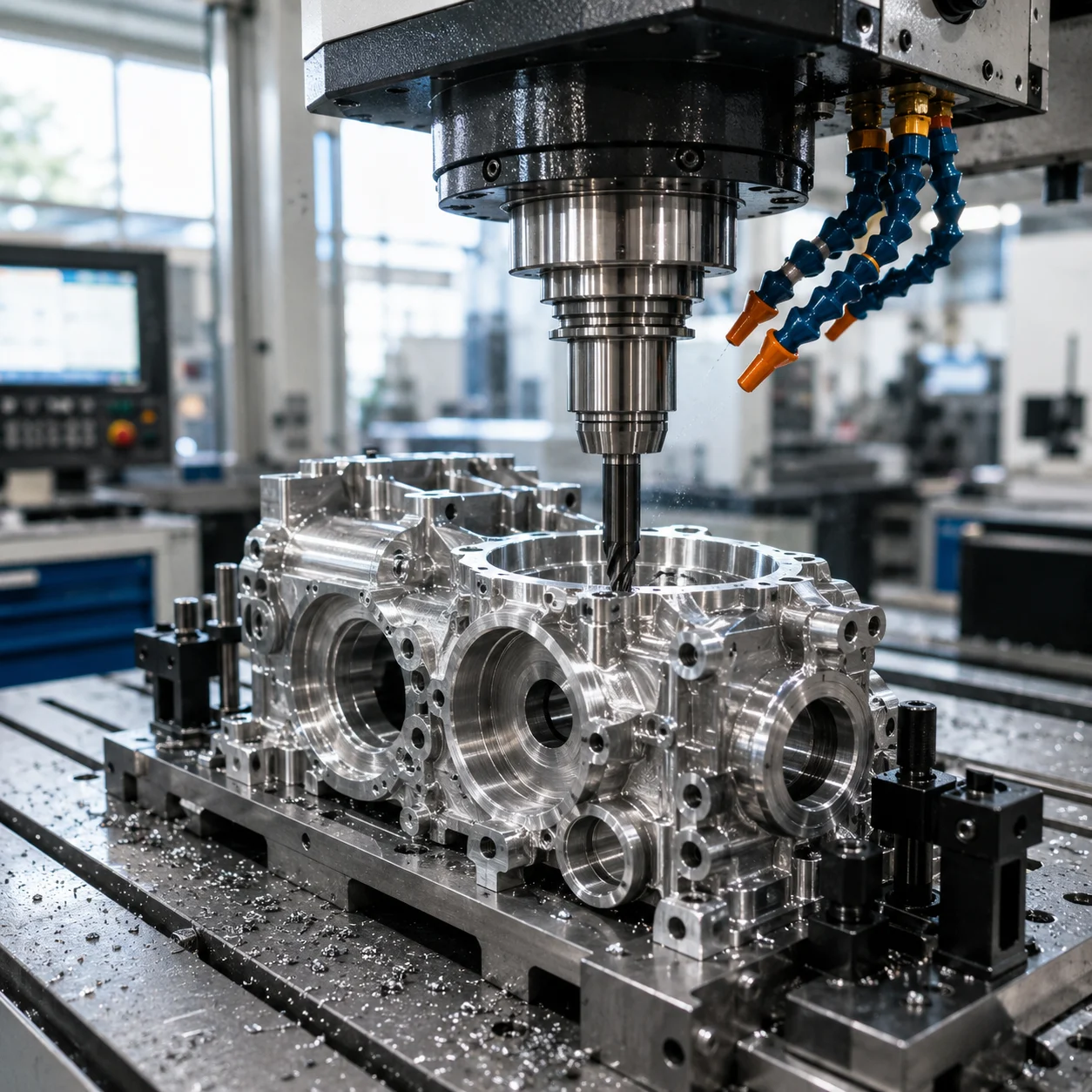
Advanced Prototype CNC Machining Capabilities for Complex Metal Parts
Multi-Axis CNC Milling (3, 4, and 5-Axis)
Precision CNC Turning & Live-Tooling
High-Accuracy Deep Boring & Tapping
Critical Mating Face & Interlocking Profiles
Micro-Deburring & Edge Blending
Controlled Surface Roughness (Ra) Profiling
Custom Fixturing for Thin-Walled Parts
Dimensional Inspection & CMM Validation
Vastmaterial leverages rigid workholding strategies and stable toolpath execution, ensuring that volatile, highly complex prototypes maintain geometrical stability, strict blueprint alignment, and total structural repeatability.
Dimensional Rigor and Quality Validation for Prototype Builds
Vastmaterial delivers precision-targeted machining down to tight linear and geometric limits on critical-to-function dimensions. Our standard CNC prototype machining practices default to international commercial standards like ISO 2768-m, while critical interfaces can be custom-engineered to meet strict tolerance stacks required for your specific assembly validation.
By optimizing the fixture setup and machining sequence during the rapid prototyping phase, we isolate tool deflection and thermal variances. This ensures that your tight tolerance prototype CNC parts maintain structural integrity and dimensional stability, bridging the gap between design intent and physical testing.
- Linear tolerances down to ±0.005 mm on critical features
- Geometric tolerances (flatness, parallelism, perpendicularity) per ISO 2768
- Custom tolerance stacks for multi-part assembly validation
- Full GD&T annotation support for complex functional interfaces
Surface finish control for machined prototypes goes beyond aesthetics; it directly impacts seal integrity, friction coefficients, and fatigue life during mechanical testing. We routinely achieve tight surface roughness averages (Ra) across complex tool paths and manage edge break parameters to eliminate burrs without compromising sharp edge features.
Our engineering team factors in stock allowances for downstream operations such as anodizing, passivation, or plating. This proactive approach ensures your machined prototypes fit perfectly within your functional assemblies even after receiving final surface treatments.
- Standard milled finish: Ra 1.6–3.2 µm; mirror-polished options available
- Controlled edge breaks and micro-deburring without altering sharp features
- Pre-plating stock allowances calculated per coating specification
- Compatible with anodizing (Type II & III), electroless nickel, and hard chrome
De-risking the product development lifecycle requires absolute transparency. Every rapid prototype machining run is backed by robust verification, utilizing advanced coordinate measuring machines (CMM), optical comparators, and calibrated digital gauging to check intricate internal profiles and true positions.
Vastmaterial delivers metrology and testing protocols to match your project's precise risk profile. We provide comprehensive dimensional inspection reports, material traceability sheets, and certificates of conformance (CoC) upon request, ensuring your prototype performs exactly as simulated.
- CMM inspection with full point-cloud reporting for complex geometries
- First Article Inspection (FAI) reports aligned with AS9102 or PPAP formats
- Material certifications and heat/lot traceability on request
- Certificates of Conformance (CoC) issued for every qualified run
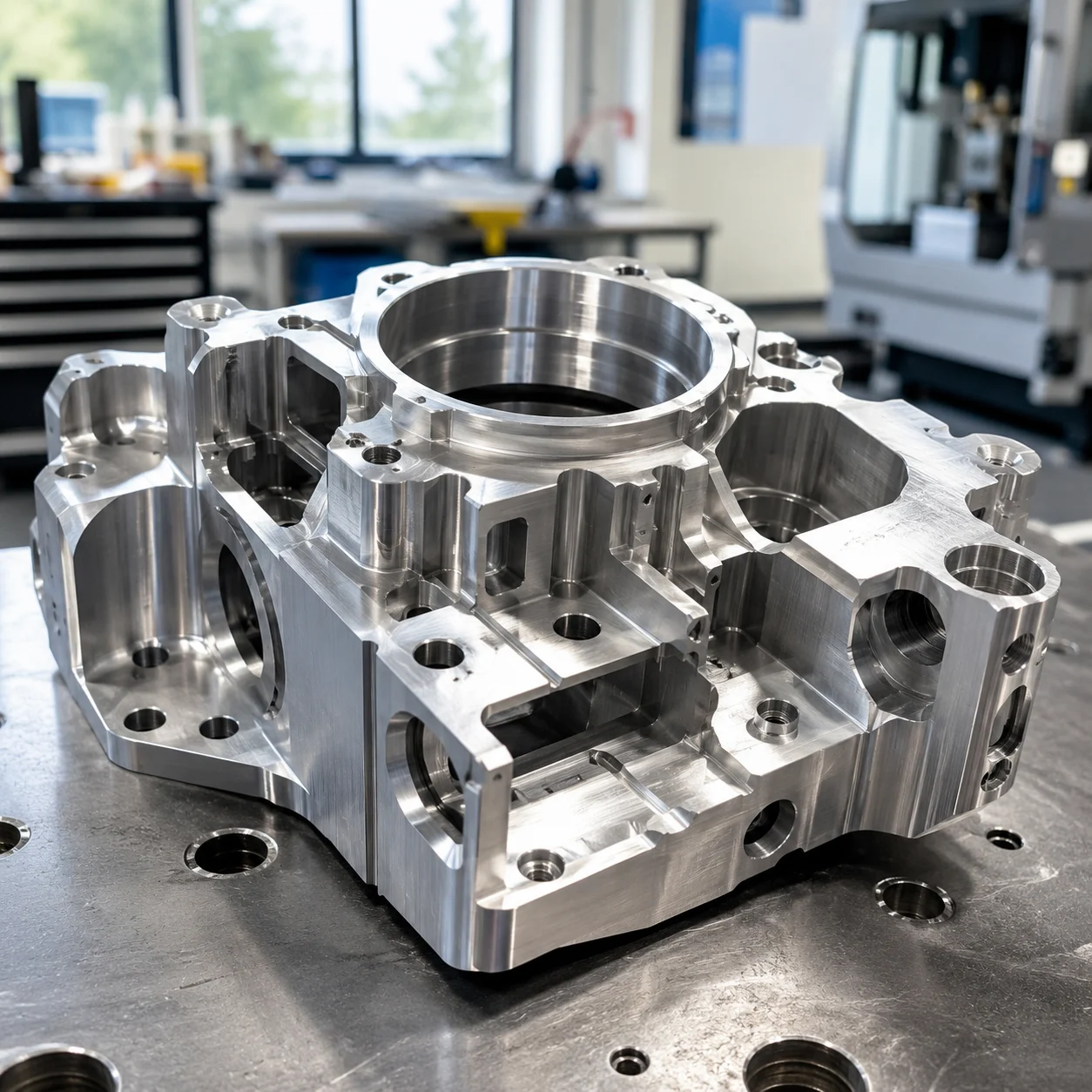
Prototype Machining Tolerances
Vastmaterial delivers precision-targeted machining down to tight linear and geometric limits on critical-to-function dimensions. Our standard CNC prototype machining practices default to international commercial standards like ISO 2768-m, while critical interfaces can be custom-engineered to meet strict tolerance stacks required for your specific assembly validation.
By optimizing fixture setups and tool paths, we eliminate variances to ensure that your prototype CNC parts maintain absolute dimensional stability.
- Linear tolerances down to ±0.005 mm on critical features
- Full GD&T annotation support
- Custom tolerance stacks for assembly validation
Surface Finish for Machined Prototypes
Surface finish control for machined prototypes ensures parts meet specified roughness averages (Ra) for critical sealing, wear, and structural tests. We expertly manage edge break parameters, micro-deburring, and specific material allowances to accommodate downstream processes like plating or anodizing. This guarantees that your prototype's functional aesthetics and engineering tolerances are preserved through every phase of testing.
- Standard milled finish: Ra 1.6–3.2 µm
- Pre-plating stock allowances included
- Compatible with anodizing, electroless nickel, hard chrome
CMM Inspection & Quality Reports
Rigorous validation is performed using coordinate measuring machines (CMM), optical comparators, and precision digital gauging tools. Vastmaterial provides full dimensional inspection reports, material traceability sheets, and certificates of conformance upon request. Our tailored metrology protocols align with your strict engineering requirements, ensuring your components perform reliably in real-world environments.
- CMM point-cloud reporting for complex geometries
- FAI reports aligned with AS9102 or PPAP
- CoC and material traceability on request
When submitting your prototype machining RFQ, please explicitly highlight:
- 1 Critical Datums & Alignment Features
- 2 Mating Tolerances & Interference Zones
- 3 Target Surface Finishes (Ra Values)
- 4 Post-Processing & Plating Plans
Materials for Prototype Machining: Validating Performance via Production-Grade Alloys
Engineering Material Tip
For reliable functional verification and stress testing, always select the exact alloy intended for final production. If your current phase only requires physical form validation or kinematic fit checks, consult our engineering team to recommend readily machinable alternative metals that can significantly reduce raw material costs and turnaround times.
Stainless Steel Prototype Machining
Ideal for medical devices, marine hardware, and chemical processing components. We achieve tight tolerances on stable grades like 304 and 316L, as well as high-strength precipitation-hardening alloys like 17-4 PH, ensuring excellent surface finish and dimensional stability.
Heat-Resistant & Carbon Steels
Optimized for high-stress powertrain parts, industrial tools, and structural frameworks. Our rapid prototype machining service handles heavy-duty carbon steels and specialized heat-resistant grades, providing the rugged durability required for severe mechanical environments.
Low-Alloy Steel Prototyping
Perfect for automotive suspension components, oilfield downhole tools, and high-impact aerospace brackets. Utilizing materials like 4140 and 4340, we deliver machined prototypes that match the exact fatigue limits and hardening characteristics of your production run.
High Temperature Alloy Prototypes
Engineered for aerospace propulsion, motorsport exhaust systems, and nuclear applications. We specialize in heat resistant alloy machining for challenging superalloys including Inconel, Hastelloy, and Cobalt-Chromium, ensuring precise geometry despite high work-hardening rates.
Non-Ferrous Alloys (Aluminum / Copper / Brass)
Widely specified for electronic enclosures, thermal management systems, and lightweight structural aerospace parts. Our CNC prototype machining capability, including CNC Milling, covers aircraft-grade aluminum (6061-T6, 7075), high-purity copper, and free-machining brass for accelerated testing turnarounds.
Streamlined Material Selection
Have an absolute material specification or internal standard code? Input it directly into our RFQ tool for a precise assessment. Uncertain about the optimal alloy for your working environment? Simply define your target operating temperatures, corrosive media exposure, and mechanical load limits, and our broader services team and staff metallurgists will recommend the most viable, cost-effective match.
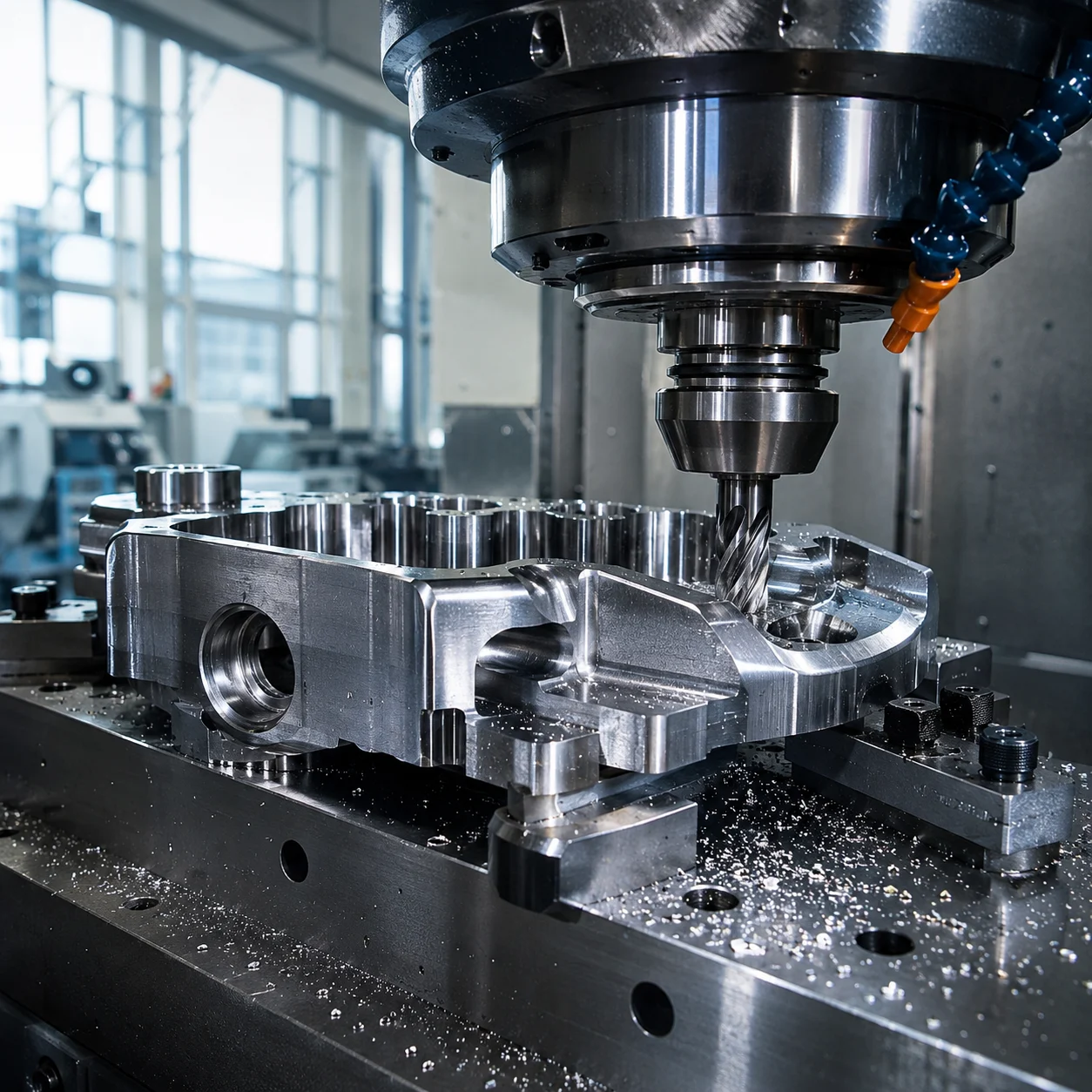
Leveraging our deep domain expertise in severe-service industrial applications and investment casting manufacturing, Vastmaterial routinely machines advanced tool steels, stainless grades, and specialty high-temperature superalloys that generic rapid prototyping shops avoid.
Our Prototype Machining Process: Controlled, Predictable Delivery
- 1
Technical Intake & RFQ Scoping
Customer Input
Submit 3D CAD models, 2D engineering drawings, and functional application requirements.
Vastmaterial Output
Initial manufacturability review, secure NDA verification, and an upfront risk assessment.
⚠ Timeline Driver: Material Sourcing - 2
DFM Review & Optimization
Customer Input
Clarify critical datums, tight tolerance stack-ups, and assembly fits.
Vastmaterial Output
Detailed DFM report with actionable suggestions for cost reduction and faster machining execution.
⚠ Timeline Driver: Design Adjustments - 3
Agile Production Scheduling
Customer Input
Approve the optimized engineering proposal and authorize the rapid prototyping project.
Vastmaterial Output
Locked-in manufacturing schedule, modular fixture planning, and explicit delivery date confirmation.
⚠ Timeline Driver: Custom Fixturing - 4
Precision CNC Machining
Customer Input
Provide optional quality gate metrics or final version-control sign-off.
Vastmaterial Output
Multi-axis CNC milling and CNC turning with in-process dimensional logging and stable feature control.
⚠ Timeline Driver: Complex Toolpaths - 5
Metrology & Protected Dispatch
Customer Input
Specify custom packaging guidelines or documentation requirements.
Vastmaterial Output
Full CMM inspection reports, precise surface finishes, rust prevention, and traceable shipping.
⚠ Timeline Driver: Surface Treatment
The Vastmaterial engineering workflow is specifically optimized to catch geometric anomalies and structural risks during the initial DFM phase, effectively eliminating costly mid-process modifications. By maintaining transparent quality gates and rigorous cross-functional communication, we ensure that your rapid prototype machining service transitions flawlessly from a digital file into a high-precision, assembly-ready metal component.
Fast Turnaround Prototype Machining with Low-Volume CNC Scalability
- Part Complexity & Internal Cavities: Multi-axis geometries and deep pockets often rely on CNC Milling strategies that dictate machining paths and cycle times.
- Material Group Availability: In-stock engineering alloys accelerate setup, while specialized superalloys require tailored tooling.
- Tolerance & Inspection Metrics: Ultra-tight tolerances require strict thermal stabilization and dedicated CMM validation.
- Specialized Surface Treatments: Post-machining finishes like anodizing, passivation, or plating add variable processing steps.
- Custom Fixturing Requirements: Complex or thin-walled prototype CNC parts may necessitate dedicated workholding jigs.
Design Freeze Continuity
Once your machined prototypes pass engineering validation, we lock and preserve the exact CAM programming, custom fixturing setups, and datum baselines to drastically compress the lead time of your subsequent production runs.
Pilot-Scale Quality Control
Seamlessly transition from a single functional prototype to low-volume prototype production. We adapt our statistical process controls and inspection frequencies to maintain absolute part-to-part dimensional consistency across hundreds of units.
Vastmaterial bridges the gap between quick-turn R&D testing and full-scale manufacturing, maintaining single-source engineering accountability from your first rapid prototype machining verification through to low-volume series delivery.
Materializing Your Designs: Choosing the Right Prototyping Pathway
| Evaluation Metric | CNC Prototype Machining | Metal 3D Printing | Prototype Casting |
|---|---|---|---|
| Material Fidelity (Wrought Properties) | 100% material fidelity. Uses real wrought metal billets to match final mass production physical, mechanical, and thermal properties precisely. | Anisotropic properties. Laser-sintered metal powder lacks the dense grain structure, fatigue limits, and shear strength of solid wrought alloys. | Excellent grain structure simulation. Mirrors the true microstructural orientation and integrity of foundational cast components. |
| Dimensional Accuracy & GD&T | Superior capability. Achieves ultra-tight linear tolerances down to ±0.01 mm and precise geometric control over concentricity, flatness, and parallelism. | Moderate control. Thermal stress during layer fusion causes warping, leaving critical dimensions and fine spatial geometries restricted. | Dependent on method. Rapid sand or investment molds yield moderate raw tolerances, requiring secondary machining for critical mating fits. |
| Surface & Thread Integrity | Excellent finish control. Produces clean surface finishes down to Ra 0.8 μm and robust, functional internal/external threads that withstand high torque. | Rough out-of-machine texture. Highly porous surfaces require heavy post-processing; tapped threads suffer from inherent brittleness. | Typical cast texture. Suitable for bulk structural integrity but relies on secondary CNC finishing for tight seals and threaded bores. |
| Initial Tooling Cost | Zero tooling investment. Parts are programmed directly from 3D CAD files via optimized CAM software, making single-unit setups cost-effective. | Zero tooling required. Built directly on a print bed, though raw powder consumption and support removal drive up individual part costs. | Moderate upfront cost. Requires rapid tooling, 3D-printed patterns, or temporary sand molds before the metal pour can begin. |
| Speed for Complex Internal Geometries | Moderate. Limited by tool access and cutting paths; deep internal channels or sharp undercut features require multi-axis setups—often handled efficiently with CNC Milling. | Exceptional. Additive layer manufacturing builds complex organic matrices, internal lattices, and curved cooling channels with ease. | Longer lead times. Requires pattern creation and mold curing, but handles complex thick-walled sections and deep structural cavities efficiently. |
When to Prioritize CNC Machining
- Rigid mechanical testing, high load-bearing verification, or structural metal testing is mandatory for your application.
- Extremely tight linear tolerances and precise geometric fits are required for mating or dynamic components.
- Validating true thread strength, high-pressure seals, and smooth surface finishes is critical for operational testing.
- Setting up a clear, predictable engineering path to seamless low-volume CNC manufacturing or serial production.
When to Look at Metal 3D Printing
- The design features ultra-complex, lightweight organic internal lattices that cannot be accessed by traditional cutting tools.
- Rapid form-fit checks, spatial mockups, or early-stage packaging configurations are needed where strength is a minor concern.
- A quick turnaround aesthetic or non-functional prototype is required to present a geometric concept visually.
When to Evaluate Casting
- Validating heavy structural models with intricate, thick-walled cast geometries before hard tooling investment in precision casting.
- Evaluating structural grain configurations, heat dissipation profiles, and fluid dynamics prior to launching high-volume foundry tooling.
Offering a rare, comprehensive blend of precision CNC machining and advanced casting capabilities under one roof, Vastmaterial provides completely unbiased, application-driven prototyping recommendations. We analyze your design data alongside your target performance metrics to balance engineering risks, project timelines, and overall project budgets. Our cross-disciplinary consultative approach ensures your chosen rapid prototyping route transitions smoothly into a robust, scalable manufacturing roadmap.
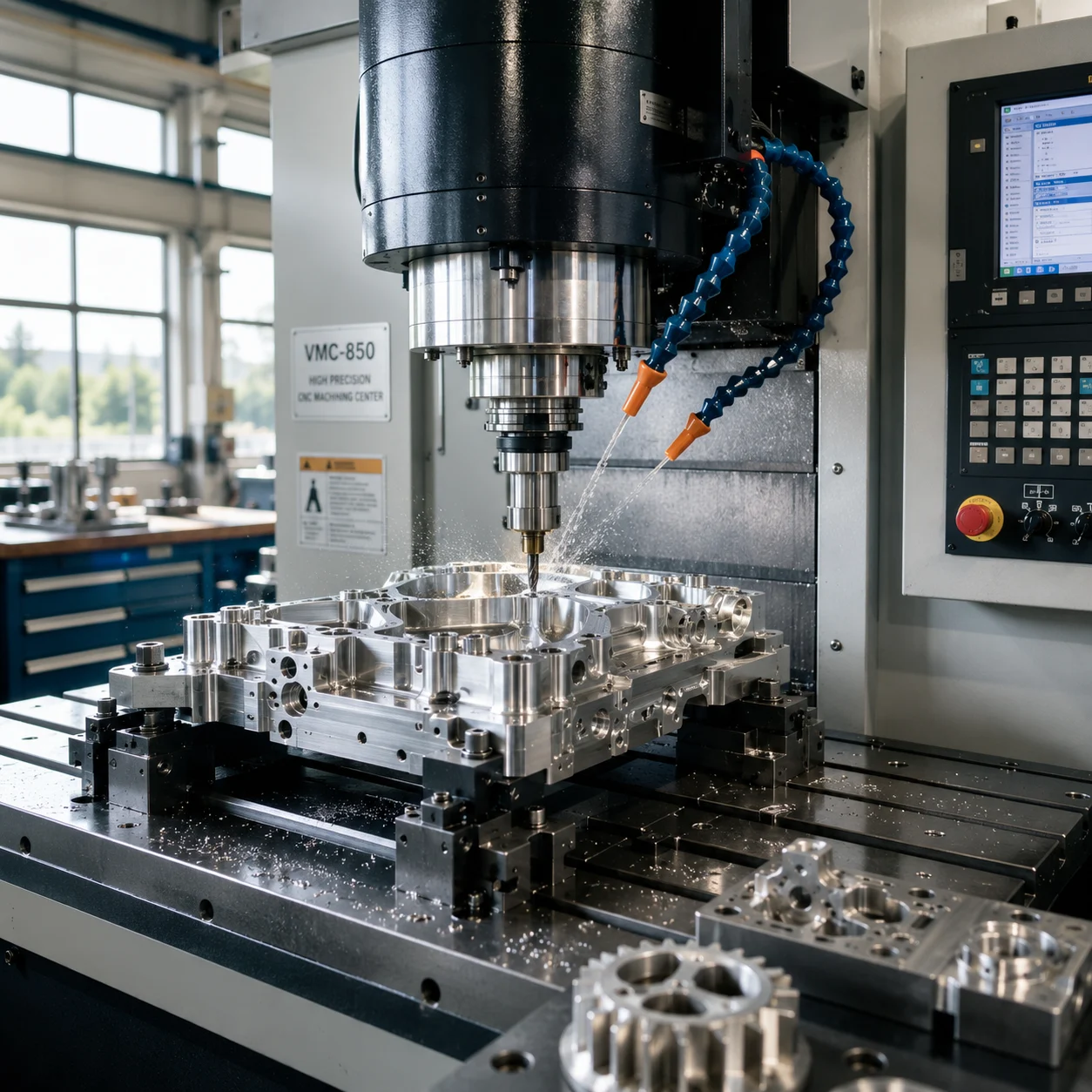
Prototype Machining for Aerospace, Energy, and Heavy Industrial Applications
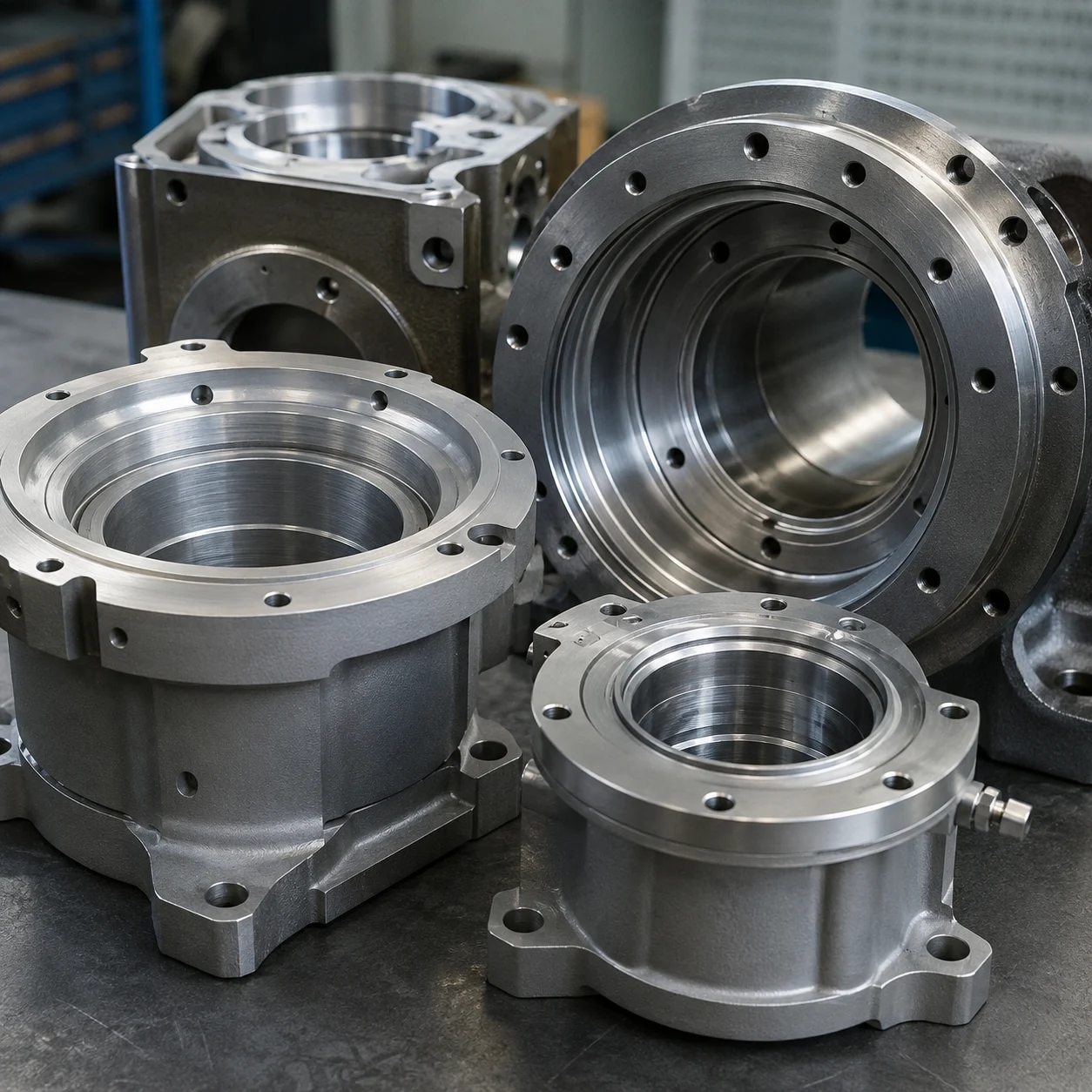
Heavy-Duty Housings & Casings
Precision industrial prototype parts engineered to secure complex assemblies. We machine robust enclosures with a strict focus on axiality and tight sealing faces to guarantee containment under high pressure, supported by our machining services for demanding industrial builds.
Critical Performance Indicators: Concentricity Limits, True Position, Flange Flatness
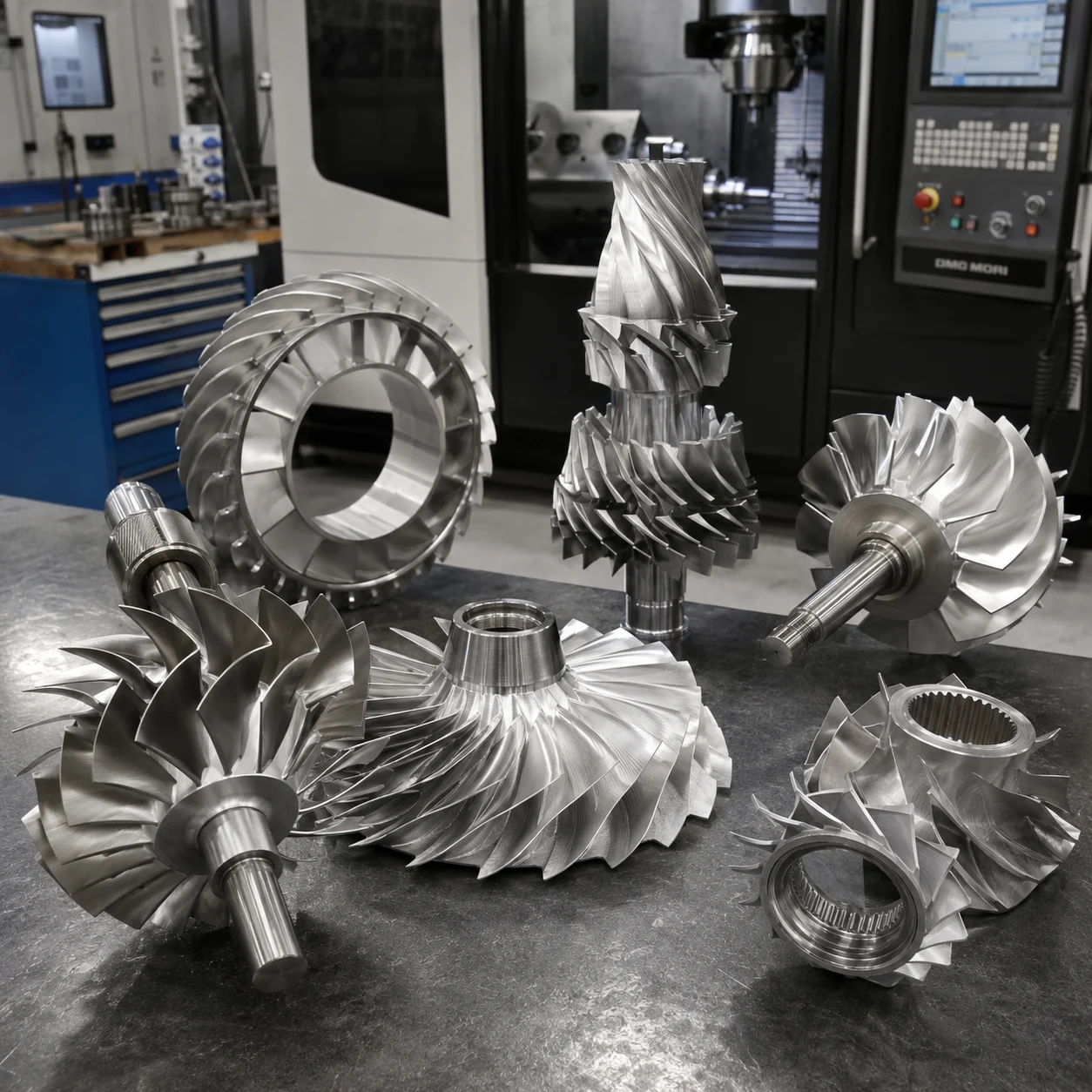
Impellers, Inducers & Bladed Rotors
High-performance metal prototypes for turbo-machinery demand advanced multi-axis workflows. Our CNC Milling service delivers complex 5-axis aerodynamic profiles with exact dynamic balance and zero material degradation.
Critical Performance Indicators: Profile Tolerance, Blade Surface Roughness (Ra), Chord Pitch
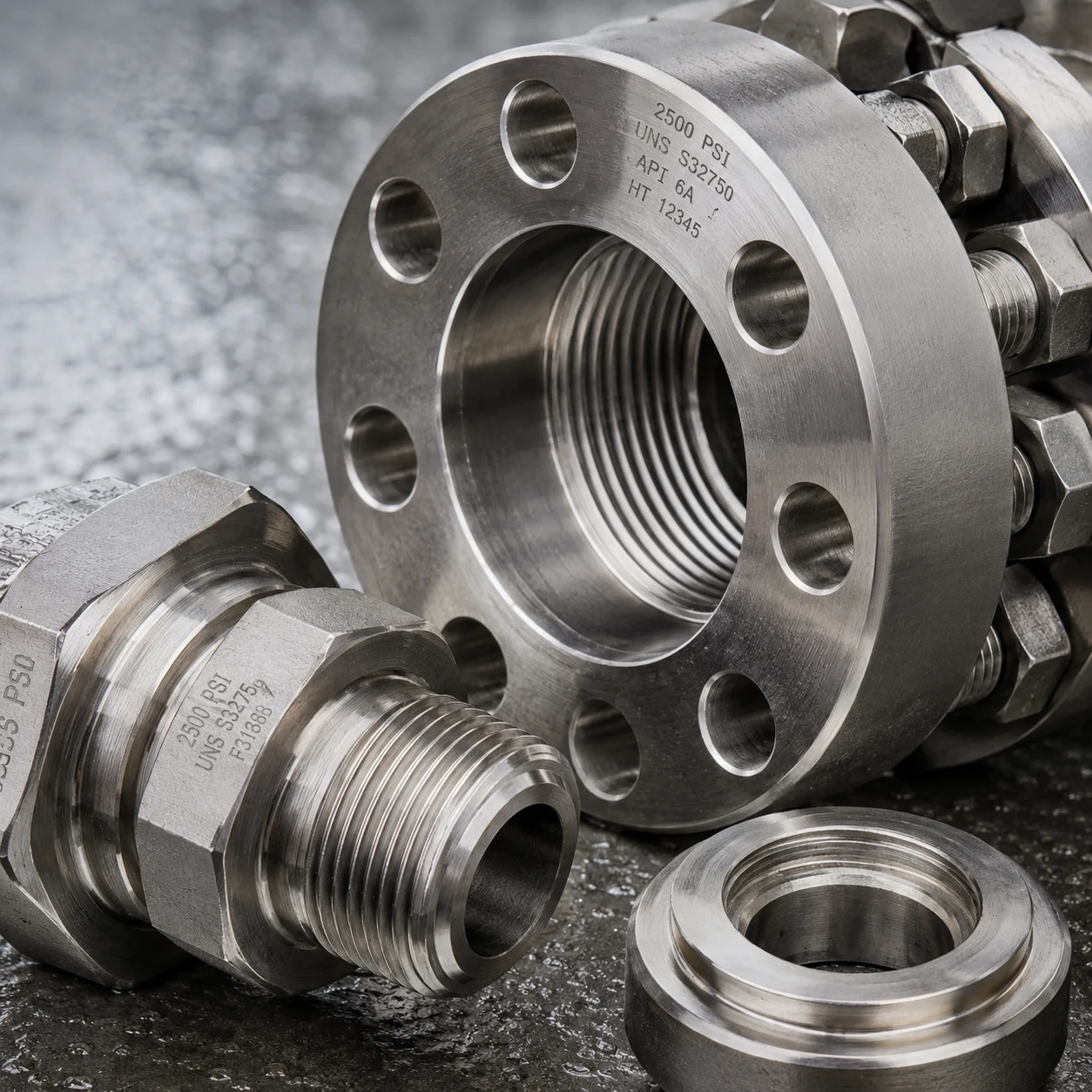
High-Pressure Flanges & Fluid Connectors
Critical machined prototypes for subsea and oilfield fluid transfer systems. We achieve absolute thread precision and zero-leak metal-to-metal sealing through rigorous processing of corrosion-resistant alloys.
Critical Performance Indicators: Thread Pitch Diameter, Seal Groove Parallelism, Surface Finish
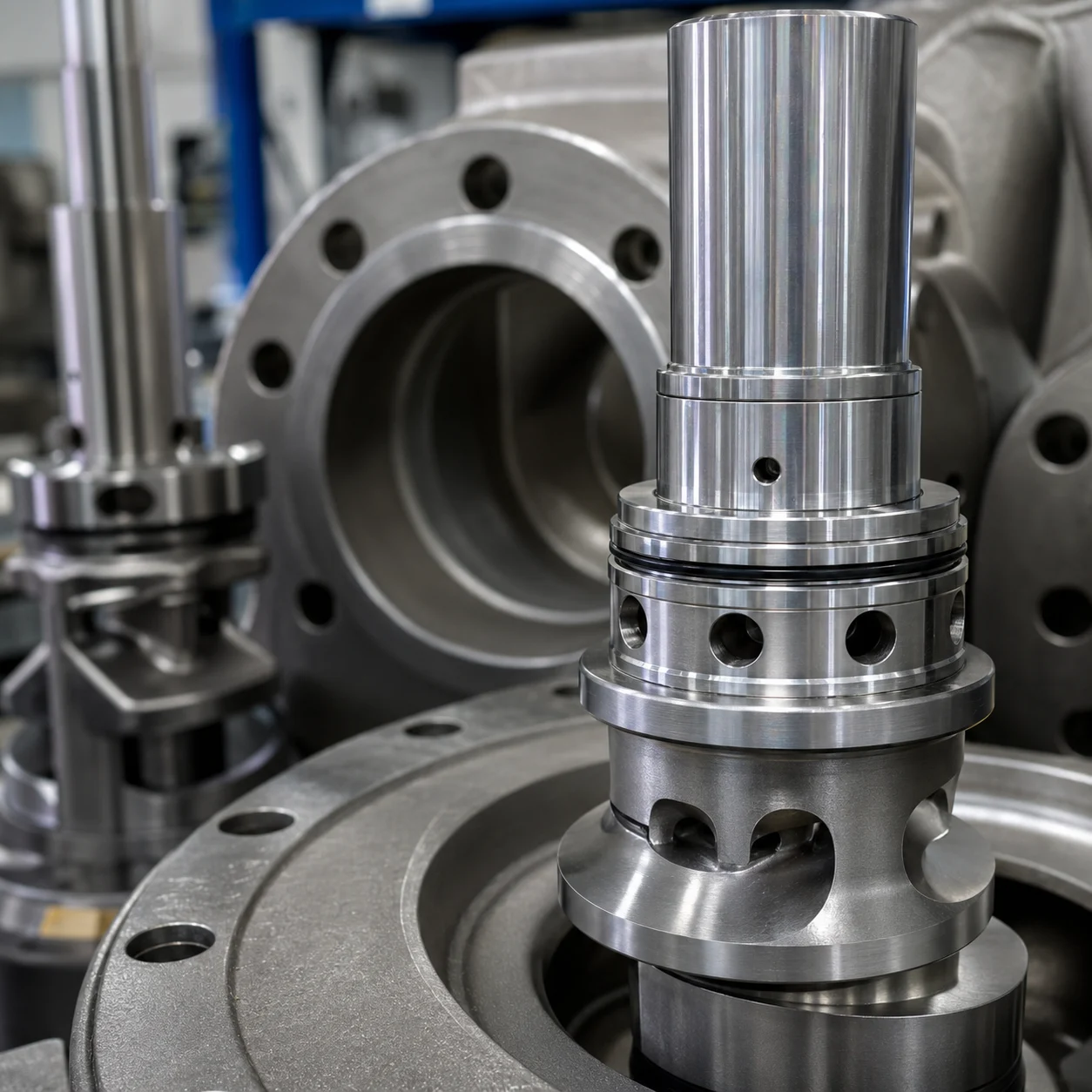
Severe-Service Pump & Valve Internals
Custom prototype CNC parts optimized for harsh flow environments. We machine valve stems, plugs, and impellers with superior cavitation resistance and ultra-fine surface finishes to protect against early operational wear.
Critical Performance Indicators: Circular Cylindricity, Bore Geometries, Micro-inch Ra Finishes
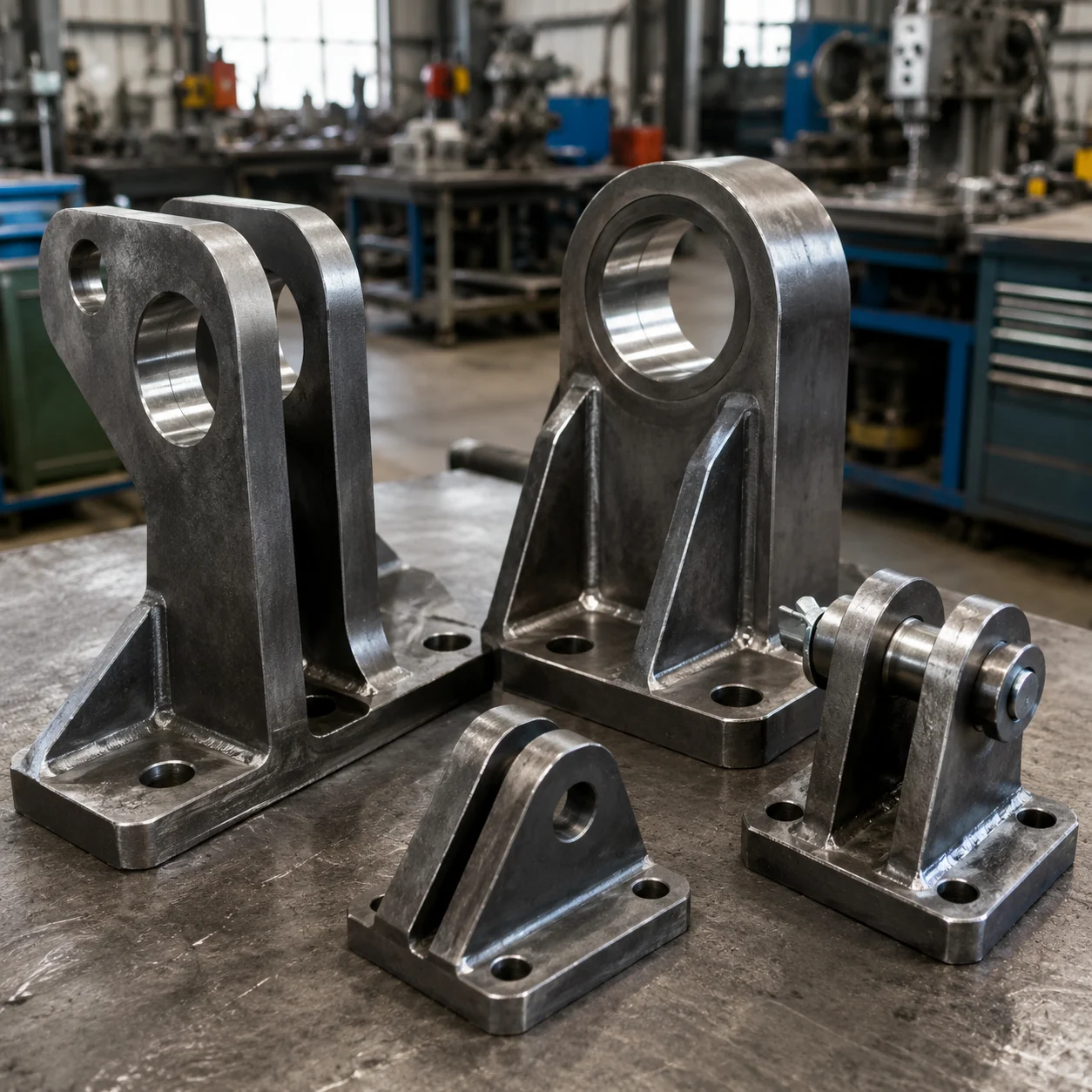
Structural Brackets & Load-Bearing Mounts
Heavy-duty rapid prototyping machining for load-bearing defense and industrial components. Engineered from solid bar stock or near-net forgings to retain true material yield strength and optimize fatigue life under dynamic stresses.
Critical Performance Indicators: Hole Coordinate Tolerances, True Position, Fillet Radii Accuracy
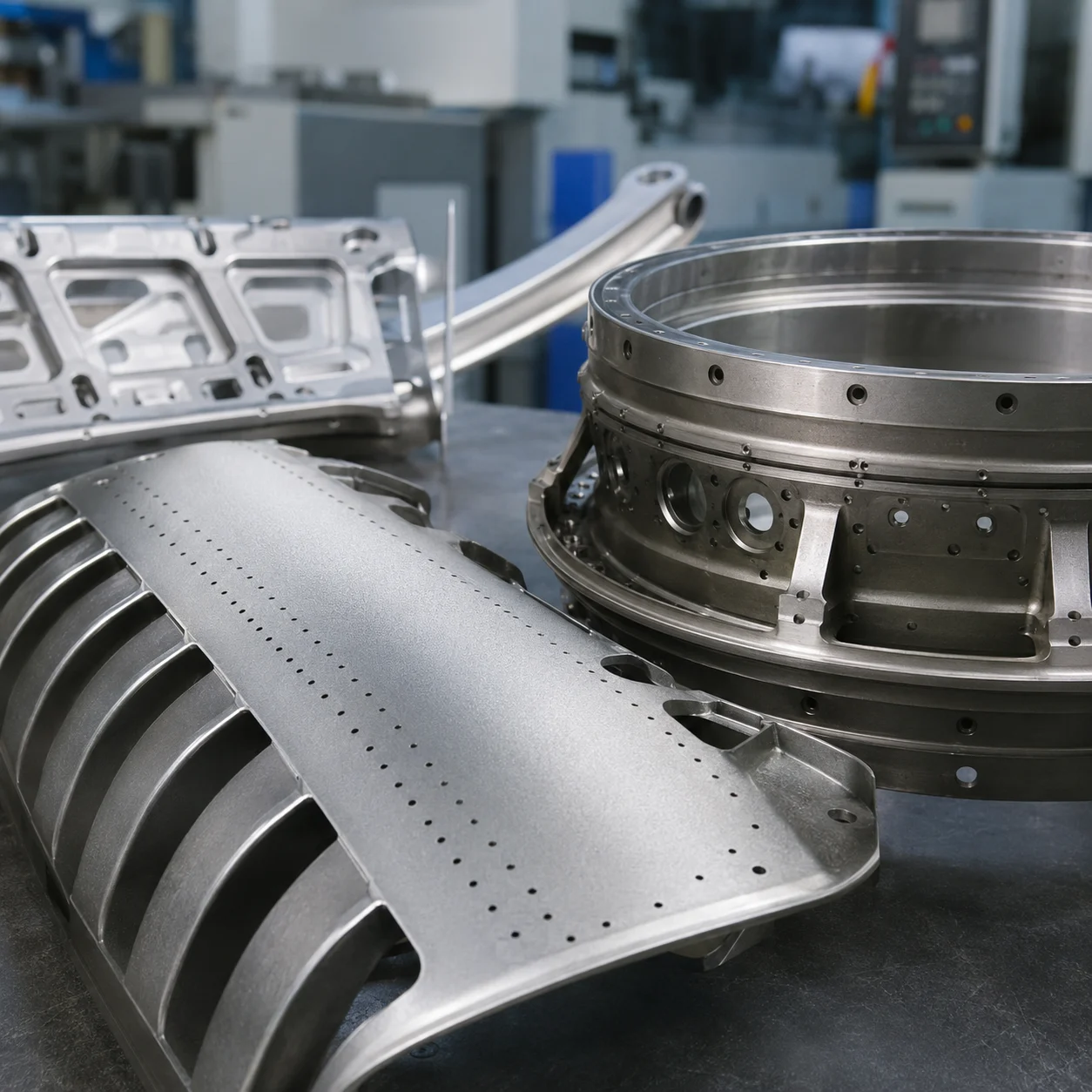
Thermal Shields & Heat-Resistant Structural Parts
Specialized prototype machining for aerospace and gas turbine environments. We process superalloys with exceptional high-temperature stability, utilizing expert cooling-hole machining and stress-relieving tool paths.
Critical Performance Indicators: Deep-Hole Coaxiality, Minimal Heat-Affected Zone, Dimensional Stability
Vastmaterial leverages its deep heritage in advanced casting and precision metal fabrication to execute your high-stakes prototype validation projects. Our experience working with Tier-1 aerospace suppliers, energy firms, and research laboratories ensures every component achieves absolute technical fidelity before moving into scaled production—explore our full range of services to support each stage.
Prototype Machining Services: Frequently Asked Questions
Which 3D CAD and 2D drawing file formats do you accept for a CNC prototype quote? We natively process standard 3D CAD models including STEP (.stp, .step), IGES (.igs), and Parasolid (.x_t). To ensure total accuracy regarding tight tolerances, thread definitions, and critical surface finish requirements, we highly recommend accompanying your 3D data with a detailed 2D engineering drawing in PDF format.
We natively process standard 3D CAD models including STEP (.stp, .step), IGES (.igs), and Parasolid (.x_t). To ensure total accuracy regarding tight tolerances, thread definitions, and critical surface finish requirements, we highly recommend accompanying your 3D data with a detailed 2D engineering drawing in PDF format.
Can you quote or engineer machined prototypes if I do not have formal CAD models?
Yes. Our engineering team can work from physical master samples, rough conceptual sketches with critical bounding dimensions, or an explicit functional description of the part’s mating requirements. We can assist in reverse engineering or developing the technical data required for rapid prototyping machining.
How does Vastmaterial guarantee the confidentiality of proprietary R&D designs?
Intellectual property protection is a core pillar of our precision manufacturing workflow. We gladly execute standard corporate Non-Disclosure Agreements (NDAs) before you transmit any proprietary design files. Our internal data servers and physical workshop setups are tightly restricted to authorized project personnel.
How are unspecified or unannotated tolerances handled on prototype CNC parts?
Any dimensions left unnotated on 2D prints default to standard medium commercial tolerances (such as ISO 2768-m). For critical functional features, mating holes, and alignment faces, our engineering team flags them during the initial DFM for prototyping review to align on intent before production begins.
Can you apply secondary heat treatments or specialized surface finishes to machined prototypes?
Yes. We provide an array of post-machining operations including stress-relieving heat treatments, hardening, anodizing, plating, and passivation. These options are tailored specifically to match your base material and functional testing goals, providing a clear reference for eventual low volume prototype production.
How do you ensure that complex prototype parts fit perfectly into a larger assembly?
We perform a thorough tolerance stack-up analysis and strict DFM review of mating features. By enforcing precise setup controls, checking alignment datums, and utilizing advanced CMM inspection, we guarantee the kinematic and structural integrity of your prototype fits the final assembly environment.
Can a prototype machining setup be seamlessly scaled into low-volume manufacturing?
Absolutely. Because we design modular fixtures, optimize production-grade toolpaths, and use scalable CNC techniques from day one, transitioning your validated design into low-volume batches or preparing for future investment casting requires minimal lead time and zero redundant setup charges. For parts that depend on precise multi-axis surfacing, our CNC Milling services help maintain repeatable accuracy from prototype to production.
What core information do you require to issue a firm rapid prototype machining quote?
To provide an accurate, fixed commercial quote, we require your 3D/2D CAD files, exact material specifications (such as specific stainless steel, heat-resistant steel, or high-temperature alloy grades), required order quantities, surface treatment requirements, and any special inspection or compliance documentation.
Vastmaterial maintains transparent technical communication, professional DFM feedback, and strict NDA policies, giving you total peace of mind throughout your R&D prototyping lifecycle.
Ready to Accelerate Your Project with Precision Prototype Machining?
- 24-Hour Technical DFM Feedback
- Strict Corporate NDA Protection Guaranteed
- Full CMM Dimensional & Material Certification