Discover Vastmaterial’s metal sheet laser cutting machines offering high precision, fast speed, and versatile power options for efficient steel and aluminum fabrication.
Are you tired of slow production times eating into your margins?
Choosing the right Metal Sheet Laser Cutting Machine isn’t just about buying equipment; it’s about securing the future of your fabrication line.
As an industrial partner, Vastmaterial understands that you don’t need just another tool—you need a solution that delivers precision, speed, and a tangible ROI.
In this guide, we’re cutting through the noise.
You’ll discover exactly how to match laser power to your material thickness, why fiber laser technology is the undisputed industry standard, and how to select a machine that optimizes your workflow from day one.
Ready to transform your manufacturing process?
Let’s dive in.
Revolutionizing Fabrication with the Metal Sheet Laser Cutting Machine
Facing rising raw material costs and shrinking profit margins? You are not alone. In today’s competitive industrial market, sticking to outdated processing methods is a fast track to falling behind. The only way to overcome these fabrication challenges is by integrating a high-efficiency metal sheet laser cutting machine into your production line. Precision and speed are no longer optional; they are the baseline for survival.
Fiber laser technology has undeniably become the industry standard for modern metal fabrication. It has largely replaced older methods by offering superior energy efficiency and cutting speeds, particularly for stainless steel, aluminum, and carbon steel sheets. This technology minimizes waste and maximizes throughput, directly addressing the cost pressures fabricators face daily.
At Vastmaterial, we understand that a machine must be as tough as the materials it processes. We balance cutting-edge innovation with heavy-duty durability. Backed by our experience in high-precision metal processing and raw material supply, our laser sheet metal cutting machine solutions are designed to be a one-stop answer for your fabrication needs. We focus on delivering equipment that ensures tight tolerances and long-term stability, helping you turn raw sheets into finished profits.
Why Fiber Laser Technology is the Standard for Sheet Metal
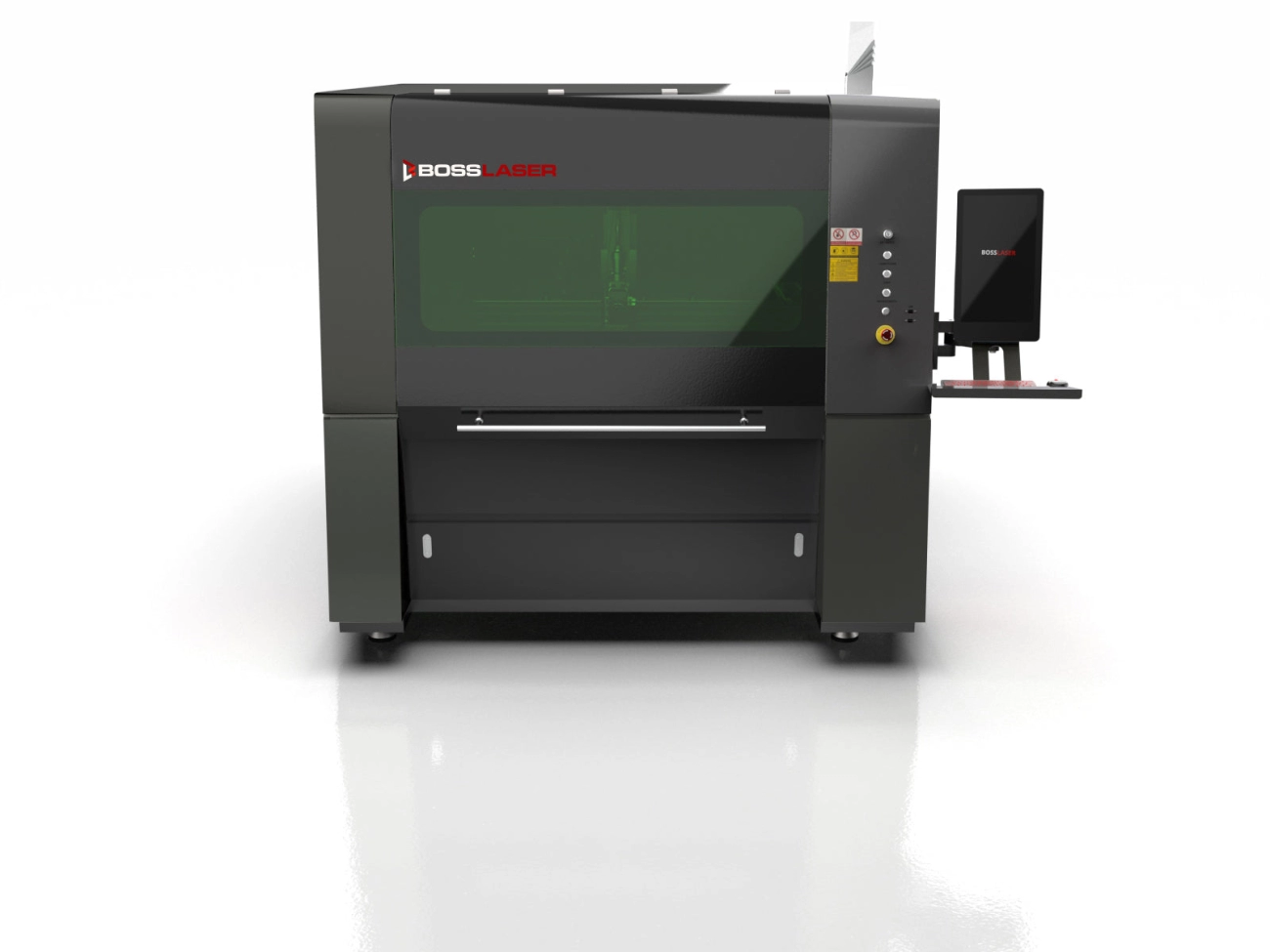
The metal fabrication industry has decisively shifted from legacy CO2 and plasma systems to the modern metal sheet laser cutting machine. This isn’t just a trend; it’s a necessary evolution for shops needing to stay competitive in the US market. While CO2 lasers had their time, CNC fiber laser cutter technology now dominates because the beam delivery system is solid-state, eliminating the complex mirror alignments and gas mixtures required by older tech.
For us, the advantages on the shop floor are immediate and measurable:
- Unmatched Speed: On thin to medium-thick sheets of stainless and carbon steel, fiber lasers offer laser cutting speed and precision that significantly outpaces CO2 counterparts.
- Energy Efficiency: These machines convert energy far more efficiently, often consuming 70% less power than CO2 resonators, which directly lowers our operational overhead.
- Material Versatility: Modern fiber optics handle reflective materials much better, allowing for efficient processing of copper and brass machining materials without the back-reflection issues that plagued older systems.
- Low Maintenance: With industrial laser maintenance being a major cost driver, the solid-state design of fiber lasers means fewer consumable parts and drastically reduced downtime compared to plasma or CO2 setups.
Critical Features of a High-Performance Laser Cutter
When investing in a metal sheet laser cutting machine, the spec sheet can look like a jumble of acronyms. However, four specific components dictate the machine’s longevity, precision, and operating cost. We don’t just assemble parts; we engineer a system where every component supports the high-power laser cutting process.
The Foundation: Heat-Treated Heavy-Duty Bed
Precision starts from the ground up. If the frame vibrates, your cuts will suffer. We utilize a heavy-duty welded bed that undergoes a strict annealing process. This isn’t just welding steel together; we put the frame through rigorous thermal cycles to relieve internal stress. Much like the science behind aluminium heat treating processes ensures material stability, our heat-treatment ensures the machine bed retains its shape and accuracy for over 20 years, even under the high G-forces of rapid acceleration.
Laser Source Comparison: IPG vs. Raycus vs. Maxphotonics
The laser source is the engine of your laser sheet metal cutting machine. Choosing the right brand depends on your budget and application intensity.
| Feature | IPG Photonics (USA/Germany) | Raycus (China) | Maxphotonics (China) |
|---|---|---|---|
| Performance | Premium beam quality, high stability | Excellent value, reliable for standard cuts | Good balance of cost and power |
| Material | Best for highly reflective metals (Aluminum, Brass) | Great for Carbon Steel & Stainless | Competent across standard metals |
| Cost | High initial investment | Cost-effective | Mid-range pricing |
| Maintenance | Extremely low, global support | Low, easy to source parts | Low maintenance |
For most US job shops, IPG vs. Raycus laser source is the main debate. If you are cutting reflective materials 24/7, IPG is the gold standard. For general fabrication, Raycus offers an incredible ROI.
Intelligent Cutting Heads and Safety
Modern CNC fiber laser cutter systems must have auto-focus cutting heads (typically Raytools or Precitec). Manual focusing is obsolete and prone to human error.
- Auto-Focus: The lens automatically adjusts the focal point based on material thickness, reducing piercing time by up to 90%.
- Anti-Collision: Capacitive sensors detect obstacles (like tipped-up parts) and stop the head instantly to prevent crashes, saving you thousands in replacement costs.
CNC Control and Nesting Software
Hardware is useless without good software. We use user-friendly control systems like CypCut, which are intuitive enough for new operators to learn quickly. Crucially, this includes advanced laser nesting software. This software automatically arranges your parts on the sheet metal laser cutting machine bed to maximize yield, often saving 10-15% on raw material costs by minimizing scrap. A precision rack and pinion system drives these movements, ensuring that the software’s digital path is translated into physical cuts with micron-level accuracy.
Choosing the Right Power: From 1kW to 30kW+
Selecting the correct wattage for a metal sheet laser cutting machine is not just about raw power; it is about matching the laser source capabilities to your specific material thickness and production volume. Efficiency drops if you underpower a thick plate job or overpower a thin sheet application. We help you navigate these ranges to ensure your setup delivers maximum ROI.
Matching Wattage to Material Thickness
The correlation between laser power and cutting capacity is linear up to a point. While higher power generally equals faster speeds, the edge quality and gas consumption also vary. Understanding the specific requirements of your stainless steel sheets or carbon steel plates ensures you invest in a configuration that meets your throughput goals without overspending on unnecessary capacity.
Low Power (1kW – 3kW)
For manufacturers focusing on thin-gauge fabrication, such as electrical cabinets, kitchenware, or lighting fixtures, a 1kW to 3kW fiber laser is the most economical choice. This power range excels at cutting materials under 5mm with high precision. It provides a clean finish on thin aluminum and stainless steel, making it ideal for industries where cosmetic detail is critical and heavy plate processing is not required.
Medium Power (4kW – 10kW)
The 4kW to 10kW range represents the sweet spot for general manufacturing and job shops. This power level offers versatility, handling carbon steel sheet processing efficiently up to 20mm while maintaining rapid cutting speeds on thinner gauges. It allows for a broader range of contracts, balancing speed and operational costs effectively for diverse production runs.
High Power (12kW – 30kW+)
For heavy industry, construction, and shipbuilding, 6kW to 30kW laser power sources are the standard. These high-wattage systems are engineered to punch through thick plates (25mm and above) with minimal piercing time. They utilize air cutting techniques to drastically reduce gas costs while maintaining speed. To understand how these power levels impact overall efficiency, review our comprehensive laser cutting metal sheet guide.
Vastmaterial Machine Configurations: Finding Your Fit
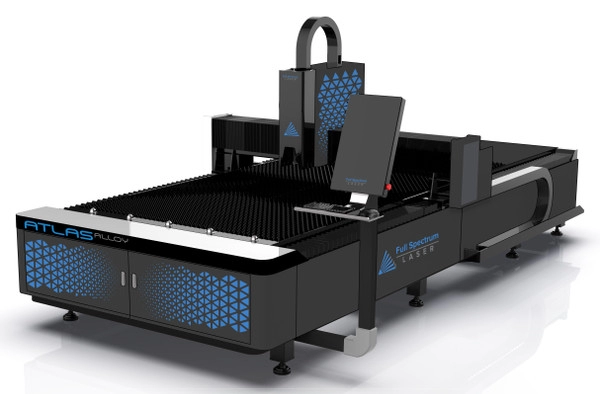
We understand that every fabrication shop has unique constraints regarding floor space, budget, and production volume. That is why we don’t believe in a “one-size-fits-all” approach. We offer distinct configurations of our metal sheet laser cutting machine to align with your specific operational goals, ensuring you get the most efficient sheet metal manufacturing solutions for your investment.
- Single Platform Models:
Designed for shops with limited floor space or lower production volumes, this configuration offers a compact footprint without sacrificing precision. It is the economical choice for businesses focused on custom, low-volume runs where loading speed is less critical than cutting accuracy. - Exchange Table Systems:
For high-volume manufacturing, downtime is the enemy. Our automatic exchange table systems allow operators to unload finished parts and load raw sheets on one table while the laser continues cutting on the other. This simultaneous workflow maximizes machine uptime and significantly boosts daily throughput. - Tube & Sheet Integrated Solutions:
Versatility is key for modern job shops. Our integrated machines handle standard flat sheets as well as metal profiles and tubes. This dual-capability design eliminates the need for two separate machines, streamlining your workflow for diverse projects ranging from structural components to precision parts for aerospace applications.
Material Compatibility and Real-World Applications
At Wuxi Haoyu, we leverage our position as both a material supplier and a fabrication specialist to maximize the potential of every sheet we process. Our metal sheet laser cutting machine capabilities are calibrated to handle the specific metallurgical properties of the vast inventory we stock. Whether the project requires carbon steel sheet processing for structural rigidity or intricate cuts on reflective non-ferrous metals, our fiber laser systems deliver clean, burr-free edges without thermal distortion.
We provide comprehensive sheet metal manufacturing solutions across a wide spectrum of materials:
- Stainless Steel: We process various grades, including 300 series stainless steel grades, ensuring corrosion-resistant precision parts for medical, food processing, and chemical industries.
- Aluminum & Alloys: Our fiber lasers effectively handle highly reflective materials like aluminum and brass, essential for lightweight aerospace components and heat-dissipating electronics.
- Carbon & Galvanized Steel: From thin sheets for enclosures to thick plates for heavy machinery, we ensure consistent quality across all gauges.
This versatility drives our success in critical sectors. In the automotive industry, we fabricate high-strength chassis components and mounting brackets that demand absolute uniformity. For the construction sector, we produce structural steel elements ready for immediate assembly. By integrating raw material supply with high-precision cutting, we offer a streamlined path from the mill to your production line.
The Haoyu Material Advantage: Precision, Durability, and Service
At Wuxi Haoyu Material Technology, we combine extensive raw material inventory with advanced fabrication capabilities to offer a superior metal sheet laser cutting machine service. Unlike standalone job shops, our integrated approach ensures that the material quality—whether Stainless Steel, Aluminum, or Carbon Steel—is verified before processing begins. We utilize professional fiber laser technology to achieve high positioning accuracy, ensuring that every cut delivers clean edges and tight tolerances for assembly-ready parts.
Our commitment to durability and consistency is backed by strict quality control systems. We manage the entire lifecycle of the component, from the raw coil to the final cut, reducing the risk of material defects affecting the finished product. To support complex projects, we also offer complementary precision CNC machining services and surface treatments like polishing and brushing.
Why partners choose our fabrication services:
- One-Stop Solution: We supply the metal sheets and perform the cutting, streamlining your supply chain.
- High Precision: Advanced CNC-controlled lasers ensure intricate designs meet exact specifications.
- Global Reach: We have extensive experience in international trade and logistics, serving clients worldwide.
- Comprehensive Support: From material certification to final delivery, our team provides technical guidance and reliable after-sales support.
Factors Influencing the Price of a Laser Cutting Machine
Investing in a metal sheet laser cutting machine involves balancing performance needs with your budget. The final cost isn’t arbitrary; it is directly tied to the core components and capabilities you select. Understanding these variables helps you calculate the true value rather than just looking at the sticker price.
Key Cost Drivers
The price fluctuates based on three main specifications:
- Laser Power: This is the most significant factor. A high-wattage source (12kW+) for heavy plate processing costs considerably more than a 1kW or 3kW unit designed for thin sheet metal.
- Laser Source Brand: The manufacturer of the laser generator plays a huge role. Premium global brands like IPG typically command a higher price compared to cost-effective alternatives like Raycus or Maxphotonics, though both offer reliable performance for different tiers of production.
- Automation & Configuration: Features like automatic exchange tables, full safety enclosures, and specialized software for nesting increase the initial investment but drastically improve throughput.
Understanding Laser Cutter ROI
While the upfront cost of a modern fiber laser system might be higher than legacy plasma or CO2 equipment, the laser cutter ROI is realized through operational efficiency. Fiber technology uses solid-state components, meaning there are no mirrors to align and no lasing gases to replenish, resulting in near-zero maintenance.
For shops processing high volumes of low carbon steel, the sheer speed of a fiber laser reduces cost-per-part significantly. We focus on providing solutions where the long-term energy savings and reduced downtime outweigh the initial capital expenditure, ensuring the machine pays for itself faster.
Frequently Asked Questions
Nitrogen vs. Oxygen: Which Gas Yields Better Results?
The choice between Nitrogen and Oxygen fundamentally changes the edge quality produced by a metal sheet laser cutting machine.
- Nitrogen (N2): We typically utilize Nitrogen for stainless steel laser cutting and aluminum. It acts as an inert shield, preventing oxidation during the process. The result is a clean, bright edge that often requires zero post-processing before welding or assembly.
- Oxygen (O2): This is the standard for carbon steel sheet processing. The oxygen triggers an exothermic reaction, adding the necessary heat to cut through thicker plates efficiently. However, it leaves a slight oxide layer (scale) that may need to be removed before painting or coating.
What is the Lifespan of a Fiber Laser Source?
Reliability is the primary reason the industry has standardized on fiber technology. Unlike older CO2 systems that required constant mirror alignment and gas replenishment, a solid-state fiber laser source is built for the long haul. With proper industrial laser maintenance, these sources are designed to run for tens of thousands of hours. This durability ensures that your sheet metal manufacturing solutions remain consistent, minimizing unexpected downtime and keeping production costs predictable.
Can Machine Sizes be Customized?
Yes, we understand that facility constraints and material dimensions differ for every operation. Whether you are handling standard 4×8 sheets or require a larger bed for oversized architectural plates, the equipment configuration can be adapted. Our goal is to match the machine’s physical footprint and cutting envelope to your specific production volume. This ensures you aren’t paying for capacity you don’t use while maintaining the ability to handle complex projects. For a deeper understanding of how we achieve exact specifications across different methods, our machining and casting guide details the importance of tight tolerances in fabrication.