Understanding Abrasion Resistant Investment Casting
Heavy equipment operates in brutal environments where friction, gouging, and grinding destroy standard metal components. We engineer abrasion resistant investment cast parts designed to endure extreme mechanical wear, reducing equipment downtime and lowering long-term maintenance costs.
Complex Wear Parts Made Easy with Lost Wax Casting
Traditional sand casting and fabrication often fail when producing intricate wear-resistant components. The lost wax casting process allows us to manufacture complex geometries without sacrificing material hardness.
- Near-Net Shape Production: We cast internal flow channels, mounting features, and curved profiles directly into the component.
- Reduced Machining Costs: Casting hard alloys close to final dimensions minimizes difficult and expensive post-machining on high-hardness metals.
- Design Flexibility: We easily integrate variable wall thicknesses and reinforcement ribs into a single seamless component.
Superior Surface Finish and Tight Tolerances
Surface roughness accelerates friction wear. Investment casting produces a smooth surface finish and strict dimensional accuracy, protecting moving parts from premature failure.
- Surface Finish: Achieves Ra 3.2–6.3 µm directly out of the ceramic mold.
- Tight Tolerances: Maintains standard casting tolerances within CT4–CT6, ensuring precise alignment in heavy industrial assemblies.
- Enhanced Fluid Dynamics: Smooth internal surfaces reduce turbulence and localized wear in hydraulic and fluid-handling equipment.
Sliding Abrasion vs. Impact Wear
Selecting the right casting profile depends entirely on the primary stress factor in your machinery.
| Wear Type | Primary Cause | Typical Applications | Key Material Requirement |
|---|---|---|---|
| Sliding Abrasion | Fine or coarse hard particles scraping along the surface | Slurry pump impellers, wear plates, pipe bends | High matrix hardness and high carbide volume |
| Impact Wear | Repeated heavy blows, crushing, or gouging forces | Crusher wear liners, shredder hammers, jaw plates | High toughness and work-hardening capacity |
Key Alloys for Maximum Wear Resistance
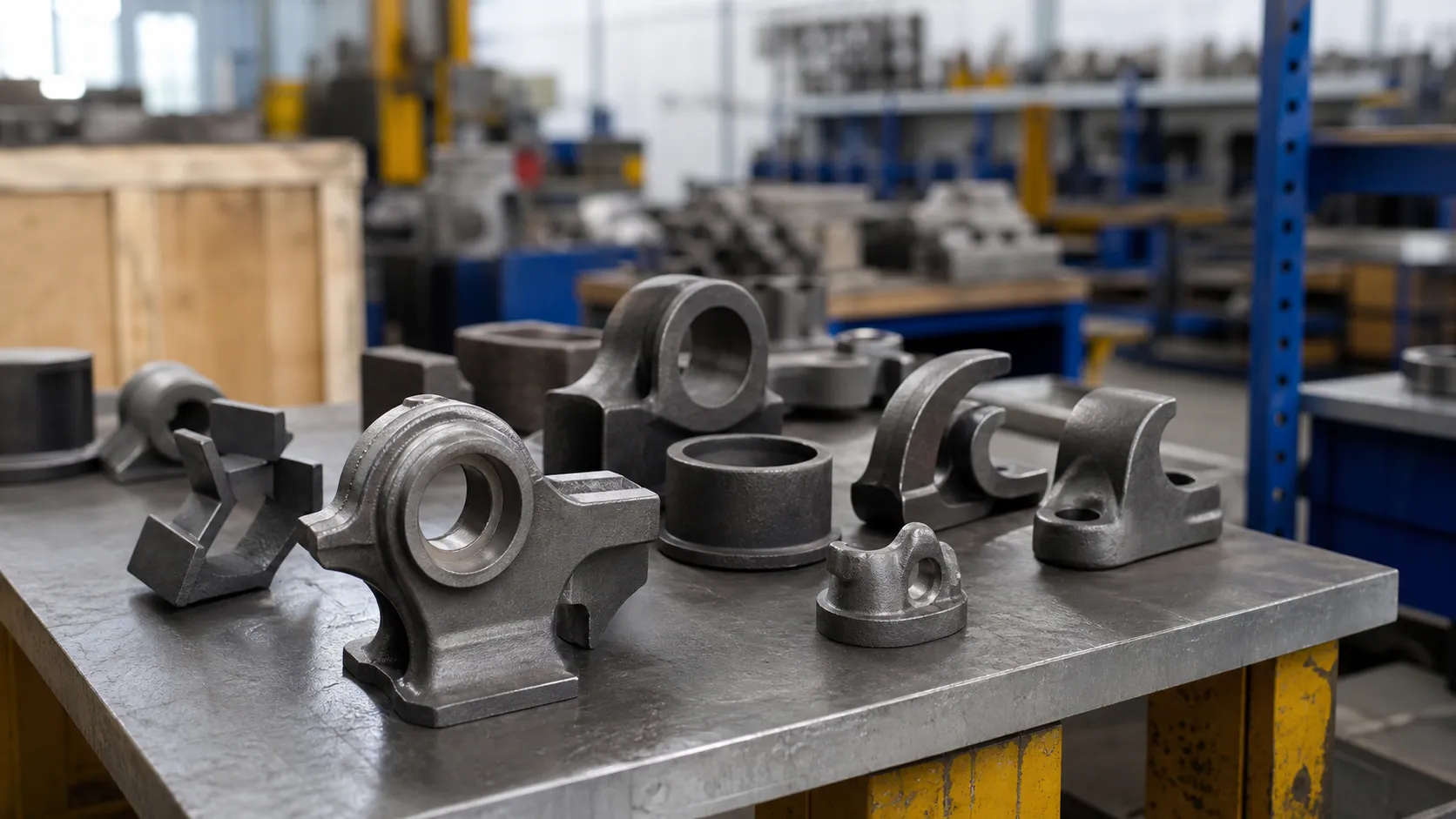
Selecting the right material directly dictates how long your abrasion resistant investment cast parts perform in the field. We match specific wear resistant alloys to your exact operational conditions to keep your machinery running without unexpected downtime.
High-Chromium White Irons for Severe Sliding Abrasion
For extreme sliding wear where direct shock loads are minimal, high-chromium white iron delivers maximum service life.
Carbide Structure: High chromium levels (12% to 28%) form hard chromium carbides within the metal matrix.
Particle Resistance: Resists fine, sharp particles in sand handling, slurry transfer, and chute linings.
High Hardness: Achieves up to 65 HRC to block fine abrasives from cutting into the component surface.
Austenitic Manganese Steels for High-Impact Applications
When heavy impact shocks would break brittle, hard metals, we cast parts using austenitic manganese steel (Hadfield steel).
Work-Hardening Capability: Begins at roughly 200 HB and hardens past 500 HB under constant impact during operation.
High Impact Toughness: Absorbs massive mechanical shocks without cracking or catastrophic failure.
Ideal Applications: Rock crusher liners, jaw plates, and heavy-duty demolition tools.
Tool Steels and Cobalt-Base Alloys for Heat and Corrosion Wear
Standard wear metals degrade rapidly when friction generates extreme heat or when corrosive media is present.
Tool Steels: Provide high yield strength and excellent resistance to gouging wear after proper heat treatment.
Cobalt Alloys: For extreme environments involving high friction, heat, and chemical attack, our cobalt alloy casting solutions retain high hardness and resist anti-galling at elevated temperatures.
Balancing Rockwell Hardness (HRC) with Structural Toughness
Increasing Rockwell hardness (HRC) enhances surface wear resistance, but it also reduces material ductility. We fine-tune material chemistry and heat treated wear parts processes to hit the ideal balance for your equipment:
| Alloy Category | Hardness Range | Primary Wear Benefit | Best Suitable Use |
|---|---|---|---|
| High-Chrome White Iron | 58–65 HRC | Sliding Abrasion | Slurry Impellers & Liners |
| Manganese Steel | 20–55 HRC (Work-Hardened) | Severe Impact | Crusher Jaw Plates |
| Tool Steel | 50–60 HRC | Strength & Gouging Wear | Wear Bushings & Blades |
| Cobalt-Base Alloys | 40–55 HRC | Thermal & Corrosion Wear | High-Temp Valve Components |
Top Industrial Applications for Cast Wear Parts
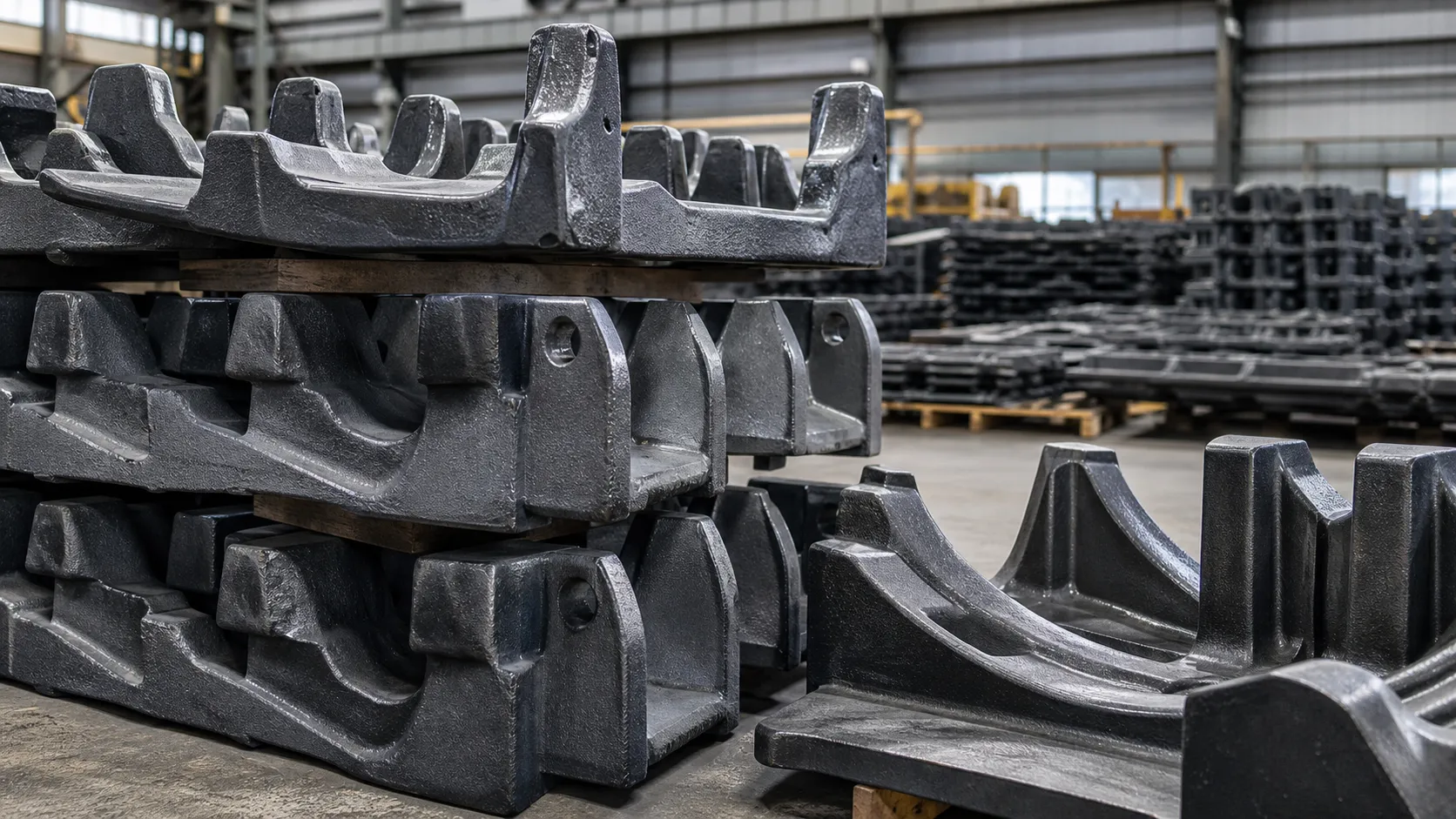
We supply high-performance abrasion resistant investment cast parts across heavy industries where machinery faces constant friction, impact, and material erosion. By leveraging the precision of the lost wax process, we produce net-shape industrial wear castings that outperform standard fabricated or sand-cast components in demanding field conditions.
Mining and Quarrying Crusher Liners and Jaw Plates
In mining operations, rock processing equipment faces continuous gouging abrasion and heavy impact. We engineer specialized mining investment castings designed to maximize uptime and lower maintenance cycles.
- Crusher wear liners and jaw plates: Cast from work-hardening austenitic manganese steel and high-chromium white iron to endure crushing forces.
- Chute liners and transfer hoppers: Custom-contoured plates engineered with precise mounting features for fast replacement.
- Toughness and hardness balance: Tailored heat treatment strategies ensure high structural toughness without sacrificing surface wear resistance.
Slurry Pump Impellers, Valve Bodies, and Pipe Fittings
Moving abrasive slurries requires components that resist both mechanical erosion and chemical corrosion. Through robust pattern tooling and integrated precision casting capabilities, we produce defect-free fluid handling parts built to withstand harsh flow environments.
| Application | Core Material Choice | Primary Benefit |
|---|---|---|
| Slurry Pump Impellers | High-Chromium White Iron | Exceptional surface wear resistance and smooth hydraulic flow |
| Valve Bodies & Trim | Duplex Stainless Steel / Tool Steel | High corrosion resistance paired with anti-galling performance |
| Pipe Elbows & Fittings | Heat Treated Wear Alloys | Uniform wall thickness to resist high-velocity particulate erosion |
Agricultural Tillage Tools and Ground-Engaging Components
Agricultural machinery operates in abrasive soils filled with sand, clay, and rocks. Standard carbon steel parts wear out quickly, leading to uneven tillage and frequent downtime.
- Tillage points and sweep blades: Precision-cast with reinforced cutting edges to maintain sharpness and optimal soil penetration.
- Ripper shanks and seed boots: Manufactured as heat treated wear parts with controlled Rockwell hardness (HRC) to resist severe ground impact.
- Tight tolerances: Excellent dimensional accuracy ensures seamless fitment directly onto OEM mounting shanks.
Recycling Equipment Shredder Hammers and Wear Chutes
Recycling facilities handle unpredictable feedstocks—from metal scrap and municipal waste to glass and masonry—requiring cast components with maximum fracture toughness and wear resistance.
- Shredder hammers and breaker bars: Engineered to prevent catastrophic breakage while maintaining sharp wear edges under high impact.
- Scrap chute liners and wear plates: Custom geometries designed to absorb violent impacts and prevent premature structural failure.
- Extended service life: Specialized alloy formulations dramatically reduce equipment rebuild frequency in severe-duty shredders.
Design and Heat Treatment Guidelines for Investment Castings
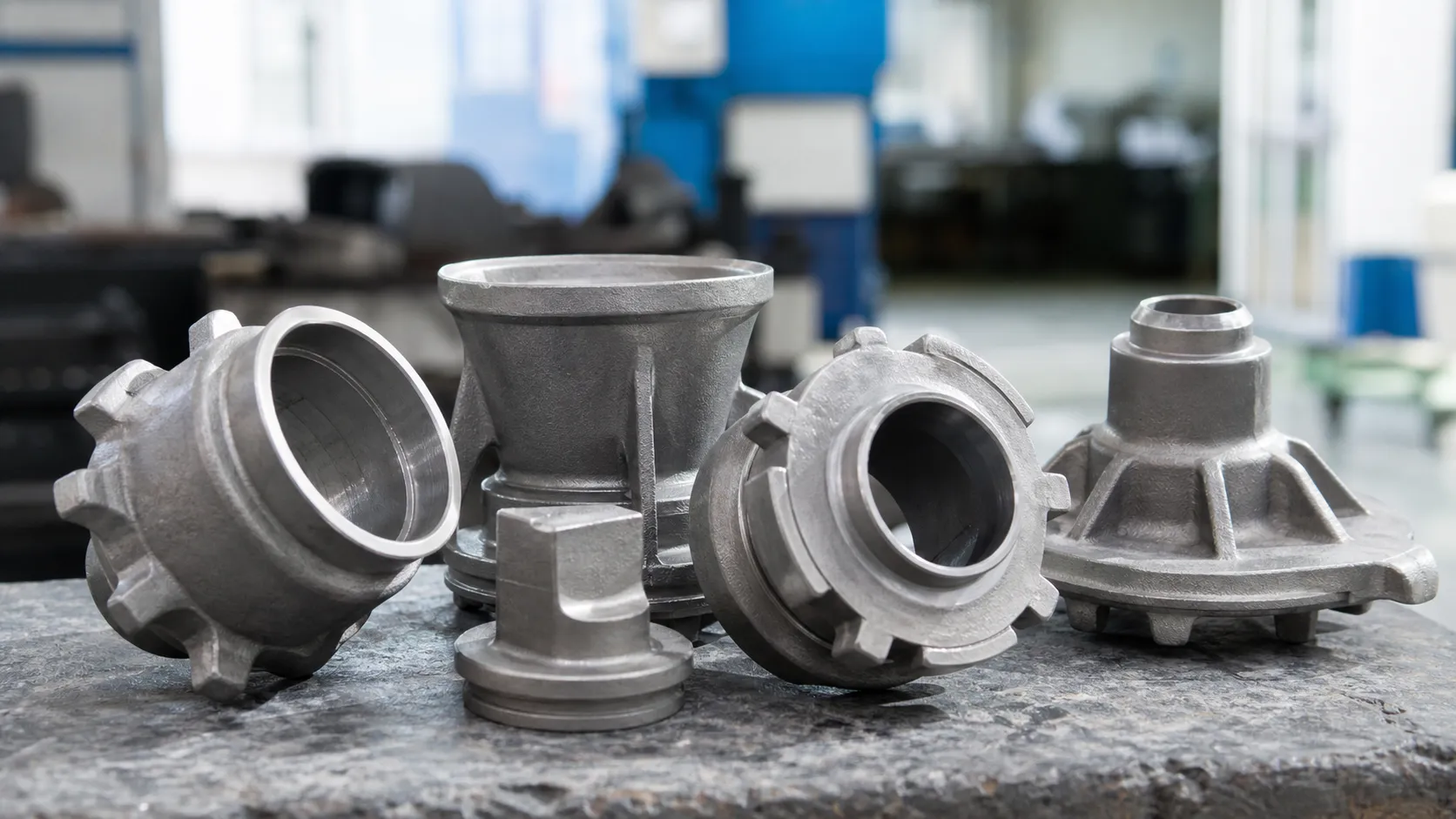
To get maximum service life from abrasion resistant investment cast parts, proper design and heat treatment are non-negotiable. Getting these steps right ensures your components resist severe wear without cracking under heavy operational loads.
Optimizing Wall Thickness to Prevent Defects
Uneven cross-sections cause localized shrink porosity and severe internal stress during cooling. We recommend these core design principles to maintain structural integrity:
Maintain Uniformity: Keep wall transitions as gradual as possible to allow even thermal dissipation during solidification.
Incorporate Generous Fillets: Avoid sharp internal corners. Use generous radii to distribute operational stress evenly across the component.
Minimize Thick Mass Centers: Excessively thick walls slow down cooling rates, which enlarges grain size and lowers localized hardness.
Strategic Heat Treatment for High-Hardness Alloys
Tailoring the heat treatment process unlocks the full wear potential of heat treated wear parts. Selecting the correct thermal strategy balances extreme Rockwell hardness HRC with essential impact toughness:
Air Quenching: Ideal for high-chromium white irons and alloy steels. Slow, uniform cooling prevents thermal shock and cracking while achieving maximum hardness.
Stress Relieving: Eliminates internal residual stresses created during solidification prior to final grinding or installation.
Tempering: Relieves quenching brittleness, fine-tuning toughness without sacrificing critical surface wear resistance.
For detailed material compositions and thermal properties, consult our comprehensive alloy guide for high-performance alloys and precision casting.
Machining and Grinding High-Hardness Castings
Machining wear-resistant alloys rated at 50 to 65 HRC requires specific tooling and techniques:
Minimize Machining via Precision Casting: We utilize the lost wax casting process to achieve tight tolerances directly out of the mold, eliminating unnecessary post-processing.
Cubic Boron Nitride (CBN) Tooling: Use CBN or specialized carbide inserts when turning or milling high-hardness alloys to prevent rapid tool degradation.
Rigid Fixturing & Grinding: Rely on precision surface grinding with rigid workholding setups to eliminate chatter marks and avoid workpiece micro-cracking.
Frequently Asked Questions (FAQs)
Investment casting lifespan vs. sand casting
Investment cast wear parts typically last 1.5 to 3 times longer than standard sand castings in abrasive environments.
Through our precision lost wax casting process, we eliminate mold erosion and internal gas porosity. This creates a denser microstructural integrity and precise grain distribution, allowing abrasion resistant investment cast parts to withstand continuous sliding wear and heavy impact far better than rougher sand-cast alternatives.
Field welding high-chromium white iron parts
We generally advise against field welding high-chromium white irons due to their extreme hardness and susceptibility to thermal cracking.
- High Risk: The heat input from welding triggers localized micro-cracks in martensitic matrix structures.
- Special Protocols Required: If field repair is unavoidable, you must use high preheat temperatures (above 300°C), specialized nickel- or iron-based hardfacing electrodes, and slow controlled cooling.
- Better Alternative: We recommend designing mechanical fast-locking systems or bolt-on wear liners to eliminate the need for field welding entirely.
Achievable tolerances on cast wear components
We regularly achieve linear dimensional tolerances of ±0.005 inches per inch (±0.13 mm per 25 mm).
Because high-hardness wear alloys are notoriously difficult and expensive to machine, achieving near-net shapes straight out of the mold saves substantial processing time. Utilizing dedicated alloy steel investment casting services ensures your components meet tight tolerances on critical mounting faces, eliminating or minimizing post-cast grinding.
Best alloy for cost-to-wear performance
The ideal alloy depends directly on your operating environment:
| Wear Condition | Recommended Alloy | Why It Works |
|---|---|---|
| Severe Sliding Abrasion | High-Chromium White Iron (ASTM A532) | Extremely hard chromium carbides offer the longest service life per dollar. |
| Heavy Impact & Crushing | Austenitic Manganese Steel (Hadfield) | Work-hardens under impact while maintaining a tough interior to prevent snapping. |
| Moderate Impact & Abrasion | Martensitic Low-Alloy Steels | Outstanding balance of structural toughness, ease of heat treatment, and lower raw material cost. |