Aluminum sand casting valve bodies are structural housings that route, regulate, and seal fluid or gas in industrial systems while keeping mass lower than many ferrous alternatives. This guide walks through green sand and shell-core practice, common alloys such as A356, valve body types, application environments, and the CNC machining plus inspection steps buyers should lock into an RFQ.
What are Aluminum Sand Cast Valve Bodies?
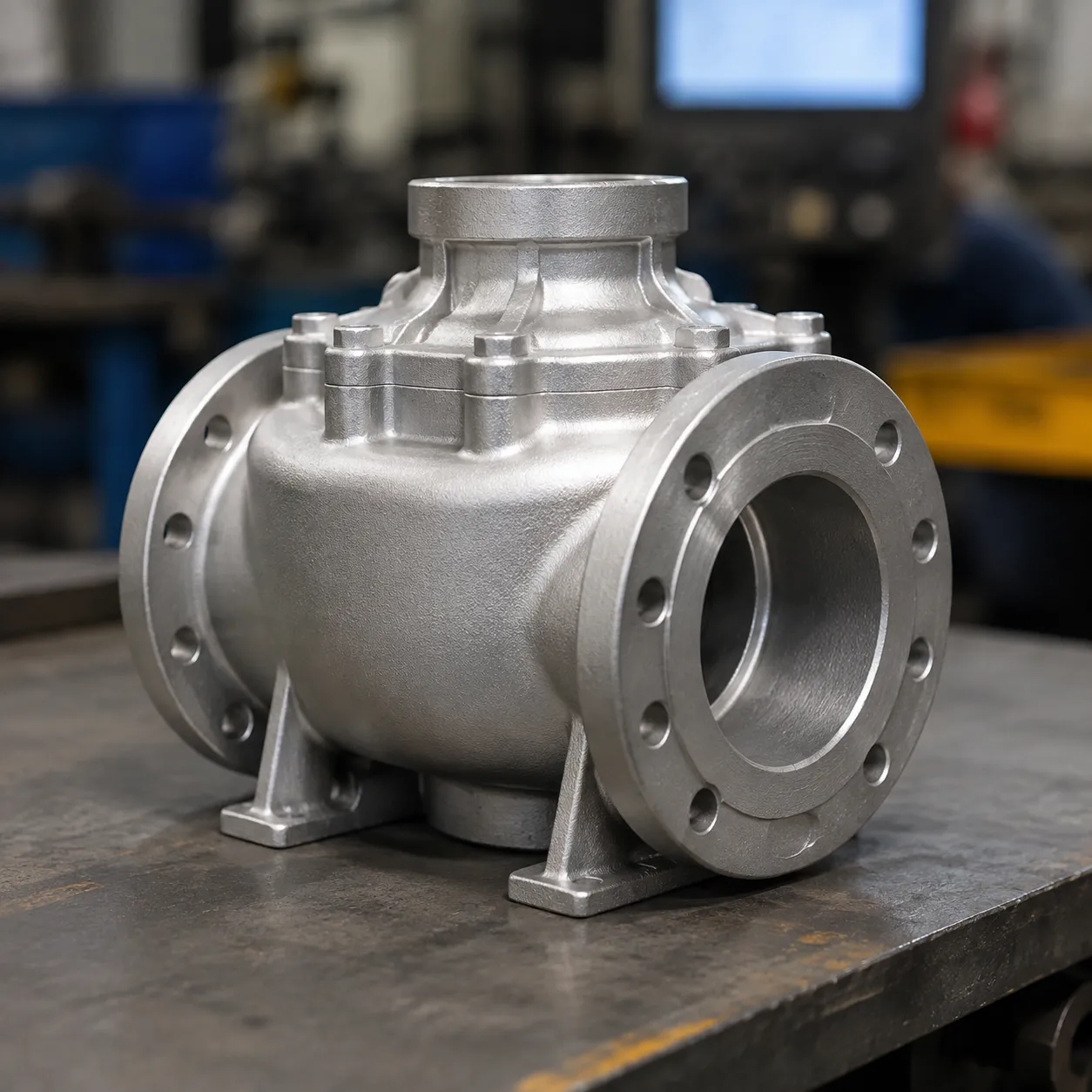
Aluminum sand cast valve bodies are high-performance structural housings designed to direct, regulate, and control fluid and gas flow across industrial fluid systems. Engineered from premium non-ferrous metals, these valve housings offer an exceptional balance of low weight, structural integrity, and excellent pressure tightness. As professional precision casting service providers, we leverage advanced sand casting methods to produce durable, leak-free components capable of handling demanding operating environments.
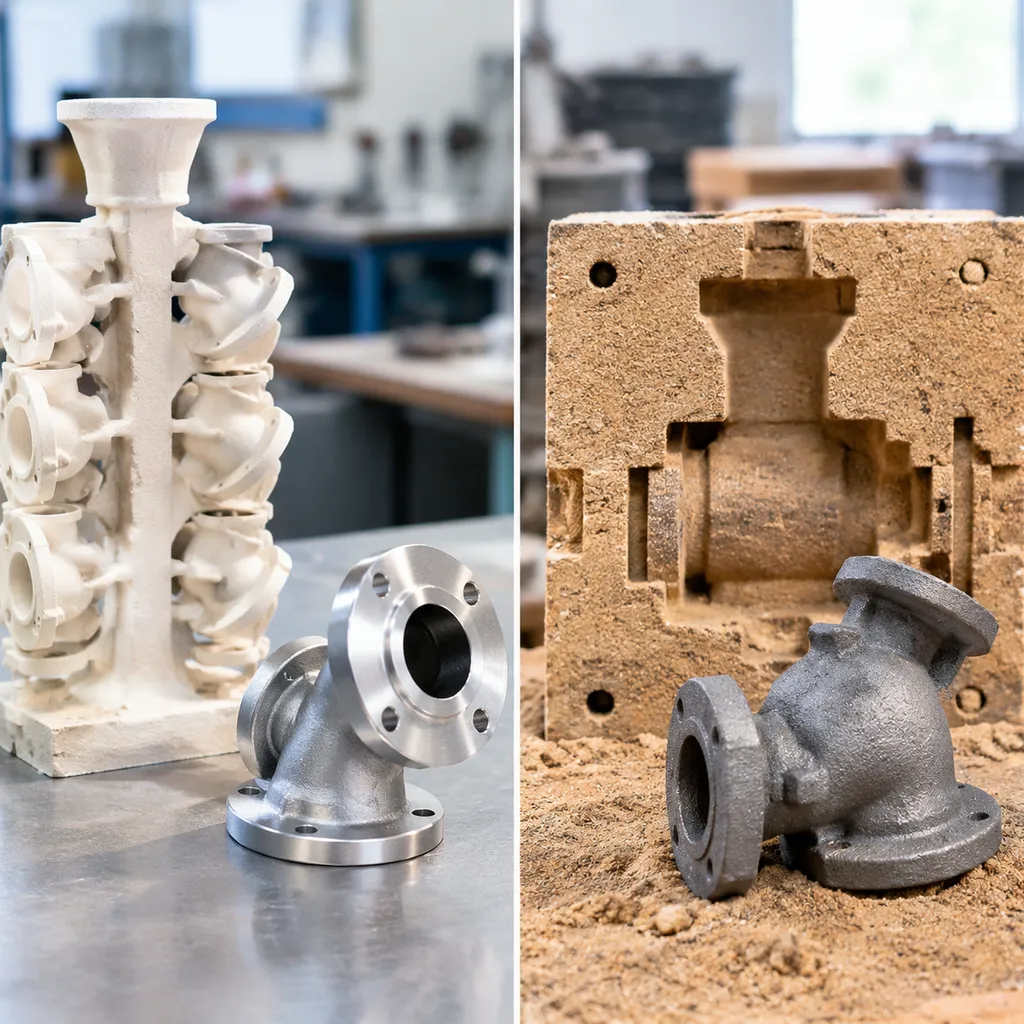
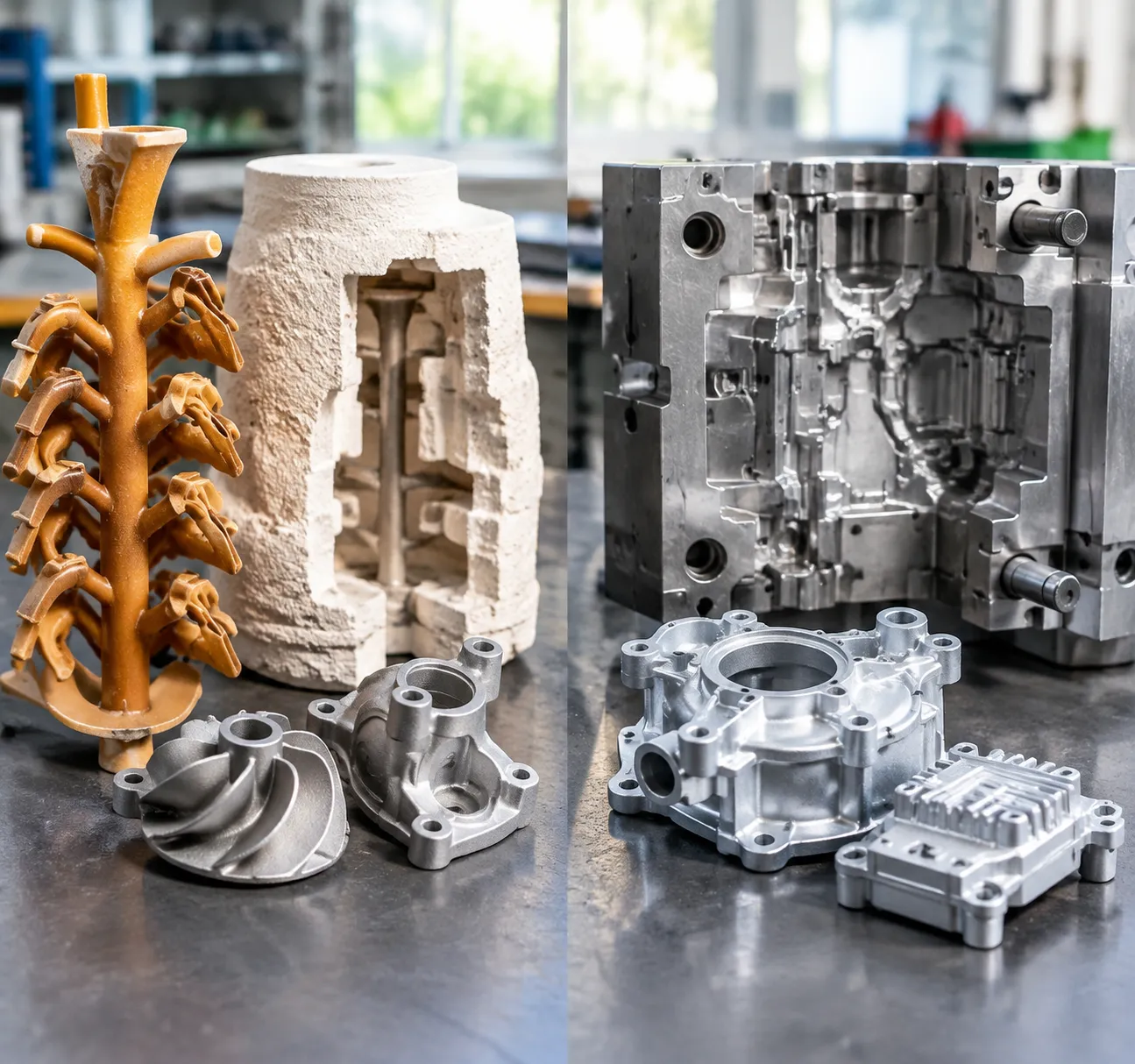
Overview of the Aluminum Sand Casting Process
Our aluminum sand casting method combines time-tested foundry techniques with modern metallurgy to craft complex components efficiently:[5]
- Pattern & Mold Preparation: High-precision patterns form the mold cavity using specialized sand mixtures within our high-capacity green sand foundry.
- Core Assembly: To form intricate internal flow passages and internal chambers, we utilize rigid shell core assembly techniques before closing the mold.
- Molten Metal Pouring: Refined molten aluminum is poured under controlled conditions to eliminate turbulence, gas entrapment, and porosity.
- Cooling & Shakeout: After solidification, the sand mold is broken away, leaving a robust raw casting ready for thermal treatment and final CNC machining.
Common Aluminum Alloys Used in Valve Manufacturing
Selecting the right material ensures long-term operational reliability and superior corrosion resistance. We frequently cast using industry-standard non-ferrous alloys tailored to specific application requirements:[2]
| Alloy Type | Key Performance Characteristics | Typical Application |
|---|---|---|
| A356 Alloy | Superior strength, high ductility, excellent pressure tightness | High-pressure hydraulic and pneumatic valve bodies |
| 356 Alloy | High tensile strength, good weldability, excellent castability | General industrial flow control systems and manifolds |
| 319 Alloy | Good fluid fluidity, high machinability, cost-effective | Low-pressure fluid handling and engine cooling valves |
Design Considerations for Complex Valve Geometries
Producing defect-free valve bodies requires strategic design planning to maximize castability and fluid efficiency:
- Wall Thickness Uniformity: Maintaining consistent wall transitions prevents hot spots, shrinkage voids, and stress concentration.
- Optimized Internal Passages: Core designs are crafted to maintain smooth internal contours, reducing pressure drops and turbulence in fluid channels.
- Draft Angles & Radii: Ample draft angles facilitate smooth pattern release, while generous fillets minimize internal stresses.
- Machining Allowances: Strategic material allowances are added to critical mating surfaces, thread ports, and valve seats for precise post-cast machining - the same DFM casting checkpoints we review with buyers before tooling release.
Key Advantages of Aluminum Sand Casting for Valve Bodies
Aluminum sand casting delivers an ideal balance of structural integrity, thermal conductivity, and manufacturing flexibility. When producing complex valve bodies, this non-ferrous metal casting process allows us to cast intricate internal chambers and heavy-duty walls with tight precision at a fraction of the tooling cost associated with permanent molds.
High Strength-to-Weight Ratio and Lightweight Design
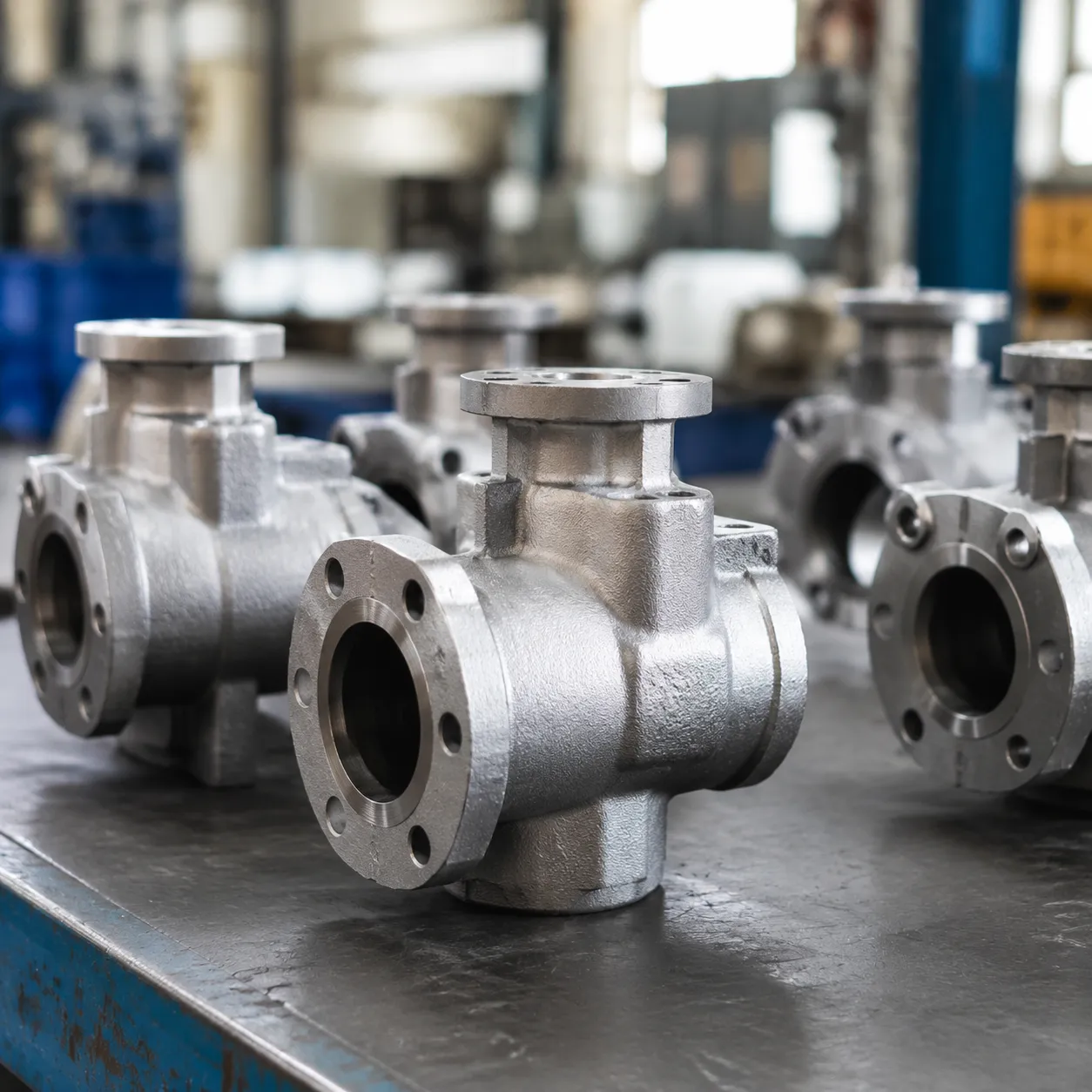
Aluminum weighs roughly one-third as much as cast iron or bronze, making it the preferred choice for mobile hydraulics, aerospace fluid systems, and automotive manifolds.[1] When ferrous mass is still required for a program, buyers often compare housings against our notes on cast iron vs ductile iron valve body materials before locking alloy family.
- Optimized Material Properties: We utilize premium aluminum casting alloy grades such as A356 to deliver outstanding tensile strength, ductility, and pressure tightness after T6 heat treatment.
- Structural Efficiency: Sand casting allows us to add localized wall thickness in high-stress zones while shedding unnecessary material elsewhere, maximizing strength-to-weight efficiency.
- Easy Handling and Installation: Lightweight valve housings reduce shipping costs, decrease mechanical loads on connecting pipework, and simplify field maintenance.
Superior Corrosion Resistance for Fluid Systems
Fluid handling equipment constantly encounters water, fuels, hydraulic fluids, and harsh ambient environments. Aluminum naturally develops a protective surface oxide layer that shields internal flow passages from rust and chemical degradation.[2]
- Longer Service Life: Unlike ferrous metals, cast aluminum valve bodies resist rust and scale formation, preventing channel blockages and seal failures.
- Surface Treatment Ready: Sand cast aluminum surfaces readily accept protective treatments, including hardcoat anodizing, chromate conversion, and chemical nickel plating for aggressive chemical handling.
- Clean Media Flow: Smooth internal passages minimize fluid contamination and turbulence, preserving downstream system performance.
Cost-Effective Production for Low to High Volume Runs
| Benefit | Sand Casting Advantage | Impact on Valve Production |
|---|---|---|
| Tooling Investment | Wood, resin, or aluminum patterns | Often substantially lower tooling costs compared to high-pressure die casting |
| Design Flexibility | Rapid pattern modifications | Fast iterations for internal passages and port configurations |
| Batch Scalability | Low MOQs to large runs | Economical for 10-piece prototypes or 10,000-piece production batches |
| Machining Efficiency | Near-net-shape casting | Minimizes cycle times and tooling wear during downstream CNC machining |
Types of Sand Cast Aluminum Valve Bodies
Aluminum sand casting allows us to manufacture complex valve geometries across a wide variety of industrial fluid management applications. By using advanced shell core assembly techniques, we produce lightweight, high-integrity valve housings designed for leak-free performance.
Hydraulic and Pneumatic Valve Bodies
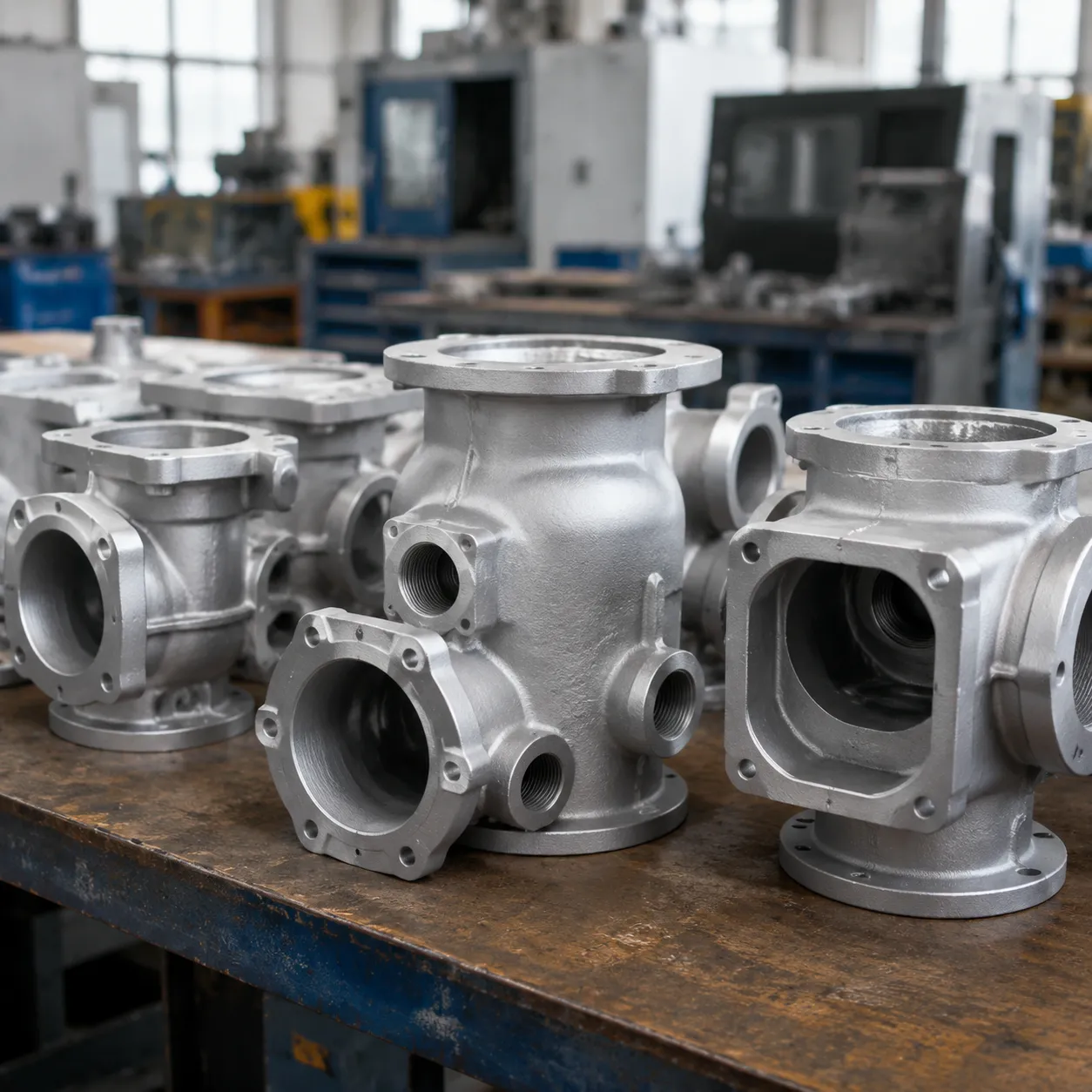
- Intricate Internal Passages: Using specialized sand cores, we cast smooth internal flow passages that reduce pressure drops and prevent fluid turbulence.
- Hydrostatic Transmissions: Our aluminum sand casting valve bodies are ideal for mobile equipment and hydrostatic transmission systems that demand high durability without adding unnecessary weight.
- Leak-Tight Construction: High-density non-ferrous metal pouring ensures dense, porosity-free walls that reliably handle demanding pneumatic circuits.
Industrial Control and Pressure Relief Valves
Process control systems rely on sand cast aluminum valve bodies for exact pressure regulation and thermal stability.
- Pressure Relief Housings: Built to withstand sudden pressure spikes, these bodies protect critical inline equipment.
- Tight Manufacturing Specs: Meeting strict dimensional tolerances in aluminum sand casting guarantees seamless alignment during secondary CNC machining and final valve trim installation.
- Broad Media Compatibility: Excellent natural corrosion resistance enables these valve bodies to handle water, mild chemicals, air, and oil media over long operational lifetimes.
Custom Pump and Flow Control Components
- Complex Multi-Port Designs: Custom mold design allows for multi-port fluid routing within a single compact casting.
- Optimized Material Selection: Utilizing premium grades like A356 alloy, we deliver valve bodies with superior mechanical strength and excellent machinability.
- Tailored Flow Paths: Precision green sand foundry processes allow us to cast custom pump housings and flow control components that optimize fluid dynamics for specialized industrial equipment.
Aluminum Sand Casting Valve Bodies Across Industrial Applications
We supply high-performance aluminum sand casting valve bodies tailored to demanding fluid handling environments worldwide. Thanks to advanced molding techniques and alloy selection, our custom castings perform reliably in high-pressure, weight-sensitive, and aggressive operating conditions.
Automotive and Transportation Systems
Modern vehicles require lightweight components to boost fuel efficiency without sacrificing mechanical strength. Our aluminum sand cast valve bodies provide critical performance across several transportation platforms:
- Hydrostatic Transmission Units: Regulate high-pressure hydraulic fluid movement in commercial vehicles and heavy machinery.
- Braking and Fluid Hydraulics: Precision valve housings cast with durable A356 alloy deliver rapid fluid response under heavy loads.
- Engine Cooling Systems: Direct thermal management fluids efficiently while keeping overall vehicle deadweight down.
Marine and Petrochemical Fluid Handling
- Offshore Flow Control: High-integrity valve housings manage volatile fuel and petrochemical transfer without risking leaks.
- Marine Water Valves: Corrosion-resistant non-ferrous metal alloys prevent oxidation and saltwater degradation.
- Smooth Internal Flow Passages: Optimized core designs prevent fluid turbulence and internal chemical buildup.
For high-volume production needs across different manufacturing setups, design engineers often compare sand casting to industrial die casting processes to evaluate tooling investment versus unit costs.
Industrial Machinery and Pump Systems
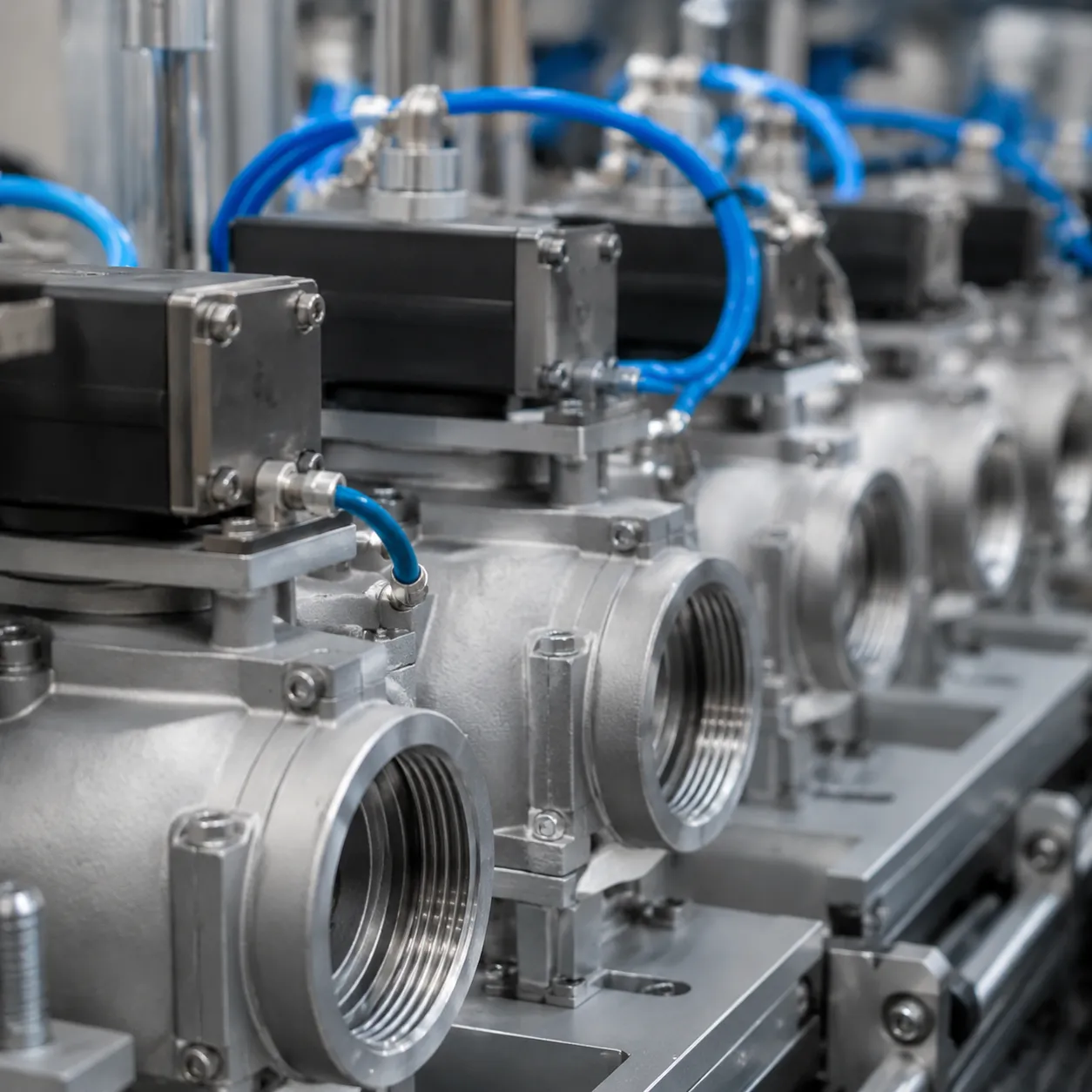
Heavy equipment, fluid circulation systems, and factory automation rely on precise fluid dynamics. We manufacture rugged aluminum sand cast valve housings designed to endure continuous operating cycles:
- Hydraulic Power Units: Handle intense system pressures while keeping total equipment weight low.
- Pneumatic Control Systems: Precision post-cast CNC machining guarantees exact port tolerances and leak-free seating.
- Industrial Pump Manifolds: Custom internal geometry routes high-volume liquids with minimal pressure loss.
Quality Control for Aluminum Sand Cast Valve Bodies
Delivering high-performance aluminum sand casting valve bodies requires strict quality control at every stage of production. From raw melt validation to final dimensional checks, we maintain rigid manufacturing protocols to ensure every casting performs reliably under demanding pressure and fluid handling conditions.
Precision CNC Machining and Dimensional Accuracy
While sand casting creates complex external shapes and core internal flow passages, post-casting finishing brings the part to exact engineering tolerances. We align our foundry operations with advanced machining capabilities to ensure absolute precision:
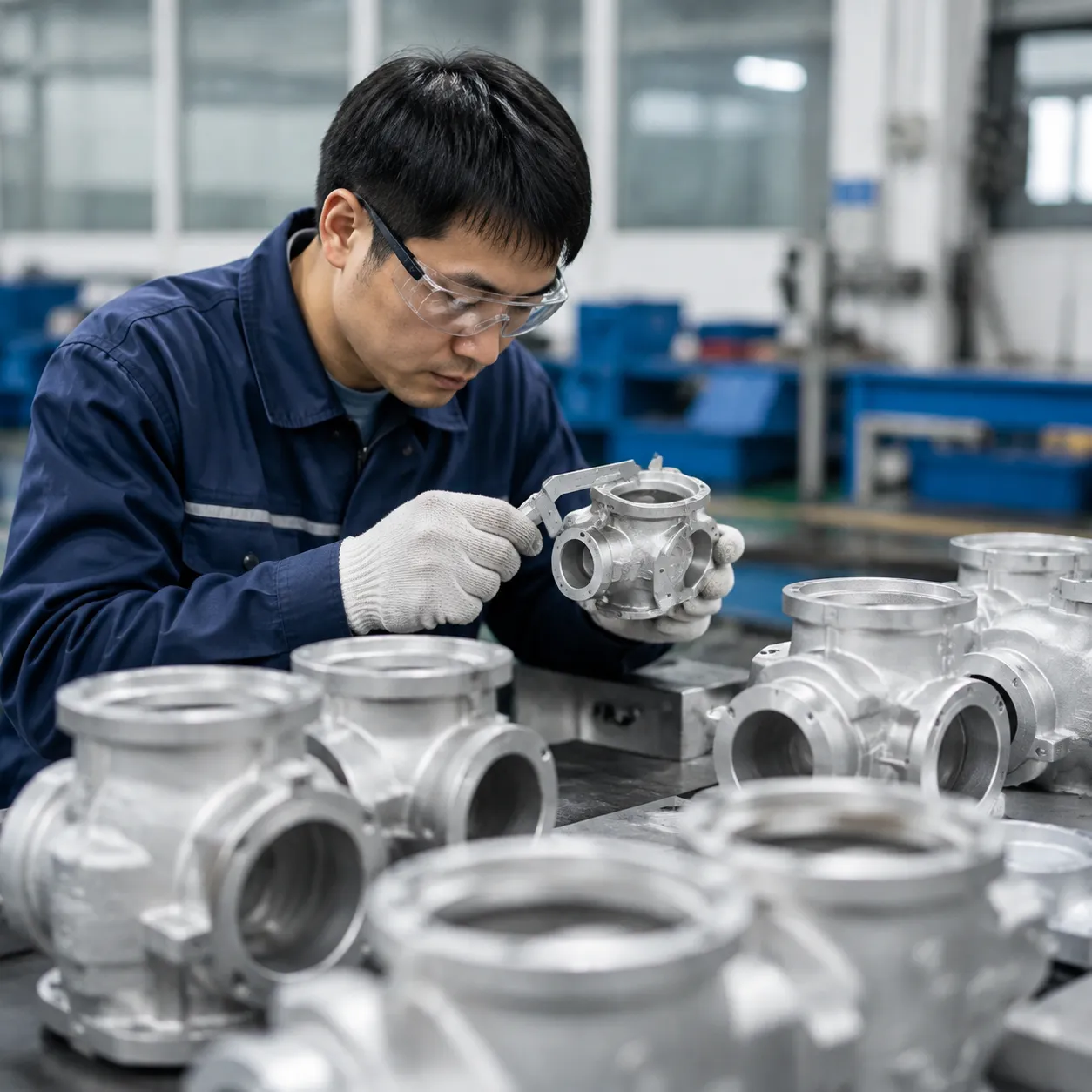
- Multi-Axis CNC Machining: We precision-machine critical sealing faces, internal threads, and valve seats to sub-millimeter tolerances - see our machining casting guide for typical finishing scopes.
- CMM Inspection: Coordinate Measuring Machines (CMM) verify valve housings against 3D CAD models to guarantee dimensional accuracy.[4]
- Surface Integrity: High-precision milling eliminates parting line variations and creates smooth mounting surfaces for leak-free seal fitment.
Pressure Testing and Non-Destructive Inspection
Because valve components operate under continuous fluid and gas pressure, internal structural integrity is non-negotiable. To reduce field-leak risk in every non-ferrous metal component, we implement rigorous testing and quality assurance protocols throughout the manufacturing workflow.[3]
- Hydrostatic & Pneumatic Testing: Castings undergo pressure testing to verify wall integrity and eliminate leak paths.
- X-Ray & Radiographic Inspection: Non-destructive checks detect internal gas porosity or shrinkage voids before parts reach the field.
- Dye Penetrant Inspection (PT): Surface defect checks catch micro-fissures around critical flange edges and high-stress junctions.
Industry Certifications and Quality Compliance
| Standard / Standard Focus | Quality Assurance Metric |
|---|---|
| ISO 9001:2015 Certification | Systematic quality control covering raw materials, pouring, machining, and final delivery. |
| ASTM Alloy Verification | Spectrographic chemical analysis confirming exact A356 alloy and aluminum composition. |
| Full Material Traceability | Complete heat-number tracking and mechanical property test certification for every batch. |
Choosing a Custom Aluminum Sand Casting Manufacturer
Partnering with the right foundry ensures your valve housings meet strict pressure and performance standards without costly delays. As an established aluminum casting manufacturer for custom precision parts, we blend advanced sand molding technology with deep metallurgical expertise to deliver reliable, high-performing components - including programs scoped through our valve castings manufacturer capability pages.
Prototyping and Custom Tooling Capabilities
Speed-to-market starts in the engineering phase. We build custom pattern tooling and rapid prototypes to validate core configurations and internal flow passages before starting full production runs.
- Rapid Prototyping: 3D-printed sand molds and core tooling for fast functional testing and flow verification.
- In-House Toolmaking: Durable pattern designs engineered for consistent dimensional accuracy across low and high production runs.
- DFM Optimization: Engineering feedback to refine draft angles, minimize shrinkage, and simplify downstream CNC machining.
Production Lead Times and Packaging Solutions
- Minimized Lead Times: Synchronized molding, pouring, and heat treatment shorten overall manufacturing cycles.
- Custom Protective Packaging: VCI corrosion-inhibiting wraps, custom foam inserts, and reinforced crates protect critical sealing faces and threads during transit.
- Supply Chain Integration: Delivery plans structured around your local inventory schedules and production targets.
Requesting a Custom Quote for Valve Body Casting
Getting a quote for custom aluminum sand cast valve bodies is fast and simple. Our team provides clear, transparent pricing and project timelines based on your exact requirements.
- Technical Drawings: 2D and 3D CAD files (STEP, IGES, or PDF) specifying critical dimensions and tolerances.
- Material Specs: Desired alloy grade, such as A356 alloy, along with any required heat treatments (e.g., T6 condition).
- Production Requirements: Estimated order quantities, pressure testing protocols, and surface finishing needs.
Send drawings and alloy targets to request a quote for your next sand-cast valve body program.