Overview
Introduction
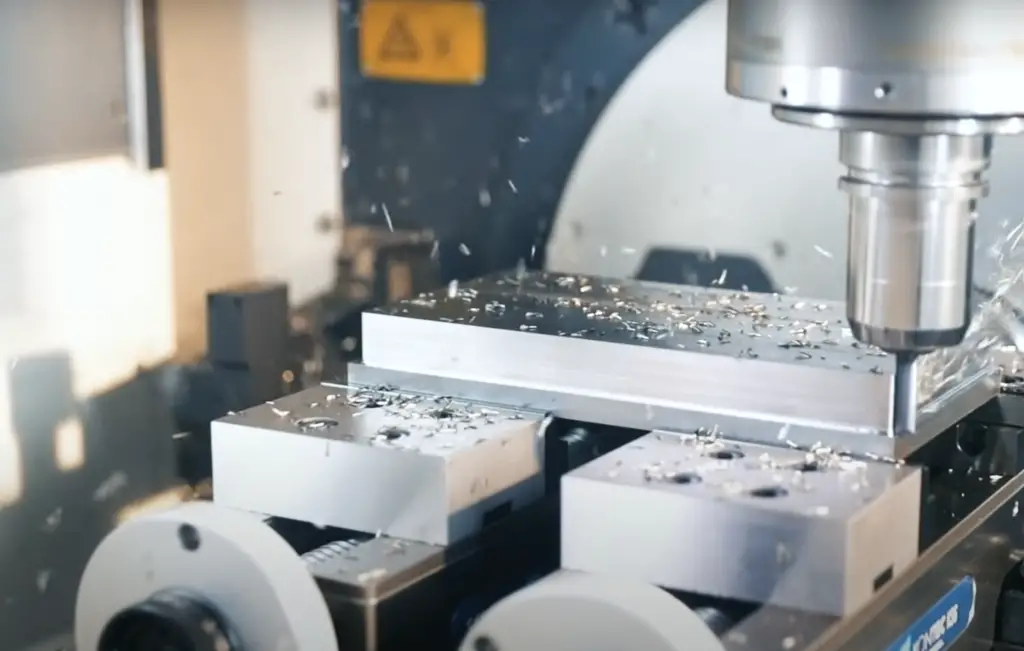
When precision, durability, and extreme temperature resistance are non-negotiable, understanding M50 alloy steel machinability becomes critical for modern manufacturing. We are a company that provides M50 alloy steel machining services, specializing in transforming this robust, high-performance material into mission-critical components. By mastering the intricate physical data and structural behavior of this metal, we deliver reliable solutions engineered for the most demanding global markets.
What is M50 Tool Steel?
M50 is a premium, molybdenum-based tool steel highly regarded for its exceptional wear resistance and remarkable compressive strength. Originally engineered for extreme environments, it has become the global standard as a high-performance bearing steel and high speed steel.
Because of its complex chemical composition, mastering its mechanical properties is essential. Key characteristics include:
- Extreme Hot Hardness: Retains structural integrity and cutting edge at elevated temperatures.
- Superior Fatigue Resistance: Crucial for dynamic, high-stress mechanical applications.
- Excellent Dimensional Stability: Resists warping during intense thermal cycling.
Even in the annealed condition, preparing this steel for fabrication requires specialized equipment and deep metallurgical expertise to achieve optimal results.
Industry Standards and Equivalents
To ensure strict quality control and global compatibility, M50 steel is regulated by rigorous international specifications. Understanding these classifications is vital for accurate material sourcing and engineering compliance.
Below are the recognized industry standards and global equivalents for M50:
| Specification Body | Material Designation |
|---|---|
| UNS (Unified Numbering System) | T11350 |
| ASTM International | ASTM A600 (Type M-50) |
| AMS (Aerospace Material Specifications) | AMS 6490, AMS 6491 |
| DIN (European Standard) | 1.3551 / 80MoCrV42-16 |
Relying on these exact specifications guarantees that the material's chemical and structural properties meet the baseline requirements for advanced machining and long-term deployment.
Chemical Composition and Key Characteristics
We are a company that provides M50 alloy steel machining services. Because of this, we know firsthand that understanding the material's exact makeup is the critical first step to mastering M50 alloy steel machinability. Primarily recognized as a premium aerospace bearing steel and high-end tool steel, M50 relies on a highly specific blend of elements to perform in demanding environments.
Primary Alloying Elements
The chemical composition of M50 is tightly controlled to guarantee top-tier performance. It behaves very much like a high speed steel, utilizing a specific matrix of hardening elements:
- Carbon (C) 0.80-0.85%: Provides the essential baseline for high hardness.
- Chromium (Cr) 4.00-4.25%: Boosts hardenability and adds a layer of oxidation resistance.
- Molybdenum (Mo) 4.00-4.50%: Drives deep hardening and maintains strength under stress.
- Vanadium (V) 0.90-1.10%: Forms dense, hard carbides for maximum wear resistance.
Physical and Mechanical Properties
When reviewing the physical data, M50 stands out for its exceptional structural integrity. Its core mechanical properties include massive compressive strength, excellent rolling-contact fatigue life, and high fracture toughness. To optimize tool life and ensure smooth fabrication, the material is almost always supplied and rough-machined in the annealed condition before undergoing final heat treatment.
High-Temperature Resistance
M50 is chosen for applications where friction and heat destroy standard metals. It retains its surface hardness and dimensional stability at operating temperatures up to 600°F (315°C). Similar to the robust components we produce through our cobalt-based casting services for high heat and wear-resistant alloys, M50 is engineered specifically to survive intense thermal shock without compromising its structural integrity.
M50 Alloy Steel Machinability
We are a company that provides M50 alloy steel machining services, and we know firsthand that working with this material requires a solid strategy. Because M50 is a premium bearing steel and high speed steel, it is incredibly tough. However, with the correct approach, you can consistently achieve excellent precision and clean surface finishes.
Machinability Rating and Guidelines
M50 tool steel has a machinability rating of roughly 45% to 50% compared to standard water-hardening carbon steels. To get the best results and extend your tool life, you must machine it in the annealed condition.
- Steady Feeds: Never let the tool dwell on the material, as this causes rapid work hardening.
- Rigid Setups: Ensure your machine and workpiece are completely secured to eliminate vibration.
- Application Focus: When manufacturing wear-resistant components for demanding sectors like the mining industry, strict adherence to these baseline guidelines is non-negotiable.
Tooling Selection and Machining Speeds
Using the right tools is the only way to manage M50's aggressive mechanical properties.
- Tool Material: Always opt for premium carbide or ceramic inserts. High-speed steel tools will wear out too quickly.
- Roughing Speeds: Keep turning speeds conservative, around 30 to 45 surface feet per minute (SFM).
- Finishing Speeds: You can increase speeds up to 60 SFM for lighter finishing cuts.
- Tool Geometry: Maintain sharp cutting edges with positive rake angles to shear the metal cleanly.
Cutting Fluids and Coolant Considerations
Heat management is critical. M50 retains its physical data and hardness at high temperatures, meaning your tooling will fail long before the workpiece does if you skip coolant.
- Continuous Flow: Flood the cutting area with a heavy, uninterrupted flow of fluid.
- Fluid Type: High-quality sulfur-based oils or heavily chlorinated water-soluble coolants work best to minimize friction.
- Chip Clearance: High-pressure coolant is highly recommended to flush chips away rapidly, preventing them from being recut and ruining your finish.
For troubleshooting specific setup issues or optimizing your cutting parameters, our technical FAQs cover practical solutions for tough machining challenges.
Fabrication and Forming Processes

We are a company that provides M50 alloy steel machining services, so we know firsthand how this material behaves on the shop floor. M50 is a premium bearing steel and high speed steel, meaning its fabrication requires precise temperature control and specific handling techniques to yield the best results.
Hot Working and Cold Working
Shaping this tough alloy steel requires a strict adherence to thermal limits.
- Hot Working: M50 performs best when heated slowly and evenly. We typically hot work the material between 2000°F and 2100°F (1093°C to 1150°C). It is crucial to stop working the metal if the temperature drops below 1700°F (925°C) to prevent severe cracking.
- Cold Working: Because of its high carbon and alloy content, cold working is heavily restricted. We only perform cold forming operations when the material is in a fully annealed condition. Attempting to cold work it in any other state will lead to immediate stress fractures.
Forging Procedures for M50 Steel
Proper forging directly impacts the final M50 alloy steel machinability. Skipping steps here leads to ruined tooling and scrapped parts later on.
- Preheating: Gradually heat the steel to 1400°F (760°C) and allow the core temperature to equalize completely.
- Target Heat: Raise the temperature to the optimal forging range of 2000°F to 2100°F.
- Controlled Cooling: This is the most critical step. After forging, the steel must be cooled incredibly slowly—often buried in insulating materials like dry ashes or lime. Rapid cooling causes thermal shock and structural damage before any advanced CNC turning processes or milling can even begin.
Weldability and Welding Techniques
Like most high-carbon tool steel grades, M50 has extremely poor weldability. It is an air-hardening steel, making it highly susceptible to severe cracking as it cools. We generally avoid welding this material entirely.
If welding is absolutely unavoidable for a specific repair, follow these strict rules:
- Heavy Preheat: The component must be preheated to a minimum of 1000°F (540°C).
- Maintain Temperature: This high heat must be maintained throughout the entire welding procedure.
- Immediate Annealing: The exact moment welding is finished, the part must be transferred to a furnace for a full annealing cycle to relieve the intense internal stresses created by the weld.
Heat Treatment for Optimal M50 Alloy Steel Machinability
As a company that provides M50 alloy steel machining services, we know firsthand that proper thermal processing is the secret to shaping this tough material. Heat treatment dictates the final mechanical properties and directly impacts M50 alloy steel machinability, allowing us to transform raw stock into durable, high-performance parts.
Annealing and Stress Relieving
Working with this premium bearing steel is much more efficient when it is in the annealed condition. Annealing softens the metal's structure, which drastically reduces tool wear during heavy milling and turning. Stress relieving is equally important to prevent part distortion after aggressive cutting passes.
- The Process: We heat the steel slowly to around 1600°F (871°C), followed by a highly controlled, slow furnace cool.
- The Result: This lowers the material's hardness for easier shaping without altering its complex chemical composition.
- The Benefit: It maximizes our cutting tool life and physically stabilizes the part before moving to the final hardening stages.
Hardening Procedures
Hardening unlocks the true performance limits of this high speed steel, giving it the extreme wear resistance needed for demanding environments. Just as we rely on strict thermal controls outlined in our steel casting foundry guide for precision components, hardening M50 requires absolute accuracy.
- Preheating: The metal is heated gradually in stages to prevent severe thermal shock.
- Austenitizing: We bring the steel up to critical temperatures, roughly between 2000°F and 2050°F (1093°C - 1121°C).
- Quenching: Rapid cooling, usually in warm oil or molten salt, locks in peak hardness and establishes the core physical data of the finished component.
Tempering and Aging
Freshly quenched tool steel is incredibly hard, but it is too brittle for practical, heavy-duty use. Tempering and aging resolve this issue by trading a fraction of that extreme hardness for a massive boost in structural toughness.
- Multiple Cycles: We typically run double or triple tempering cycles at approximately 1000°F (538°C) to ensure a uniform microstructure.
- Dimensional Stability: Aging guarantees the internal structure is completely stabilized so the part holds its exact shape over time.
- The Balance: This crucial step fine-tunes the metal, ensuring it absorbs heavy impacts and performs flawlessly without cracking under high-stress operating conditions.
Typical Applications and End Uses
We are a company that provides M50 alloy steel machining services, and we see firsthand where this premium material truly shines. Thanks to its exceptional mechanical properties and reliable physical data, M50 is the go-to choice for demanding, extreme-heat environments.
High-Speed Steel Bearings
At its core, M50 is a top-tier bearing steel. It is widely utilized to manufacture critical components that must endure intense stress and rapid rotation.
- Main Shaft Bearings: Ideal for engines requiring superior fatigue life.
- High-Temperature Operation: Maintains structural integrity where standard metals fail.
Even when starting from the annealed condition, mastering M50 alloy steel machinability is essential to hitting the exact tolerances required for high speed steel bearings to perform flawlessly.
Aerospace and Aviation Components
The aviation industry cannot compromise on quality. The strict chemical composition of M50 makes it perfect for the high-stress, high-heat reality of jet engines and gas turbines. From turbine bearings to complex structural mounts, M50 handles the pressure. For projects requiring distinct manufacturing approaches, we also produce precision custom steel parts tailored specifically to meet rigorous aerospace standards.
Industrial Tooling and Equipment
Beyond flight, M50 serves as an elite tool steel for heavy industrial applications. High-wear manufacturing environments depend on materials that won't easily degrade.
- Cutting Tools: Broaches, end mills, and specialized drill bits.
- Rolling Elements: Heavy-duty rollers for industrial manufacturing lines.
- High-Stress Fasteners: Bolts and nuts exposed to extreme operating temperatures.
Understanding M50 alloy steel machinability allows us to produce these complex industrial tools efficiently, ensuring they deliver exceptional durability and long-term performance on the factory floor.
Why Choose Vastmaterial for M50 Alloy Steel Machinability?
At Vastmaterial, we take the headache out of working with aircraft quality bearing steel. We know exactly how to handle the precise thermal processing and the strict tolerances required to get the best M50 alloy steel machinability.
Here is exactly what we bring to your supply chain:
| Our Core Strengths | What We Deliver for You |
|---|---|
| Quality Assurance | Full material traceability with strict adherence to AMS 6490 / AMS 6491 standards. |
| End-to-End Capabilities | We manage everything from raw bar stock supply to delivering tight-tolerance, finished CNC machined M50 components. |
| Technical Expertise | Deep, practical understanding of VIM-VAR M50 alloy materials and the nuances of machining high-hardness alloys. |
We manage the entire production process for you. We ensure the material is supplied in the optimal annealed condition to prevent work hardening, allowing our team to produce superior parts. Whether you need custom high-speed steel tooling or are exploring our rapid CNC machining and casting services for rapid prototyping, we focus on delivering precision, speed, and zero compromises on quality.
M50 Alloy Steel Machinability FAQs
Can M50 tool steel be welded or formed? No. Forming is simply not applicable due to the material's rigid mechanical properties. Welding is highly restricted and generally avoided. The extreme heat from welding disrupts the M50 steel heat treatment process, leading to a high risk of cracking and structural failure.
What makes VIM-VAR M50 alloy different from standard tool steels? It all comes down to purity. The VIM/VAR (Vacuum Induction Melting / Vacuum Arc Remelting) process removes impurities that standard air-melting leaves behind. This double-vacuum melting creates a premium aircraft quality bearing steel with a significantly longer fatigue life and better reliability under extreme stress.
How does M50's machinability compare to M2 tool steel? When machining high speed steel (HSS), both grades share similar challenges. However, M50 alloy steel machinability is often slightly more difficult than M2 due to its specific alloying profile. To get good results and manageable cutting speeds, both materials must be machined in the M50 steel annealed condition.
| Feature | VIM-VAR M50 Alloy | Standard M2 Tool Steel |
|---|---|---|
| Purity Level | Ultra-high (Double Vacuum Melted) | Standard Air Melted |
| Machinability | Challenging (Requires strict annealing) | Moderate |
| Best Application | High-performance aerospace bearings | General purpose cutting tools |
Request an M50 Machining Quote
At Vastmaterial, we have the specialized equipment and hands-on expertise required for CNC machining M50 components. We know how to handle the strict Vasco M50 specifications your projects demand. Beyond high-wear aerospace parts, our manufacturing capabilities also cover a wide range of industrial needs, including precision-machined custom alloy steel flanges for high-pressure systems.
Reach out to our team with your part drawings and requirements. We will quickly review your project and provide a competitive quote for your M50 alloy steel machining needs.