What are the details and conditions for obtaining accurate diameter tolerances for 1045 steel shafts?
In this guide, I’m breaking down the exact tolerance charts, fit classifications, and precision limits you need to know for 1045 carbon steel.
Let’s get right to the numbers.
Mastering 1045 Steel Shaft Diameter Tolerance
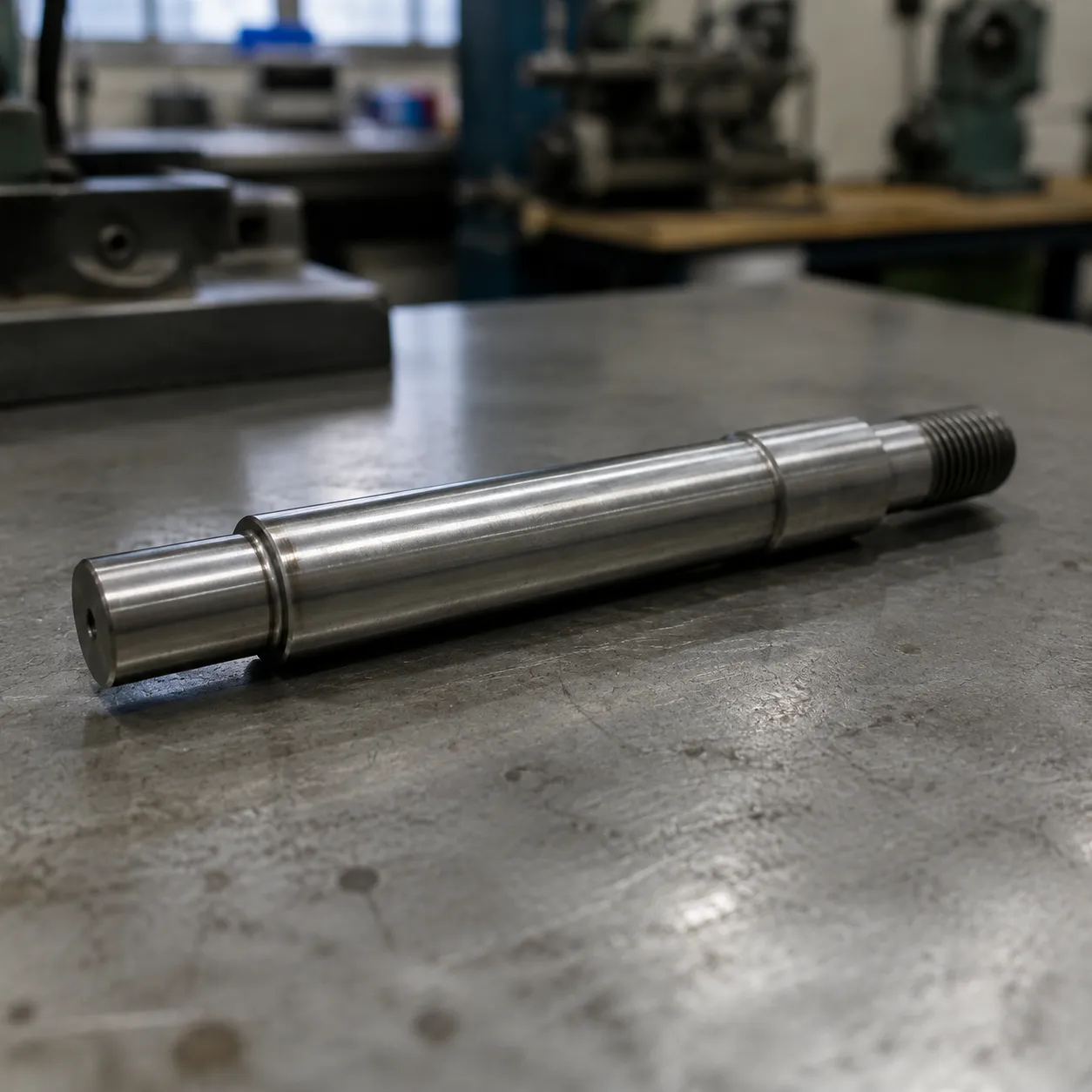
When engineering high-performance rotating components, achieving the exact 1045 steel shaft diameter tolerance is critical. AISI 1045 (or SAE 1045) is a medium carbon steel favored globally for its excellent balance of tensile strength, wear resistance, and toughness.
To meet stringent global market demands, manufacturers rely on specific processing methods to control dimensional tolerance and optimize the material's mechanical properties.
Standard Production Methods and Tolerances
The method used to finish a round bar dictates its final diameter precision and surface quality. For critical rotary shaft applications, three primary finishing methods dominate the industry:
- Turned, Ground, and Polished (TG&P): This method offers the tightest dimensional tolerance and a flawless surface finish. It eliminates surface imperfections and ensures extreme concentricity, making TG&P shafts ideal for high-speed applications.
- Cold Finished: Cold drawing improves the yield strength and hardness of the carbon steel while providing closer tolerances than hot-rolled alternatives.
- Hot Rolled: Typically used as raw stock for heavy machining data applications where the final diameter will be heavily turned down or used in structural frameworks alongside structural tubing.
| Material / Finish Type | Typical Diameter Tolerance Range | Common Applications |
|---|---|---|
| AISI 1045 Cold Finished | Class h9 to h11 (e.g., +0.000" / -0.002" to -0.005") | General drive shafts, axles, sprockets |
| AISI 1045 TG&P | Class h6 to h8 (e.g., +0.000" / -0.0005" to -0.001") | High-speed electric motors, precision pumps |
Engineering Shaft Fits for Global Markets
Selecting the right tolerance class depends entirely on the mechanical fit required for your assembly. Precise machining data guides whether a shaft needs an interference, transition, or clearance fit:
- h6 / h7 Tolerances: Strict negative-side tolerances designed for zero-clearance fits, ensuring bearings slip on accurately without vibrational play.
- h9 / h11 Tolerances: Standard commercial allowances perfect for keys, splines, and basic power transmission components.
By optimizing the processing matrix from raw carbon steel to a finished rotary shaft, we ensure that every component withstands rigorous industrial workloads while matching international standard specifications exactly.
What is 1045 Steel?
AISI/SAE 1045 is a high-quality medium carbon steel that contains approximately 0.45% carbon. This specific carbon content places it perfectly between low-carbon mild steels and high-carbon tool steels, offering a balanced combination of strength, ductility, and wear resistance. As precision manufacturing specialists, we frequently utilize aisi 1045 carbon steel round bar stock because it responds exceptionally well to various heat treatment processes, allowing us to tailor its final mechanical properties to demanding industrial applications. It is an important raw material for designing high-stress components such as drive shafts, axles, and wheels.
Core Mechanical Properties
The popularity of 1045 medium carbon steel in power transmission and structural components stems from its robust baseline characteristics:
- High Tensile Strength: Yield strength typically ranges from 50,000 to 85,000 psi, with an ultimate tensile strength of 80,000 to 100,000 psi, depending on whether it is hot rolled or cold finished.
- Excellent Fatigue Resistance: It withstands the continuous torsional and bending stresses experienced by a rotary shaft.
- Surface Hardening Potential: While it does not through-harden easily due to a lack of heavy alloying elements, it is ideal for induction or flame hardening to create a wear-resistant outer crust while maintaining a tough, ductile core.
Strength vs. Machinability Trade-offs
One of the greatest advantages of 1045 steel is its excellent carbon steel machinability. In the manufacturing world, a classic trade-off exists: harder materials destroy cutting tools faster, while softer materials tear and leave poor surface finishes.
1045 steel hits the sweet spot. It provides significantly higher strength than 1018 mild steel, yet it can still be efficiently turned, milled, and drilled without causing excessive tool wear. This balance keeps production costs manageable while delivering a rugged component capable of handling high rotational torques. For applications requiring strict dimensional tolerance and superior surface finishes, we often process this material into cold drawn 1045 or turned ground and polished (TGP shafting) forms to optimize both its structural integrity and its final machining data profiles.
Understanding Shaft Diameter Tolerance
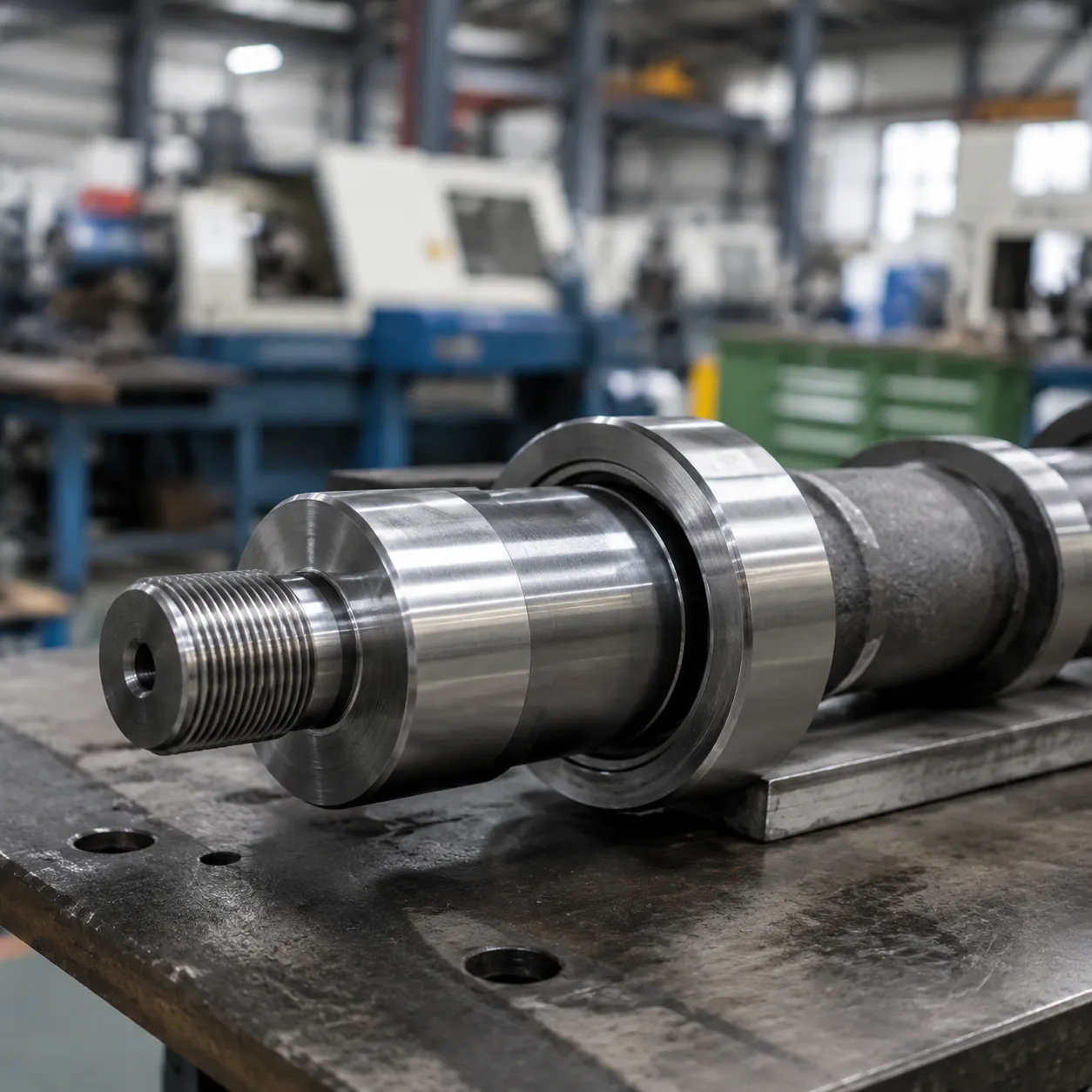
Shaft diameter tolerance is the allowable dimensional variation from the nominal size during manufacturing. When engineering components like an AISI 1045 carbon steel round bar, achieving the exact specified diameter is nearly impossible due to machining variables. Tolerance defines the acceptable high and low limits for that diameter, ensuring every rotary shaft fits its mating part perfectly.
Why Precise Clearance and Interference Fits Matter
Getting the shaft diameter clearance right determines how your machinery performs. In mechanical design, we rely on two primary types of fits:
- Clearance Fits: Ensure the shaft is smaller than the mating hole, allowing free rotation or sliding movement. This is critical for driving gears and pulleys.
- Interference Fits: Require the shaft to be slightly larger than the hole, creating a tight press-fit that locks the components together without keys or adhesives.
When working with high-stress components, achieving these exact dimensions requires advanced manufacturing capabilities. For applications demanding complex geometries alongside tight tolerances, leveraging specialized precision casting services ensures that the mating parts align perfectly with your machined 1045 shafting.
How Incorrect Tolerances Cause Vibration and Bearing Failure
Mismatched tolerances lead to catastrophic equipment failure. If the 1045 steel shaft diameter tolerance is too loose, it creates excessive play. This slack causes high-speed vibration, destroying oil seals and rattling bearings to pieces.
Conversely, if the diameter is too large for a clearance fit, it binds the assembly. This increases friction, spikes operating temperatures, and causes premature bearing failure or snapped drive shafts. Maintaining strict dimensional tolerance is the only way to ensure balanced rotation and a long operational lifespan.
Standard 1045 Steel Shaft Diameter Tolerance Chart
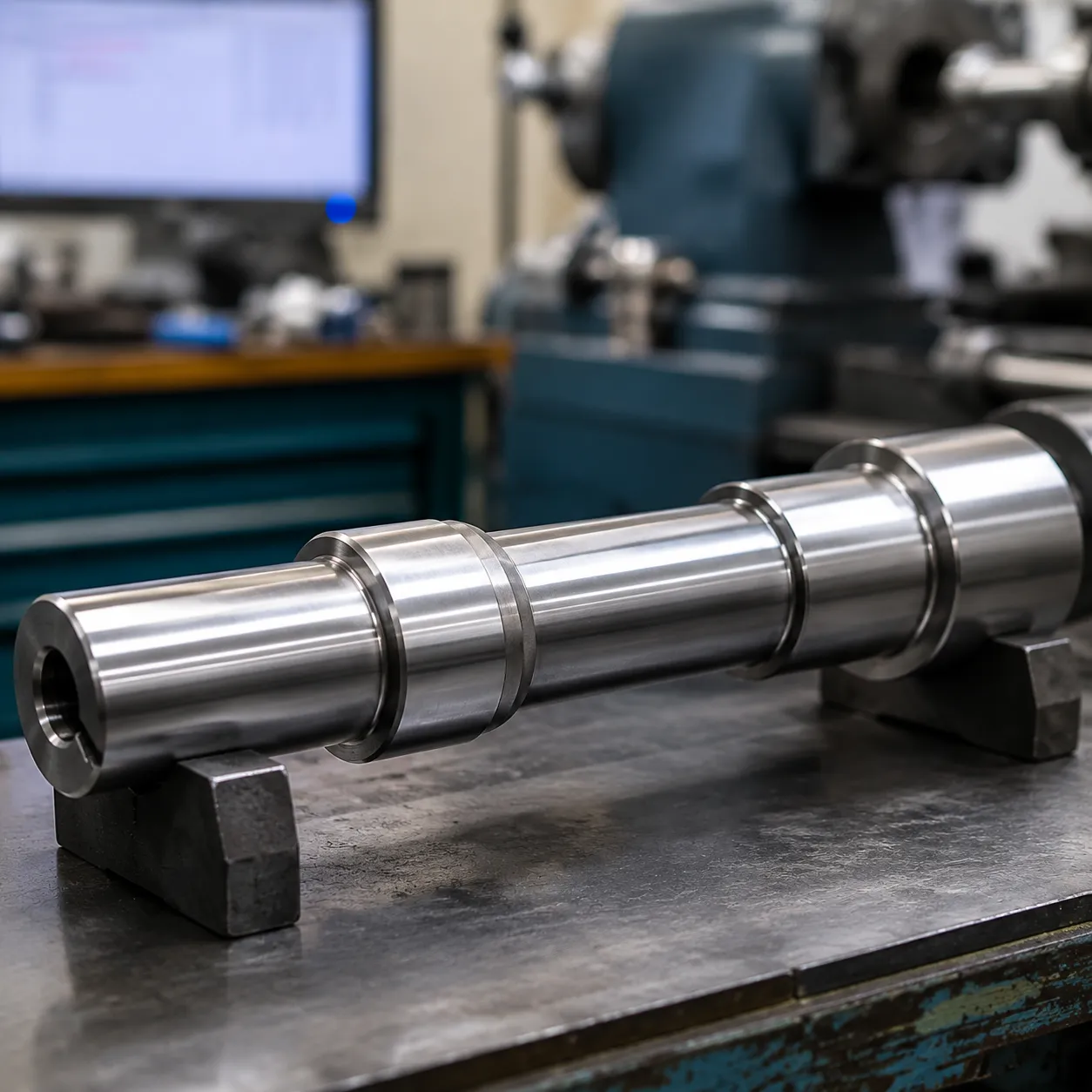
When sourcing or machining a 1045 steel shaft, hitting the exact diameter limit keeps your assembly running smoothly without unwanted play or binding. The allowable dimensional variation changes significantly depending on whether you utilize raw cold drawn 1045 bars or high-precision turned, ground, and polished (TGP) shafting. For heavy-duty applications requiring specialized geometries, integrating high-quality custom machined metal parts with tight tolerances ensures the component perfectly matches your required fits.
The table below breaks down the common ISO shaft tolerance chart classes (h6, h7, h8, h9) for metric sizes alongside typical ANSI standard fits for imperial 1045 shafts.
Metric ISO Tolerance Limits (mm)
| Nominal Diameter Range (mm) | h6 Tolerance (μm) | h7 Tolerance (μm) | h8 Tolerance (μm) | h9 Tolerance (μm) |
|---|---|---|---|---|
| Over 10 to 18 | 0 to -11 | 0 to -18 | 0 to -27 | 0 to -43 |
| Over 18 to 30 | 0 to -13 | 0 to -21 | 0 to -33 | 0 to -52 |
| Over 30 to 50 | 0 to -16 | 0 to -25 | 0 to -39 | 0 to -62 |
| Over 50 to 80 | 0 to -19 | 0 to -30 | 0 to -46 | 0 to -74 |
Imperial TGP Shafting Limits (Inches)
- Standard Cold Finished Bars: Typically feature a broader minus-side tolerance, often ranging from -0.002" to -0.005" depending on the base diameter.
- Turned, Ground, and Polished (TG&P): Provides an extremely tight, uniform variance. For a standard 1-inch rotary shaft, the commercial TGP tolerance is usually +0.000" / -0.001" or better.
- h6 vs h7 Fit Selection: We recommend an h6 tolerance for high-precision, high-speed applications utilizing strict interference fit standards. Use h7 or h8 limits for standard shaft diameter clearance where easy bearing installation is the priority.
Factors Influencing 1045 Shaft Tolerances
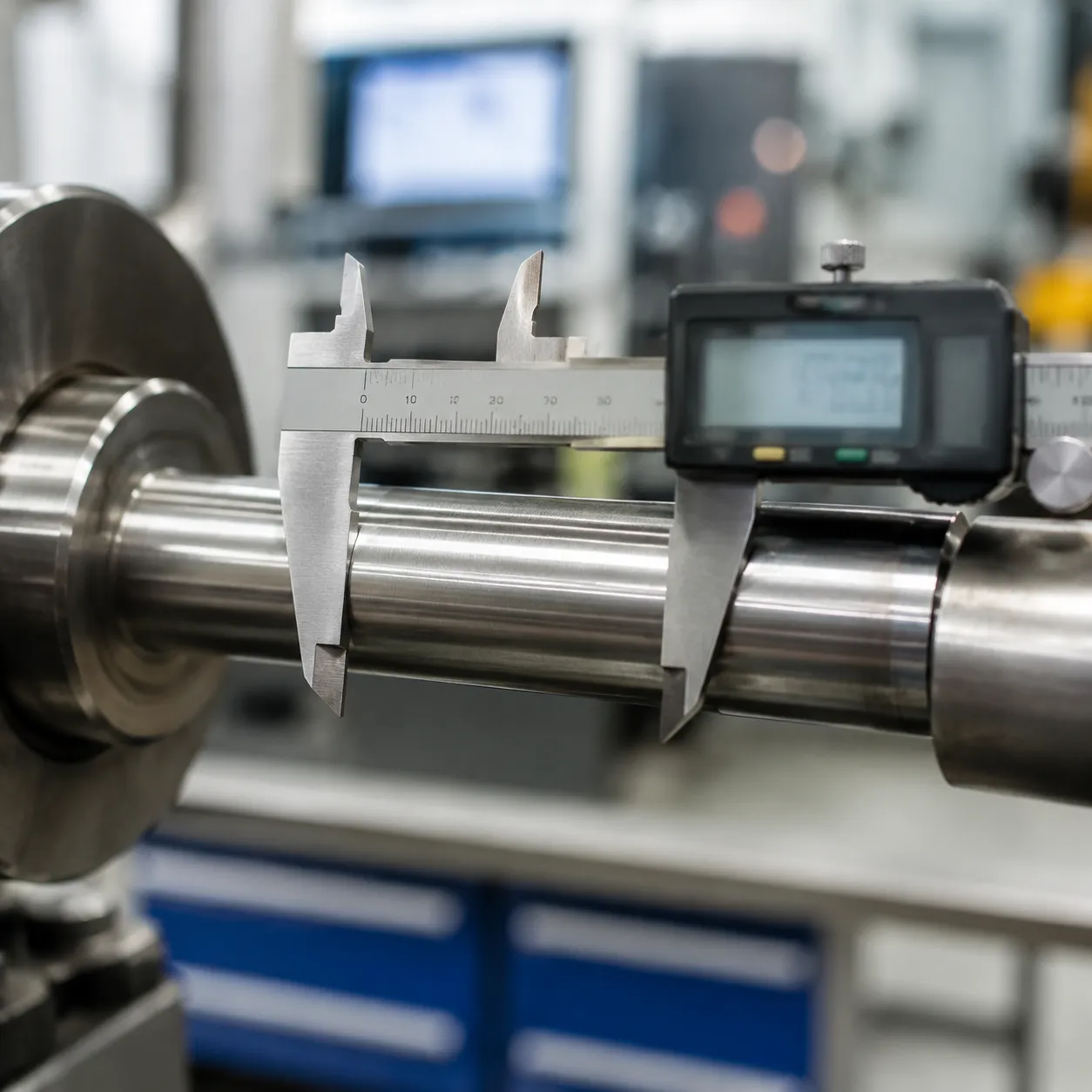
Achieving a precise 1045 steel shaft diameter tolerance depends entirely on how the raw material is processed and handled on the shop floor. For critical applications like rotary shafts, controlling these variables prevents unexpected dimensional variation.
Raw Material Baselines: Cold Drawn vs. Hot Rolled
The starting state of the carbon steel determines your baseline precision. Cold drawn 1045 bars come out of the mill with much tighter dimensional tolerances and a smoother finish than hot rolled alternatives. While hot rolled steel requires heavy initial roughing to remove scale and correct out-of-roundness, cold finished bars let us skip straight to final sizing or minor machining data adjustments.
| Material Condition | Baseline Diameter Tolerance | Surface Quality | Common Application |
|---|---|---|---|
| Hot Rolled | Generous / Wide variation | Rough, heavy mill scale | Heavy structural, forged blanks |
| Cold Drawn | Tight / Commercial straightness | Smooth, scale-free | Standard drive shafts, pins |
| Turn Ground & Polished (TG&P) | Extremely Tight (h6–h7) | Mirror-like, high-precision | High-speed electric motor shafts |
Thermal Expansion During High-Speed Machining
Heat is the enemy of tight tolerances. During aggressive cutting or grinding of aisi 1045, thermal expansion temporarily increases the shaft's diameter. If you measure the workpiece while it is still hot from the lathe, it will shrink below your target shaft diameter clearance once it cools down to room temperature. Controlling the feed rate, utilizing proper lubrication, and implementing cooling cycles are essential to maintaining predictable mechanical properties and sizes.
For advanced component production that requires pairing 1045 steel with alternative high-performance parts, optimizing your tooling setups is just as critical as it is when mastering stainless steel CNC machining to prevent thermal distortion.
Surface Finish and Sizing
The final surface roughness directly impacts the measurable 1045 steel shaft diameter tolerance. A rough-turned surface has microscopic peaks and valleys. Heavy tool marks can artificially inflate your micrometer measurement. Achieving premium fits like an h7 tolerance limit requires a secondary finishing operation—such as centerless grinding or polishing—to flatten those peaks, secure the exact outer diameter, and ensure a reliable interference fit standard during assembly.
Measuring and Verifying 1045 Steel Shaft Diameter Tolerance
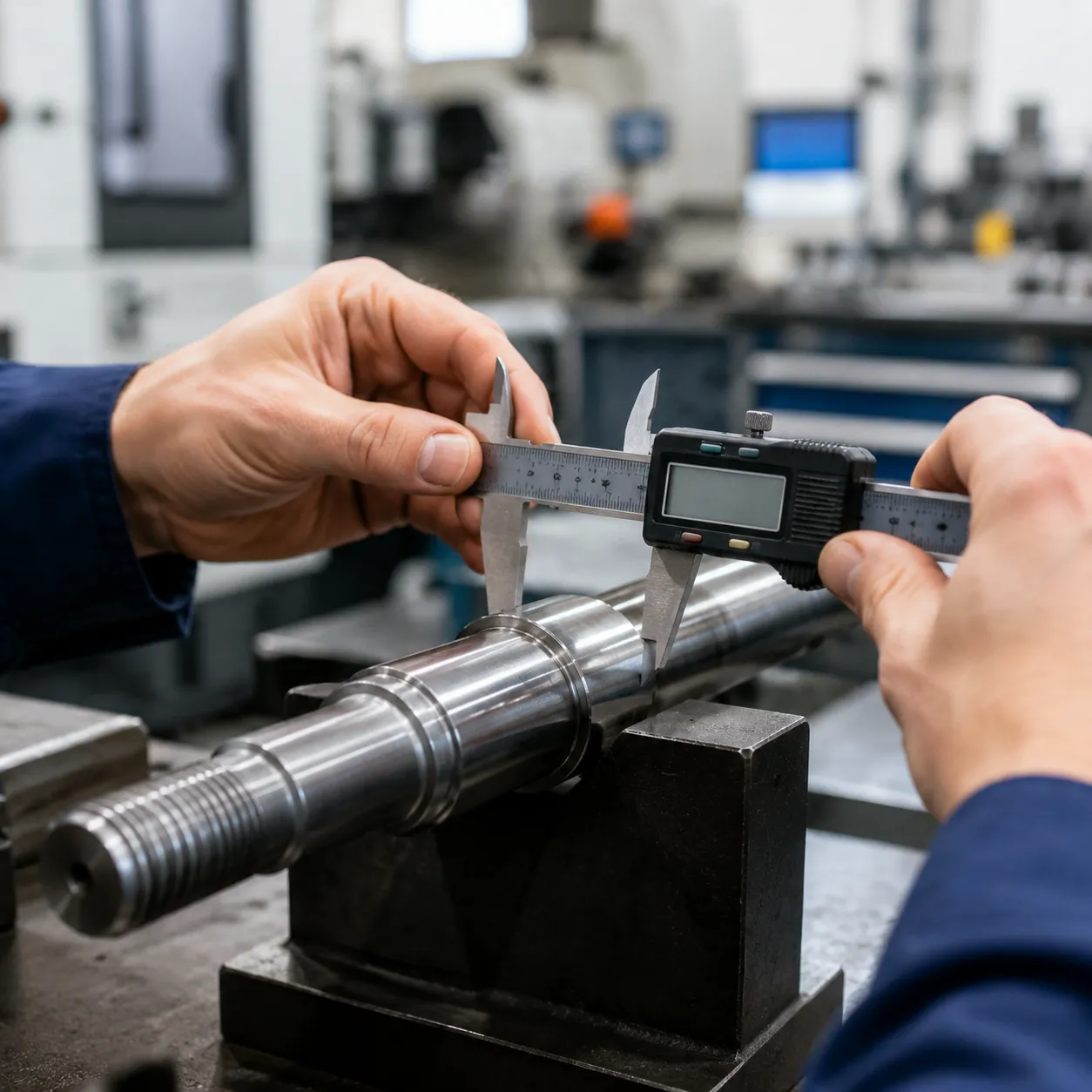
Getting the exact 1045 steel shaft diameter tolerance on paper doesn't mean a thing if it isn't verified accurately on the shop floor. Standard vernier calipers are fine for quick rough-ins, but verifying tight allowable dimensional variation requires outside micrometers and snap gauges calibrated to the exact micron.
When we check a rotary shaft, a single measurement is never enough. We measure at multiple points along the length and around the circumference to catch out-of-roundness and taper. If a shaft is wider in the middle or oval-shaped, it will destroy bearings and cause severe high-speed vibration.
Temperature control is the secret weapon for accurate inspection. Carbon steel expands and contracts with temperature shifts. If you measure a warm 1045 bar right after heavy machining, your data will be wrong. We always let the material stabilize to a standard ambient room temperature of 20°C (68°F) before taking final micrometer measurements. For components operating under extreme heat or high friction alongside these shafts, using specialized precision investment castings ensures the entire assembly maintains its dimensional tolerance under harsh working conditions.
Quick Checklist for Accurate Shaft Inspection:
- Clean the surface: Wipe away all cutting fluids, grit, and burrs before measuring.
- Use the right tool: Deploy outside micrometers for the main journal diameters and snap gauges for rapid go/no-go production checks.
- Check for ovality: Measure at 0-degree and 90-degree positions on the same cross-section.
- Identify taper: Take measurements at both ends and the middle of the shaft seating area.
FAQs: 1045 Steel Shaft Diameter Tolerance
What is the standard tolerance for a 1-inch 1045 TGP shaft?
For a 1-inch turned, ground, and polished (TGP shafting) rotary shaft, the standard allowable dimensional variation is typically +0.000 inches / -0.002 inches for standard cold finished precision bars. However, high-precision tg&p 1045 carbon steel round bars often achieve a tighter commercial tolerance of +0.000 inches / -0.001 inches to ensure a precise shaft diameter clearance during bearing installation.
Can you weld 1045 steel without affecting its dimensional tolerance?
No. AISI 1045 / SAE 1045 is a medium carbon steel, meaning it has elevated carbon content that makes it susceptible to cracking and thermal distortion during welding. The intense localized heat alters the mechanical properties and causes localized shrinkage, ruinous to your strict dimensional tolerance. If you must join components, we often recommend exploring the difference between forging and casting or utilizing mechanical interference fit standards to avoid thermal warping altogether.
How does heat treatment change the diameter of a 1045 shaft?
Through-hardening or induction hardening causes volumetric changes in the steel microstructure. When cold drawn 1045 transforms into martensite, the material expands. This predictable distortion requires you to leave extra material stock during preliminary machining, followed by final turned ground and polished processing to hit the final machining data targets.
What is the difference between h7 and h9 tolerances for 1045 steel?
The core difference lies in the size of the acceptable tolerance window defined by the ISO shaft tolerance chart. The h7 class is much tighter and meant for high-precision fits, while h9 allows a larger manufacturing deviation.
| Metric Size Range (1-inch equivalent ~25mm) | h7 Tolerance Limits | h9 Tolerance Limits | Common Application |
|---|---|---|---|
| Over 18mm to 30mm | +0 mm / -0.021 mm | +0 mm / -0.052 mm | h6 vs h7 fit: High-speed bearings h9: Sprockets, pulleys, and basic drive keys |
When verifying these limits on the factory floor, always use a calibrated micrometer measurement rather than standard calipers to ensure absolute accuracy.