Choosing between a cast iron vs ductile iron valve body can mean the difference between a smooth-running piping system and a catastrophic line failure. One sudden water hammer or pressure spike will instantly expose the limits of brittle gray iron. This guide compares core differences in tensile strength, yield stress, and pressure ratings—plus temperature ratings, butterfly and ball valve body choices, and brittleness under piping loads—so you can select the safest, most cost-effective valve body for your application.
Key Differences: Cast Iron vs Ductile Iron Valve Body
Graphite Nodule Microstructure vs Flake Graphite
The foundational difference between a gray cast iron valve body and a nodular iron valve body lies in their internal carbon geometry:
- Gray Cast Iron: Contains interconnected flake graphite. These sharp flakes create stress concentration points within the metal matrix, increasing brittle fracture risk under strain.
- Ductile Iron: Features spherical graphite nodules created by adding magnesium during casting. This graphite nodule microstructure stops crack propagation and delivers structural flexibility.[4]
Tensile Strength and Yield Strength
Ductile iron yield strength and tensile properties far exceed standard gray iron capabilities. As precision casting service providers, we manufacture both materials to exact industry standards:
| Mechanical Property | Gray Cast Iron (ASTM A126) | Ductile Iron (ASTM A536) |
|---|---|---|
| Microstructure | Graphite Flakes | Spherical Graphite Nodules |
| Tensile Strength | ~31,000 psi (210 MPa) | ~65,000 psi (450 MPa) |
| Yield Strength | Minimal (Brittle) | ~45,000 psi (310 MPa) |
| Elongation (Flexibility) | < 1% | 12% |
Typical gray-iron tensile values align with ASTM A126 Class B practice, while the ductile-iron row mirrors a common ASTM A536 65-45-12 grade band used for pressure-containing castings.[1][2]
Impact Resistance and Pressure Shock
Mechanical shocks and sudden pressure spikes dictate proper valve body material selection:
- Gray Cast Iron Valve Body: Limited impact absorption; vulnerable to sudden cracking under severe thermal shock or physical impact.
- Ductile Iron Valve Body: Superior toughness under sudden pressure surges (water hammer). Its high yield strength allows the housing to deform slightly rather than shatter.
Material Specs for Cast Iron vs Ductile Iron Valve Body
Pressure and Temperature Operating Limits
When evaluating a cast iron vs ductile iron valve body, mechanical operating thresholds are critical. Cast iron valve bodies are typically rated for Class 125 or Class 250 systems, making them suitable for standard baseline line pressure.[3] However, they struggle with extreme thermal shock and sudden pressure spikes.
Ductile iron valve bodies comfortably handle higher pressure ratings up to Class 300 and elevated temperature limits. We rely on standard precision casting insights and material performance criteria to ensure every valve body matches its intended operating environment safely.
| Performance Metric | Cast Iron Valve Body | Ductile Iron Valve Body |
|---|---|---|
| Pressure Class Rating | Class 125 / Class 250 | Class 150 / Class 300 |
| Operating Temperature | Up to 450°F (232°C) | Up to 650°F (343°C) |
| Vibration Damping | Superior (absorbs noise) | Moderate |
| Structural Flexibility | Rigid (low elongation) | Flexible (high elongation) |
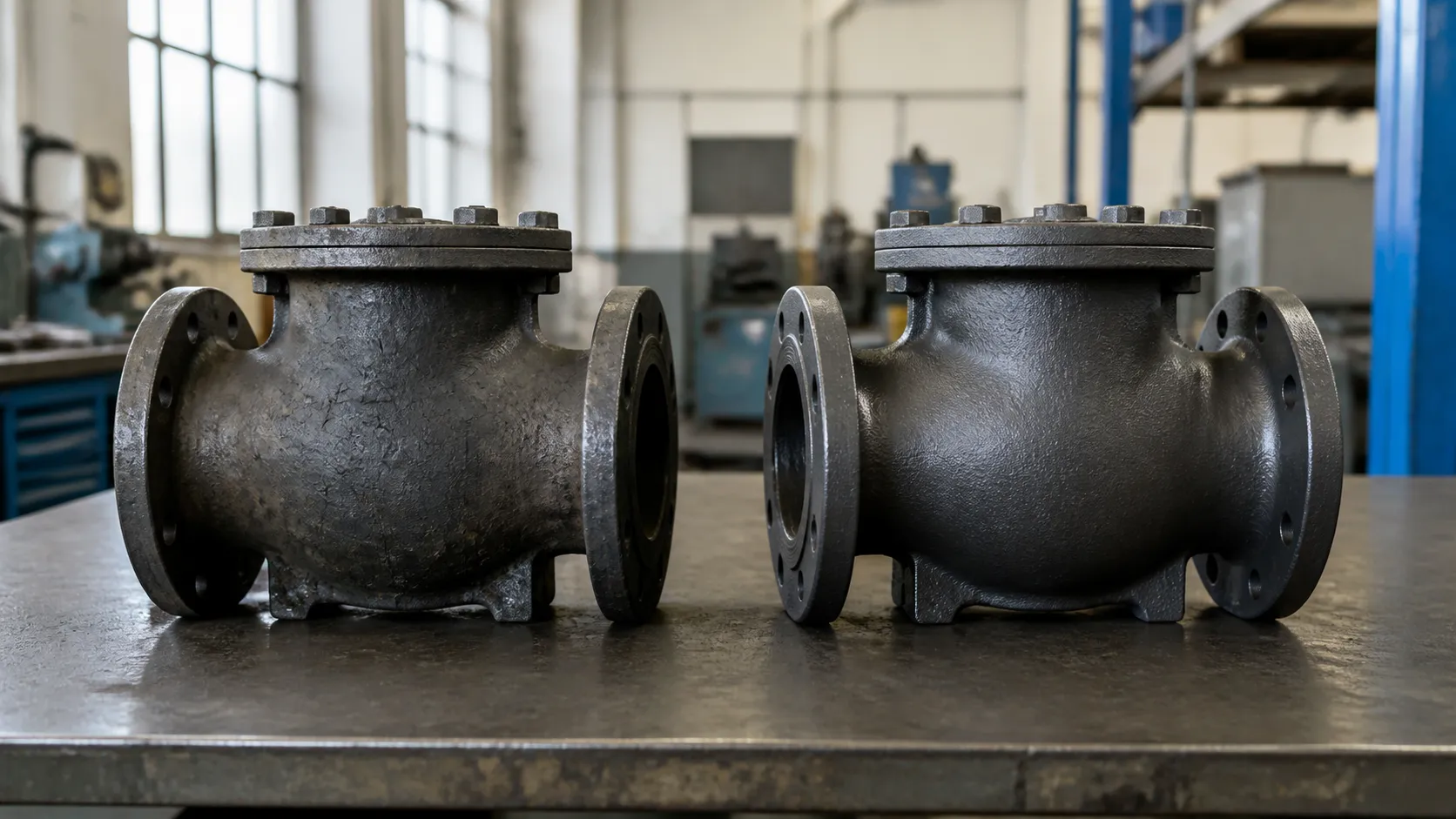
Corrosion Resistance and Wear Characteristics
- Corrosion Resistance: Both iron alloys perform reliably in neutral fluid service by forming a protective surface oxidation layer. Ductile iron handles localized pitting better in aggressive wastewater treatment environments.
- Wear & Abrasion: Gray cast iron contains graphite flakes that provide self-lubricating properties, reducing friction and sliding wear in low-impact fluid service.
- Durability: Ductile iron provides higher overall yield strength and resistance to mechanical erosion caused by high-velocity media.
Vibration Damping vs. Structural Flexibility
- Vibration Damping: Cast iron's graphite flake network absorbs vibrational energy exceptionally well, making it a great noise damper near pumps in HVAC systems.
- Structural Flexibility: Ductile iron offers superior structural elasticity. Instead of snapping under sudden pipe deflection or thermal expansion, it bends and absorbs structural stresses without cracking.
Temperature Ratings for Cast Iron vs Ductile Iron Valve Bodies
Pressure class alone is not enough when you publish temperature ratings on a datasheet. For a cast iron vs ductile iron valve body, map every allowable working pressure to the fluid temperature band in the governing flange or valve standard, then derate for steam, cycling, and insulation gaps.
- Gray cast iron: Common Class 125 / Class 250 iron flanges follow ASME B16.1 pressure-temperature tables; elevated temperature quickly lowers allowable pressure, so hot water and low-pressure steam need an explicit check against the published temperature ratings.[3]
- Ductile iron: Higher-strength grades (ASTM A536 families) support wider Class 150 / Class 300 envelopes, but coatings, elastomeric seats, and bolting still set the practical ceiling—not the iron matrix alone.[2]
- Thermal shock: Rapid heat-up or cool-down favors ductile iron because flake graphite gray iron concentrates stress at the flake tips and raises brittle fracture risk.
We confirm temperature ratings with the same drawing package used for pressure ratings—material grade, seat trim, and coating system—so the valve body is not approved on ambient water data alone.
Application Guide for Cast Iron vs Ductile Iron Valve Body
Selecting between a cast iron vs ductile iron valve body comes down to system pressure, shock risks, and overall project budget. As custom valve body castings manufacturer specialists, we evaluate operating conditions to help engineers choose the ideal material for long-term service reliability.
When to Choose Cast Iron Valve Bodies
A standard gray cast iron valve body works best for low-pressure environments with stable thermal and mechanical conditions.
- HVAC Systems: Chilled and hot water circulation loops with predictable working pressures.
- Cost-Sensitive Projects: Budget-driven installations where initial material cost is the priority.
- Low-Pressure Wastewater Treatment: Non-critical, gravity-fed fluid handling lines.
- Common Valve Types: Standard low-pressure butterfly valves, gate valves, and simple check valves.
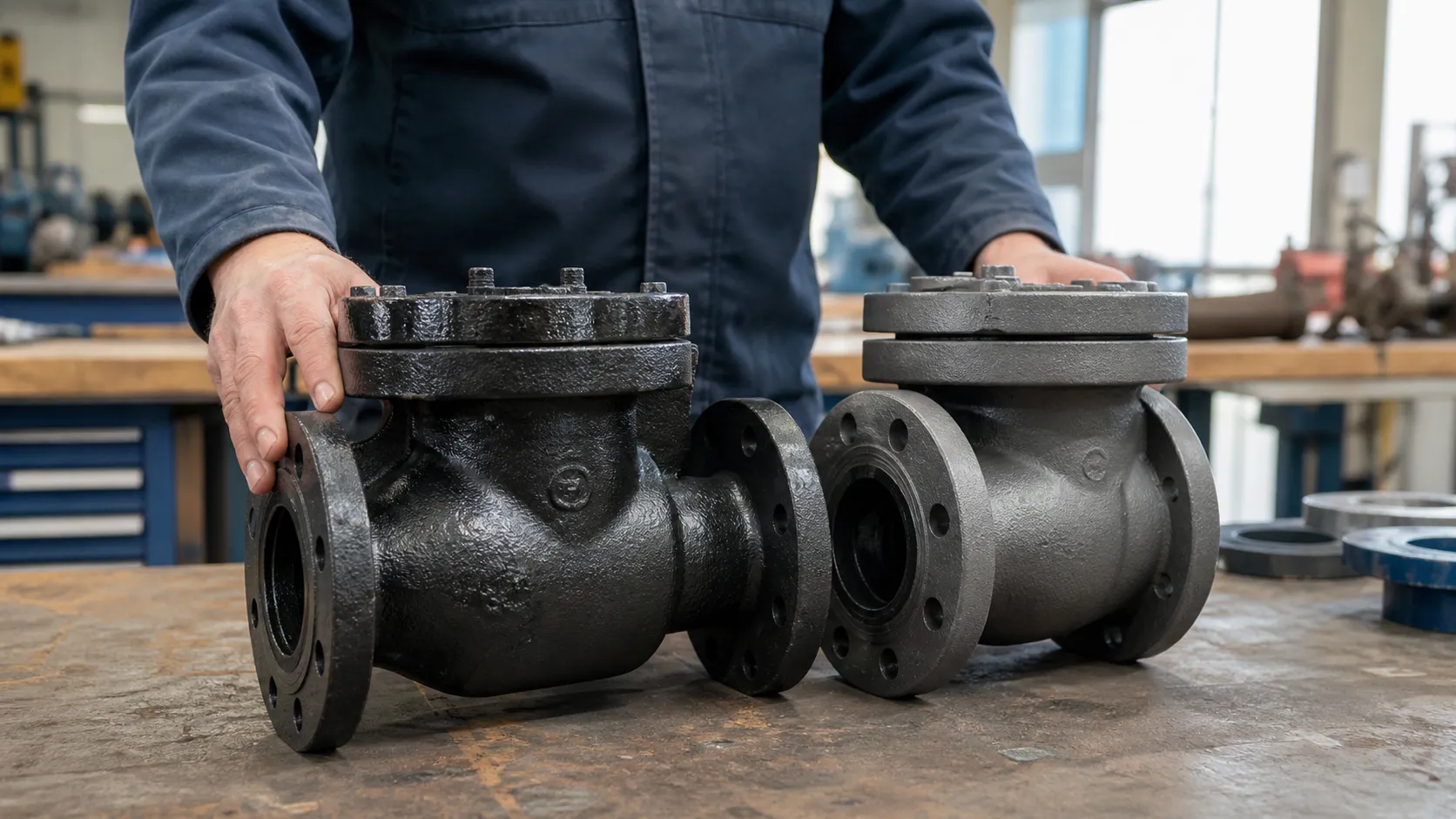
When Ductile Iron Valve Bodies Are Required
A nodular iron valve body is mandatory whenever piping networks face dynamic stresses, pressure spikes, or high physical demands.
- High-Pressure Water Systems: Distribution networks operating above standard pressure thresholds.
- Municipal Waterworks: Underground main lines subject to soil movement and severe water hammer.
- Steam and Process Lines: Applications experiencing rapid thermal cycling or heavy fluid vibration.
- Industrial Oil and Gas: Severe-duty applications requiring high yield strength and zero risk of brittle failure.
ASTM A126 vs ASTM A536 Material Standards
Reviewing standard engineering specifications ensures your valve body material selection matches international building codes and safety regulations.
| Material Standard | Iron Type | Structural Feature | Target Operating Conditions |
|---|---|---|---|
| ASTM A126 Class B | Gray Cast Iron | Flake graphite microstructure | Low-pressure HVAC, general water service, low vibration |
| ASTM A536 | Ductile Iron | Spherical graphite nodules | High pressure, steam service, severe water hammer risks |
Butterfly Valves and Ball Valves: Body Material Choices
SERP buyers often ask about valve type first, then material. Keeping both butterfly valves and ball valves in scope avoids narrowing a cast iron vs ductile iron valve body decision to a single product family.
- Butterfly valves: Large-diameter HVAC, water, and wastewater butterfly bodies commonly start in gray cast iron for Class 125 quiet loops. Spec ductile iron when buried lines, tube-collapse risk, or frequent slam shutoffs load the body; butterfly valve cast iron body OEM geometry is available in either iron grade.
- Ball valves: Compact ball valves in plant utility headers and oil and gas skids see more stem-side bending and seat-loading cycles than a lightly loaded butterfly. Ductile iron ball valve bodies tolerate that combination of pressure ratings and mechanical deflection better than gray cast iron; use gray iron only where piping imposes minimal external forces and temperatures stay inside published temperature ratings.
- Shared rule: Match face-to-face and flange class first, then choose iron grade for shock, soil movement, and thermal cycling—not list price alone.
For custom OEM envelopes across butterfly, ball, gate, and check patterns, we cast both grades under the same precision casting valve manufacturer process controls so material upgrades do not force a redesign.
Cost Analysis: Cast Iron vs Ductile Iron Valve Body
Upfront Material and Manufacturing Cost Differences
When weighing a cast iron vs ductile iron valve body, upfront cost is often the first consideration. Standard gray cast iron costs less to manufacture because of lower raw material expenses and simpler pouring procedures. Ductile iron costs roughly 15% to 30% more initially due to the addition of magnesium alloys required to create spherical graphite nodules.
However, factoring production design into early budget planning—such as reviewing an investment mould guide for tooling costs and materials lifespan—helps balance initial manufacturing expenses with actual operational needs.
Maintenance Requirements, Lifespan, and Overall ROI
We evaluate total cost of ownership by looking far beyond the purchase price:
- Cast Iron: Ideal for low-pressure HVAC, chilled water, and gravity-fed lines. Maintenance is minimal in stable systems, but premature failure can occur if lines experience vibration or thermal shock.
- Ductile Iron: Offers significantly higher yield strength and impact resistance. It resists piping stress and thermal cycling, leading to fewer replacement cycles, reduced downtime, and a much higher long-term return on investment (ROI).
Failure Modes: Brittle Fracture Risk vs Ductile Bending
Understanding how each material handles unexpected system stress is critical to risk management:
- Catastrophic Brittle Failure (Cast Iron): Cast iron cannot deform under excessive stress. Under high shock loads or water hammer, it snaps or shatters suddenly, risking massive fluid leaks and immediate operational failure.
- Ductile Bending (Ductile Iron): Ductile iron deforms plasticly before breaking. If pressure exceeds safety limits, the valve body bends rather than shattering, giving operators time to detect leaks and safely shut down the system.
| Financial & Performance Feature | Cast Iron Valve Body | Ductile Iron Valve Body |
|---|---|---|
| Initial Purchase Price | Lower baseline cost | 15% – 30% higher investment |
| Service Lifespan | Standard in quiet systems | Extended under high stress |
| Failure Response | Sudden brittle fracture | Gradual yield and bending |
| Long-Term ROI | Best for low-budget, static systems | Best for high-pressure, critical infrastructure |
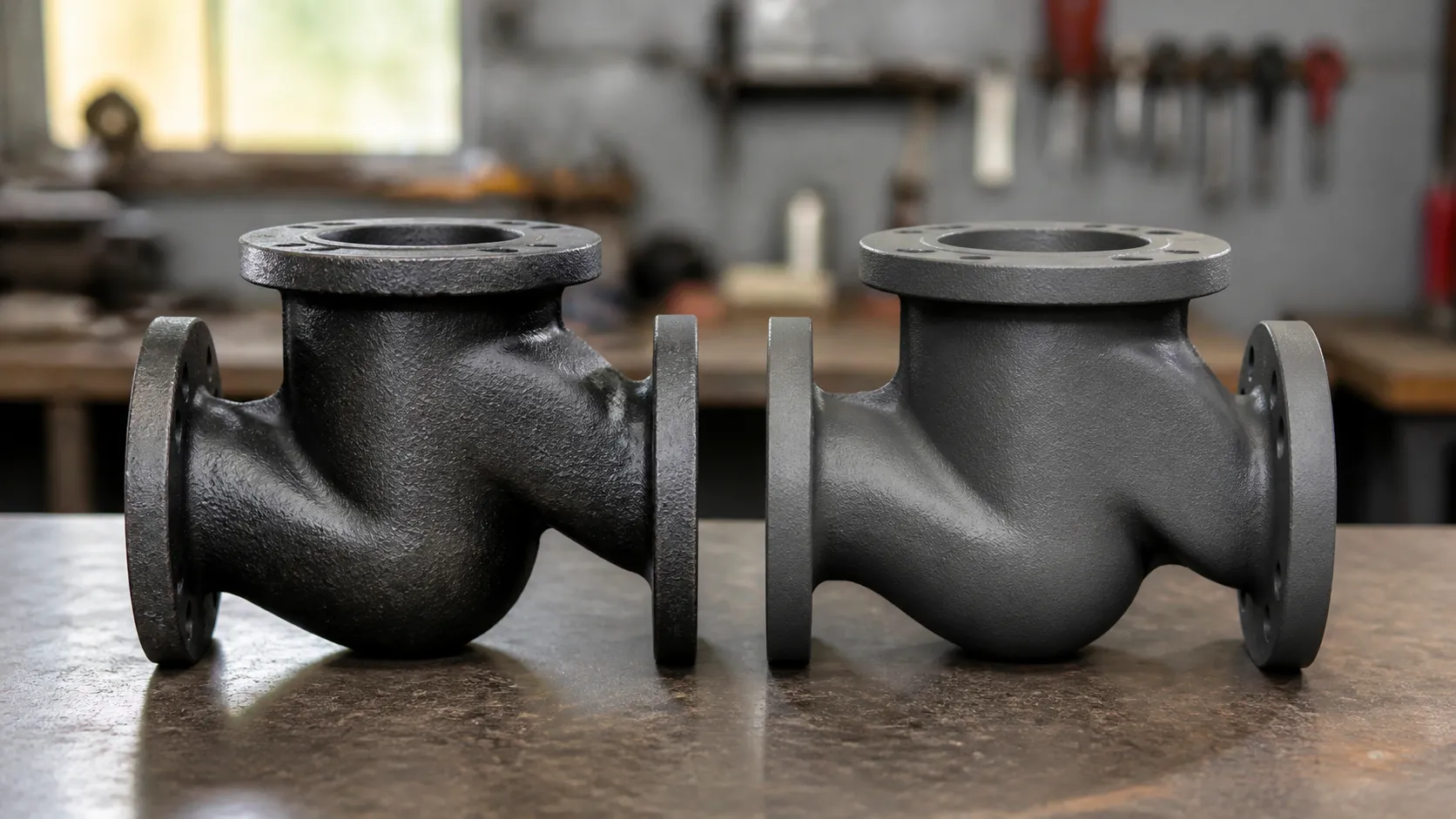
Durability and Brittleness Under Piping Loads
Durability in valve service is not only hardness or coating life—it is whether the body survives the loads the pipe actually applies. Brittleness is the deciding gap between gray cast iron and ductile iron when hangers settle, soil shifts, or a pump trip creates water hammer.
- Gray cast iron brittleness: Flake graphite creates sharp stress raisers. Piping systems that impose bending moments, misalignment, or freeze-thaw movement can crack a gray iron body even when internal pressure looks “within class.”
- Ductile iron durability: Spherical graphite nodules raise elongation and yield strength, so the body can flex with the line. That flexibility is why ductile iron shows better durability in buried waterworks, oil and gas skids, and any header with frequent slam loads.[4]
- Selection check: If stress analysis or field history shows non-trivial external forces on the valve, specify ductile iron—or redesign supports—rather than relying on gray iron vibration damping alone.
We review nozzle loads with the same rigor as pressure ratings when quoting ductile iron cast valve bodies for dynamic lines.
Frequently Asked Questions: Cast Iron vs Ductile Iron Valve Body
Can you replace a cast iron valve body with ductile iron?
Yes, in almost all fluid systems, you can directly upgrade a gray cast iron valve body to a ductile iron valve body. Ductile iron provides higher tensile strength, higher yield strength, and superior structural flexibility under dynamic loads. When swapping components, ensure flange dimensions, pressure ratings, and face-to-face dimensions match your existing system. We routinely produce custom cast iron parts precision gray and ductile casting solutions engineered to retrofitting requirements.
How do you visually tell cast iron and ductile iron valve bodies apart?
While both materials look similar on the surface, you can identify them using these markers:
Body Markings: Ductile iron valve bodies feature cast markings like "DI", "ASTM A536", or "GGG40". Gray iron valves display "CI", "ASTM A126", or "GG25".
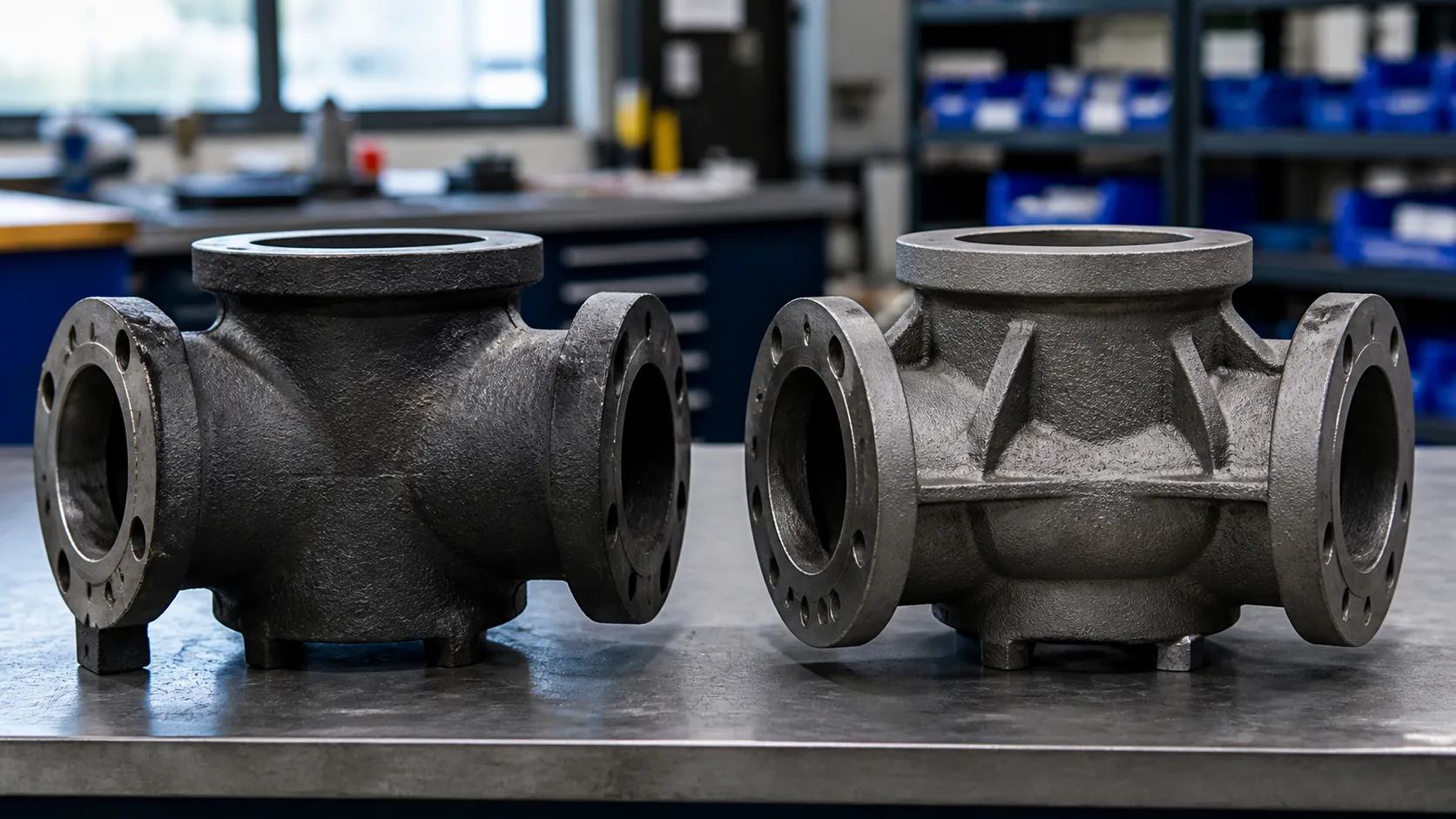
Surface Finish: Cast iron typically exhibits a rougher, grainier texture. Ductile iron features a tighter, smoother surface due to its refined casting process.
Spark Test: Grinding gray iron produces short, dark red spark streams due to flake graphite. Ductile iron yields longer, brighter yellow-white sparks due to its graphite nodule microstructure.
Does ductile iron rust faster than gray cast iron?
No. Standard ductile iron and gray cast iron exhibit nearly identical bare corrosion resistance in fluid service. However, because ductile iron valves are commonly installed in high-pressure municipal waterworks and wastewater treatment lines, they are usually coated with fusion-bonded epoxy or protective linings. Working with a dedicated ductile cast iron foundry for precision custom castings ensures your valve bodies receive the appropriate surface coatings for extended service life.
Which valve body material handles water hammer better?
Ductile iron handles water hammer significantly better than gray cast iron. Gray cast iron carries a high brittle fracture risk because its flake graphite creates stress points that fail under sudden pressure shocks. Ductile iron features spherical graphite nodules, giving the metal exceptional impact resistance and structural elongation to absorb severe pressure surges without catastrophic failure.
References
- ASTM A126 — Standard Specification for Gray Iron Castings for Valves, Flanges, and Pipe Fittings
- ASTM A536 — Standard Specification for Ductile Iron Castings
- ASME B16.1 — Gray Iron Pipe Flanges and Flanged Fittings (Classes 25, 125, and 250)
- Wikipedia — Ductile iron (graphite nodule microstructure overview)