Overview
Railway Parts Investment Casting Service
Railway parts investment casting service produces high-detail, tight-tolerance metal components for locomotives, rolling stock, and track hardware, covering carbon steel investment casting railway parts, stainless alloys, and specialty steels for draft gear housing, bearing brackets, axle boxes, yokes, centre plates, and train accessories via lost-wax near-net-shape casting.
Definition and Fundamentals of Investment Casting for Rail
Investment casting also known as the lost-wax process is an industrial manufacturing method that produces metal parts with exceptional precision and smooth surface finishes. For railway applications, the process follows critical steps:
- Pattern Creation: High-precision wax patterns are injected to match the exact geometry of the required rail part.
- Ceramic Shell Construction: The wax assembly is repeatedly dipped into ceramic slurries and stucco material to build a rigid mold.
- Dewaxing and Firing: Heat removes the wax, leaving a cavity ready to accept molten metal.
- Pouring: Molten alloys including carbon steel, low-alloy steel, and stainless steel are poured into the preheated ceramic mold.
- Knockout and Finishing: Once cooled, the ceramic shell is removed, yielding a near-net-shape component that requires minimal secondary machining.
This process enables the production of complex, thin-walled, or contoured railroad parts that standard forging or traditional sand casting methods cannot replicate efficiently.
The Importance of Quality and Precision in Railway Components
Railway operations operate under strict safety standards where component failure can lead to severe service disruptions. Precision casting directly supports long-term operating safety through several key metrics:
- Structural Integrity: Dense, uniform grain structures eliminate internal porosity, providing the fatigue strength required for heavy-haul freight and high-speed passenger transit.
- Tight Tolerances: High dimensional repeatability ensures that components like brake hardware, brackets, and coupler elements fit accurately into assemblies without excessive post-cast processing.
- Wear and Impact Resistance: Selecting the proper steel or iron alloys ensures parts resist continuous friction, vibration, and dynamic shock loads along track lines and car assemblies.
Investment Casting Advantages for Railway Parts

Modern rolling stock and track infrastructure demand components that can withstand extreme fatigue, continuous vibration, and heavy static loads. A railway parts investment casting service bridges the gap between design freedom and industrial durability, delivering net-shape or near-net-shape components that outperform standard forgings and traditional sand castings in both precision and long-term reliability.
Achieving Complex Geometries and Intricate Designs
Using the lost-wax investment casting process, high-detail components feature complex internal channels, curved contours, and variable wall thicknesses that are practically impossible to achieve through machining alone. This design flexibility consolidates multi-piece assemblies into single, unified steel casting units.
- Integrated Features: Easily cast complex cross-sections, internal cavities, and mounting bosses directly into the part.
- Weight Optimization: Remove excess dead weight without sacrificing cross-sectional strength or structural integrity.
- Critical Rail Assemblies: Ideal for complex geometries found in brake system components, draft gear housing elements, and specialized bearing brackets.
Material Versatility and Enhanced Mechanical Properties
Rail operations operate under demanding climate extremes and severe friction environments, making alloy selection critical. We offer an extensive selection of metals tailored to exact mechanical requirements, including carbon steel investment casting railway parts, high-tensile low-alloy steels, stainless steels, and ductile iron grades. For a comprehensive overview of alloy behaviors and selection criteria, consult our detailed guide to materials for casting.
- Carbon and Low-Alloy Steels: Provide superior impact resistance, high yield strength, and tough wear characteristics for track maintenance equipment and rail car hardware.
- Corrosion-Resistant Stainless Grades: Engineered for outdoor rail infrastructure, locomotive engine components, and exposed train accessories subject to harsh environmental elements.
- Secondary Heat Treatment: We support custom normalizing, quenching, and tempering to optimize tensile strength, grain structure, and fatigue life.
Dimensional Accuracy and Superior Surface Finish
Precision is essential when producing tight-tolerance parts for safety-critical railroad mechanisms. Our lost-wax casting technique delivers repeatable linear tolerances and smooth surface finishes directly from the mold, drastically cutting cycle times and fabrication costs.
- Near-Net-Shape Castings: Drastically reduce or eliminate the need for secondary CNC machining on non-critical faces.
- Consistent Tolerances: Maintain tight dimensional consistency across high-volume production runs for hassle-free assembly and drop-in fitment.
- Minimized Material Waste: Near-net geometry ensures raw material is utilized efficiently, lowering overall unit production costs for precision engineered rail parts.
Railway Components and Application Areas
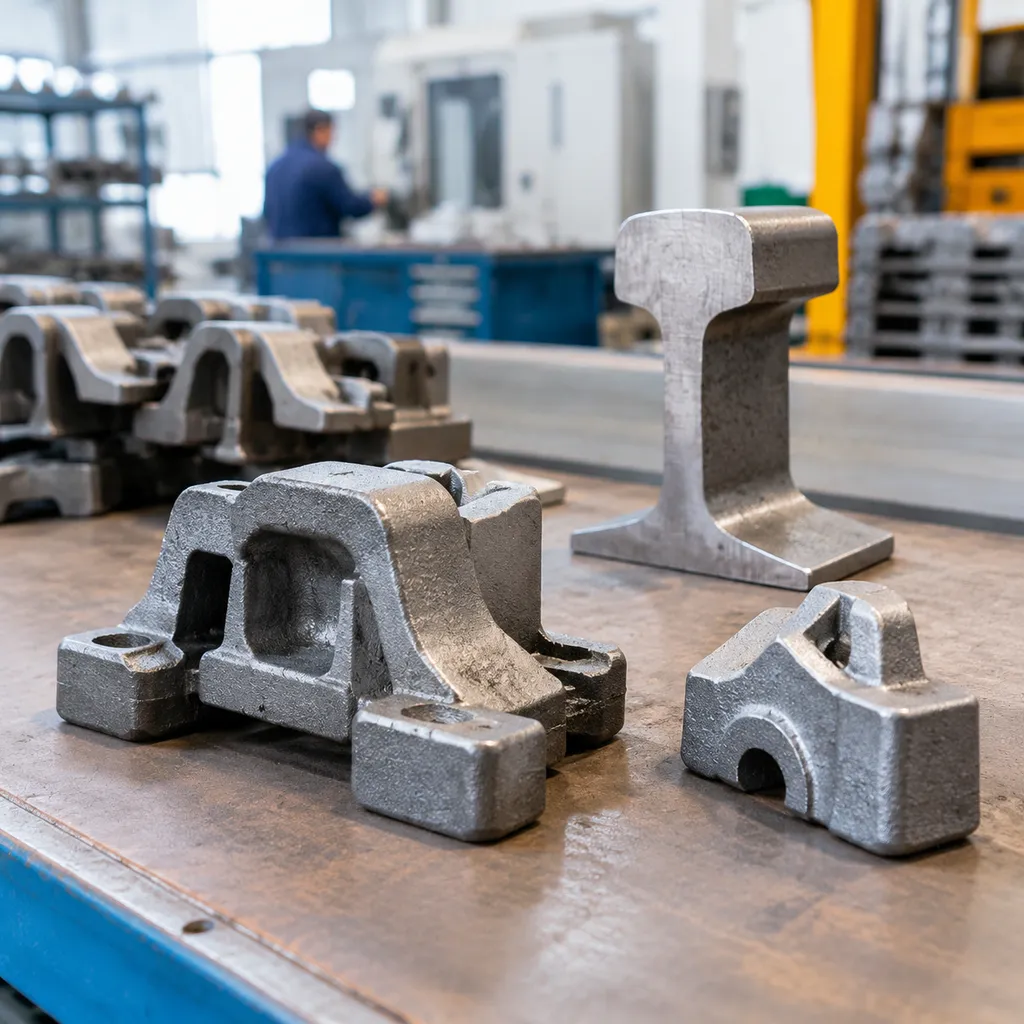
Our railway parts investment casting service delivers cast metal components designed to handle extreme friction, continuous vibration, and heavy axle loads across global rail networks. By using lost-wax precision techniques, we supply components that integrate directly into safety-critical assemblies without demanding extensive post-machining.
Key Parts for Rolling Stock and Locomotive Assemblies
Freight cars, passenger coaches, and locomotives rely on robust structural elements to maintain stability and operational safety under high-tonnage conditions. We manufacture high-integrity carbon steel investment casting railway parts and alloy components built specifically for dynamic load-bearing assemblies:
- Coupler and Draft Gear Systems: Lock lift assemblies, knuckles, coupler bodies, yokes, and durable draft gear housing components that absorb transit shock.
- Brake System Mechanisms: Air brake levers, brake shoe heads, linkages, actuators, and connector brackets engineered for high fatigue endurance.
- Locomotive Engine and Chassis: Precision engineered rail parts, axle boxes, centre plates, exhaust manifolds, turbocharger mounts, suspension brackets, and heavy-duty bearing brackets.
Through our dedicated tooling and carbon steel investment casting for auto parts programs, we achieve tight-tolerance parts that match strict mechanical requirements straight out of the mold.
Infrastructure and Track-Related Casting Applications
Track maintenance systems and fixed track hardware demand superior wear and impact resistance to prevent premature failure from ground-level vibration and weather exposure:
| Component Type | Material Grade Focus | Primary Functional Benefit |
|---|---|---|
| Track Maintenance Equipment | High-alloy steel, ductile iron | Resists severe impact and abrasive track debris |
| Switch and Crossing Hardware | Heavy-duty alloy steel casting | Sustains repeated high-velocity wheel-flange contact |
| Baseplates & Rail Fasteners | Carbon and low-alloy steel | Maintains consistent gauge spacing under shifting climate conditions |
Custom Solutions for Specialized Train Accessories
Beyond major rolling mechanisms, we provide custom casting configurations for exterior rail car hardware, interior brackets, locking elements, door hinges, bogie fittings, and specialized train accessories. When standard forgings cannot achieve thin-wall profiles or complex internal cavities, our investment casting process delivers high-detail components that reduce excess weight while preserving overall tensile strength.
Manufacturing Process and Quality Standards
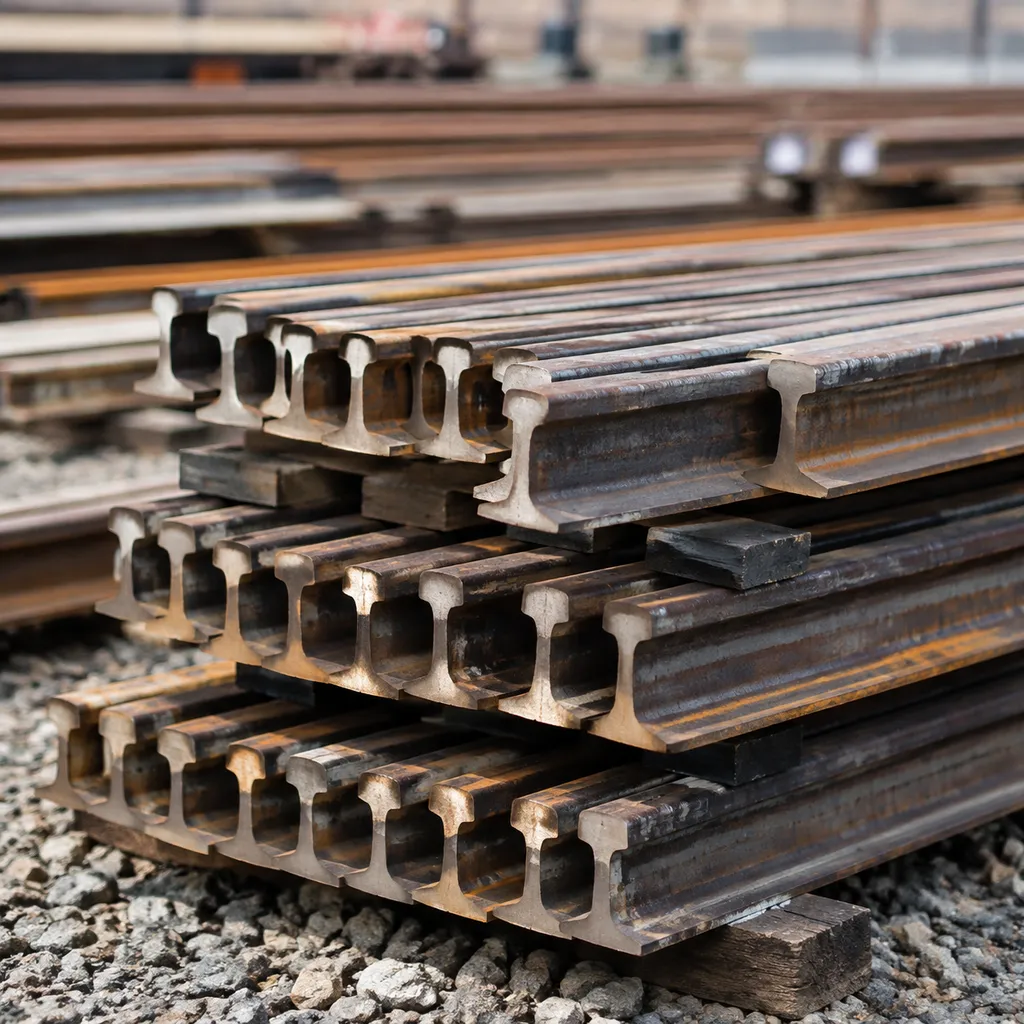
Delivering dependable components for the rail sector requires an uncompromising production system. In our specialized railway parts investment casting service, we oversee every step from mold design to final inspection, ensuring every steel casting withstands extreme mechanical stress and harsh track conditions.
The Investment Casting Workflow for Railway Parts
Our precision lost-wax casting process turns engineered CAD models into near-net-shape, heavy-duty parts:
- Pattern Creation: We inject dimensional wax to create an exact replica of the target component.
- Tree Assembly: We mount multiple patterns onto a central sprue to optimize metal flow and yield.
- Ceramic Shell Building: The assembly is repeatedly dipped into fine ceramic slurries and stuccoed with refractory materials to build a robust shell.
- Dewaxing and Firing: We melt out the wax in an autoclave and bake the hollow ceramic mold at high temperatures.
- Pouring: Molten metal such as carbon steel or high-strength alloy is poured into the pre-heated mold under strict temperature controls. While sand molding remains useful for large castings, our lost-wax investment casting delivers far tighter tolerances and smoother surface finishes for intricate assemblies.
- Knockout and Cleaning: Once cooled, we remove the ceramic shell via vibration and shot blasting.
- Secondary Operations: We apply normalizing, quenching, and tempering to hit target mechanical properties, followed by precision CNC machining when exact interfaces are needed.
Critical Inspection Protocols and Testing Procedures
Safety-critical rail parts cannot fail in service. As an experienced metal casting manufacturer, we implement rigorous quality checks at every milestone:
| Inspection Phase | Method / Tool | Target Property |
|---|---|---|
| Chemical Analysis | Optical Emission Spectrometry | Verifies alloy composition and melt purity |
| Internal Integrity | Radiographic (RT) & Ultrasonic Testing (UT) | Detects hidden voids, shrinkage, or inclusions |
| Surface Flaw Detection | Magnetic Particle (MPI) & Dye Penetrant (PT) | Uncovers micro-cracks and surface defects |
| Mechanical Properties | Tensile, Yield, and Charpy Impact Testing | Validates load limits, shock absorption, and toughness |
| Dimensional Accuracy | CMM (Coordinate Measuring Machines) & 3D Scanning | Confirms compliance on tight-tolerance parts |
Compliance with Industry Standards and Certifications
Rail environments leave no room for error. We produce carbon steel investment casting railway parts that strictly align with global railway manufacturing benchmarks, material classifications, and safety regulations. Through full traceability, heat-lot tracking, and verified mill test reports, we ensure every batch of precision engineered rail parts meets the endurance, impact resistance, and operational demands required by railway infrastructure and rolling stock builders.
Selecting a Railway Investment Casting Partner
Choosing the right manufacturing partner is crucial when sourcing safety-critical track and rolling stock components. As an experienced metal casting manufacturer, we provide dedicated end-to-end support for OEMs, aftermarket suppliers, and infrastructure operators worldwide. When you need a reliable railway parts investment casting service, you need a team that understands the harsh mechanical demands, extreme weather exposure, and strict regulatory frameworks of the rail industry.
Assessing Manufacturer Expertise and Experience
Not every foundry has the technical capability to cast parts that withstand heavy cyclic loading, thermal stress, and severe rail vibrations. When evaluating potential partners, look closely at their engineering track record and metallurgical proficiency:
- Metallurgical Mastery: Your partner should have deep experience pouring carbon steel, low-alloy steel, stainless grades, and ductile iron tailored to heavy-haul and passenger standards.
- Process Understanding: Review how they optimize tooling and gate design. Understanding trade-offs such as when analyzing investment casting vs sand casting for specific volume and tolerance demands ensures you get the ideal balance of structural strength and cost efficiency.
- Complex Geometry Capabilities: Look for verified experience manufacturing tight-tolerance parts like draft gear housing assemblies, coupler components, brake arms, and bearing brackets with minimal need for secondary processing.
We are Professional Precision Casting and CNC Machining Service Providers, meaning we manage everything from pattern tooling through finish machining in-house, minimizing communication gaps and ensuring full dimensional conformity.
Evaluating Consistency, Reliability, and Production Capacity
Rail transit projects run on tight schedules where downtime carries steep costs. A dependable partner must demonstrate both volume scalability and consistent batch-to-batch repeatability.
| Evaluation Metric | What to Look For | Our Capability Standard |
|---|---|---|
| Tooling & Repeatability | High-precision metal dies and automated wax injection | Consistent net-shape and near-net-shape geometries across production runs |
| Material Integrity | Certified chemistry and defect-free internal structure | Full heat-code traceability with certified melt analysis |
| Secondary Operations | Fully integrated post-casting capabilities | In-house heat treatment (quenching, tempering, normalizing) and multi-axis CNC machining |
| Quality Verification | Non-destructive testing (NDT) protocols | Magnetic particle testing, radiographic testing, and CMM dimensional inspection |
Our facility maintains the capacity to handle both high-volume production for standard rail car hardware and low-to-mid volume runs for specialized train accessories and track maintenance equipment.
How to Request a Custom Quote for Your Project
Getting an accurate quote for your rail casting project is straightforward. To help us optimize pricing, material usage, and lead times, submit your inquiry with the following project details:
- Engineering Drawings: Provide 2D prints (with dimensional tolerances and critical surface callouts) and 3D CAD files (STEP, IGES, or SolidWorks).
- Material Specifications: Indicate your designated alloy grade, such as carbon steel investment casting railway parts, specific alloy steel blends, or corrosion-resistant grades.
- Secondary Requirements: Specify any required heat treatments, protective surface finishes, or precision CNC machining steps.
- Testing & Certification: List mandatory inspection levels, including non-destructive testing requirements, mechanical tensile tests, or specific rail compliance standards.
- Estimated Volumes: Include prototype needs along with annual production volume estimates to ensure the best tooling and per-unit pricing.
Once our engineering team receives your project package, we conduct a complete design-for-manufacturing (DFM) review and deliver a clear, competitive quotation covering tooling, piece price, and production timelines.