

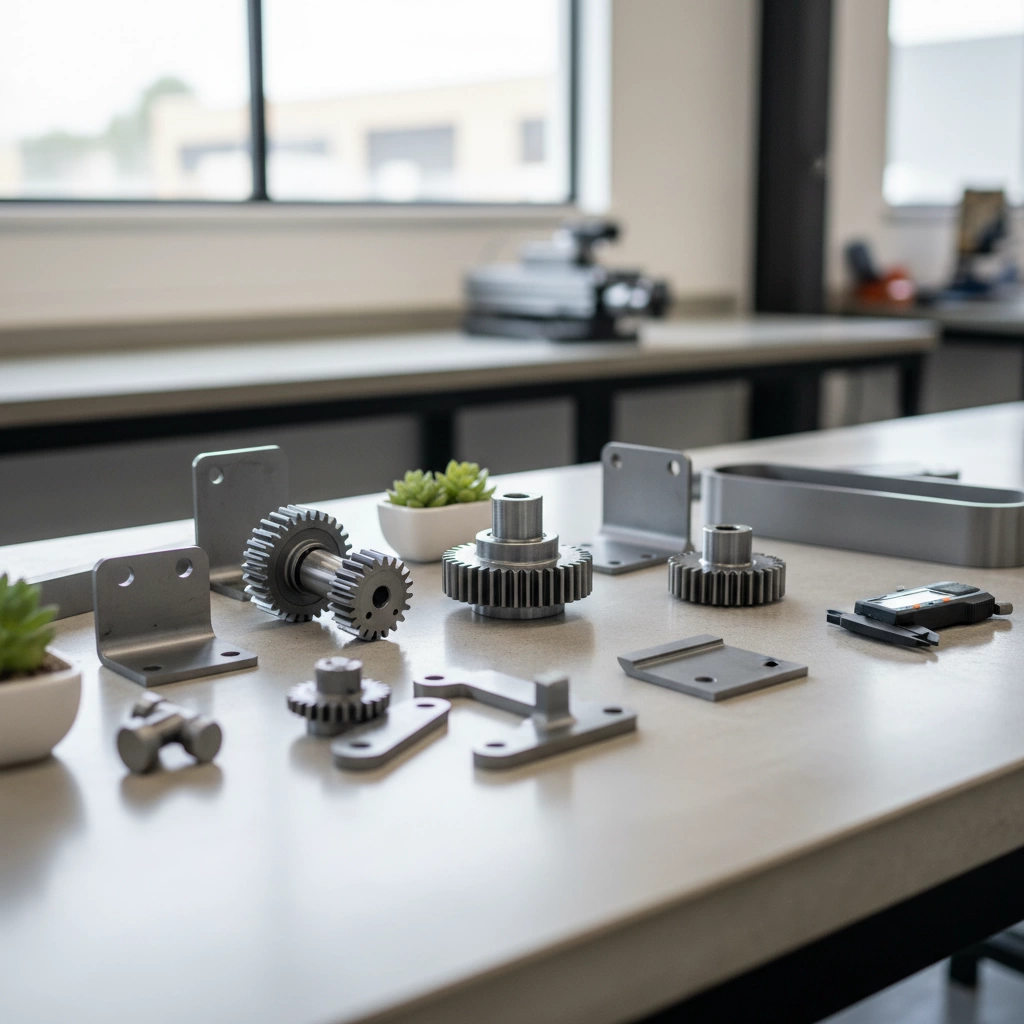
Overview of 1200 Series Low Carbon Steel for Precision Machining
The 1200 series represents a category of resulfurized and rephosphorized carbon steels specifically engineered for high-speed automated production. As a leading provider of 1200 series low carbon steel precision machined parts, we utilize these materials to bridge the gap between material strength and extreme manufacturability. These alloys are the industry standard for components requiring intricate detail and high-volume output.
What is 1200 Series Carbon Steel?
1200 series carbon steel is a group of “free-machining” alloys designed to break into small chips during the cutting process. Unlike standard carbon steels, these grades contain controlled additions of sulfur, phosphorus, and sometimes lead (as seen in 12L14 steel) to enhance lubricity and chip fragmentation. This chemical composition makes them the preferred choice for CNC machining and high-speed screw machine operations where efficiency is paramount.
Key Properties of Low Carbon Steel Alloys
Low carbon steel alloys in the 1200 series are characterized by their unique metallurgical balance. They offer a combination of physical properties that favor machining over structural load-bearing:
- Low Carbon Content: Typically containing less than 0.15% carbon, providing excellent ductility.
- Enhanced Machinability: High sulfur and phosphorus levels act as internal lubricants.
- Good Ductility: Allows for secondary forming operations like crimping or bending.
- Superior Surface Finish: Capable of achieving smooth, bright finishes straight from the machine.
- Magnetic Properties: Useful in electronic and electromagnetic applications.
The Role of Free-Machining Steel in Manufacturing
In the world of precision machining services, the 1200 series is indispensable for reducing cycle times. The “free-machining” nature of these steels means they require less power to cut and generate less heat at the tool-workpiece interface.
This role is critical for:
- High-Speed Production: Enabling faster spindle speeds and feed rates.
- Tool Longevity: Minimizing abrasive wear on carbide and high-speed steel (HSS) tooling.
- Complex Geometry: Facilitating Swiss machining for small-diameter parts with tight tolerances.
- Consistency: Ensuring uniform dimensions across production runs of thousands or millions of units.
Benefits of 1200 Series Steel for Precision Machined Parts
Choosing the right material is the first step in successful manufacturing. We specialize in 1200 series low carbon steel precision machined parts because this material class offers a unique balance of speed, precision, and economy that other steels simply cannot match.
Superior Machinability and Production Speed
The 1200 series is often referred to as “free-machining” steel for a reason. These alloys are specifically engineered with additives like sulfur, phosphorus, and sometimes lead (as seen in 12L14 steel) to break up chips during the cutting process. This allows us to run our alloy steel machined parts at significantly higher spindle speeds and feed rates compared to standard carbon steels.
- Faster Cycle Times: Reduced friction allows for rapid material removal.
- Small Chip Formation: Prevents “bird-nesting” around the tool, ensuring continuous operation.
- High Efficiency: Ideal for high-speed CNC machining environments.
Excellent Surface Finish and Dimensional Accuracy
When we produce 1200 series low carbon steel precision machined parts, the resulting surface finish is often superior right off the machine. The chemical composition of these grades minimizes “built-up edge” on cutting tools, which results in a cleaner, smoother surface that often eliminates the need for secondary polishing.
| Feature | 1200 Series Performance | Benefit to Customer |
|---|---|---|
| Surface Roughness | Exceptionally Low | Better aesthetic and functional fit |
| Tolerance Control | High Stability | Holds tight dimensions over long runs |
| Edge Quality | Sharp and Clean | Minimal burr formation |
Cost-Effectiveness for High-Volume Production
For projects requiring thousands or millions of components, the 1200 series is the most economical choice. Because the material is easier to cut, we can produce more parts per hour. This high throughput directly translates to a lower cost per unit for our clients. Whether we are utilizing Swiss machining for intricate pins or multi-spindle lathes for fittings, the efficiency of 1200 series steel keeps budgets on track without sacrificing quality.
Enhanced Tool Life and Reduced Manufacturing Wear
Machining harder alloys can be brutal on equipment. By using 1200 series steel, we significantly extend the life of our cutting tools. The “lubricating” effect of the sulfur or lead inclusions reduces the heat generated at the tool tip.
- Less Downtime: Fewer tool changes mean the machines stay running longer.
- Consistency: Tools wear down slower, ensuring the first part of the batch looks exactly like the last.
- Lower Overhead: Reduced tool consumption allows us to offer more competitive pricing on complex CNC titanium machining services and steel projects alike.
Common 1200 Series Grades Used in Precision Machining
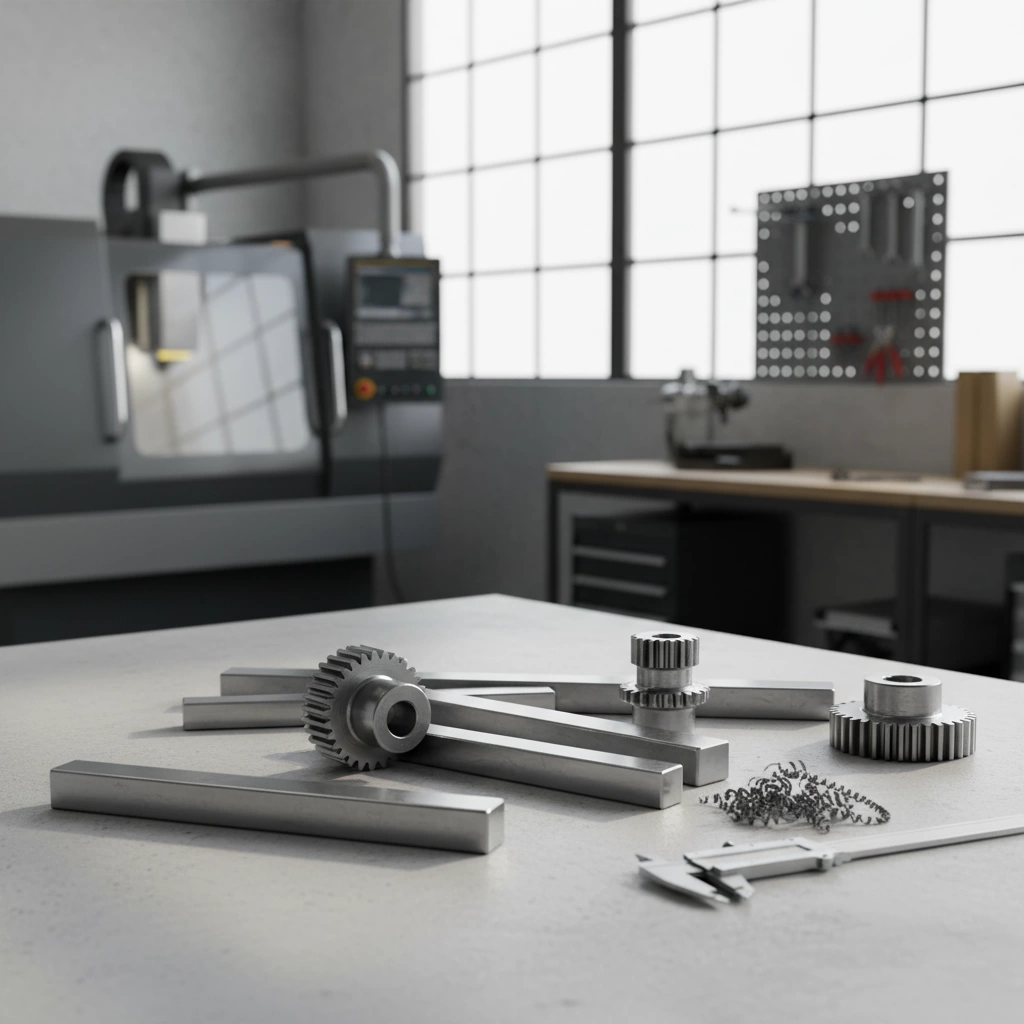
Selecting the right grade is the first step in ensuring the performance of your 1200 series low carbon steel precision machined parts. While these steels share a focus on machinability, specific alloying elements like lead or sulfur dictate their best use cases in our shop.
12L14: The Standard for Lead-Added Free-Machining Steel
12L14 steel is widely regarded as the fastest-machining steel available. By adding a small percentage of lead, the material acts as its own lubricant during the cutting process. This significantly reduces friction at the tool tip, allowing us to run our CNC machining centers at much higher speeds compared to standard carbon steels.
- Best For: Complex parts requiring high-speed Swiss machining.
- Key Advantage: Minimal tool wear and exceptionally smooth surface finishes.
- Common Parts: Bushings, inserts, and hydraulic fittings.
1215: Environmentally Friendly Resulfurized Steel
For projects where lead content is restricted due to environmental regulations or specific industry standards, 1215 is the top choice. It is a resulfurized and rephosphorized steel that provides excellent chip breakage. While it doesn’t quite match the “buttery” cutting of 12L14, it still offers a significant step up in efficiency over general-purpose steels. It provides a bright, clean finish that is ideal for parts requiring subsequent plating.
Comparing 1200 Series vs. 1018 and 1045 Carbon Steels
When we help clients choose materials, the trade-off is usually between speed and strength. The 1200 series is optimized for high-volume production and ease of cutting, whereas 1018 and 1045 are selected for their mechanical properties.
| Feature | 1200 Series (12L14/1215) | 1018 Mild Steel | 1045 Medium Carbon |
|---|---|---|---|
| Machinability | Excellent (136% – 190%) | Good (78%) | Fair (57%) |
| Strength | Moderate | Moderate | High |
| Weldability | Poor (due to lead/sulfur) | Excellent | Good |
| Best Use | High-volume precision parts | Structural components | Heavy-duty shafts/gears |
Understanding these differences is crucial when comparing alloy steel vs stainless steel or other carbon grades for your specific application. While 1018 is better for welding, the 1200 series is unbeatable for reducing cycle times in complex turning operations.
Precision Machining Capabilities for Carbon Steel
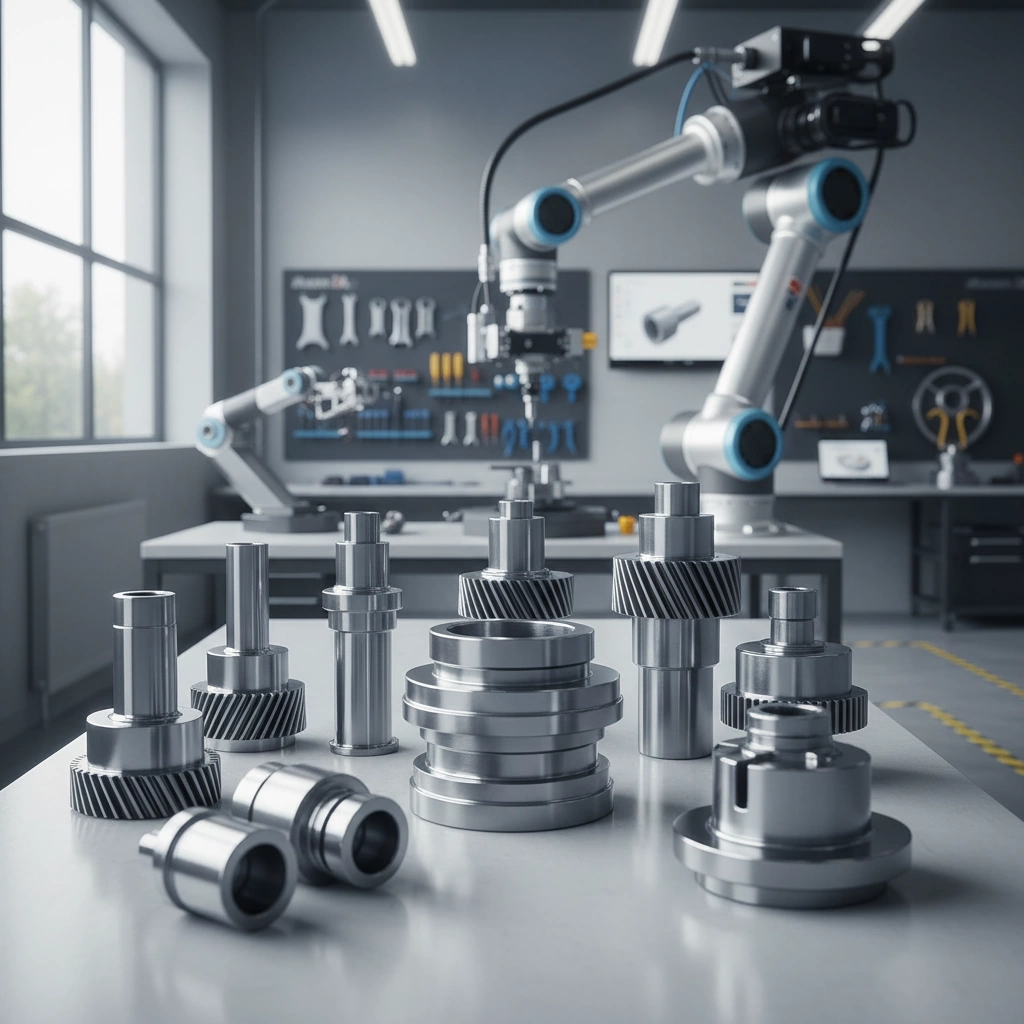
We utilize advanced equipment to transform raw 1200 series stock into high-performance components. Our facility is optimized to handle the unique characteristics of free-machining steels, ensuring fast cycle times and repeatable quality.
CNC Turning and Multi-Spindle Screw Machining
Our CNC machining centers are specifically calibrated for the high-speed requirements of 1200 series steel. We use multi-spindle screw machining for high-volume orders, taking full advantage of the material’s excellent chip-breaking properties. This allows us to maintain rapid production rates without sacrificing the tight tolerances required for 1200 series low carbon steel precision machined parts.
High-Precision CNC Milling and Drilling
For parts with complex geometries, our CNC milling services provide the necessary precision for slots, pockets, and intricate profiles. We ensure that every drilled hole and milled surface meets your exact engineering requirements. Our expertise in handling 12L14 steel and 1215 grades ensures that tool wear is minimized, keeping your production costs low and quality high.
Swiss Machining for Complex Small-Diameter Parts
When your project involves small, intricate parts with tight tolerances, our Swiss machining capabilities deliver. This process is ideal for long, slender components that require high stability during the cutting process. We regularly produce precision components using this method, achieving exceptional surface finishes that often eliminate the need for secondary grinding.
Custom Build-to-Print Manufacturing Services
We operate as a dedicated partner for your custom manufacturing needs. Our team follows your specific blueprints to the letter, ensuring every dimension is verified.
- Prototyping: Fast turnaround for initial design validation.
- Scalability: Seamless transition from low-volume prototypes to mass production.
- Quality Control: Rigorous inspection protocols for every batch of metal parts.
- Technical Support: Direct communication with our machining experts to optimize your design for manufacturability.
Industrial Applications of 1200 Series Machined Components
The versatility and high-speed processing of 1200 series steel make it the primary choice across various global industries. We specialize in delivering high-volume orders of 1200 series low carbon steel precision machined parts that meet the rigorous demands of modern engineering. Because these alloys allow for faster cycle times, we can provide cost-effective solutions for complex components without compromising on quality.
Automotive and Transportation Systems
In the automotive sector, efficiency and reliability are the top priorities. We utilize 12L14 and 1215 steels to manufacture critical components that require tight tolerances and smooth finishes. Our production capabilities include:
- Fuel system components: Injector nozzles and fuel rail fittings.
- Braking systems: Hydraulic valves and piston housings.
- Transmission parts: Shift forks, pins, and sensor housings.
- Steering assemblies: Bushings and specialized fasteners.
Hydraulic, Pneumatic, and Fluid Power Fittings
Precision is vital when dealing with high-pressure fluid systems. We provide precision machining services for the fluid power industry, ensuring every thread and seal surface is perfect. The excellent surface finish of 1200 series steel allows for leak-proof connections in:
- Hydraulic hose ends and couplings.
- Pneumatic manifold blocks and valve bodies.
- Adapter fittings and compression nuts.
- High-pressure fluid connectors.
For projects requiring even more complex geometries, our high-precision casting services complement our machining capabilities to deliver tight-tolerance metal parts for any industrial setup.
Commercial Hardware, Fasteners, and Bushings
We produce a massive range of commercial hardware where durability and cost-efficiency must go hand-in-hand. By leveraging Swiss machining for small-diameter parts, we maintain extreme accuracy for:
- Custom threaded fasteners and specialized bolts.
- Precision bushings and spacers for industrial machinery.
- Locking pins and dowels used in heavy equipment.
- Threaded inserts and standoffs for structural assemblies.
Appliance and Consumer Electronic Components
The consumer goods market demands high-quality parts at a competitive price point. We supply the appliance and electronics sectors with durable steel components that withstand daily use. Our 1200 series low carbon steel precision machined parts are found in:
- Drive shafts: For washing machines, dryers, and kitchen appliances.
- Connector pins: High-conductivity plated steel pins for electronics.
- Printer components: Precision rollers and guide rods.
- Small motor housings: Durable frames for household power tools.
Secondary Operations and Finishing for Steel Parts
To maximize the performance of 1200 series low carbon steel precision machined parts, we offer a full suite of secondary operations. These processes ensure that every component meets your exact mechanical and aesthetic requirements before it leaves our facility.
Heat Treating and Case Hardening Processes
Because 1200 series steels have low carbon content, they do not respond to traditional through-hardening. Instead, we utilize case hardening and carburizing to create a high-hardness outer shell. This provides excellent wear resistance for high-friction applications while maintaining a tough, ductile core that prevents part failure under impact. This balance is critical for components like pins, bushings, and small gears.
Plating and Corrosion-Resistant Coatings
Untreated carbon steel is susceptible to rust and oxidation. We provide various plating options to enhance the longevity and appearance of your parts:
- Zinc Plating: The most common choice for cost-effective corrosion protection.
- Nickel Plating: Offers a premium finish with enhanced chemical resistance and hardness.
- Black Oxide: Provides a non-reflective surface and mild corrosion resistance without altering part dimensions.
- Electroless Nickel: Ensures uniform thickness even on complex geometries and internal bores.
Understanding how these finishes interact with different metals is essential, much like evaluating a cast iron vs steel comparison to determine the best material for long-term environmental exposure.
Precision Grinding and Deburring Services
For applications requiring tolerances tighter than standard CNC machining can provide, we employ precision grinding. Our centerless and surface grinding capabilities allow us to achieve micron-level accuracy and superior surface smoothness.
Every part undergoes a rigorous deburring process. We use vibratory finishing, thermal deburring, or manual edge breaking to remove burrs and sharp edges. This ensures that your 1200 series low carbon steel precision machined parts are safe to handle and ready for seamless integration into your assembly line.
Selecting a Provider for 1200 Series Machined Parts
Choosing the right partner for your 1200 series low carbon steel precision machined parts is critical for maintaining a lean supply chain. We focus on delivering high-precision components that meet your exact specifications without the typical manufacturing headaches.
Quality Assurance and ISO Certification Standards
We operate under strict quality management systems to ensure every part leaving our floor is perfect. Our facility utilizes advanced inspection equipment, including CMM and optical measurement systems, to verify that every dimension of your CNC machining project stays within tolerance. We don’t just aim for “good enough”; we hit the mark every time.
Material Traceability and Sourcing Reliability
Reliability starts with the raw material. Whether your project requires 12L14 steel for its superior machinability or 1215 for its environmental compliance, we provide full material traceability. Every batch comes with mill test reports (MTRs), ensuring you receive the exact chemistry and mechanical properties required for your application.
Engineering Support for Design for Manufacturability (DFM)
Our team provides active engineering support to help you get the most out of your designs. We analyze your prints to identify opportunities for cost reduction and improved performance.
- Design Optimization: We suggest tweaks to geometry that simplify Swiss machining setups.
- Cost Efficiency: Our DFM process reduces cycle times and material waste.
- Prototyping to Production: We help bridge the gap between initial concepts, such as those developed via 3D printer metal casting, and high-volume precision manufacturing.
By focusing on these core pillars, we ensure your production runs smoothly from the first prototype to the final shipment.
Reviews
There are no reviews yet.