Overview
What is Duplex Stainless Steel 2205 Casting?
Precision Foundry Services for UNS S32205 / CD3MN
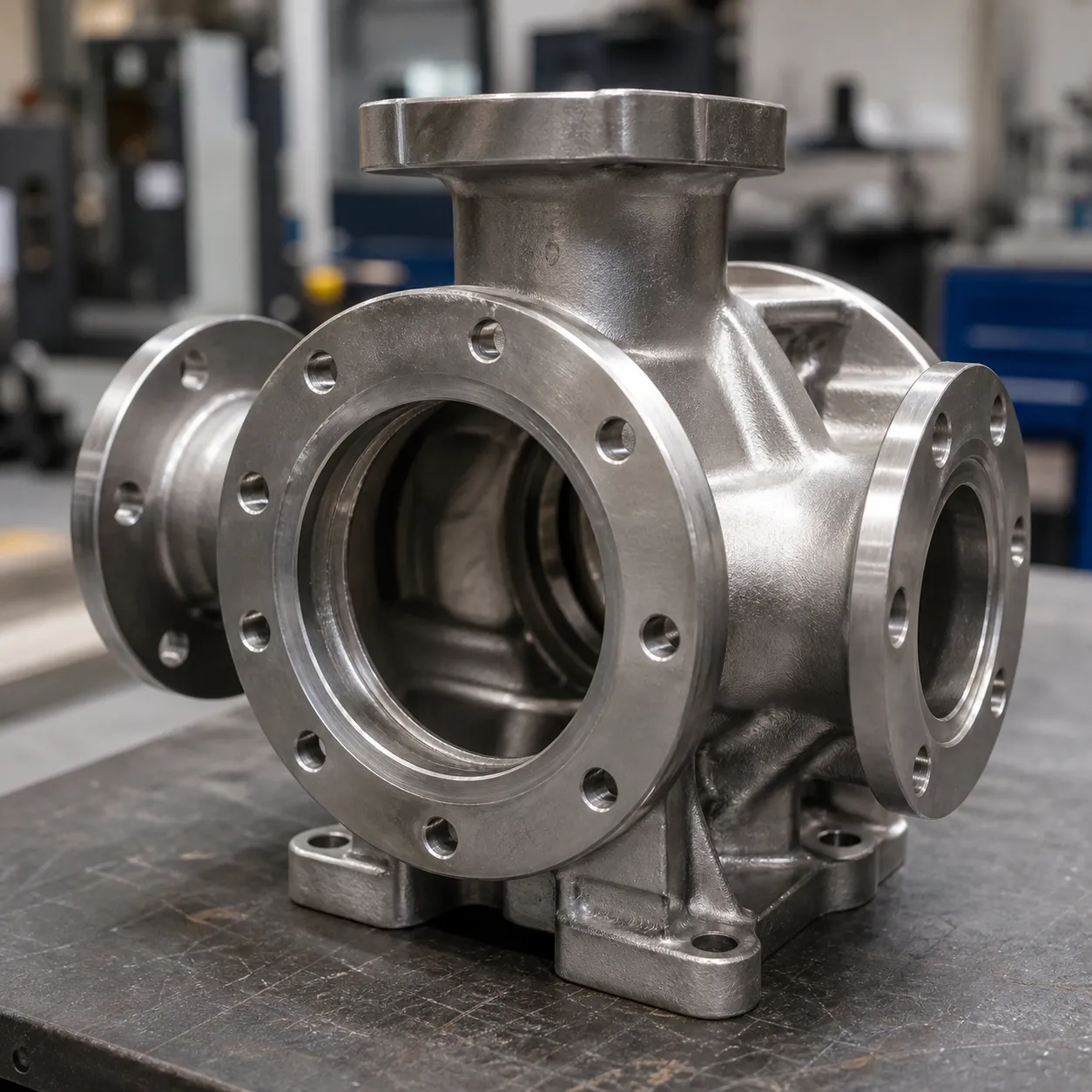
Duplex stainless steel 2205 casting is a precision manufacturing process designed to create high-strength, corrosion-resistant components using alloy 2205. Engineered to withstand heavy mechanical loads and aggressive operating conditions, this casting alloy outperforms traditional stainless steel in harsh industrial environments. Custom 2205 castings are produced to exacting international standards through professional precision casting services.
2205 duplex castings offer roughly double the yield strength of standard austenitic alloys like 316L, combined with low thermal expansion and superior resistance to localized corrosion—specified globally as UNS S32205 / cast grade CD3MN for chemical processing, oil and gas, marine, and desalination duty.
Overview of 2205 Duplex Microstructure
The defining advantage of 2205 duplex stainless steel is its balanced dual-phase microstructure, consisting of roughly equal amounts of austenitic and ferritic phases:
- Austenitic Phase (~50%): Provides high ductility, impact toughness, and general corrosion resistance.
- Ferritic Phase (~50%): Delivers high yield strength and superior resistance to stress corrosion cracking.
This hybrid microstructure prevents micro-cracking and grants the alloy exceptional mechanical integrity under extreme thermal and physical pressures.
Key Characteristics and Specifications
2205 duplex castings offer roughly double the yield strength of standard austenitic alloys like 316L, combined with low thermal expansion and superior resistance to localized corrosion.
| Property / Parameter | Specification Value |
|---|---|
| Phase Balance | ~50% Ferrite / ~50% Austenite |
| Yield Strength (0.2% Proof) | ≥ 450 MPa |
| Tensile Strength | ≥ 655 MPa |
| PREN (Pitting Resistance Equivalent) | ≥ 34 |
| Key Alloying Elements | Chromium (~22%), Molybdenum (~3%), Nickel (~5-6%), Nitrogen (~0.18%) |
Standard Equivalent Grades
2205 duplex steel castings are specified globally under various industrial naming standards to ensure material consistency:
| Organization / Standard System | Grade Equivalent |
|---|---|
| UNS System | UNS S32205 / UNS S31803 |
| ASTM Cast Grade | ASTM A890 Grade 4A / CD3MN |
| EN / DIN Standard | 1.4462 (X2CrNiMoN22-5-3) |
| ISO Standard | GX2CrNiMoN22-5-3 |
2205 Duplex Casting and Processing Services
2205 duplex casting programs manufacture components for severe operational environments. Achieving the ideal 50/50 balance between the austenitic and ferritic phases requires rigorous control over melting, pouring, and cooling cycles.
- Investment Casting: Ideal for complex, net-shape parts requiring fine surface finishes and tight dimensional tolerances, drastically reducing post-cast machining. Related capability: duplex stainless steel investment casting services.
- Sand Casting: Best suited for large-scale structural components, pump casings, and high-pressure industrial valves.
- Process Control: Pouring temperatures and solidification rates are strictly monitored to prevent micro-segregation and improper phase distribution.
Heat Treatment and Solution Annealing
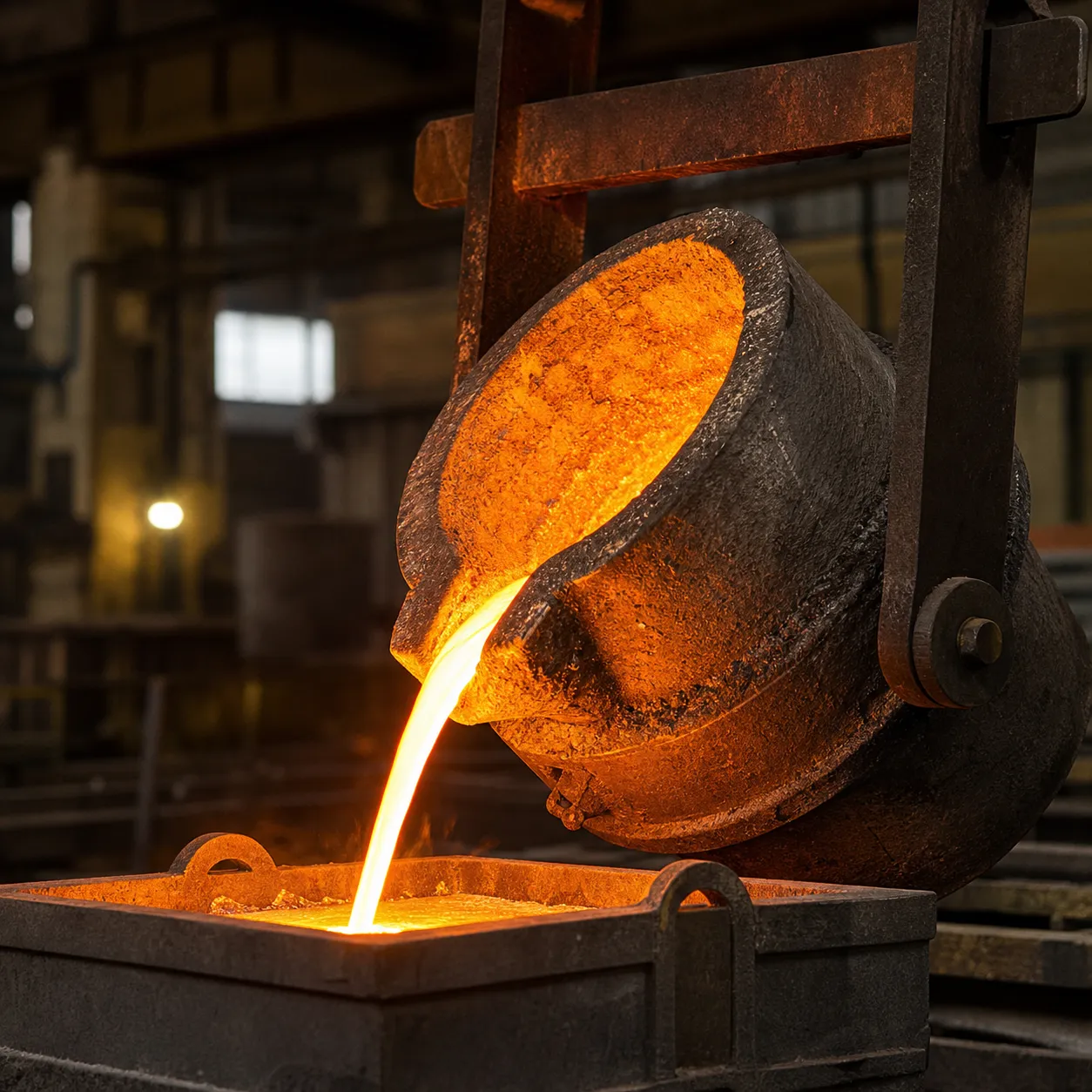
Proper heat treatment is mandatory to fully restore the mechanical properties and corrosion resistance of 2205 stainless steel castings.
- Solution Annealing: Castings are heated to a precise temperature range of 1900°F to 2050°F (1040°C to 1120°C) to dissolve harmful precipitates.
- Rapid Water Quenching: Fast cooling prevents the formation of brittle intermetallic phases like the sigma phase, which can severely compromise toughness and crevice corrosion resistance.
- Phase Restoration: Re-establishes the optimal dual-phase microstructure required to combat chloride pitting and stress cracking.
Welding and Machining Considerations
Because 2205 duplex steel exhibits higher strength and work-hardening rates than standard 316L stainless steel, processing demands precise tooling and execution:
- Machining: High-rigidity machine tools, sharp carbide inserts, lower cutting speeds, and heavy feed rates overcome work-hardening tendencies.
- Welding: Maintaining phase balance in the heat-affected zone (HAZ) requires controlled heat input and over-alloyed nickel filler materials to prevent localized embrittlement.
- Finished-part integration: Transitioning to 2205 castings often requires strict manufacturing control. Complete solutions integrate precision 2205 duplex stainless steel machining to maintain exact engineering tolerances for finished cast components.
Chemical Composition and Mechanical Properties
Chemical Composition Breakdown
The reliability of a 2205 duplex casting relies on its precise elemental balance. By combining roughly equal proportions of austenitic and ferritic structures, this alloy strikes an ideal balance between high mechanical strength and extreme durability.
| Element | Weight Percentage (%) | Function in Alloy |
|---|---|---|
| Chromium (Cr) | 22.0 – 23.0 | Provides base corrosion resistance and passive layer formation |
| Molybdenum (Mo) | 3.0 – 3.5 | Enhances crevice corrosion resistance and pitting defense |
| Nickel (Ni) | 4.5 – 6.5 | Promotes the austenitic structure and enhances toughness |
| Nitrogen (N) | 0.14 – 0.20 | Increases yield strength and chloride pitting resistance |
| Iron (Fe) | Balance | Base structural metal |
This composition—commonly classified as UNS S32205 or cast grade CD3MN—ensures robust structural integrity under aggressive operating conditions.
Mechanical and Physical Properties
2205 duplex casting products deliver nearly double the yield strength of traditional 316L or 317L stainless steels. For high-load components, alloy 2205 provides exceptional load-bearing capability while maintaining excellent ductility.
- Yield Strength (0.2% Offset): ≥ 450 MPa
- Tensile Strength: 650 – 880 MPa
- Elongation: ≥ 25% (ensures toughness under sudden impacts)
- Hardness: ≤ 290 HBW
Corrosion and Stress Cracking Resistance
Equipped with high levels of chromium and molybdenum, 2205 duplex steel achieves a Pitting Resistance Equivalent Number (PREN) above 34. This makes it a go-to solution for severe industrial settings:
- Chloride Pitting and Crevice Corrosion Resistance: Outstanding defense against localized corrosion attacks in saltwater and acidic solutions.
- Resistance to Stress Corrosion Cracking: The microstructural balance prevents crack propagation in warm, chloride-rich environments that typically destroy standard 300-series stainless steels.
Advantages of 2205 Duplex Stainless Steel Castings
Choosing 2205 duplex casting components provides an exceptional balance of structural strength and environmental resistance. By combining balanced ferritic and austenitic structures, alloy 2205 outperforms standard stainless grades across critical operational parameters.
High Mechanical Strength and Durability
Components cast from UNS S32205 offer roughly twice the yield strength of traditional austenitic options like 316L. This elevated load-bearing capacity supports lighter, thinner-walled castings without sacrificing performance or safety margins.
- High Yield Strength: Nearly double that of 300-series stainless steels.
- Fatigue Resistance: Excellent resistance to cyclic loading and structural wear.
- Weight Efficiency: Enables slimmer component designs that reduce total equipment weight.
Superior Pitting and Crevice Corrosion Resistance
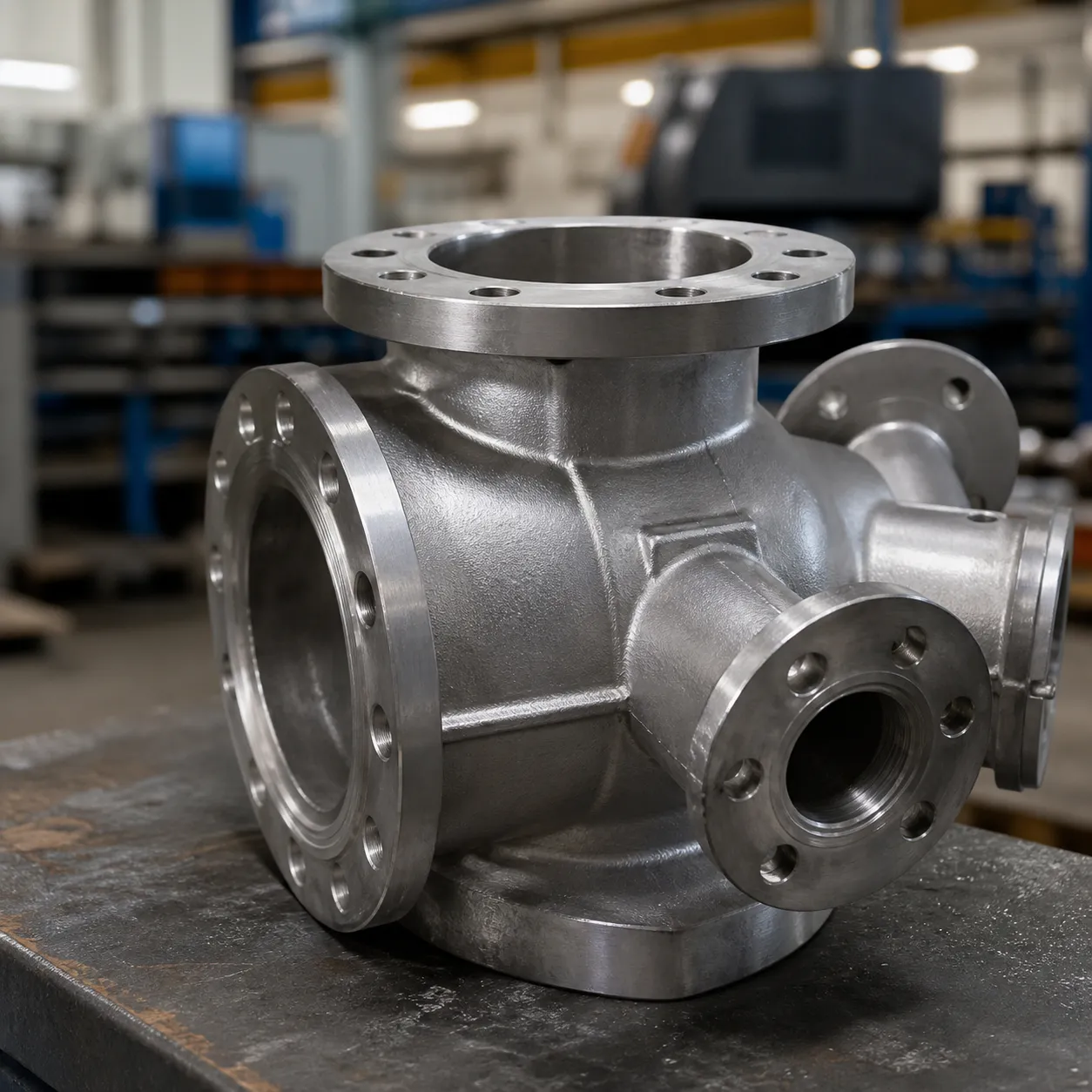
Enriched with high levels of chromium, molybdenum, and nitrogen, alloy 2205 thrives in harsh chemical and marine environments. It delivers superior crevice corrosion resistance and prevents localized chloride pitting, while maintaining outstanding protection against stress corrosion cracking—far outperforming basic 300-series grades.
Cost-Efficiency Compared to High-Nickel Alloys
High-nickel nickel-base alloys like Inconel 625 or 317L offer extreme corrosion defense, but their high nickel content drives up material costs significantly.
| Alloy Grade | Yield Strength | Chloride Resistance | Cost Profile |
|---|---|---|---|
| 316L Austenitic | Standard | Moderate | Economy |
| 2205 Duplex | High | High | Balanced / Cost-Effective |
| Inconel 625 | High | Very High | Premium |
2205 duplex casting strikes the ideal middle ground: it delivers near-superalloy durability and corrosion defense at a drastically reduced overall life-cycle cost.
Primary Applications of 2205 Duplex Steel Castings
2205 duplex casting components (UNS S32205 / CD3MN) are engineered to perform in extreme environments where standard austenitic steels fall short. Combining high yield strength with superior resistance to stress corrosion cracking and chloride pitting, these castings are essential across critical global industries.
Oil and Gas Exploration
In both onshore and deepwater operations, equipment faces high pressures, sour gas (H2S), and heavy chloride exposure. Robust 2205 duplex components are produced to prevent catastrophic material failure under extreme downhole stress.
- Key Components: Subsea valve bodies, manifolds, choke valves, and high-pressure pump housings.
- Core Advantage: High mechanical strength allows for thinner wall designs without sacrificing pressure ratings.
Chemical and Petrochemical Processing
Chemical processing handling aggressive acids, chlorides, and solvents requires materials with exceptional corrosion resistance.
- Key Components: Impellers, agitators, heat exchanger headers, pressure vessel connections, and chemical feed pumps.
- Core Advantage: Outstanding resistance to localized crevice corrosion and pitting, far surpassing standard 316L stainless steel.
When custom-engineering complex fluid-handling parts, steel casting mould design evaluation supports elimination of micro-shrinkage defects and precise flow-path tolerances.
Marine and Offshore Engineering
Seawater is notoriously harsh on metallic structures. 2205 duplex castings deliver long-term service life in splash zones and subsea installations without frequent maintenance downtime.
- Key Components: Marine propulsion systems, seawater intake valves, deck fittings, and offshore platform fasteners.
- Core Advantage: High erosion-corrosion resistance against high-velocity seawater currents.
Desalination and Water Treatment
Reverse Osmosis (RO) desalination plants operate under high pressure while processing concentrated brine solutions.
- Key Components: High-pressure RO pumps, brine energy recovery units, and distribution manifolds.
- Core Advantage: Prevents pitting corrosion in high-salinity brine environments while enduring continuous fatigue loads.
Comparison: 2205 Duplex vs. Alternative Grades
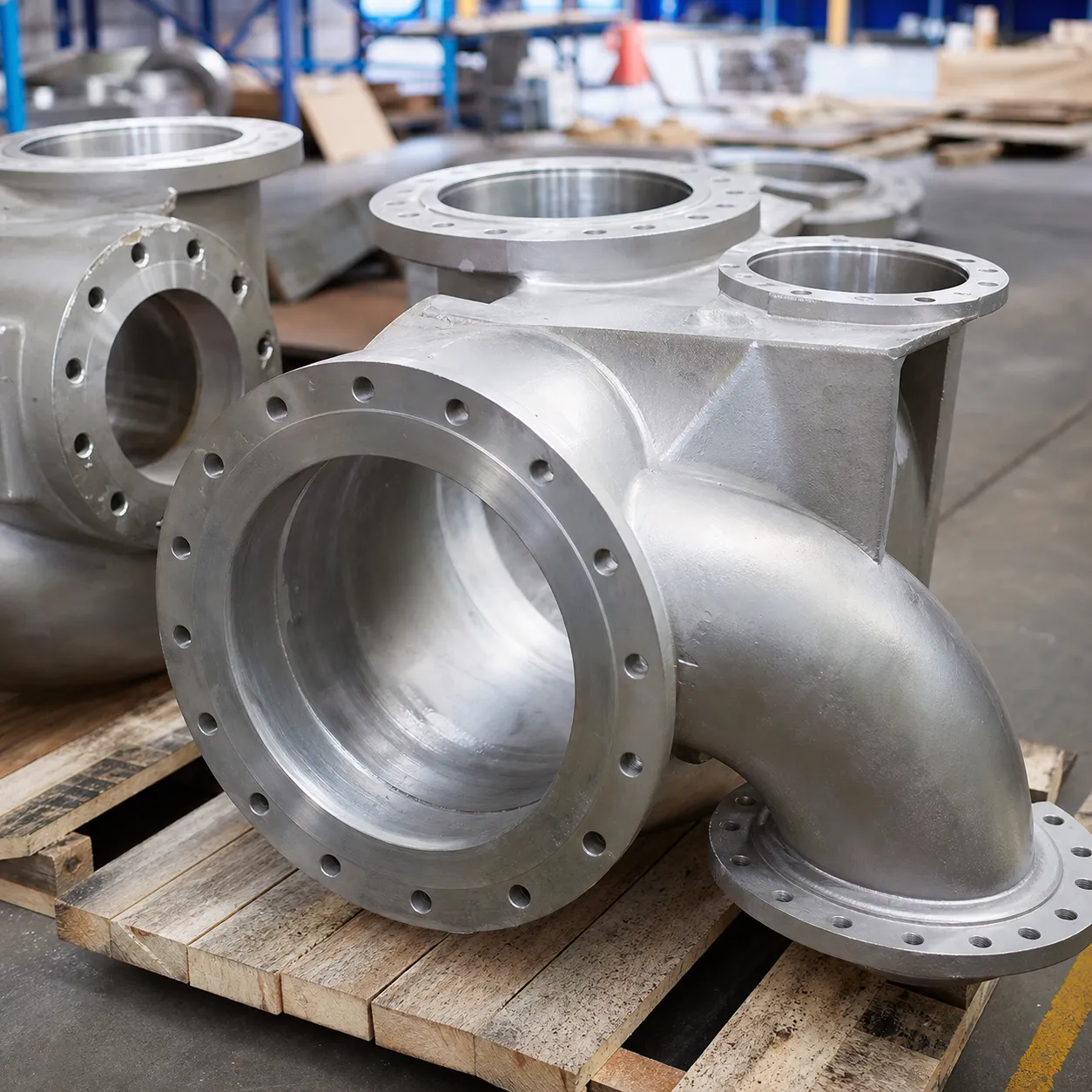
Selecting the ideal alloy for severe industrial environments requires balancing mechanical strength, corrosion resistance, and total project cost. As professional precision casting service providers, Vastmaterial routinely compares 2205 Duplex Casting against traditional austenitic steels and higher-tier super duplex alloys to identify the best fit.
2205 Duplex vs. 2507 Super Duplex
While both feature a dual-phase austenitic-ferritic microstructure, 2507 Super Duplex offers higher chromium and molybdenum levels for extreme conditions. However, 2205 Duplex Casting (UNS S32205 / CD3MN) provides the optimal balance of high performance and economy for most aggressive applications.
| Feature / Property | 2205 Duplex Stainless Steel | 2507 Super Duplex Steel |
|---|---|---|
| Microstructure | ~50% Austenitic / 50% Ferritic | ~50% Austenitic / 50% Ferritic |
| Yield Strength | ~450–550 MPa | ~550–750 MPa |
| PREN (Corrosion Index) | ~34–38 | ≥ 42 |
| Chloride Pitting Resistance | High | Superior |
| Cost-Efficiency | Excellent | Premium |
2205 Duplex vs. 316L Austenitic Stainless Steel
Standard 316L and 317L austenitic steels are widely used, but they fall short in demanding corrosive or load-bearing environments:
- Double the Strength: Alloy 2205 delivers nearly twice the yield strength of 316L, allowing for thinner casting walls and reduced overall component weight.
- Superior Resistance: 2205 provides vastly superior protection against stress corrosion cracking and crevice corrosion resistance in chloride environments where 316L quickly fails.
- Machining & Assembly: Finished programs maintain exact engineering tolerances on cast components, with matching fasteners such as custom 2205 duplex stainless steel bolts for unified assembly protection.
Selecting the Right Casting Material
To choose the best material for operational demands, consider these key criteria:
- Choose 316L: Best for low-stress environments with mild chemical exposure and standard temperature ranges.
- Choose 2205 Duplex: Ideal for high-stress applications in chemical processing, oil & gas, and marine systems requiring high mechanical strength and strong resistance to chloride pitting.
- Choose 2507 or Inconel 625: Reserved for extreme acidic environments, ultra-high temperatures, or severe offshore conditions where maximum corrosion resistance overrides budget constraints.
Request a quote for 2205 Duplex Casting programs by size, drawing, and alloy specification via contact.