Overview
What is 4142 Alloy Steel?
SAE 4142 Material Properties
At Vastmaterial, we provide expert 4142 alloy steel machining services for demanding industrial applications. SAE 4142 is a premium medium-carbon, chromium-molybdenum (chrome-moly) alloy steel. Classified among high-performance low alloy steels, it is engineered for exceptional toughness, high fatigue strength, and excellent wear resistance.
Whether you are working with 4142 round bar stock or custom forgings, this material is typically supplied in either an annealed or pre-hardened state. It serves as the reliable backbone for heavy-duty chrome-moly steel manufacturing, providing the necessary durability for high-stress steel machined components.
Core Benefits of 4142 Steel
Leveraging the structural advantages of 4142 steel is critical for optimizing your custom 4142 steel CNC machining projects. The material offers a balanced machinability rating during fabrication while delivering superior mechanical properties once properly heat treated.
| Core Benefit | Technical Advantage | Manufacturing Impact |
|---|---|---|
| High Wear Resistance | Resists surface degradation and deformation under intense, continuous friction. | Essential for producing durable, precision machined 4142 gears and shafts. |
| Exceptional Fatigue Strength | Withstands heavy, cyclic mechanical loads without structural failure or cracking. | Drastically increases the operational lifespan of power transmission components. |
| Heat Treatment Versatility | Highly responsive to targeted 4142 steel heat treatment and grinding processes. | Allows manufacturers exact control over core toughness and surface hardness. |
| Machining Stability | Favorable chip formation and predictable cutting dynamics when using annealed stock. | Reduces tooling costs and stabilizes high-volume 4142 alloy steel machined parts production. |
Vastmaterial's 4142 Machining Capabilities
At Vastmaterial, we specialize in custom 4142 steel CNC machining. We know exactly how to handle tough low alloy steels, optimizing our setups to deliver durable, high-performance 4142 alloy steel machined parts on time and on budget.
Core Machining Services
We provide a complete manufacturing pipeline to turn raw 4142 steel into finished, ready-to-use components:
- CNC Turning & Milling: High-efficiency cutting for complex geometries and tight profiles.
- Precision Grinding: Securing exact dimensions and smooth surface finishes, even post-heat treatment.
- Drilling & Boring: Accurate internal feature creation without excessive tool wear.
Material Formats Handled
Starting with the correct raw material format minimizes waste and cuts down on machining time. We are fully equipped to handle:
- 4142 round bar stock machining
- Forged steel blocks and rings
- Annealed or pre-hardened plates and billets
Tolerances & Quality
When manufacturing high-stress components like precision machined 4142 gears and shafts, accuracy is non-negotiable. We hold extremely tight dimensional tolerances to meet your strictest print requirements. To guarantee this level of consistency across every batch, our rigorous testing and quality control processes monitor production from start to finish. This ensures flawless structural integrity and dimensional precision, perfectly managing the inherent machinability rating of the steel.
Technical Specifications & 4142 Steel Machinability Data
4142 Steel Machinability Rating
When planning 4142 alloy steel machining projects, understanding how the material behaves under the cutter is essential. The machinability rating of 4142 steel sits at roughly 65% to 70% when compared to standard B1112 steel. This makes it highly workable compared to other low alloy steels. It cuts cleanly and holds tight tolerances, provided you use rigid setups and optimal cutting speeds to prevent premature tool wear.
Common Material States
We process 4142 in a variety of conditions, most frequently starting from heavy-duty round bar stock. The physical state of the metal entirely dictates our machining approach:
- Annealed: This is the most forgiving state for heavy turning, drilling, and milling operations. Annealed 4142 yields the highest machinability and longest tool life.
- Heat Treated: Material is often supplied pre-hardened to achieve maximum structural integrity and wear resistance. Machining heat treated stock requires specialized carbide inserts and reduced speeds, but directly results in incredibly durable 4142 alloy steel machined parts. We apply similar specialized cutting strategies when handling other high-stress components like 4340 steel casting to guarantee precision.
4142 Chemical Composition Table
The predictable machining behavior and high strength of this chrome-moly material come straight from its tightly controlled chemical composition.
| Element | Symbol | Percentage (%) |
|---|---|---|
| Carbon | C | 0.40 - 0.45 |
| Chromium | Cr | 0.80 - 1.10 |
| Manganese | Mn | 0.75 - 1.00 |
| Molybdenum | Mo | 0.15 - 0.25 |
| Silicon | Si | 0.15 - 0.30 |
| Sulfur | S | 0.040 max |
| Phosphorus | P | 0.035 max |
Expert Guidelines: 4142 Steel Cutting Speeds and Feeds
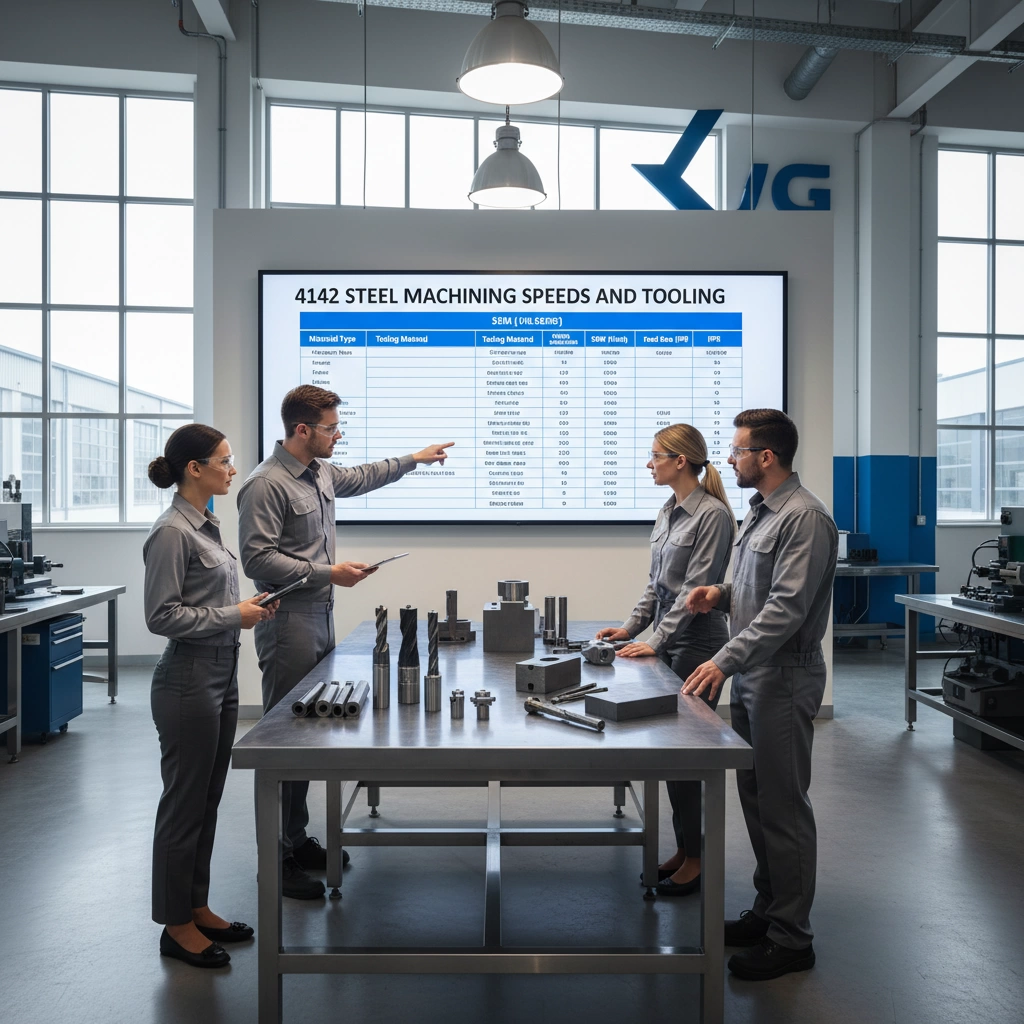
Getting the right parameters is critical for producing flawless 4142 alloy steel machined parts. Whether we are turning annealed round bar stock or milling pre-hardened plates, we dial in our speeds and feeds to balance efficiency with tool life. Just like the rigorous material optimization we detail in our stainless steel CNC machining guide, machining low alloy steels like 4142 requires strict control over cutting conditions.
Optimal Cutting Speeds (Stable Conditions)
Here is a quick reference for our baseline cutting speeds when working with 4142 steel. These apply to stable CNC setups using standard carbide tooling:
| Machining Operation | Material Condition | Surface Speed (SFM) | Surface Speed (m/min) |
|---|---|---|---|
| Turning (Roughing) | Annealed | 250 - 350 | 75 - 105 |
| Turning (Finishing) | Annealed | 350 - 450 | 105 - 135 |
| Milling | Annealed | 200 - 300 | 60 - 90 |
| Turning / Milling | Heat Treated (Rc 28-32) | 150 - 225 | 45 - 70 |
| Drilling (HSS) | Annealed | 50 - 70 | 15 - 21 |
Note: Speeds must drop by roughly 20% to 30% when cutting heavily heat-treated or pre-hardened 4142 steel fabrication projects.
Tooling Recommendations
To handle the toughness and high wear resistance of this chrome-moly steel, we rely on specific tooling setups to get the job done right:
- Carbide Tooling: Essential for custom 4142 steel CNC machining. We strictly use solid carbide end mills and tough carbide inserts for turning operations.
- Advanced Coatings: Inserts coated with TiAlN (Titanium Aluminum Nitride) or TiCN handle the friction and heat generated by 41CrMo4 machining services much better than uncoated tools.
- Coolant Application: High-pressure flood coolant is mandatory to flush chips away and keep temperatures stable, especially during heavy roughing or deep hole drilling.
- Rigid Setup: Low alloy steels will cause tool deflection and chatter if the workpiece isn't completely secure. We ensure maximum rigidity in our workholding fixtures to preserve tight part tolerances and maintain a clean surface finish.
Common Applications & Industries We Serve
Our 4142 alloy steel machining services deliver rugged, durable parts built for heavy-duty performance. Because this low alloy steel balances high fatigue strength with excellent wear resistance, we regularly produce parts that must survive extreme stress without failing.
High-Stress Steel Machined Components
We manufacture a wide range of 4142 alloy steel machined parts for critical applications. Typical use cases include:
- Precision machined 4142 gears and shafts: Designed to handle high torque, rotational stress, and heavy friction.
- Heavy-duty axles and spindles: Reliable support for continuous load-bearing vehicle and machine operations.
- High-strength fasteners and bolts: Crucial for securing structural joints under immense pressure and vibration.
- Drill collars and sprockets: Engineered for continuous use in highly abrasive environments.
Industries Relying on Chrome-Moly Steel
Our chrome-moly steel manufacturing capabilities support global industries that cannot afford equipment downtime. We supply high-performance components directly to:
- Automotive & Commercial Vehicles: Drivetrain components, steering linkages, and transmission parts.
- Oil & Gas: Downhole drilling tools, high-pressure valve bodies, and pump shafts.
- Construction & Agriculture: Heavy machinery pins, linkages, and wear-resistant tracks.
- Industrial Manufacturing: Custom tooling, machine beds, and automated assembly line components.
While we specialize in precision subtractive CNC machining for these demanding sectors, choosing the absolute best material for your specific environment is the first step to success. If your project parameters evolve, consulting our metal casting material guide can help you compare other alloy properties and alternative manufacturing methods to ensure you always have the right solution.
International Standards for 4142 Steel
As a global provider of 4142 alloy steel machining, we routinely work with prints and schematics from all over the world. Whether your engineers call it 4142 or use an international alias, we guarantee the correct SAE 4142 material properties for your project. If you are currently evaluating different metals for an upcoming build, you can reference our alloy guide for high-performance alloys to see how this grade stacks up against other options.
Common Global Aliases
When delivering chrome-moly steel manufacturing, we cross-reference the following global standards to ensure exact material matches:
- USA: AISI 4142, SAE 4142, UNS G41420
- Europe (DIN/EN): 41CrMo4, 42CrMo4 (1.7225) — the core of our 41CrMo4 machining services
- Japan (JIS): SCM440
- China (GB): 42CrMo
- UK (BS): 708M40, 709M40
Understanding these international equivalents ensures zero confusion during material sourcing. If your blueprints call out any of these regional grades, our shop is fully equipped to deliver your custom machined metal parts with strict adherence to local and global tolerances.
Why Choose Vastmaterial for 4142 Alloy Steel Machining?
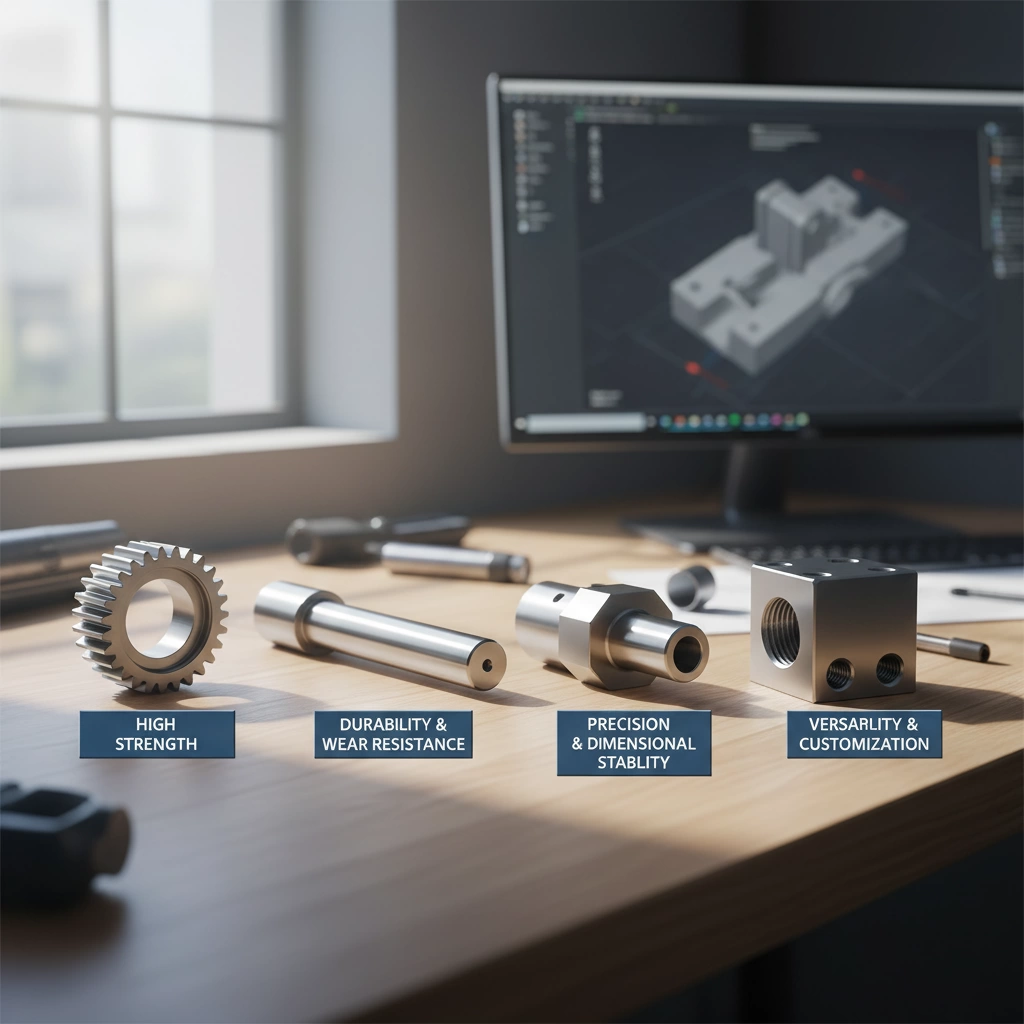
We are your trusted partner for 4142 alloy steel machining. Navigating the specific demands of tough low alloy steels requires more than just standard equipment; it takes deep expertise in chrome-moly steel manufacturing. From managing the high wear resistance of heat-treated stock to hitting strict tolerances on complex geometries, we deliver results that global industries rely on.
Our capabilities ensure your projects are handled with ultimate care. Just as we excel in delivering complex alloy machined parts like 17-4 PH stainless steel, our approach to custom 4142 steel CNC machining guarantees top-tier durability, precision, and performance for every component we produce.
The Vastmaterial Differentiators
- Optimized Machining Strategies: We utilize specialized tooling and setups tailored to the specific machinability rating of 4142, minimizing tool wear and maximizing production efficiency.
- Material State Flexibility: Whether your project requires cutting soft, annealed material or tackling tough, heat treated stock, we precisely calibrate our cutting speeds and feeds for a flawless finish.
- Global Quality Standards: Every component undergoes rigorous, documented inspection to ensure it meets your exact engineering specifications before it leaves our facility.
Our Core Production Advantages
| Feature | The Vastmaterial Standard |
|---|---|
| Tolerance Control | Ultra-tight precision for high-stress applications |
| Turnaround Time | Optimized workflows for rapid, reliable global delivery |
| Material Handling | Proven expertise in difficult-to-machine low alloy steels |
| Scalability | Seamless transition from initial prototypes to high-volume production |
4142 Alloy Steel Machining FAQs
Machining Pre-Hardened vs. Annealed 4142 Steel
When manufacturing 4142 alloy steel machined parts, we generally recommend rough machining the material in its annealed state. 4142 annealed steel turning is significantly easier on tooling and allows for much faster material removal rates. After the initial roughing, the component is heat treated to the target hardness, followed by final precision grinding or light finish machining to hit tight tolerances. While we certainly can machine pre-hardened stock directly, it requires specialized carbide tooling and reduced cutting speeds.
4142 vs 4140 Steel Machinability
The primary difference between these two low alloy steels is the carbon content. 4142 has a slightly higher carbon level, allowing it to achieve greater hardness and better overall wear resistance after being heat treated. Consequently, the 4142 vs 4140 steel machinability rating is slightly lower for 4142. While 4140 is a bit easier to cut, 4142 is the superior choice for high-stress applications. As an experienced local CNC machine shop delivering precision parts, we easily adapt our custom programming and tooling setups to handle both materials efficiently.
Preventing Built-Up Edge (BUE) in 4142 Turning
Built-up edge (BUE) occurs when tiny pieces of the workpiece material weld themselves directly to the cutting tool insert. When machining 4142 round bar stock, this typically happens if cutting speeds are too slow or lubrication is inadequate. To prevent BUE, we implement the following strategies:
- Optimize Cutting Speeds: We increase the surface footage to generate just enough heat to shear the chip cleanly away from the cut.
- Apply High-Pressure Coolant: Flooding the cutting zone flushes chips away immediately and manages localized heat to protect the tool.
- Utilize Coated Carbide Tools: Using inserts with advanced, low-friction coatings stops the steel from adhering to the cutting edge.