Overview
What Is an Investment Casting Clevis?
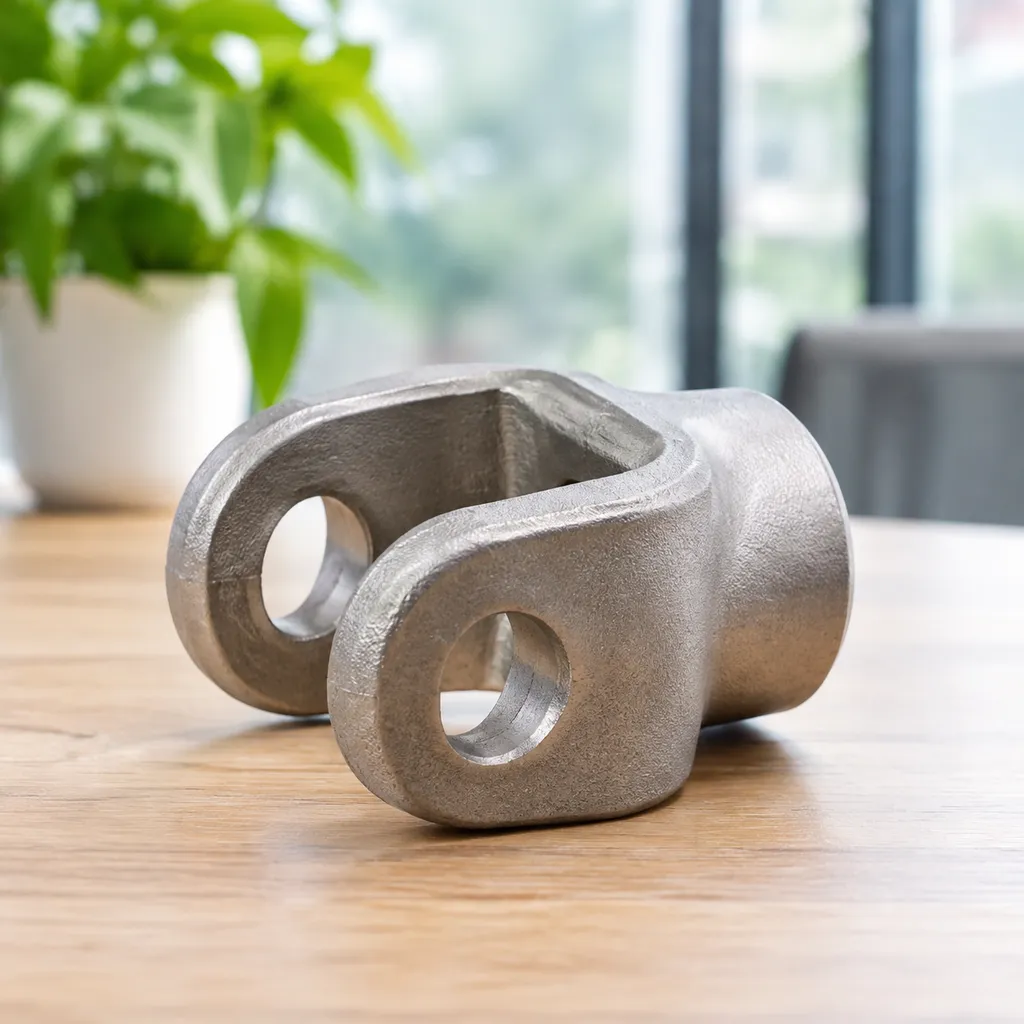
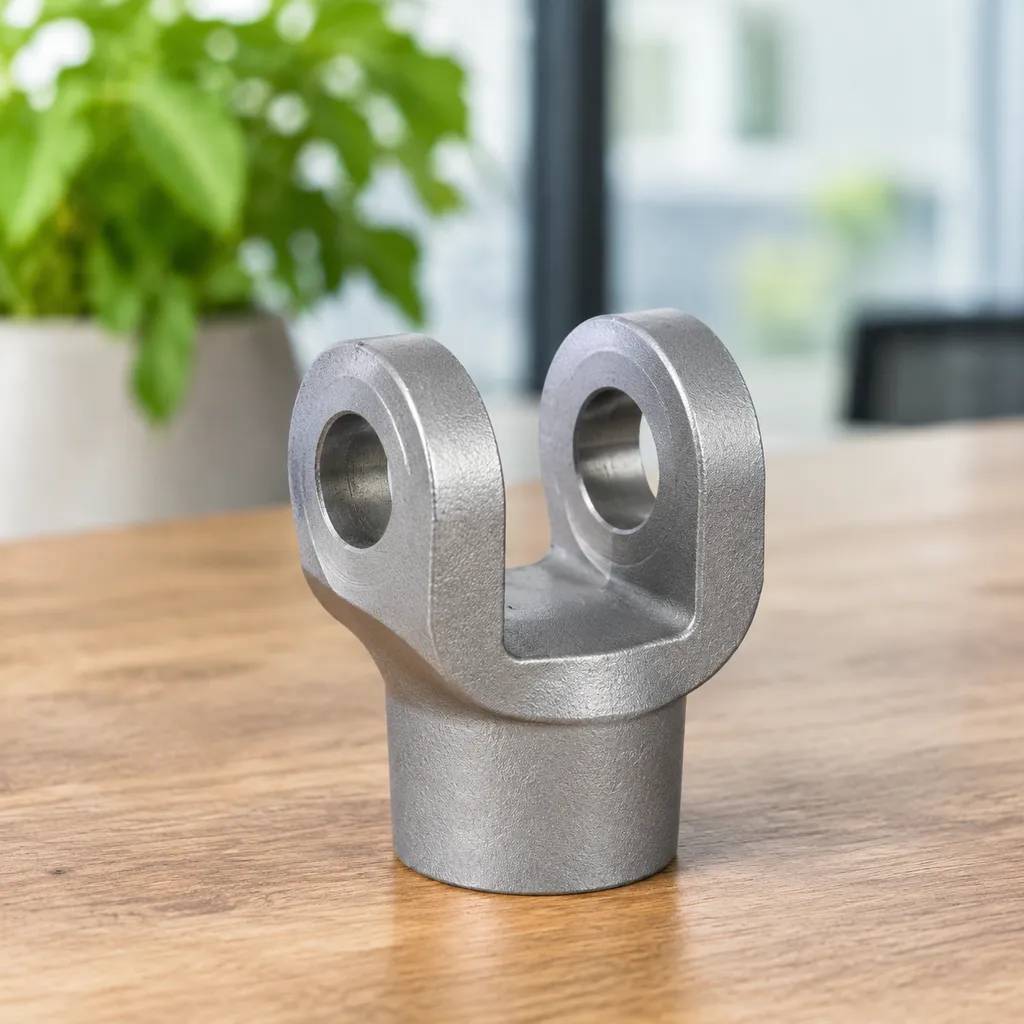
Precision casting produces a stainless steel investment casting clevis - a rod clevis with a U-shaped fork, aligned pin holes, and a cylindrical threaded shank for control rods, linkages, and hydraulic cylinders. Lost-wax casting with silica sol shells and secondary CNC machining deliver near-net geometry, a matte cast finish, and ready-to-fit pin-to-bore interfaces.
Definition and Function of a Clevis Joint
A clevis joint is a high-load mechanical linkage composed of a U-shaped fork (the clevis) and a mating insertion point (a tang or rod end), connected by a secure cross-pin. It serves specific mechanical functions:
- Single-Axis Articulation: Allows smooth, uninhibited rotation along a single plane while restricting secondary lateral movement.
- Linear Force Transfer: Efficiently transmits pure tensile and compressive loads across dynamic mechanical assemblies.
- Binding Prevention: Eliminates internal torque buildup and binding caused by misaligned movement during mechanical stroke or actuation.
- Shear Distribution: Transfers heavy dynamic loads evenly across the dual shear planes of the clevis pin.
The Lost Wax Casting Process for Clevis Components
Producing clevis components via lost-wax casting ensures intricate internal contours, precise fork spacing, and clean pinhole alignment right out of the mold:
- Wax Pattern Tooling: Liquid wax is injected into a precision die to create an exact replica of the finished clevis.
- Ceramic Shell Construction: The wax assembly is repeatedly dipped into high-grade refractory slurries - typically utilizing a silica sol binder - and coated with fine ceramic sands.
- Dewaxing and Firing: The hardened mold is heated in an autoclave to evacuate the wax, followed by high-temperature sintering to create a rigid, seamless ceramic cavity.
- Molten Metal Pouring: Melted alloy is poured directly into the preheated mold, ensuring full material fill into tight fillets and thin structural ribs.
- Shell Knockout and Cut-Off: After cooling, the ceramic shell is vibrated off, and the clevis castings are removed from the central runner system for heat treatment and finishing.
Common Clevis Types: Rod Ends, Clevis Forks, and Pins
| Clevis Component | Primary Configuration | Typical Mechanical Function |
|---|---|---|
| Rod Clevis | Threaded female or male base with an integrated fork | Direct attachment to hydraulic cylinder shafts and tie-rods. |
| Clevis Fork (Yoke) | Symmetrical dual-lug bracket with inline cross-holes | Straddles mounting brackets, actuating arms, or linkage tabs. |
| Clevis Pin | Precision-turned solid pin with retention/cotter holes | Acts as the primary hinge element holding the fork and mating tang together. |
- Rod Ends: Designed with internal or external metric/imperial threads, these components thread directly onto actuation rods to establish precise linkage lengths.
- Clevis Forks: Feature optimized fork throat depths and parallel wall thicknesses, cast to absorb severe shock without wall spreading or plastic deformation.
- Standard and Custom Pins: Engineered to close sliding tolerances, clevis pins bridge the fork ears to carry primary shear forces during cyclic mechanical operation.
Key Benefits of Investment Casting for Clevises
Choosing an investment casting clevis over standard fabrication or drop forging delivers clear performance and cost advantages. As professional precision casting and CNC machining service providers, we engineer mechanical linkages that hold up under severe dynamic loads while keeping production lean.
| Benefit Area | Investment Casting Advantage | Traditional Fabrication / Forging |
|---|---|---|
| Dimensional Tolerance | ISO 8062-3 DCTG 4 to 6 (+/-0.1 mm typical) | ISO 8062-3 DCTG 8 to 11 (requires heavy milling) |
| Surface Finish | Ra 3.2 - 6.3 um out of the shell | Ra 12.5 um or rougher scale |
| Geometry Freedom | Complex fork pockets, internal bosses, custom radii | Limited to uniform cross-sections or simple drafts |
| Scrap Rate | Minimal (< 5% material loss) | Substantial chip waste from solid stock (up to 40%) |
Superior Dimensional Accuracy and Tight Tolerances
Precision casting methods maintain consistent dimensions from the first piece to the ten-thousandth. Refined wax patterns and temperature-controlled silica sol slurry systems cast clevis forks with slot widths, pin-hole alignments, and prong parallelisms held within tight limits.
- Uniform pin-to-hole alignment: Eliminates binding in rod ends and linkage assemblies.
- Controlled wall thickness: Eliminates weight variance without compromising local load-bearing points.
- High-grade surface finish: Minimizes post-cast polishing, saving turnaround time and tooling costs.
Complex Geometries and Near-Net-Shape Production
Forging or billet machining limits geometry options. Through lost-wax casting, intricate geometries are produced directly into the near-net-shape part:
- Integrated internal lubrication channels inside the clevis fork.
- Asymmetrical mounting tabs, clevis stops, and custom mounting ears.
- Contoured transitions that distribute mechanical strain away from sharp pin corners.
Enhanced Structural Integrity and Fatigue Resistance
A clevis joint experiences severe cycling, multi-axis shearing, and vibrational loads. An investment casting clevis offers uniform isotropic strength because the metal solidifies evenly without the directional weak planes common in welded or wrought bar stock.
- No weld seam failures: Monolithic solid construction eliminates heat-affected zone (HAZ) cracking.
- Dense grain structure: Controlled shell preheating and vacuum pour capabilities prevent internal shrinkage and gas porosity.
- Superior fatigue limits: Rounded internal fillets reduce stress concentration factors under repetitive push-pull cycles.
Reduced Machining Time and Material Waste
Starting with a near-net-shape rod clevis drastically shortens the manufacturing chain. Machining a complex fork end from solid bar stock turns expensive material into useless swarf. Investment casting requires only rapid, final-pass CNC machining for critical interfaces:
- Fast reaming or boring on the pin hole for high-precision bearing fits.
- Clean, chatter-free thread tapping (metric or imperial UNC/UNF) in the mounting shank.
- Less cutting cycle time, lower cutter wear, and lower per-unit cost on volume runs.
Common Material Grades for Investment Cast Clevises
Selecting the right metal grade determines how well an investment casting clevis withstands load, friction, and environmental stress. A broad range of alloys is cast using the lost-wax casting method to balance yield strength, toughness, and chemical resistance.
| Material Category | Common Grades | Key Characteristics | Best Fit Applications |
|---|---|---|---|
| Stainless Steel | 304, 316, 17-4 PH | Rust prevention, high toughness | Marine, chemical, food processing |
| Carbon & Alloy Steel | AISI 1020, 1045, 4140, 8620 | High tensile strength, wear resistance | Heavy machinery, hydraulic rod clevis joints |
| Specialty Superalloys | Inconel, Cobalt-based alloys | Thermal stability, extreme wear resistance | Exhaust valves, aerospace linkages |
Stainless Steel for Corrosion Resistance
When clevis joints operate in harsh environments, moisture, salt, or corrosive chemicals quickly degrade standard metals. Austenitic and precipitation-hardening stainless steels are poured to support long service lives without surface pitting or stress cracking.
- AISI 316 / CF8M: The industry standard for marine rigging, coastal structures, and chemical fluid equipment where chloride attack is an issue.
- AISI 304 / CF8: A versatile, cost-effective grade delivering dependable corrosion protection and mechanical stability for food-grade machinery and general hardware.
- 17-4 PH (1.4542): Combines the corrosion resistance of 304 with the immense mechanical strength of high-alloy steels, ideal for structural flight hardware and dynamic linkage assemblies.
Carbon Steel and Low-Alloy Steel for High Tensile Strength
For heavy load-bearing assemblies, high shock absorption and raw tensile capabilities are mandatory. The specialized alloy steel casting process for high precision CNC parts delivers dense, void-free grain structures that easily handle intense shear stresses.
- AISI 1020 & 1045 Carbon Steel: Reliable, weldable options tailored for agricultural implements, material handling links, and general construction linkages.
- AISI 4140 & 4340 Alloy Steel: Chromium-molybdenum grades that provide superior fatigue life and impact resistance under repetitive cycling.
- Heat Treatment Compatibility: These alloys respond well to quenching, tempering, and case hardening, allowing precise hardness thresholds prior to finish CNC machining.
Specialty Alloys for High-Temperature Applications
Standard steels lose their yield strength and deform when exposed to extreme thermal cycling or aggressive erosion. For extreme environments, high-performance components use cobalt alloy casting solutions for extreme wear, corrosion, and heat alongside nickel-based superalloys.
- Nickel Alloys (Inconel 625 / 718): Resist oxidation, creeping, and mechanical degradation at temperatures exceeding 650 deg C (1200 deg F).
- Cobalt Alloys (Stellite equivalents): Deliver exceptional resistance to galling, abrasion, and thermal shock in hot exhaust linkages and severe-service control valves.
- Consistent Integrity: Precision casting with refined silica sol slurries helps these complex alloys maintain strict chemical purity and structural soundness.
Precision CNC Machining and Finishing for Investment Casting Clevis
Manufacturing a dependable investment casting clevis requires strict process control from the initial wax mold to final surface treatment. Advanced lost-wax casting methods integrate with downstream machining to produce ready-to-install rod clevis components that handle intense cyclic loads without failure.
Silica Sol vs. Water Glass Investment Casting
Choosing the right mold binder directly dictates surface quality, dimensional precision, and post-processing needs for an investment casting clevis. Both methods are available based on project requirements, though high-stress mechanical linkages favor silica sol.
| Feature | Silica Sol Casting | Water Glass Casting |
|---|---|---|
| Surface Roughness | Ra 1.6 - 3.2 um | Ra 6.3 - 12.5 um |
| Linear Tolerance | ISO 8062 CT4 - CT6 | ISO 8062 CT7 - CT9 |
| Alloy Compatibility | Stainless, nickel, carbon, alloy steel | Primarily carbon and low-alloy steel |
| Defect Rate | Extremely low inclusion and gas risk | Moderate surface scale potential |
| Best Application | Critical aerospace, marine, and hydraulic clevises | Cost-effective agricultural and structural links |
The silica sol process delivers exceptional boundary definition on thin-walled clevis tangs and tight pin openings, drastically reducing the need for secondary stock removal.
Secondary Precision CNC Machining and Threading
While precision casting achieves near-net shapes, clevis joints require high-precision mating surfaces to prevent mechanical binding and excessive free play. Multi-axis machining centers execute high-tolerance post-cast operations:
- Pin Bore Line-Boring: Precision-machined clevis pin holes held within H7/H8 tolerances to ensure concentric alignment across both fork ears.
- Precision Threading: Single-point CNC threading for male and female shanks, delivering standard UNF, UNC, and metric profiles with 2B/2A or 3B/3A thread classes.
- Slot and Face Milling: High-accuracy pocket milling on inner fork faces to guarantee perpendicularity and zero binding under angular articulation.
Running these operations through an integrated CNC machine shop for precision parts helps eliminate dimensional stacking and maintain precise pin-to-bore fits.
Heat Treating and Surface Coating Options
To match mechanical and environmental demands, cast clevises undergo targeted metallurgical treatments and protective finishes:
- Quench and Temper (Q&T): Increases core yield strength and fatigue resistance in carbon and alloy steel rod ends subjected to heavy shock loads.
- Solution Annealing: Restores optimal corrosion resistance and relieves internal stresses in 304 and 316 stainless steel components.
- Case Hardening and Carburizing: Enhances surface hardness around pin holes to prevent pin fretting, wear, and bore elongation under continuous cycling.
- Protective Coatings: Zinc plating (clear, yellow, or black trivalent), hot-dip galvanizing, chemical blackening, and electropolishing to safeguard against harsh outdoor and marine conditions.
Industrial Applications for Investment Cast Clevises
Investment casting clevis components serve industries where mechanical failure is not an option. Because these pivot connections handle heavy tension, shear, and angular loads, a high-integrity precision casting supports long-term operational safety.
Aerospace and Defense Flight Control Linkages
In aerospace assemblies, weight savings and structural reliability must go hand-in-hand. Investment cast clevis components are produced for:
Flight control systems: Connecting push-pull rods to ailerons, elevators, and rudder linkages.
Landing gear actuation: Absorbing shock and transferring pivot loads during deployment.
Weapon release and cargo door assemblies: Delivering superior fatigue resistance under high G-force maneuvers.
Through lost-wax casting, exact wall thicknesses and smooth surfaces support rigorous non-destructive testing requirements.
Automotive and Heavy Duty Equipment
Heavy commercial vehicles, mining loaders, and agricultural machinery require joints that can survive continuous vibration and dirty operating conditions. High-tensile steel clevis brackets and suspension links are manufactured to endure severe dynamic loads.
Industrial Actuators and Hydraulic Cylinders
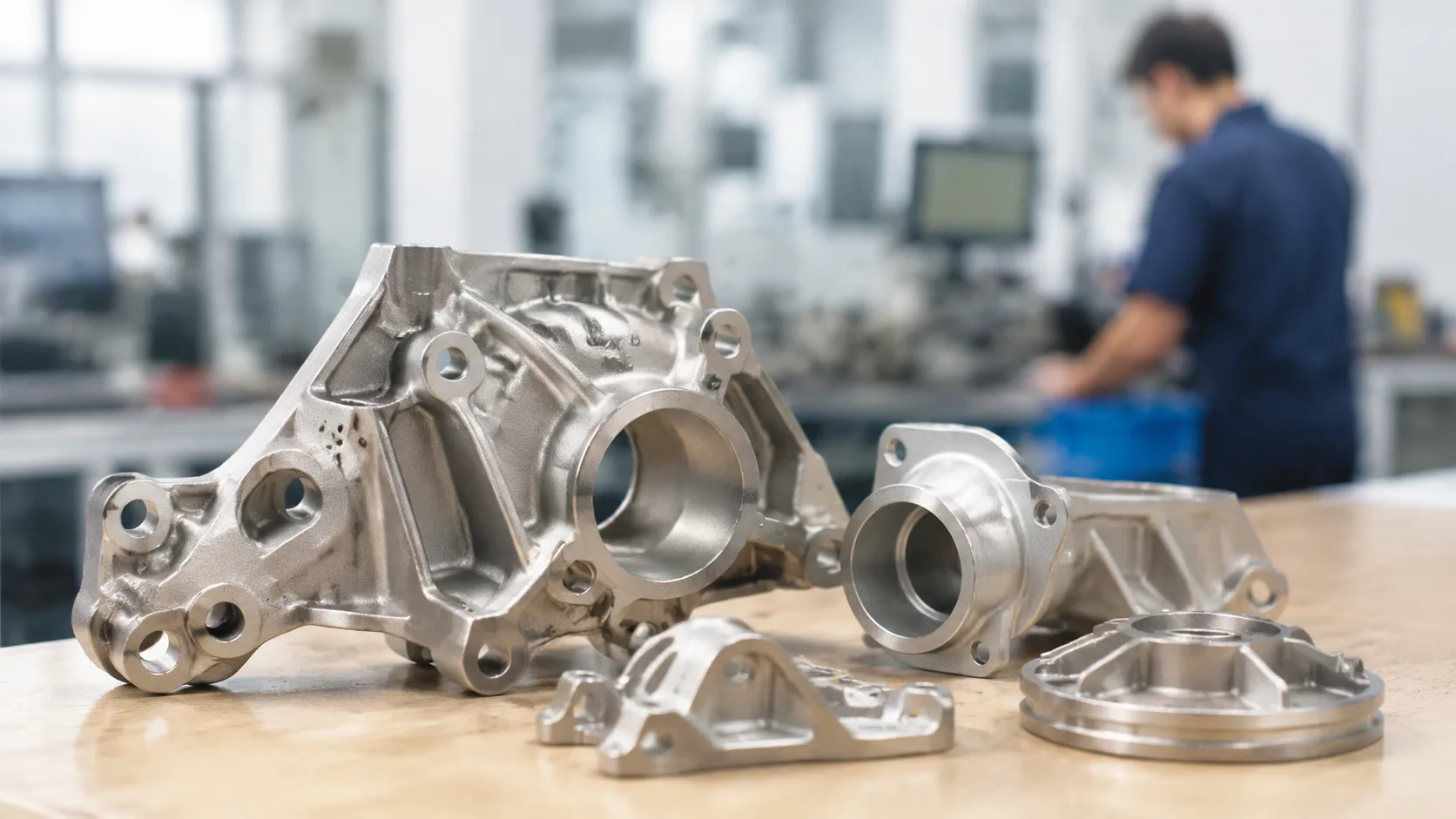
A standard rod clevis is the primary interface between a hydraulic cylinder rod and the load it moves. Custom cylinder rod ends and cap clevises are manufactured for:
Linear actuators in automated factory lines
High-pressure hydraulic cylinders for earthmoving machines
Pneumatic cylinder pivots requiring smooth, bind-free movement
Following the casting stage, secondary CNC machining cuts tight-tolerance internal threads and pin holes, ensuring seamless pin alignment without play.
Marine and Petrochemical Rigging Systems
Harsh offshore environments quickly destroy sub-par components through pitting and galvanic corrosion. Using the silica sol casting process, stainless steel clevis ends are produced for:
Mooring lines, turnbuckles, and tensioning stays
Offshore crane rigging and hoisting connections
Subsea valve actuators and petrochemical pipe suspension networks
These components provide the high yield strength and chemical resistance needed to endure continuous saltwater exposure without cracking under sustained loads.
Quality Assurance and Testing Standards for Investment Casting Clevis Components
When sourcing a critical investment casting clevis, structural reliability under load is non-negotiable. We are Professional Precision Casting and CNC Machining Service Providers, and rigorous quality gates are built into every phase of production. From the initial liquid metal pour to the final machined rod clevis, verification procedures confirm that every part delivers peak performance in demanding mechanical assemblies.
Non-Destructive Testing (NDT) and Radiography
Internal defects like gas porosity, shrinkage voids, or micro-cracks can cause catastrophic failures in heavy-load linkage systems. Precision casting components are inspected using advanced, non-invasive inspection protocols:
- X-ray Radiographic Testing (RT): Penetrates deep into the thick sections and fork transitions of the clevis to reveal hidden subsurface shrinkage or gas cavities.
- Magnetic Particle Inspection (MPI): Detects surface and near-surface micro-fractures in ferromagnetic carbon and low-alloy steel components.
- Liquid Penetrant Testing (PT): Exposes surface-breaking defects in stainless steel and non-ferrous alloy clevises produced via lost-wax casting.
- Ultrasonic Testing (UT): Evaluates internal density and wall thickness across complex geometry profiles.
Tensile, Hardness, and Metallurgical Verification
A properly manufactured clevis must balance high tensile strength with adequate ductility to absorb dynamic shock loads. Mechanical and chemical profiles of every melt batch are validated against strict international benchmarks:
| Testing Method | Inspection Focus | Industry Standard Reference |
|---|---|---|
| Tensile & Yield Testing | Load-bearing limits, elongation percentage, and yield point before deformation | ASTM A370 / ISO 6892 |
| Hardness Testing | Rockwell (HRC) and Brinell (HBW) checks to verify wear resistance after heat treatment | ASTM E18 / ASTM E10 |
| Spectrometric Analysis | Precise melt chemistry verification prior to pouring silica sol molds | ASTM E415 / ASTM E1086 |
| Metallographic Examination | Microstructure evaluation to confirm correct grain size and phase distribution | ASTM E3 / ASTM E112 |
Certifications and Traceability Standards
Accountability protects the supply chain. Every investment casting clevis shipment comes backed by comprehensive documentation that tracks production from raw ingot to final CNC machining tolerances.
- EN 10204 Type 3.1 Inspection Certificates: Full disclosure of chemical composition, heat numbers, and physical test results tied directly to the batch.
- Direct Part Marking: Laser-etched or cast-in heat codes, lot numbers, and logos to enable permanent field traceability.
- Dimensional CMM Reports: Coordinate Measuring Machine scans proving pin-hole parallelism, fork-opening clearances, and thread precision match exact CAD specifications.
How to Select a Reliable Investment Casting Clevis Manufacturer
Choosing the right foundry for investment casting clevis components determines the mechanical safety, precision, and longevity of end assemblies. Because a clevis often operates as a critical load-bearing joint, the supplier must deliver defect-free castings with repeatable precision. Dependable manufacturing requires end-to-end engineering control from raw pattern creation to final dispatch - whether the brief is an investment casting clevis supply factory program, a supply investment casting clevis prototype lot, or ongoing supply investment casting clevis factory production.
Buyers that need supply investment casting clevis wholesale pricing, wholesale investment casting clevis supply agreements, or wholesale supply investment casting clevis container schedules benefit from a single-source casting and CNC machining partner.
Custom Tooling and Engineering Support Capabilities
A reputable precision casting partner provides comprehensive engineering assistance before cutting steel for tooling. Look for foundries that offer:
- Design for Manufacturability (DFM): Early evaluation of clevis geometry to optimize wall thicknesses, pin-hole radiuses, and draft angles.
- Solidification Simulation: Advanced computer modeling to predict metal flow, eliminate shrinkage porosity, and optimize gating systems.
- Process Selection: Expertise in silica sol lost-wax casting methods to achieve superior surface finishes and tight dimensional control on intricate rod clevis profiles.
- Tooling Longevity: High-grade aluminum or steel dies designed to yield thousands of consistent wax patterns without dimensional drift.
Prototyping to Full-Scale Production Flexibility
The manufacturing partner must adapt seamlessly to the product lifecycle stage. A partner with rapid prototyping and tooling options for low-volume production allows physical testing of load limits, pin clearances, and thread engagements before committing to mass production tooling.
A reliable partner supports:
Rapid Prototype Runs: 3D-printed wax or patternless casting methods for rapid design verification.
Low-to-Medium Volume Batches: Cost-effective bridge tooling to satisfy initial market rollouts or specialty equipment builds.
High-Volume Mass Production: Automated wax injection and multi-station pouring setups capable of delivering continuous container-load shipments.
Integrated Single-Source Supply Chain Services
Dividing casting, machining, and surface treatments between separate vendors introduces delays, logistics overhead, and quality disputes. Working with an integrated single-source supplier eliminates supply chain risks:
| Manufacturing Phase | Capabilities Required | Quality Benefit |
|---|---|---|
| Foundry Pouring | In-house lost-wax casting with automated shell building | Controlled metallurgical chemistry and internal sound density |
| Secondary Machining | Multi-axis CNC machining, milling, and precision threading | Exact tolerances on pin holes, fork slots, and shank threads |
| Thermal Processing | Quenching, tempering, and solution annealing | Optimized tensile strength and fatigue resistance |
| Surface Finishing | Passivation, zinc plating, anodizing, or painting | Tailored corrosion resistance for harsh marine and industrial environments |
| Verification | In-house coordinate measuring machine (CMM) and NDT testing | Complete dimensional conformity and full batch traceability |
Consolidating investment casting clevis production under one qualified roof ensures structural integrity, controls unit costs, and guarantees that every joint meets exact engineering prints. Request a Quote with drawings, alloy grade, and pin-hole tolerance targets to start tooling review.