Overview
Understanding Butterfly Valve Cast Iron Body — Specs, Types & Flow Control
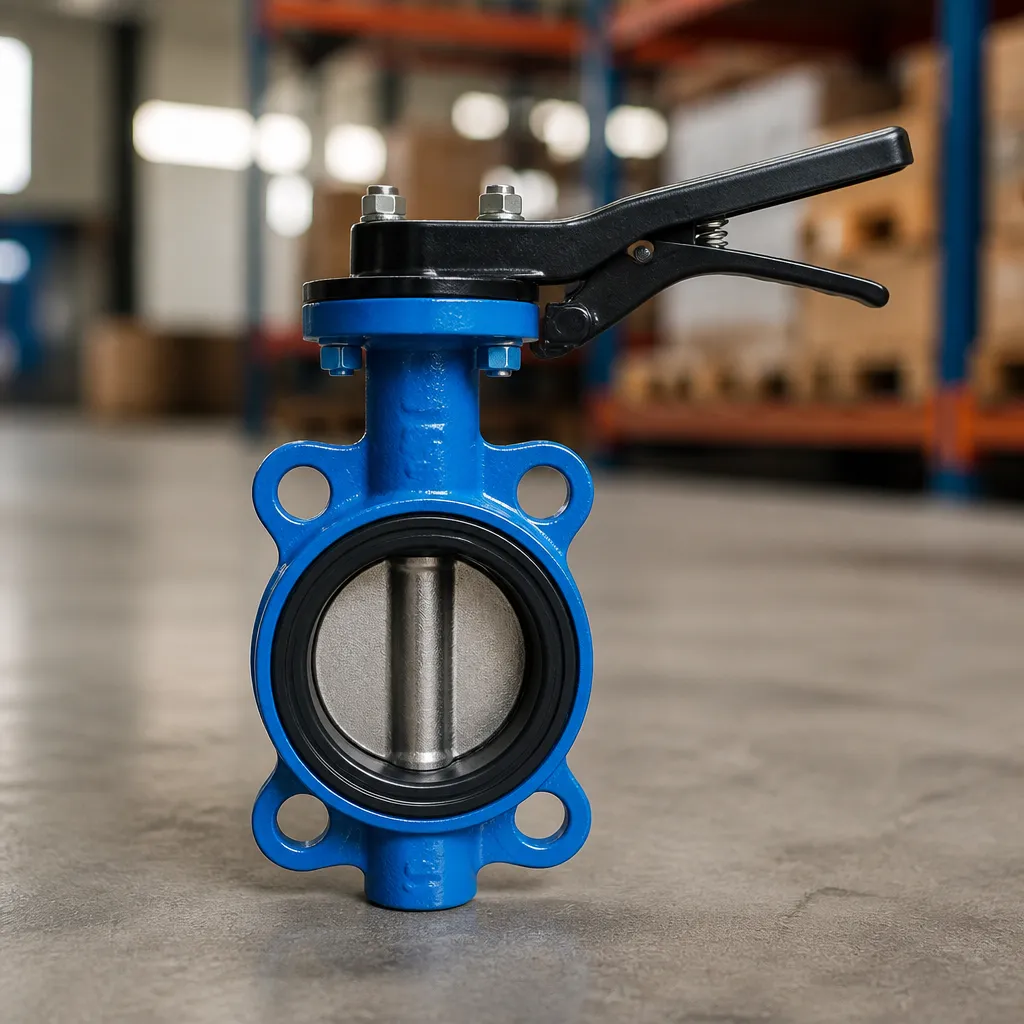
A butterfly valve cast iron body serves as a reliable, cost-effective solution for quarter-turn fluid control. Engineered primarily from gray cast iron (GG25 / ASTM A126 Class B) or ductile iron, these valve bodies provide efficient flow isolation and throttling across liquid and gas pipelines in wafer style and lug body configurations.
Cast iron butterfly valves operate on a straightforward quarter-turn rotary motion with lever operated handles or actuator-driven discs. Resilient seat options such as EPDM lining or NBR seat, paired with a ductile iron disc or AISI316 disc, support positive shutoff and flow control up to a PN16 rating in industrial piping systems.
Overview and Material Specifications
Gray cast iron (GG25 / EN-GJL-250) or ductile iron bodies offer excellent structural stability and vibration damping in low-to-medium pressure industrial systems.
| Parameter | Specification Standard |
|---|---|
| Body Material | Gray Cast Iron (GG25 / EN-GJL-250) / Ductile Iron (GGG40) |
| Nominal Diameter | DN40 to DN1200 (1.5" to 48") |
| Pressure Rating | PN10, PN16, Class 125, Class 150 |
| Design Standards | API 609, ISO 5752, EN 593, BS 5155 |
| Connection Types | Wafer, Lug, Double Flanged |
| Temperature Range | -20°C to +120°C (depending on seat material) |
Working Principle and Valve Components
Turning the actuator, lever, or gear operator rotates the internal disc parallel or perpendicular to the fluid flow, enabling rapid opening, positive shutoff, or precise flow regulation.
- Cast Iron Body: The outer casing engineered to withstand mechanical loads and pipeline stress while housing internal elements.
- Rotary Disc: Positioned in the center of the pipe, available in ductile iron disc or stainless steel configurations to control flow volume.
- Resilient Seat: Formed using EPDM lining or NBR seat materials to guarantee a bubble-tight seal against the valve body.
- Drive Stem/Shaft: Heavy-duty stainless steel shaft passing through the disc, transmitting torque directly from the operator.
- Actuator Mounting Pad: Standardized ISO 5211 top flange for seamless integration with manual levers, gearboxes, pneumatic, or electric actuators.
Main Types of Cast Iron Butterfly Valves
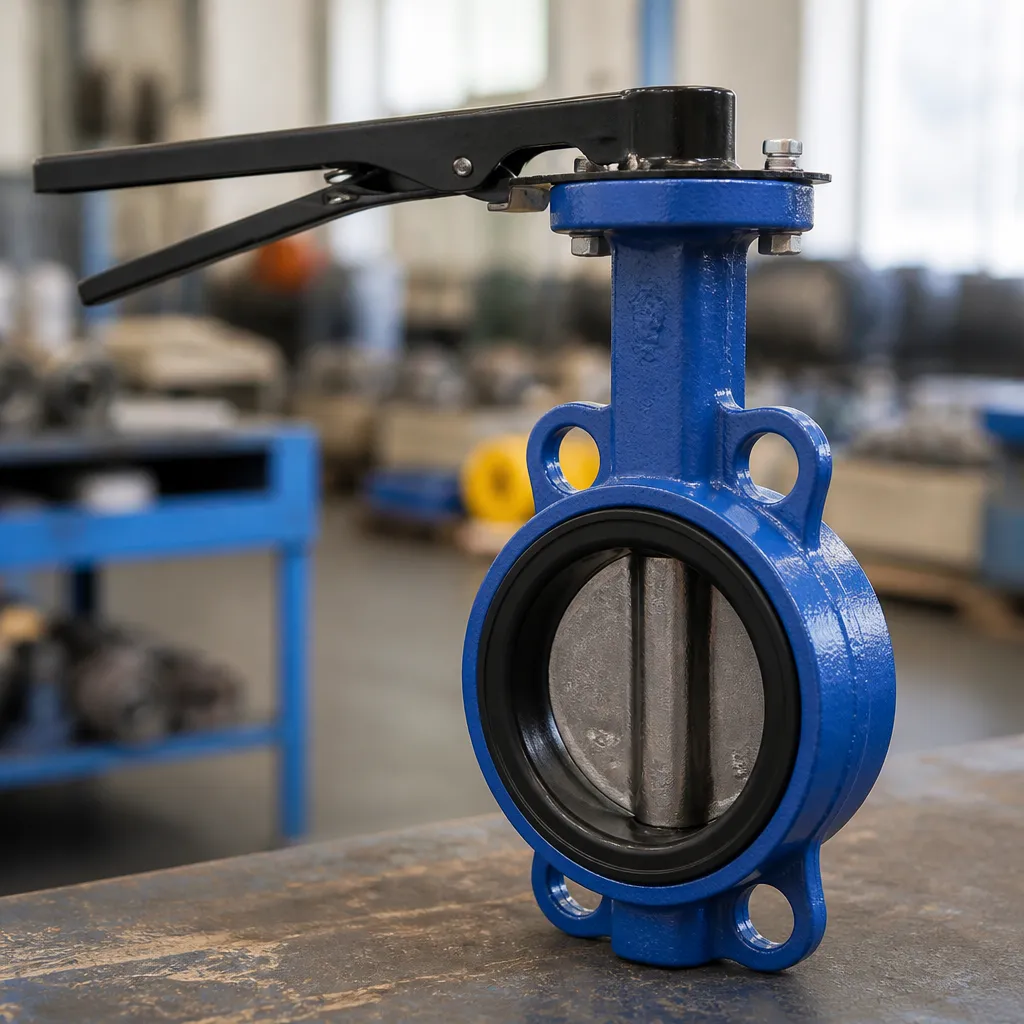
Each butterfly valve cast iron body is designed to accommodate specific pipeline stress levels, mounting constraints, and fluid media. Choosing the right body style and internal disc component ensures long-term operational integrity and leak-free performance.
Wafer Style Cast Iron Butterfly Valves
The wafer style valve is designed to fit snugly between pipe flanges using through-bolts that surround the valve body:
- Compact Footprint: Minimal face-to-face dimensions save critical installation space in tight piping configurations.
- Cost-Effective: Uses fewer raw materials, making it an economical choice for general throttling valve needs.
- Bi-Directional Seal: Achieves a tight positive shutoff against flow in either direction.
Lug Style Cast Iron Butterfly Valves
A lug body design features threaded metal inserts protruding around the entire outer perimeter:
- Dead-End Service: Permits downstream piping removal while keeping the upstream side under full system pressure.
- Heavy Load Capacity: Threaded connections absorb high mechanical loads, preventing strain on the valve seat.
- Versatile Mounting: Ideal for systems operating up to PN16 rating standards where independent section isolation is required.
Ductile Iron vs. Stainless Steel Disc Options
The inner disc handles direct mechanical wear and fluid contact. Material options include high-strength ductile iron cast discs for standard utility lines and high-grade stainless steel for aggressive media.
| Component Spec | Ductile Iron Disc | Stainless Steel Disc (AISI316) |
|---|---|---|
| Material Grade | Nickel-plated or epoxy-coated ductile iron | AISI316 stainless steel |
| Corrosion Resistance | Moderate (Best for HVAC & municipal water) | Superior (Best for salt water & mild acids) |
| Mechanical Strength | Exceptional shock and wear resistance | High tensile strength under elevated temperatures |
| Target Application | Cost-conscious potable water & non-corrosive fluids | Harsh chemical processing & industrial fluids |
Key Features and Benefits of Cast Iron Valve Bodies
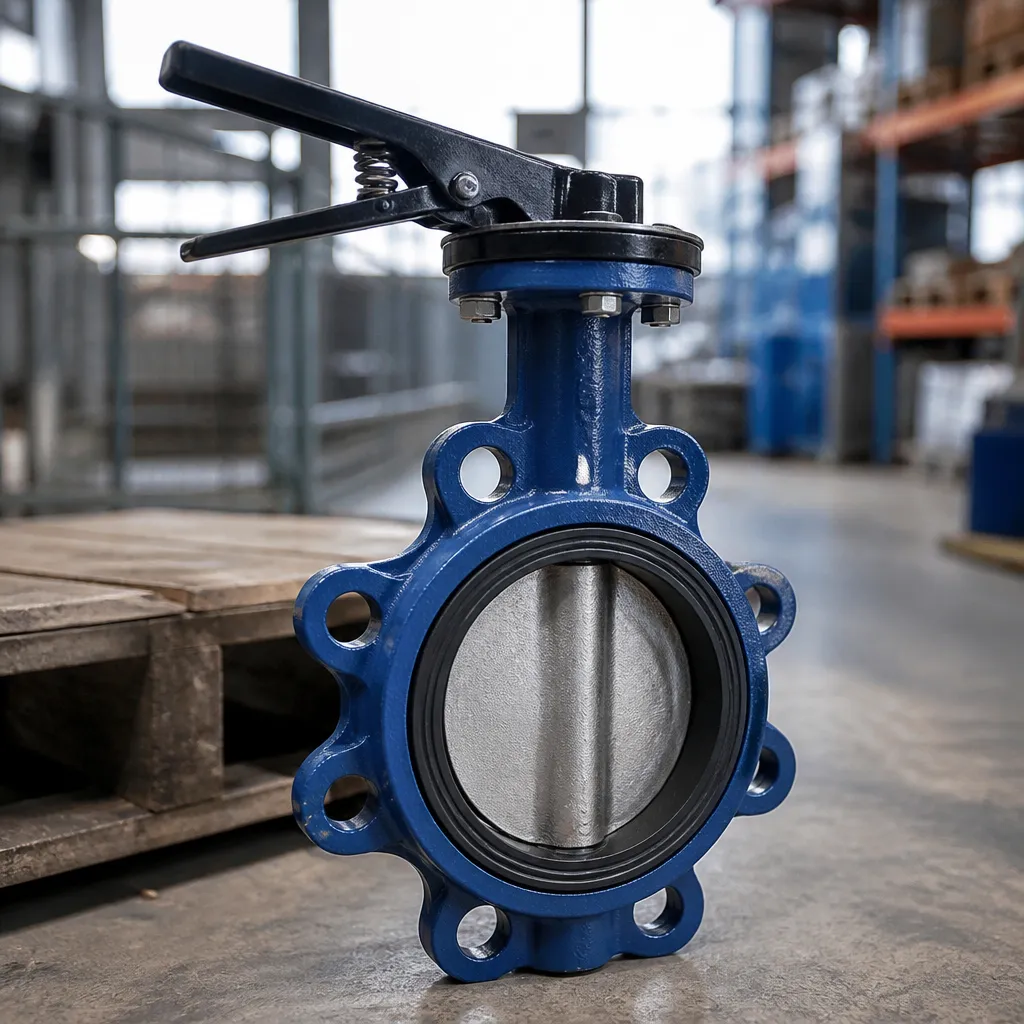
A butterfly valve cast iron body offers a practical balance of mechanical strength, long-term durability, and low total cost of ownership. These bodies provide dependable fluid isolation and reliable service across industrial and commercial piping networks.
High Durability and Pressure Resistance
Cast iron valve bodies excel in heavy-duty setups where pipeline stress and structural vibrations are common.
- Structural Integrity: Cast iron (such as GG25) naturally dampens mechanical vibrations and absorbs stress from high mechanical loads.
- Solid Pressure Ratings: Built to support standard working pressures up to a PN16 rating, ensuring stable performance without body deformation.
- Rigid Housing: Protects internal components—like the stem and disc—from external piping forces, ensuring smooth operation over extended duty cycles.
Cost-Effective Flow Control Performance
For general liquid and gas management, a butterfly valve cast iron body delivers exceptional flow control without the heavy price tag of full stainless steel construction.
- Economical Material Costs: Provides maximum structural strength per dollar spent, making large-diameter piping projects far more affordable.
- Versatile Functionality: Functions reliably both as an on/off isolation unit and a precise throttling valve for adjusting line flow rates.
- Smart Material Selection: Pairing a cast iron body with high-grade internal trims supports customized performance. The precision casting alloy guide shows how different metal combinations optimize strength and cost.
Corrosion and Thermal Endurance
While raw iron requires protection, proper external coatings and internal linings give cast iron valve bodies superior endurance in challenging fluid environments.
| Feature | Design Specification | Operational Benefit |
|---|---|---|
| Protective Coating | Fusion-bonded epoxy coating (internal & external) | Prevents rust, external atmospheric wear, and chemical degradation. |
| Resilient Linings | Integrated EPDM lining or NBR seat options | Protects the metal body from aggressive fluids while ensuring tight sealing. |
| Thermal Range | Rated for moderate system temperatures | Maintains dimensional stability across hot and cold fluid cycling without cracking. |
Common Industrial Application Scenarios
A butterfly valve cast iron body provides a versatile, space-saving solution for fluid control across heavy-duty commercial and industrial networks. Thanks to high mechanical strength and shock absorption, these valves handle severe operational demands across various piping systems worldwide.
Water Supply and Wastewater Treatment Systems
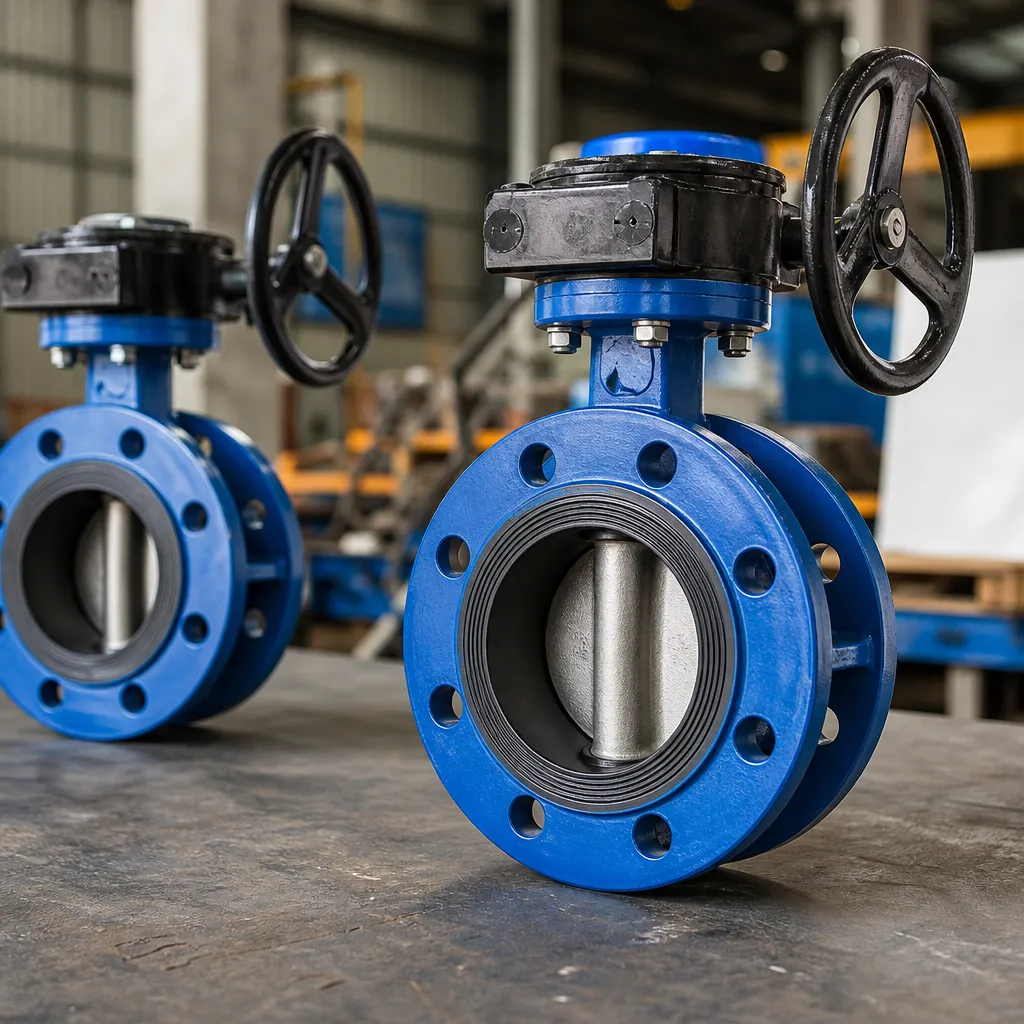
Municipal water networks and sewage treatment plants rely heavily on cast iron valves to regulate massive liquid volumes efficiently. Their compact profile and dependable sealing make them ideal for high-flow applications.
- Reliable Isolation: Outfitted with an EPDM lining or NBR seat, these valves deliver a dependable positive shutoff in raw water, potable water, and treated effluent pipelines.
- Sediment Resistance: The streamlined disc design minimizes pressure drops, preventing debris and solids from clogging filtration loops.
- Standardized Ratings: Built to accommodate standard PN16 rating requirements, maintaining system integrity under continuous municipal pressure.
HVAC and Commercial Piping Infrastructure
In large commercial complexes, chilled water loops, and hydronic heating systems, space and energy efficiency are critical. Cast iron valve bodies integrate seamlessly into automated climate control systems.
- Compact Form Factor: Both wafer style and lug body designs allow quick installation between existing flanges in tight mechanical spaces.
- Automated Regulation: Built-in mounting pads simplify actuator mounting for automated temperature and zone flow control.
- Vibration Dampening: Cast iron naturally dampens equipment vibration and handles thermal cycles, protecting pumps and distribution lines.
Industrial Fluid and Chemical Processing
For general manufacturing lines handling utility fluids, cooling water, or mild chemical solutions, cast iron butterfly valves deliver long-term performance at a sensible cost. Broad industrial casting process benefits and applications highlight how custom valve body castings meet rigid plant specifications.
- Flexible Trims: Paired with a ductile iron disc or stainless steel options, the valve body adapts to non-aggressive chemical lines, washdown stations, and secondary process loops.
- Precise Throttling: Serves effectively as a throttling valve to balance line pressures and flow rates.
- Manual and Automatic Operation: Easily equipped with a lever operated handle for quick manual shutoff or motorized actuators for full process automation.
Custom Butterfly Valve Cast Iron Body Casting Services
OEM casting solutions manufacture every butterfly valve cast iron body according to exact engineering specifications. From rapid prototyping to full-scale production, these processes guarantee tight tolerances and dependable structural integrity for demanding piping systems.
Precision Mold Tooling and Foundry Capabilities
The foundry leverages automated molding lines and high-precision pattern tooling to form complex valve geometries. Whether a wafer style or lug body configuration is required, advanced sand casting setup maintains smooth surface finishes and uniform wall thickness.
- Advanced Tooling Design: Computer-aided pattern making ensures exact dimensions for seat grooves and shaft bores.
- Integrated Foundry Setup: Specialized custom cast iron parts with precision gray and ductile casting capabilities handle high-volume runs while maintaining minimal defect rates.
- Flexible Geometries: Custom castings accommodate top-flange configurations built for direct ISO 5211 actuator mounting.
Casting Material Selection: GG25 Cast Iron vs. Ductile Iron
Choosing the right metallurgy depends directly on system pressure ratings and operational environment:
| Material Grade | Key Characteristics | Best Used For |
|---|---|---|
| GG25 Cast Iron (Gray Iron) | Excellent vibration damping, high compressive strength, cost-effective | Low to medium pressure lines, standard HVAC, and municipal water systems |
| Ductile Iron (QT450-10 / GGG40) | Superior tensile strength, ductility, handles high mechanical loads and thermal shock | High-pressure fluid lines, water hammer risk zones, heavy industrial throttling valve setups |
Quality Control, Machining, and Pressure Testing Standards
To ensure long-term durability and positive shutoff performance, every cast valve body undergoes rigorous processing and testing before shipment:
- Precision CNC Machining: Accurate boring and facing ensure perfect alignment for the disc shaft, resilient seat, and sealing components.
- Nondestructive & Mechanical Testing: Metallurgical analysis, ultrasonic testing, and hardness checks verify material density and structural integrity.
- Hydrostatic & Shell Pressure Testing: Every body casting undergoes shell pressure testing matched to standard PN16 rating requirements to guarantee zero porosity and structural sound performance under pressure.
Selection and Specification Guide
Selecting the right butterfly valve cast iron body setup depends on piping layout, system pressures, and the specific fluid passing through the line. Making the right choices upfront prevents premature wear, guarantees positive shutoff, and maintains smooth flow control.
Evaluating Connection Styles: Wafer vs. Lug
The mounting style dictates how the valve integrates into the piping system and affects future maintenance accessibility.
| Feature | Wafer Style | Lug Body |
|---|---|---|
| Mounting Mechanism | Sandwiched between two line flanges with long tie rods | Bolted directly to pipe flanges via threaded lug inserts |
| System Maintenance | Requires complete line depressurization for removal | Enables dead-end service and downstream pipe disassembly |
| Weight & Footprint | Compact, lighter weight, and highly economical | Slightly heavier, robust structural support for heavy loads |
Matching Disc, Seat, and Body Materials
Custom valve bodies use grade GG25 grey cast iron or high-strength ductile iron. When assessing overall body durability and mechanical performance, the guide on the best metals for casting provides clear insight into choosing between standard grey iron and ductile alloys.
- Disc Selection: A ductile iron disc works well for general HVAC and municipal water service. For aggressive chemical processing or marine environments, step up to an AISI316 disc.
- Resilient Seat Lining: Choose an EPDM lining for municipal water, HVAC loops, and moderate heat applications (up to 120°C). Use an NBR seat when working with oils, hydrocarbons, or compressed air systems.
Reviewing Technical Specifications and Standards
Always cross-reference line parameters against international valve manufacturing standards before finalizing the specification:
- Pressure Class: Verify system working pressures to ensure compliance with a PN16 rating or ANSI Class 125/150 pressure thresholds.
- Actuator Mounting Interface: Look for standard ISO 5211 top flanges to allow seamless direct mounting of manual levers, gear operators, or automated pneumatic and electric actuators.
- Shutoff Rating: Confirm zero-leakage resilient seat testing standards to ensure tight shutoff performance under maximum working pressures.
Request a quote by size, pressure class, disc/seat materials, and body style.