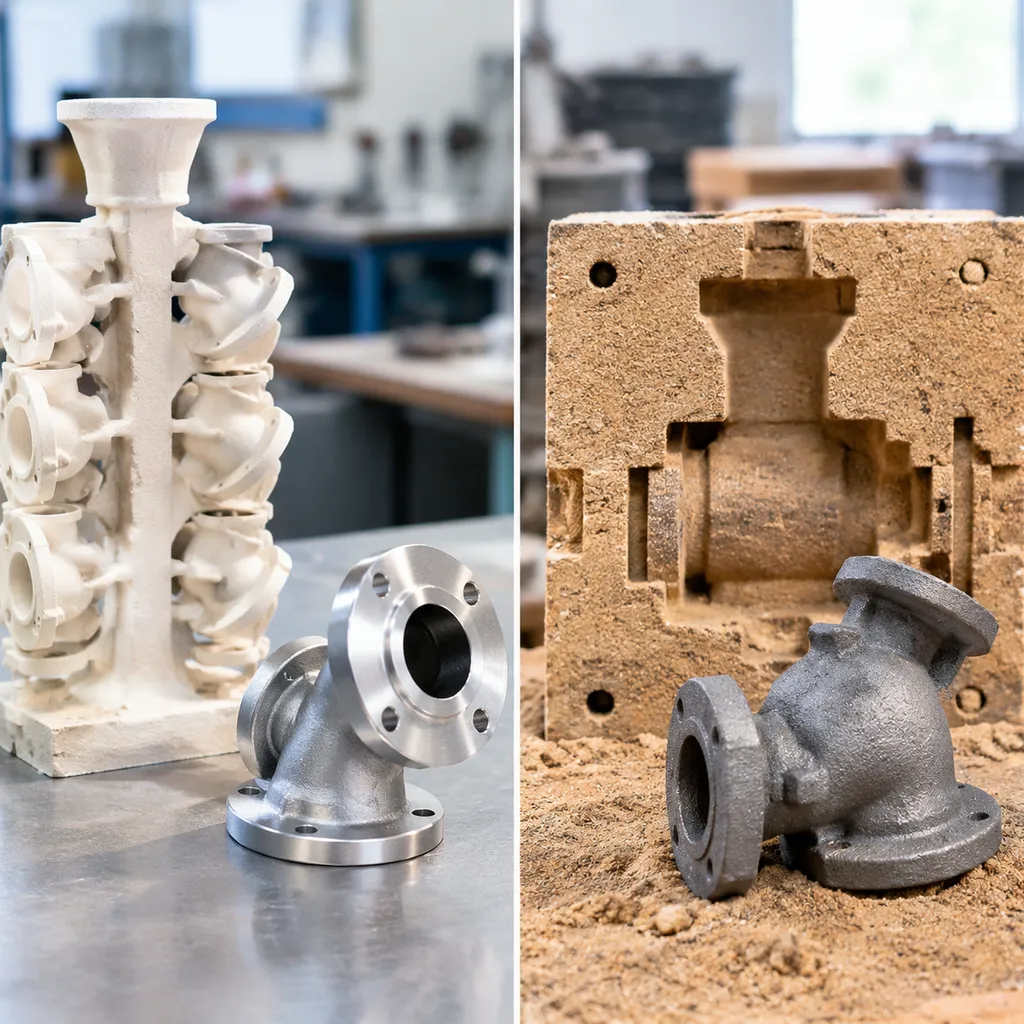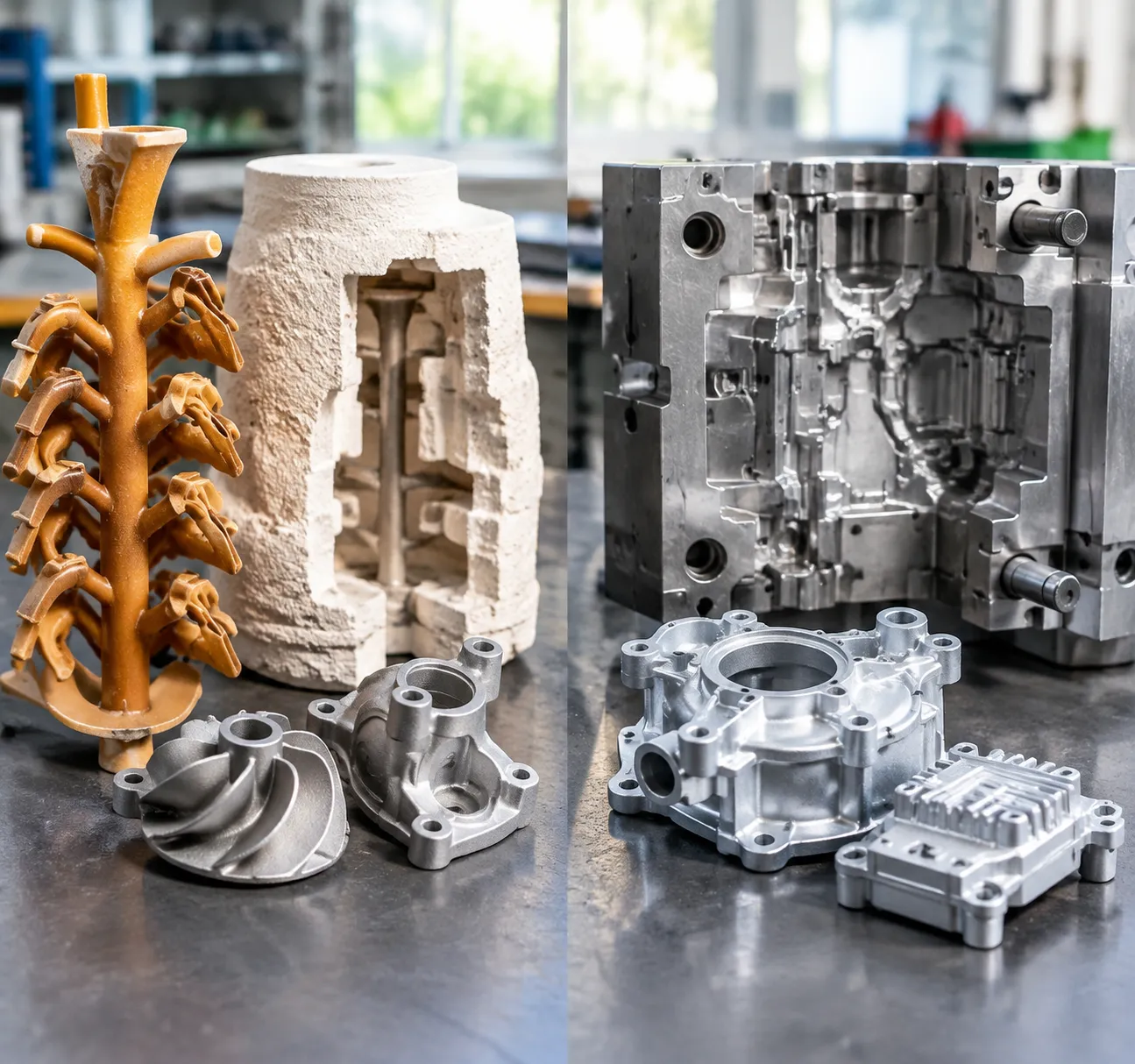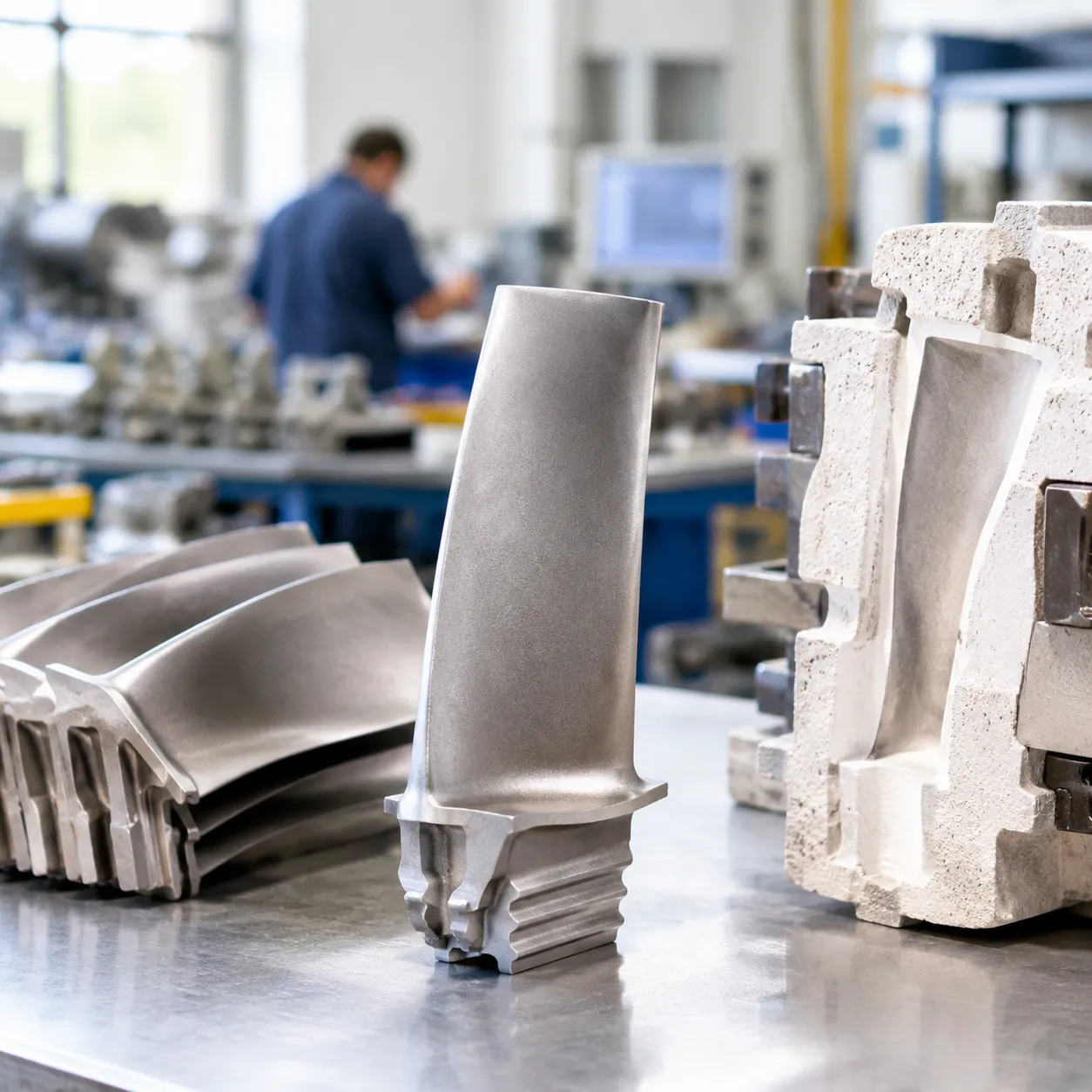
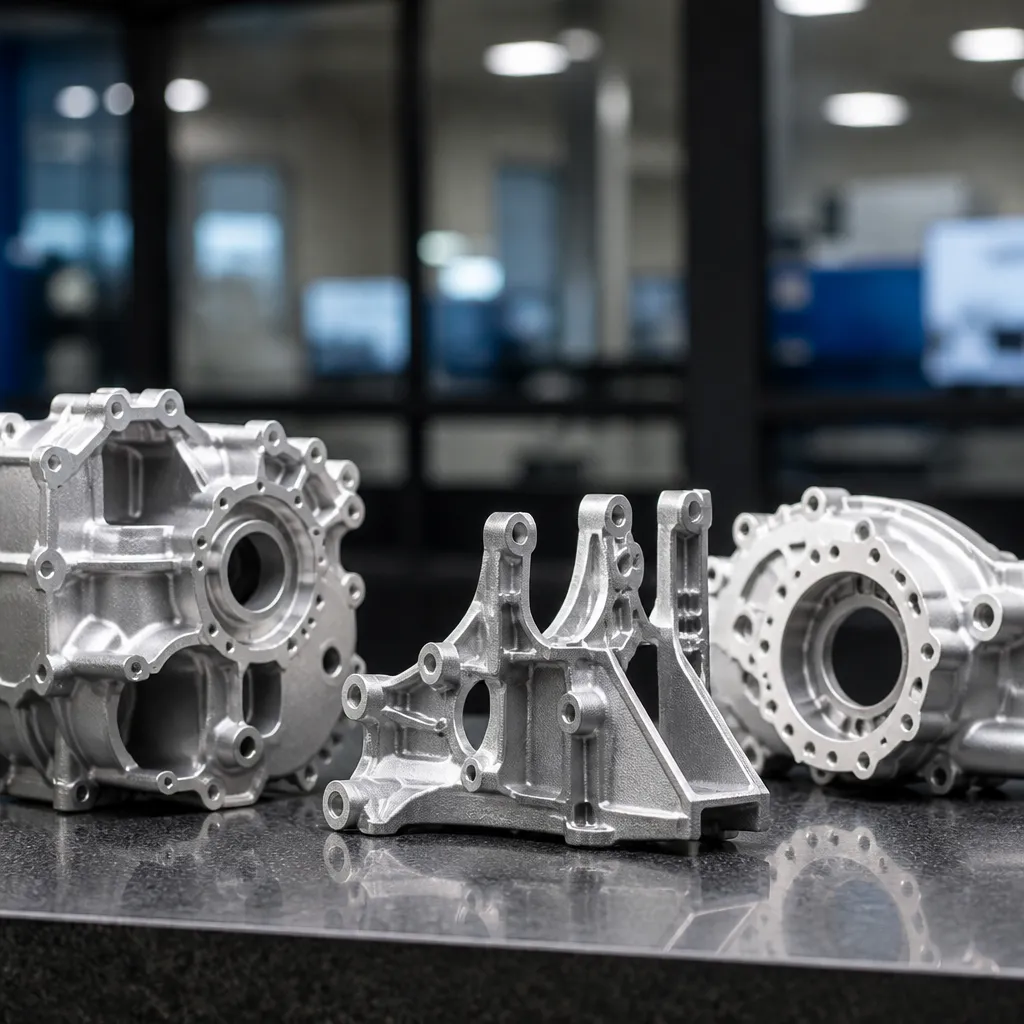
High-precision alloy die-casting parts are molten non-ferrous alloys forced into reusable steel dies under pressure—delivering tight tolerances, thin walls, and cost-effective volume production across aluminum, zinc, and magnesium. This guide covers alloy selection (including A380 aluminum alloy, Zamak 3, and Zamak 5), high pressure and low pressure process choices, surface finishing options, industry applications, and design rules buyers use before tooling.
What Are Alloy Die-Casting Parts?
Alloy die-casting parts are high-precision metal components manufactured by injecting molten non-ferrous alloys into reusable steel molds under extreme pressure. This process delivers strong, lightweight, and complex parts engineered for critical applications across global industries.
Definition and Working Principle
Die casting relies on high hydraulic or pneumatic pressure to force liquid metal into a precision-engineered cavity (die). The core principle combines thermal transfer and rapid pressure injection to lock molten metal into intricate shapes before it solidifies.[1]
- Materials Used: Primarily non-ferrous metals including aluminum die casting alloys (e.g., A380 aluminum alloy), zinc die casting alloys (e.g., Zamak 3), and magnesium.
- Core Advantage: Produces near-net-shape components that require minimal to no secondary machining.
How the Die Casting Process Works
The manufacturing process follows a streamlined, highly automated four-step cycle:
- Die Preparation: The steel mold is sprayed with lubricant to control temperature and allow easy part release.
- High-Pressure Injection: Molten metal is forced into the sealed die cavity at high speeds and under intense pressure.
- Rapid Solidification: The metal cools quickly inside the liquid-cooled tool, forming the solid component.
- Ejection & Trimming: Ejector pins push the part out of the die, and excess material (runners and flash) is trimmed off for recycling.
Key Characteristics of Die-Cast Components
Alloy die-cast parts are distinguished by superior mechanical properties and manufacturing efficiency:
- Dimensional Precision: Holds strict tolerances reliably across massive production runs.
- Thin-Wall Capability: Casts complex, thin-walled geometries without sacrificing structural strength.
- Smooth Surface Finish: Delivers clean surfaces straight out of the mold, reducing preparation for final finishing.
- High Production Yield: Extremely fast cycle times lower unit costs for high-volume manufacturing.
Advantages of Custom Alloy Die-Casting Parts
Choosing custom alloy die-casting parts gives your production run a major competitive edge. We deliver high-performance components engineered for applications where reliability, exact specs, and manufacturing efficiency matter most.
High Precision and Tight Tolerances
Die casting forms complex geometric shapes with incredible dimensional accuracy, drastically reducing or eliminating secondary machining steps. By utilizing our specialized aluminum die casting services, we hold tight tolerance standards across large-scale production runs so every part fits perfectly into your final assembly.
Excellent Strength-to-Weight Ratio
Engineered metal alloys make it possible to design thin-walled, lightweight parts that maintain exceptional structural strength. Selecting the right aluminum casting alloy grades provides superior tensile strength and heat resistance, keeping your overall product weight low without compromising load-bearing limits.
Cost-Effective High-Volume Production
For high-volume manufacturing, high pressure die casting offers unmatched cost benefits:
- Rapid Cycle Times: Produce thousands of identical components quickly and efficiently.
- Long Tooling Life: Durable steel molds handle hundreds of thousands of shots before requiring replacement.
- Minimal Material Waste: Scrap metal and trimmed runners are easily remelted and reused.
Superior Surface Quality and Durability
Die-cast components naturally feature smooth, consistent surface finishes straight out of the mold. The dense crystalline structure of cast alloys creates a durable shell that easily withstands wear, stress, and environmental exposure while bonding seamlessly with secondary protective treatments.
Common Materials Used in Alloy Die Casting
Selecting the right metal for custom alloy die-casting parts comes down to balancing strength, weight, fluidity, and finishing options. We process various non-ferrous metals to fit your exact performance requirements.
Aluminum Alloys (A380, A383, A360, A413)
Aluminum is the top choice for lightweight, durable components that require excellent thermal conductivity and corrosion resistance. Refer to our cast aluminum foundry guide for detailed mechanical specs on specific grades.
- A380 Aluminum Alloy: The most common all-around alloy, offering an optimal balance of mechanical strength, pressure tightness, and ease of casting—see also our die-cast aluminum alloy A380 grade page for typical property ranges.[2]
- A360 Alloy: Delivers higher corrosion resistance, superior ductileness, and strength at high temperatures.
- A383 Alloy: Formulated for complex aluminum die casting designs requiring higher fluidity and fill characteristics.
- A413: Contains high silicon content for maximum fluid mobility and tight pressure tightness in intricate parts.
Zinc Alloys (Zamak 3, Zamak 5, ZA-8)
Precision zinc die casting yields exceptional impact strength, high ductility, and ultra-precise dimensional control with minimal draft angles.
- Zamak 3: The industry benchmark for zinc casting, providing excellent physical properties, dimensional stability, and easy electroplating.
- Zamak 5: Formulated with higher copper content to deliver increased tensile strength and hardness.
- ZA-8: High-aluminum zinc material offering superior creep resistance and strength for structural components.
Magnesium Alloys and Specialized Metals
When weight reduction is critical, magnesium alloys provide the highest strength-to-weight ratio among all structural metals.
| Material Type | Key Features | Primary Benefit |
|---|---|---|
| Magnesium (AZ91D / AM60B) | Ultra-lightweight, high vibration damping | Substantially lighter than aluminum with excellent machinability |
| Specialized High-Performance Alloys | High heat and corrosion resistance | Ideal for extreme industrial environments |
For specialized structural needs, review our guide for high-performance alloys and precision casting to select the best alloy blend for your project.
High Pressure and Low Pressure Die Casting Processes
We utilize different manufacturing methods to produce precise, high-performance alloy die-casting parts tailored to your exact production goals. Choosing the right industrial die casting process depends on your material choice, required strength, and output volume.
High Pressure Die Casting (HPDC)
High pressure die casting is the most widely used method for high-volume production runs.
- How it works: Liquid metal is injected into a sealed steel mold at high speed and extreme pressure.
- Best for: Complex shapes, thin walls, and components demanding tight dimensional tolerances.
- Key advantage: Rapid cycle times that significantly lower per-unit costs for large orders.
Low Pressure Die Casting (LPDC)
Low pressure die casting relies on low gas pressure to force molten alloy into the mold cavity from underneath.
- Controlled filling: The bottom-up filling action drastically reduces turbulence during injection.
- Superior density: Prevents air entrapment and porosity, ensuring exceptional structural integrity.
- Best for: Heavy-duty structural parts and thicker alloy die-casting parts that require maximum strength.
Hot Chamber vs. Cold Chamber Die Casting
The main distinction between these two processes comes down to how metal is fed into the injection mechanism.
| Feature | Hot Chamber Die Casting | Cold Chamber Die Casting |
|---|---|---|
| Injection Setup | Cylinder is submerged directly in molten metal | Metal is ladled into the chamber for each shot |
| Cycle Speed | Ultra-fast production cycles | Slightly slower due to manual or robotic ladling |
| Ideal Materials | Low melting point metals (e.g., zinc, lead) | High melting point alloys (e.g., aluminum, magnesium) |
| Equipment Wear | Low corrosion risk on submerged components | Protects machine parts from high-temperature erosion |
Surface Finishing Options for Die-Cast Parts
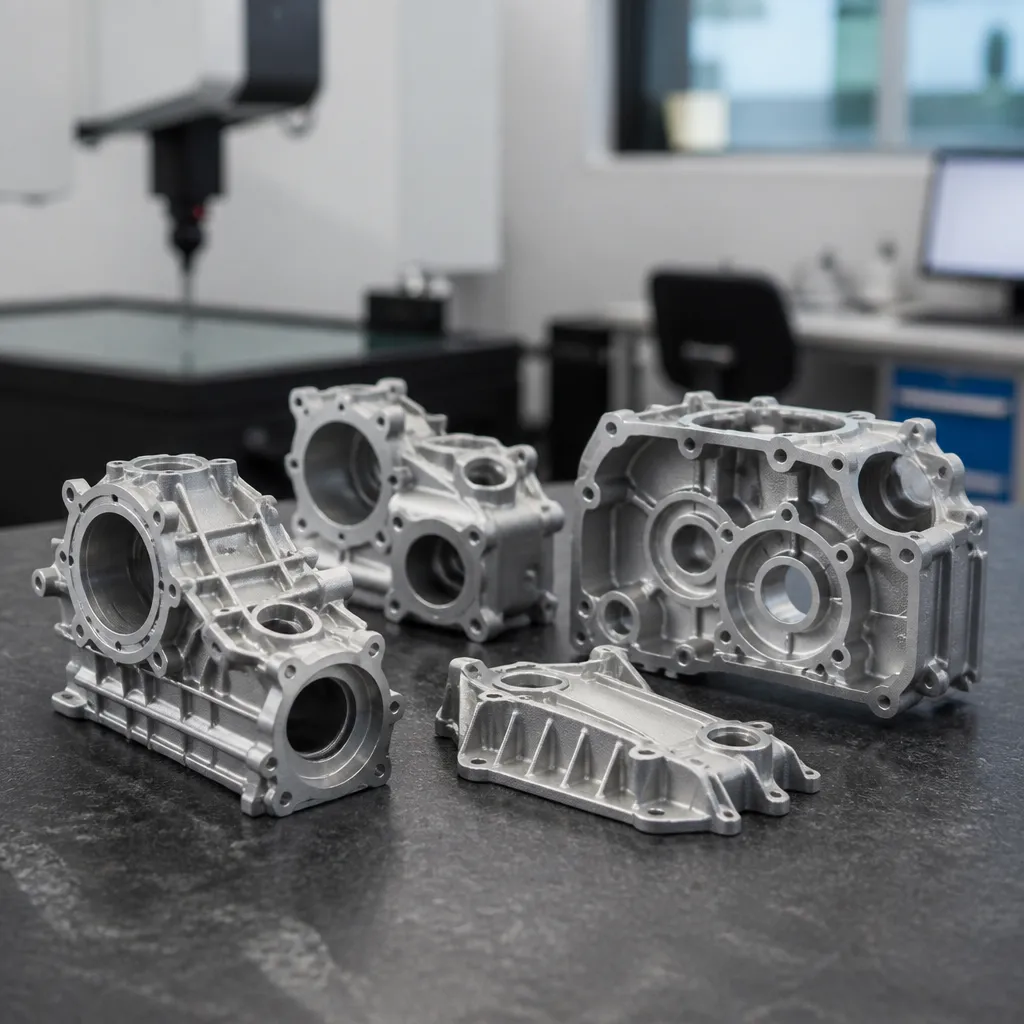
Raw alloy die-casting parts come out of the mold with impressive dimensional accuracy. However, choosing the right post-processing treatment takes their performance, durability, and visual appeal to the next level. We offer a comprehensive suite of surface finishing options tailored to meet demanding global standards.
Powder Coating and Painting
These organic finishes deliver robust protection and customizable colors:
- Powder Coating: Creates a thick, tough barrier that resists chipping, scratching, and UV degradation. It is perfect for heavy-duty hardware and exposed structural components.
- Liquid Painting: Ideal for thin-layer applications, precise color matching, and high-gloss decorative finishes where standard powder application might be too thick.
Anodizing and E-Coating
For targeted chemical protection and complete surface coverage across complex geometries:
- Anodizing: Electrochemical process that converts aluminum surfaces into a hard, corrosion-resistant anodic oxide layer while allowing for vivid decorative dyes.
- E-Coating (Electrocoating): Submerges parts in a specialized bath to deposit an even paint layer over every angle, deep recess, and fine thread. Whether finishing high-volume die castings or utilizing our permanent mold casting services for precision aluminum and copper parts, e-coating ensures complete corrosion resistance.
Electroplating and Polishing
When your application demands high surface conductivity, enhanced wear resistance, or a metallic shine:
- Electroplating: Applies a thin layer of metals—such as chrome, nickel, or zinc—onto the component surface. This increases surface hardness, lowers friction, and improves conductivity.
- Polishing: Smooths out parting line marks and surface imperfections, bringing raw components to a fine satin or high-gloss mirror finish.
| Finishing Option | Key Advantage | Typical Application |
|---|---|---|
| Powder Coating | High impact & UV resistance | Outdoor housings, brackets |
| E-Coating | 100% uniform coverage in recesses | Automotive under-hood components |
| Anodizing | Hardened surface & metallic colors | Premium aluminum die-cast housings |
| Electroplating | Shiny metallic finish & conductivity | Electrical connectors, decorative trim |
| Polishing | Ultra-smooth cosmetic surface | Consumer electronics, hardware |
Industry Applications for Alloy Die-Casting Parts
We engineer high-performance alloy die-casting parts designed to meet the rigorous physical and structural demands of global industries. By matching specific metals to operational environments, we deliver lightweight, high-precision components that maintain structural integrity under extreme stress. Explore our comprehensive casting alloy guide to evaluate how different metal properties fit specific industry requirements.
Automotive and Transportation
The automotive sector relies heavily on zinc die casting and aluminum die casting to reduce vehicle weight without sacrificing safety or performance. Key applications include:
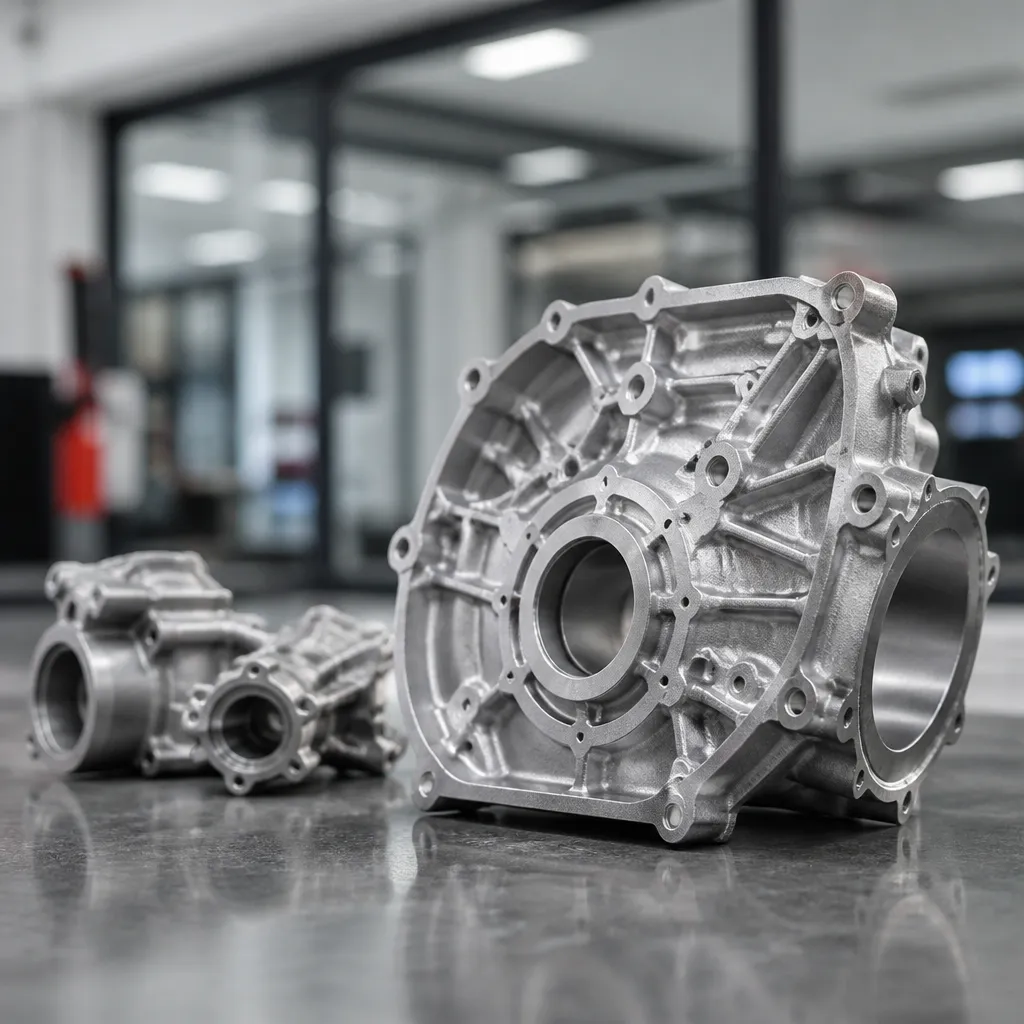
- Powertrain Components: Engine blocks, cylinder heads, and transmission housings.
- Structural Parts: Cross-car beams, subframes, and shock towers.
- Electrical & Braking Systems: EV battery enclosures, motor housings, and brake brackets.
Aerospace and Defense Components
Aerospace and defense applications demand extreme reliability, high strength-to-weight ratios, and tight tolerances. We manufacture critical die-cast parts built to withstand intense thermal and mechanical stress:
- Sensor housings and radar mounting chassis.
- Aircraft engine brackets and control valve bodies.
- Flight control system enclosures and missile guidance frames.
Electronics and Telecommunications
In electronics and 5G telecommunications, alloy die-casting parts provide exceptional thermal conductivity and built-in electromagnetic interference (EMI) shielding. Common components include:
- Heat Sinks: High-efficiency aluminum heat sinks for power electronics and LED systems.
- Telecom Housings: Weatherproof 5G outdoor enclosures and base station frames.
- Device Chassis: Rigid, lightweight frames for laptops, handheld terminals, and network switches.
Industrial Machinery and Consumer Goods
From heavy equipment to everyday products, custom alloy die casting ensures long-lasting durability and complex geometric accuracy. Working alongside our specialized industrial molds and precision casting service, we supply turn-key parts across multiple commercial sectors:
- Industrial Equipment: Hydraulic pump housings, valve bodies, and pneumatic tool frames.
- Consumer Goods: Power tool casings, lawnmower decks, and commercial appliance hardware.
- Hardware & Fixtures: High-strength door lock mechanisms, hinges, and mounting brackets.
Alloy Die Casting vs. Alternative Manufacturing Methods
Selecting the right manufacturing process for alloy die-casting parts comes down to production volume, structural requirements, and target unit costs. We work closely with engineers and buyers to match part designs with the ideal production technology.
Die Casting vs. CNC Machining
- Speed and Volume: CNC machining subtracts material from solid blocks, making it ideal for low-volume prototypes. Alloy die casting forms complex shapes in seconds, drastically reducing cycle times for high-volume production.
- Material Utilization: CNC machining creates high scrap waste. Die casting injects precise molten alloy charges directly into custom dies, maximizing material efficiency.
Die Casting vs. Injection Molding
- Mechanical Strength: Plastic injection molding creates flexible, lightweight components. Metal die casting provides high yield strength, rigidity, and resistance to extreme temperatures.
- Performance Capabilities: Non-ferrous die-cast alloys offer natural electromagnetic shielding (EMI) and high thermal conductivity that plastic injection molded parts cannot match.
Die Casting vs. Investment Casting
- Production Efficiency: Investment casting excels at complex, low-volume steel components, but the multi-step wax process is labor-intensive. Die casting offers automated, high-speed output for non-ferrous parts.
- Unit Cost at Scale: Die casting tools require a higher initial investment, but deliver clear cost savings on large orders. When evaluating different mold methods, exploring sand casting vs. die casting trade-offs or comparing our permanent mold and gravity die casting services will help you determine the right tooling strategy.
Design Guidelines for Alloy Die-Casting Parts
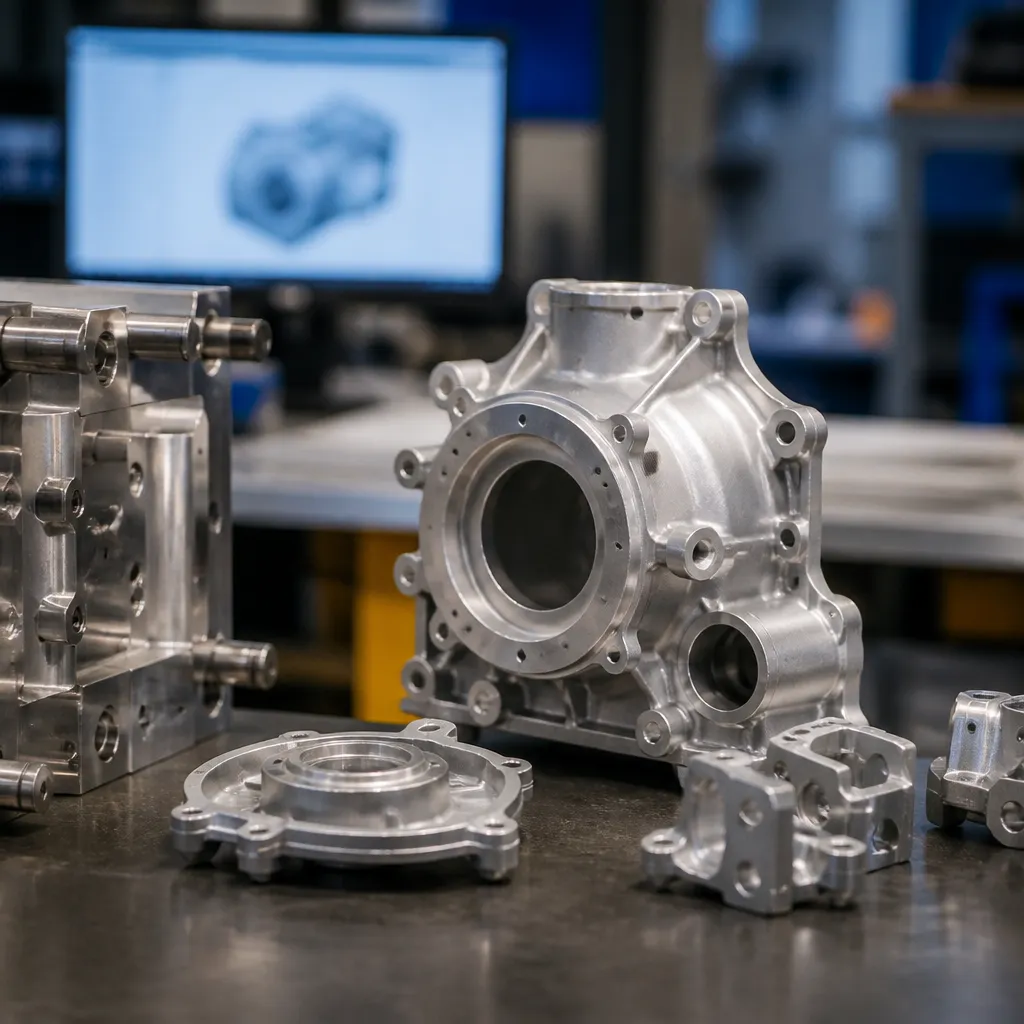
Designing high-performance alloy die-casting parts requires a smart balance between part geometry, material properties, and manufacturing feasibility. By focusing on smart design rules early, we help you eliminate production bottlenecks, reduce unit costs, and optimize part performance.
Wall Thickness and Draft Angles
Proper geometry prevents common defect risks like internal porosity, warping, and surface sink marks during high-pressure cooling.
- Uniform Wall Thickness: Maintain consistent wall sections whenever possible—typically 1.5 mm to 4.0 mm for aluminum die casting and down to 0.8 mm for zinc die casting. Smooth transitions prevent thermal stress.[3]
- Draft Angles: Apply standard draft angles (1° to 3° on inside and outside walls) so components release smoothly from the die without dragging or tearing.
- Fillets and Radii: Avoid sharp internal corners. Adding generous radii optimizes molten metal flow, extends tool life, and improves structural integrity.
Material Selection Factors
Matching the alloy to your end-use application ensures maximum reliability without over-engineering costs.
- Mechanical & Thermal Demands: High-stress applications often call for A380 aluminum alloy, while intricate components needing exceptional impact strength favor Zamak 3 or Zamak 5. Reviewing a detailed best metal for casting properties and uses guide can help narrow down the ideal alloy for your application.
- Corrosion Resistance: Marine, automotive, and outdoor electronics benefit from specialized aluminum or magnesium alloys paired with secondary protective finishes.
- Weight & Conductivity: Lightweight alloys reduce structural load in automotive or aerospace assemblies while offering superior heat dissipation.
Tooling and Prototyping Considerations
Tooling is a major upfront investment, making early prototyping essential for risk mitigation.
- Design Validation: Utilize rapid prototyping or soft tooling to verify fit and function before machining hardened steel production dies.
- Die Material: We select premium tool steels (such as H13 steel) to withstand high thermal shock and deliver long production lifespans.
- Maintenance & Maintenance Schedules: Regular die maintenance preserves critical dimensions, fine surface textures, and consistent quality across mass production runs.
Frequently Asked Questions About Alloy Die Casting
Which alloy is best for my die-casting project?
The ideal metal depends on your application's mechanical and environmental demands:
- Aluminum Alloys (A380, A360): Best for lightweight, corrosion-resistant components needing high dimensional stability.
- Zinc Alloys (Zamak 3, Zamak 5): Ideal for high-strength, thin-wall precision components requiring smooth surface finishing options.
- Magnesium Alloys: Excellent choice when extreme weight reduction and high strength-to-weight ratio are critical.
We analyze your structural requirements, target weight, and production budget to recommend the optimal alloy die-casting parts material.
What are the tolerance standards for alloy die-casting parts?
Standard commercial tolerances for high pressure die casting typically range from ±0.002 to ±0.005 inches per inch, following North American Die Casting Association (NADCA) guidelines.[4] To consistently achieve tight tolerances across high-volume production, building a dedicated custom metal casting mold and precision tooling is essential to prevent thermal distortion and wear.
How do you ensure quality in custom die-casting production?
We enforce comprehensive quality assurance protocols through every stage of production:
- Raw Material Verification: Spectrometric analysis verifies chemical purity before melting.
- Process Control: Automated monitoring tracks pressure, melt temperature, and injection speeds.
- Non-Destructive Testing: X-ray inspection detects internal porosity and structural flaws.
- Precision Inspection: CMM (Coordinate Measuring Machine) checks verify tight dimensional tolerances.
For projects requiring strict structural performance and post-process machining, combining proper mold design with an optimized alloy steel casting process for high-precision CNC parts guarantees reliable component integrity.
References
- Wikipedia — Die casting (process overview)
- The Aluminum Association — Pink Sheets 2025 (cast alloy designations, incl. A380.0)
- NADCA / diecasting.org — Standards & Specifications
- NADCA — North American Die Casting Association
- International Zinc Association — zinc.org (further reading)
- The Aluminum Association — Aluminum Advantage (further reading)