Overview
Investment Casting for Electrical Industry Parts — Precision Lost Wax Components
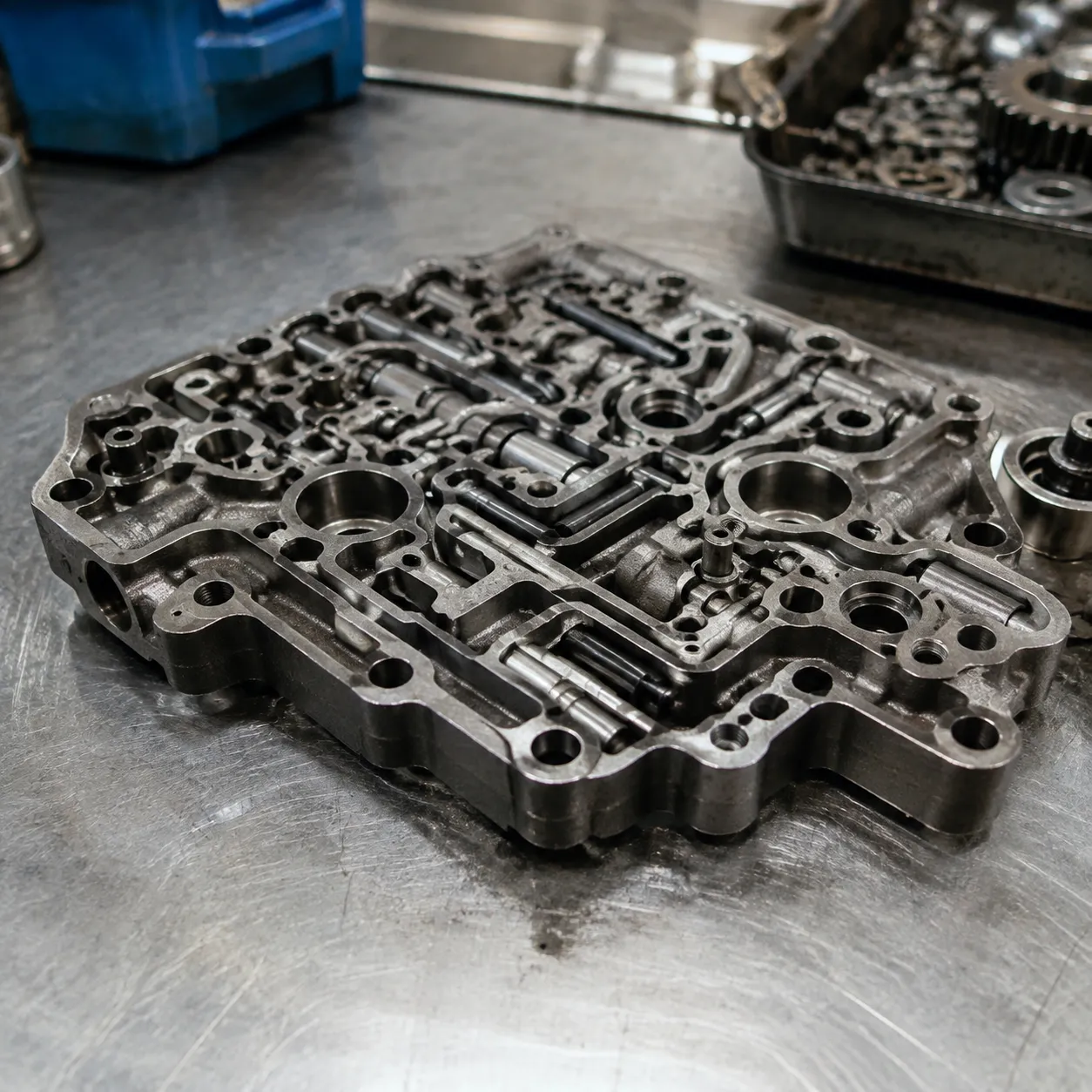
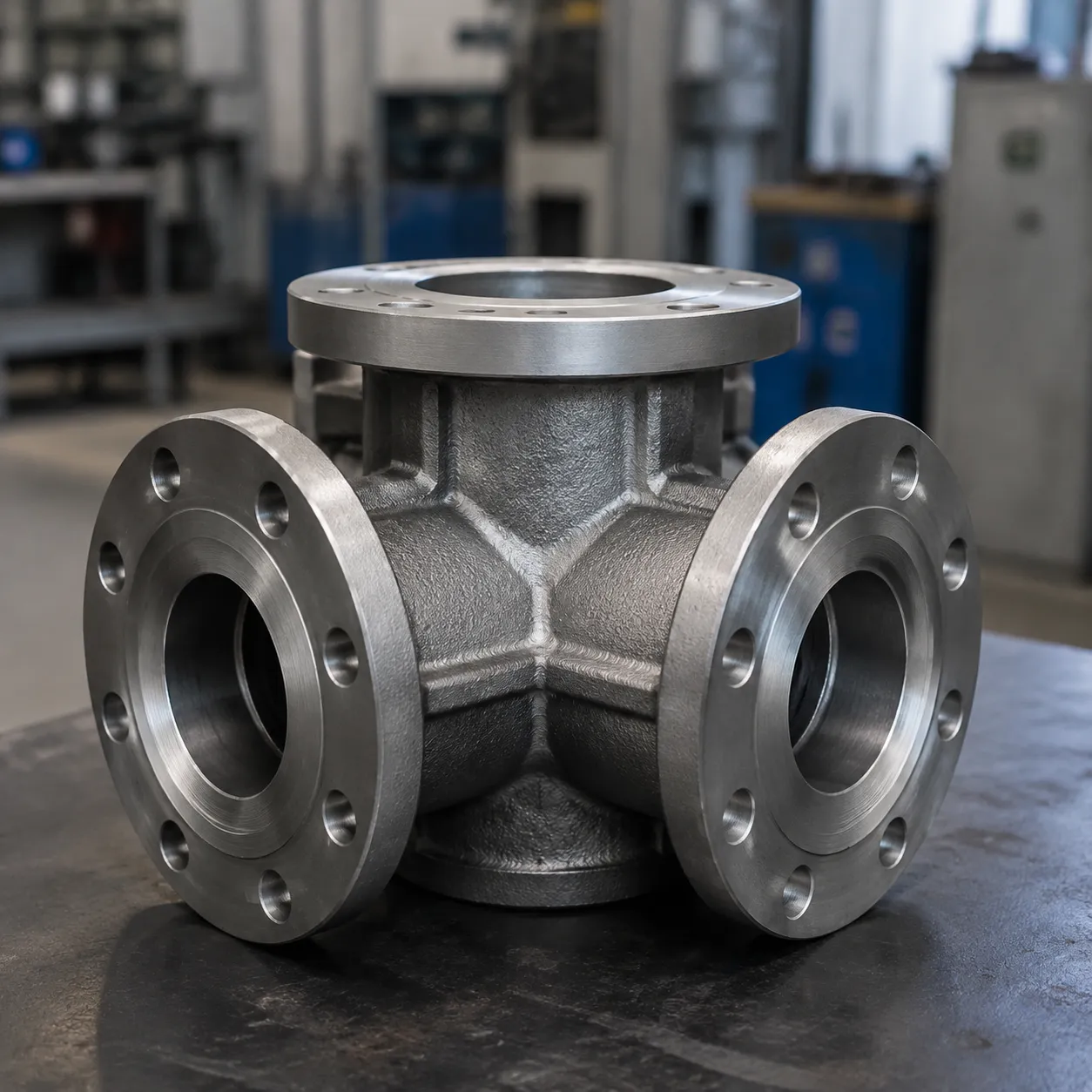
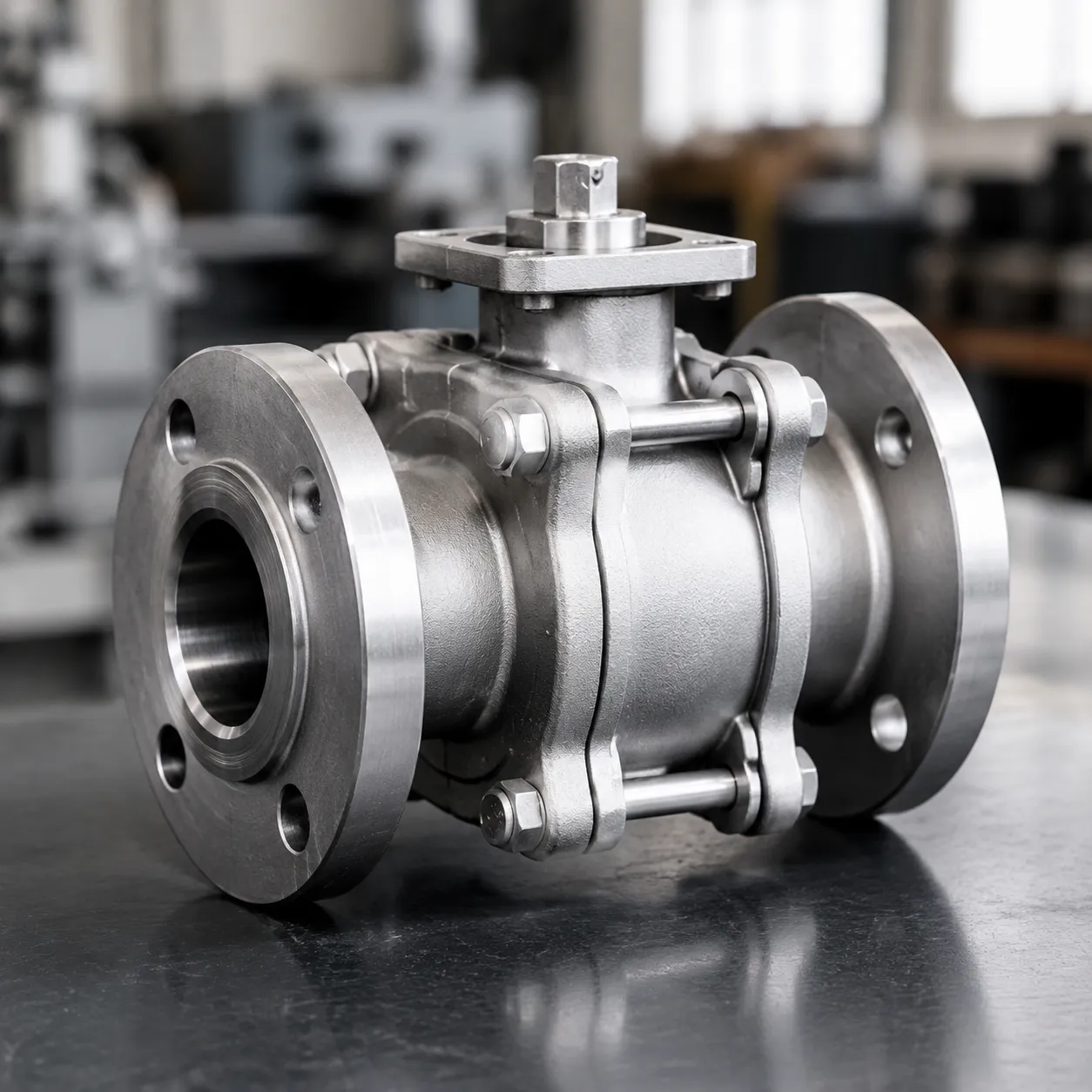
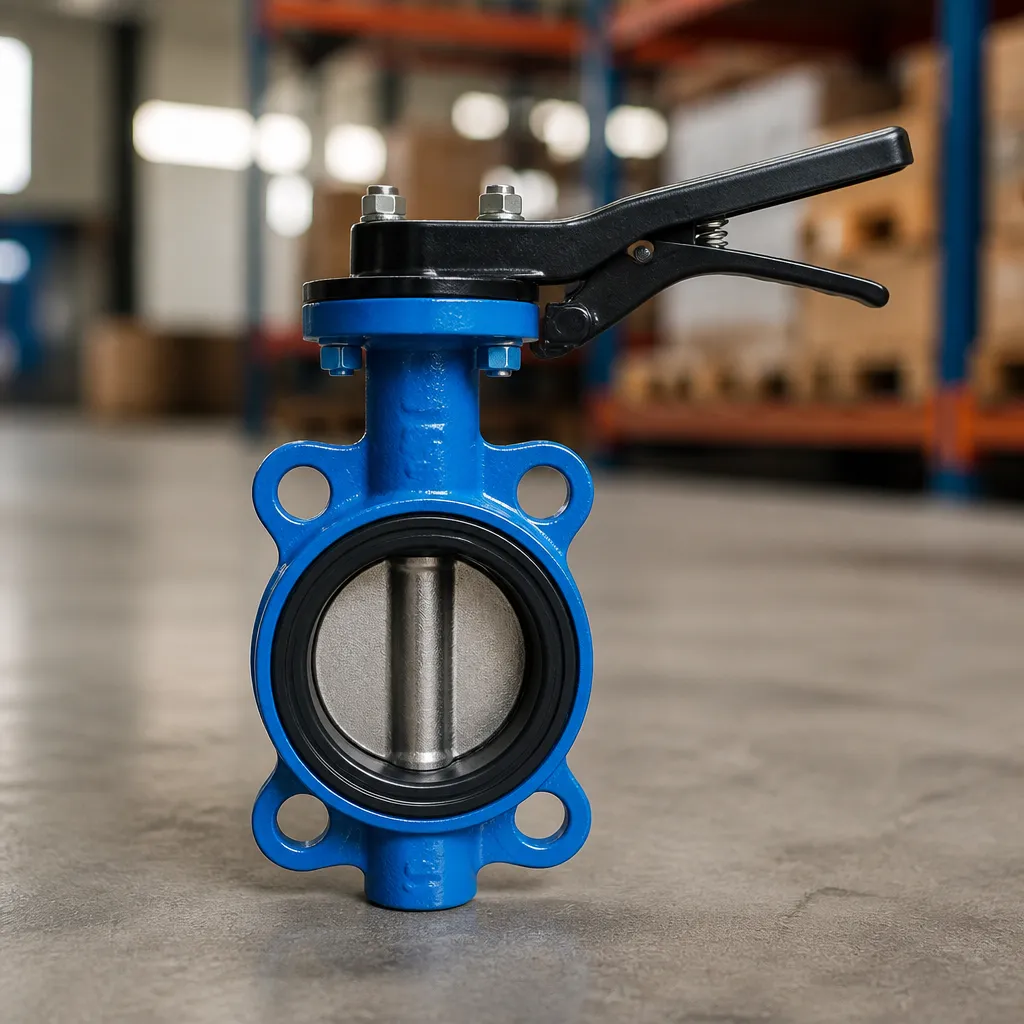
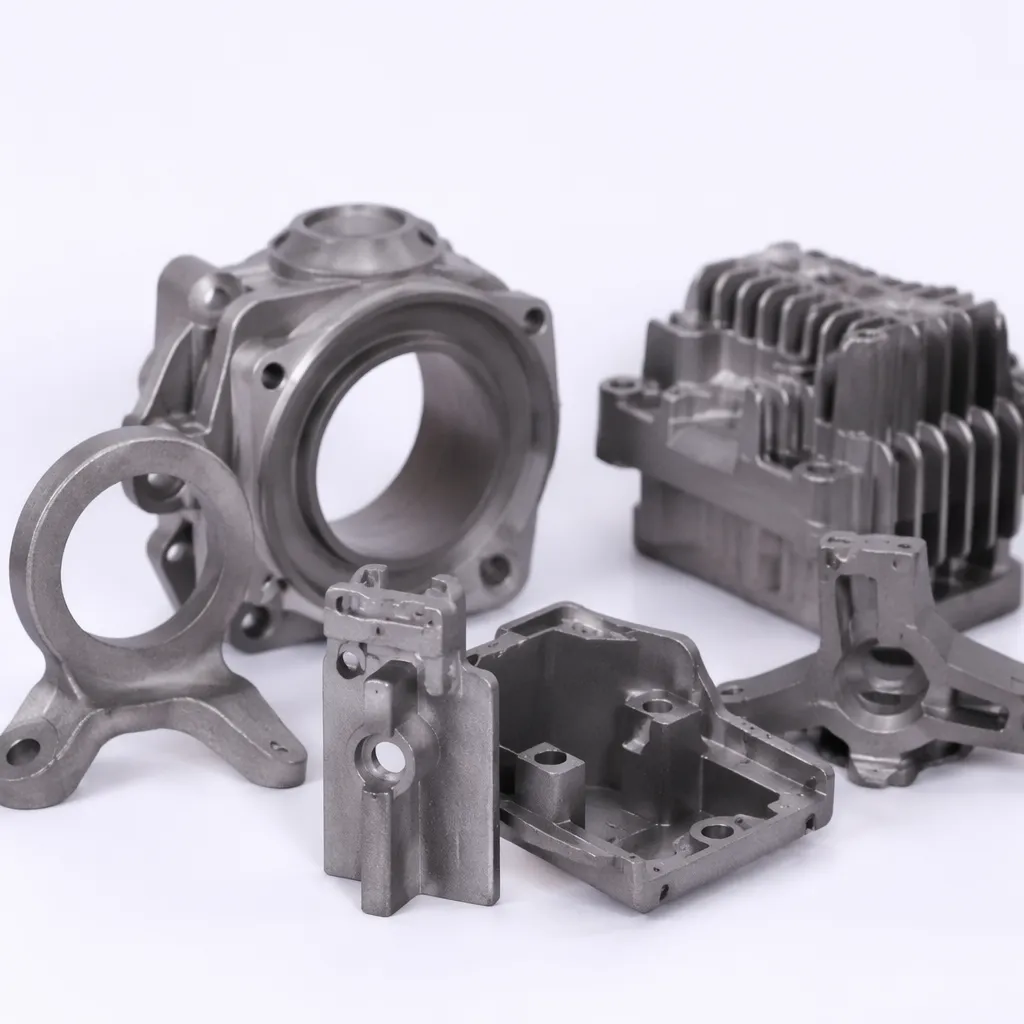
Investment casting for electrical industry parts—often referred to as lost wax casting—is an advanced manufacturing technique used to produce highly complex, robust, and precision metal components. At Vastmaterial, this process runs as an OEM casting program that creates near-net shape metal parts with exceptional surface quality and tight dimensional tolerances, minimizing secondary machining.
Electrical hardware demands flaw-free materials that ensure consistent electrical flow and heat dissipation. Investment casting delivers dense, void-free structures using high conductivity copper and copper-based alloys for critical components in high voltage switchgear, transformers, and power distribution units—backed by in-house CNC finishing when drawings require assembly-ready interfaces.
Overview of Precision Investment Casting
Precision investment casting creates near-net shape metal parts with exceptional surface quality and tight dimensional tolerances, minimizing the need for secondary machining.
- Pattern Creation: Injecting wax into a precision die to form a detailed wax replica of the electrical component.
- Shell Building: Dipping the wax tree into ceramic slurry to form a rigid, heat-resistant mold.
- Dewaxing & Casting: Burning out the wax to leave a hollow cavity, which is filled with molten metal.
- Shell Removal: Breaking away the ceramic shell after cooling to reveal a seamless precision metal component.
The Role of Investment Casting in Electrical Manufacturing
Electrical hardware demands flaw-free materials that ensure consistent electrical flow and heat dissipation. Investment casting eliminates the internal voids, porosity, and structural weak points often found in traditional sand casting.
- Optimal Electrical Performance: Delivers dense, void-free structures using high conductivity copper and copper-based alloys.
- Complex Internal Features: Effortlessly incorporates internal cooling channels, fine threads, and intricate geometry into single-piece designs.
- Heavy-Duty Reliability: Essential for producing critical components used in high voltage switchgear, transformers, and power distribution units.
Key Industry Standards and Quality Compliance
Precision electrical parts must meet stringent international quality, safety, and performance standards to withstand demanding operational environments:
| Certification / Standard | Focus & Application |
|---|---|
| ISO 9001:2015 | Quality management system ensuring repeatable production accuracy |
| IEC & IEEE Standards | Electrical safety, insulation performance, and switchgear compliance |
| ASTM Standards | Verification of metallurgical purity, tensile strength, and conductivity |
| RoHS & REACH | Environmental compliance for hazardous-substance-free electrical equipment |
Applications of Investment Casting in the Electrical Industry
Modern electrical networks demand exceptional reliability, high thermal performance, and flawless conductivity. Custom investment casting for electrical industry parts meets these strict performance standards. Lost wax casting produces near-net shape components with intricate internal features that traditional fabrication methods simply cannot match.
High-Voltage Switchgear and Circuit Breakers
High-voltage switchgear assemblies require robust, void-free metal parts that withstand intense electrical and mechanical stress without arcing or failure.
Compared to coarse sand casting processes, investment casting yields fine grain structures with tight tolerances and superior structural integrity. Key components include:
- Arc Chutes and Contact Arms: Designed for rapid electrical interruption under extreme voltage loads.
- Mechanism Housings: Precise, lightweight enclosures that protect critical tripping devices.
- Interrupter Components: Smooth-surfaced parts that optimize dielectric performance.
Electric Vehicle (EV) Motors and Drive Systems
The global shift toward electro-mobility requires lightweight, highly efficient precision metal components that improve thermal efficiency and power density in electric drive systems.
- Cooling Jackets: Intricate internal flow channels cast directly into motor housings to optimize heat dissipation.
- Inverter Baseplates: High-density copper and aluminum bases engineered to protect sensitive EV power electronics.
- Rotor Cores and Mounts: Precision-balanced parts designed for high RPM endurance and minimal vibrational energy loss.
Busbars, Connectors, and Terminal Blocks
Uninterrupted power transmission relies on pure electrical conductivity and minimal resistance. High-conductivity copper and brass alloys are cast into complex shapes that eliminate the need for multi-part welded assemblies.
- Custom Busbars: Engineered with integrated mounting tabs and complex geometries to minimize power transmission loss.
- Heavy-Duty Connectors: Solid-cast connectors designed to withstand high current loads without thermal degradation.
- Terminal Blocks: Compact, corrosion-resistant distribution blocks tailored for industrial power distribution boxes.
Power Generation and Renewable Energy Components
Renewable energy installations require electrical components that operate flawlessly in harsh, outdoor environments. Corrosion-resistant stainless steel and copper parts are supplied for demanding power generation systems.
| Renewable Sector | Key Cast Components | Primary Material Advantage |
|---|---|---|
| Wind Energy | Grounding clamps, pitch control hubs, switch contacts | High tensile strength and fatigue resistance |
| Solar Power | Inverter terminals, busbars, structural brackets | Superior weather and corrosion resistance |
| Hydroelectric | Heavy-duty switch contacts, transformer connectors | High current capacity and water resistance |
Common Materials Used in Electrical Investment Casting
Choosing the right material directly impacts electrical efficiency, thermal performance, and physical durability. A wide range of conductive non-ferrous metals and rugged ferrous alloys is cast to match exact application specifications.
High-Conductivity Copper Alloys
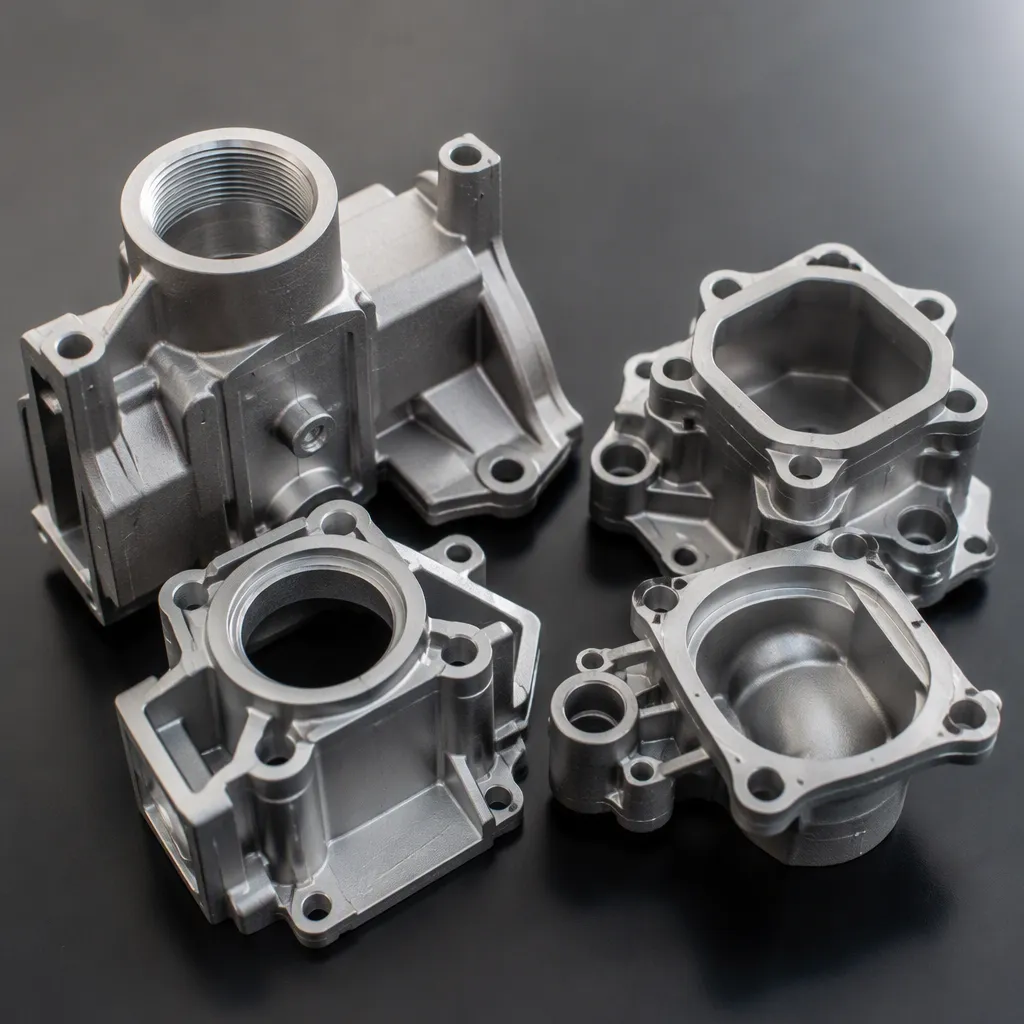
Pure copper and high-conductivity copper alloys are essential when minimal electrical resistance is required for heavy power loads.
- Key Advantages: Maximum electrical and thermal conductivity, excellent arc resistance, and high ductility.
- Common Applications: High-current terminals, transformer connectors, switchgear contacts, and grounding hardware.
Brass and Bronze Alloys
Brass alloys and silicon or tin bronzes strike the perfect balance between mechanical strength, wear resistance, and cost efficiency. Advanced processes for high-precision copper-zinc alloys produce intricate connectors and switch components that withstand repeated mechanical cycles without degrading electrical performance.
- Key Advantages: Superior corrosion resistance, easy post-cast machinability, and low friction coefficient.
- Common Applications: Cable glands, plug sockets, terminal blocks, and relay housings.
Lightweight Aluminum Alloys
Aluminum alloys deliver exceptional strength-to-weight ratios along with solid conductivity and heat dissipation properties.
- Key Advantages: Significant weight reduction, excellent thermal conductivity, and natural oxide corrosion protection.
- Common Applications: Electric vehicle motor enclosures, airborne power distribution units, heat sinks, and outdoor inverter housings.
Corrosion-Resistant Stainless Steel
When electrical components operate in highly corrosive, high-temperature, or extreme outdoor environments, stainless steel is the preferred choice. Selecting the proper stainless steel alloy grade ensures maximum mechanical strength and reliable long-term protection against oxidation.
- Key Advantages: High tensile strength, extreme corrosion resistance, and dimensional stability under severe thermal stress.
- Common Applications: Substation structural hardware, explosion-proof electrical enclosures, and renewable energy mountings.
Key Advantages of Investment Casting for Electrical Components
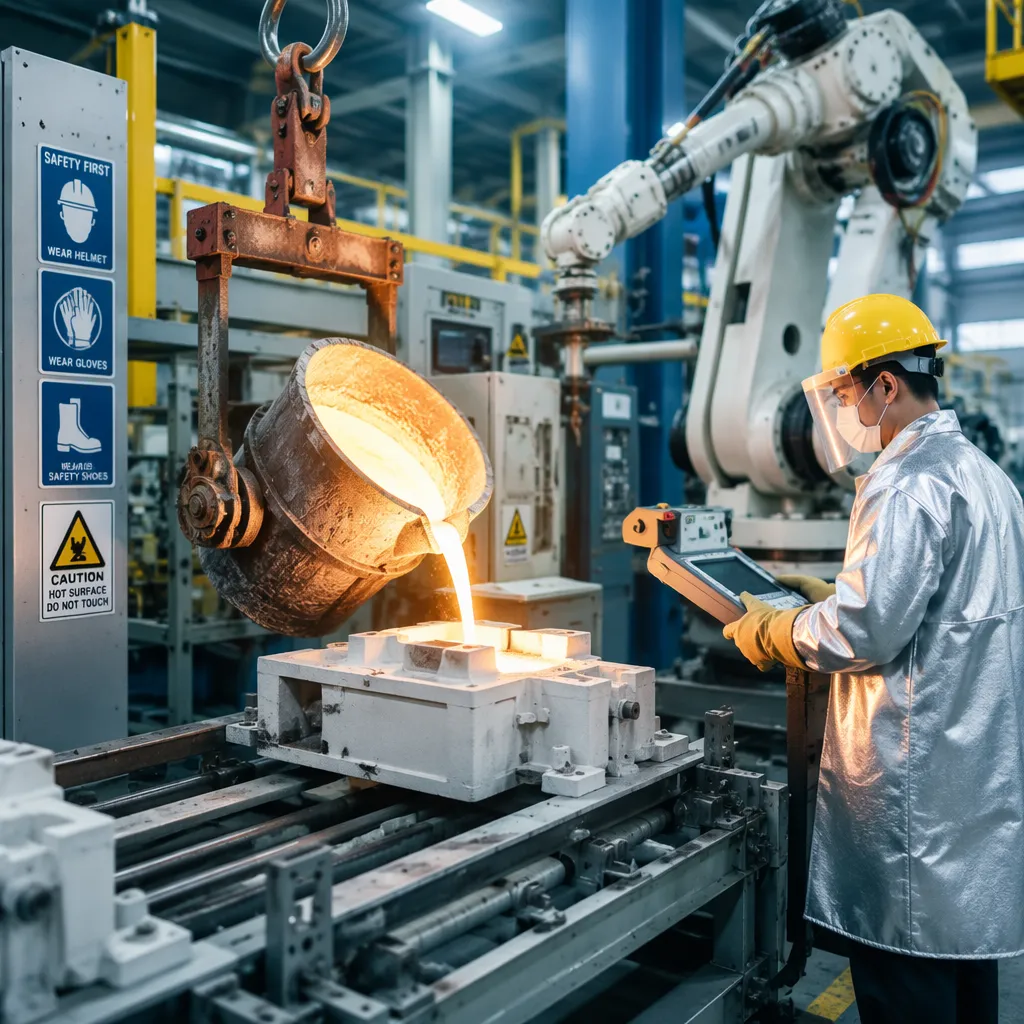
Investment casting for electrical industry parts provides unmatched design flexibility and material integrity. Vastmaterial lost wax programs manufacture high-performing, durable precision metal components that meet strict electrical and thermal demands.
High Precision and Complex Geometries
Electrical assemblies frequently demand intricate features like internal cooling channels, thin walls, and fine mounting points.
- Intricate Features: Easily cast complex geometries that are impossible or cost-prohibitive to machine from solid stock.
- Consolidated Designs: Combine multi-part assemblies into a single cast component, reducing assembly time and failure points.
- Design Freedom: Cast complex shapes using high-conductivity copper, brass, or aluminum alloys with complete structural integrity.
Superior Surface Finish and High Conductivity
Electrical performance relies heavily on surface quality. Rough surfaces can cause localized resistance, heat buildup, or arcing in high-voltage environments.
- Smooth Surfaces: Achieve exceptional surface finishes (typically 125 RMS or better) straight out of the mold.
- Optimal Electrical Flow: Smooth finishes preserve uninterrupted current paths in high conductivity copper and brass contacts.
- Custom Material Matching: Material selection is supported by a comprehensive alloy guide for high-performance metals to ensure maximum electrical and thermal efficiency.
Tight Tolerances and Reduced Machining Costs
Investment casting produces near-net shape components, dramatically minimizing secondary finishing work.
| Benefit | Impact on Electrical Part Manufacturing |
|---|---|
| Tight Tolerances | Holds dimensional accuracy within ±0.005 inches per inch, eliminating excessive cleanup. |
| Material Savings | Drastically cuts raw material waste, especially critical when using expensive alloys like copper or cobalt. |
| Lower Tool Wear | Reduces post-process CNC milling, extending tool life and cutting operational overhead. |
Cost-Effective Production for Low and High Volumes
Whether prototyping specialized components or running full-scale production, the investment casting process balances speed, cost, and repeatability.
- Scalable Tooling: Tooling designs adapt quickly from short-run custom prototypes to large volume production runs.
- Long Tool Life: Precision wax injection molds last through hundreds of thousands of cycles, maintaining consistent part geometry.
- Lower Overall Cost: Combining near-net shape accuracy, reduced machining, and material savings delivers a lower total cost per part across any production size.
The Step-by-Step Electrical Investment Casting Process
Complex precision metal components for the electrical sector are produced using a rigorous lost wax casting process. This step-by-step workflow guarantees tight tolerances, smooth surface finishes, and near-net shape accuracy on every production run.
Pattern Creation and Shell Mold Assembly
The process begins by injecting wax into a custom metal die to create an exact replica of the final component.
- Pattern Assembly: Multiple wax patterns are attached to a central wax sprue, creating a "tree" structure.
- Ceramic Coating: The wax tree is repeatedly dipped into high-grade ceramic slurry and coated with fine sand (stuccoing).
- Shell Building: Once dried, this process builds a rigid ceramic shell capable of handling high molten metal temperatures.
Dewaxing and Alloy Pouring
Once the ceramic shell hardens completely, it moves to the melting and pouring stage.
- Wax Removal: The ceramic mold is placed into a high-pressure autoclave steam chamber to quickly melt out the wax.
- Mold Preheating: The empty shell is fired in a furnace to burn away residual wax and strengthen the ceramic structure.
- Precision Pouring: Specific metal charges—including high-conductivity copper, brass, aluminum, or stainless steel—are melted and poured directly into the preheated mold.
To deliver optimal electrical performance, strict temperature control is paired with specialized alloy casting processes and alloys tailored to each component's thermal and mechanical demands.
Cooling, Shell Removal, and Cut-off
After the poured metal solidifies and cools under controlled conditions, the ceramic mold shell is carefully broken away.
- Knockout: Mechanical vibratory equipment or high-pressure water jets strip away the ceramic shell from the metal tree.
- Gate Cut-off: Individual parts are cut off from the main sprue using friction saws or plasma cutters.
- Grinding: Remaining gate stubs are ground flat against the part geometry.
Finishing, Heat Treatment, and Surface Coating
The final phase transforms raw cast parts into ready-to-install electrical components.
- Heat Treatment: Castings undergo specialized heat treatment (such as annealing or aging) to optimize electrical conductivity and mechanical strength.
- Precision Finishing: Shot blasting cleans the surface, while light CNC machining applies critical fine threads or ultra-flat sealing surfaces where required.
- Surface Plating: Electroplating options—such as silver, tin, or nickel plating—maximize surface conductivity and long-term corrosion resistance in demanding electrical environments.
Investment Casting vs. Alternative Manufacturing Methods
Choosing the right production process for electrical components directly impacts conductivity, structural integrity, and total production costs. While several options exist, investment casting for electrical industry parts delivers an unmatched combination of design freedom, material versatility, and precise detail.
Investment Casting vs. Die Casting
Die casting excels at high-volume production of basic aluminum parts, but it fails when a design requires high-melting-point metals or complex internal structures.
- Material Versatility: Die casting is restricted mostly to low-melting-point non-ferrous alloys. Investment casting easily processes pure copper, brass alloys, stainless steel, and specialized ferrous alloys.
- Design Complexity: Lost wax casting produces intricate internal channels, undercuts, and thin walls without demanding steep draft angles.
- Tooling Investment: Die casting tooling requires extreme upfront capital, making investment casting much more economical for low-to-medium production runs and specialized custom components.
Investment Casting vs. Sand Casting
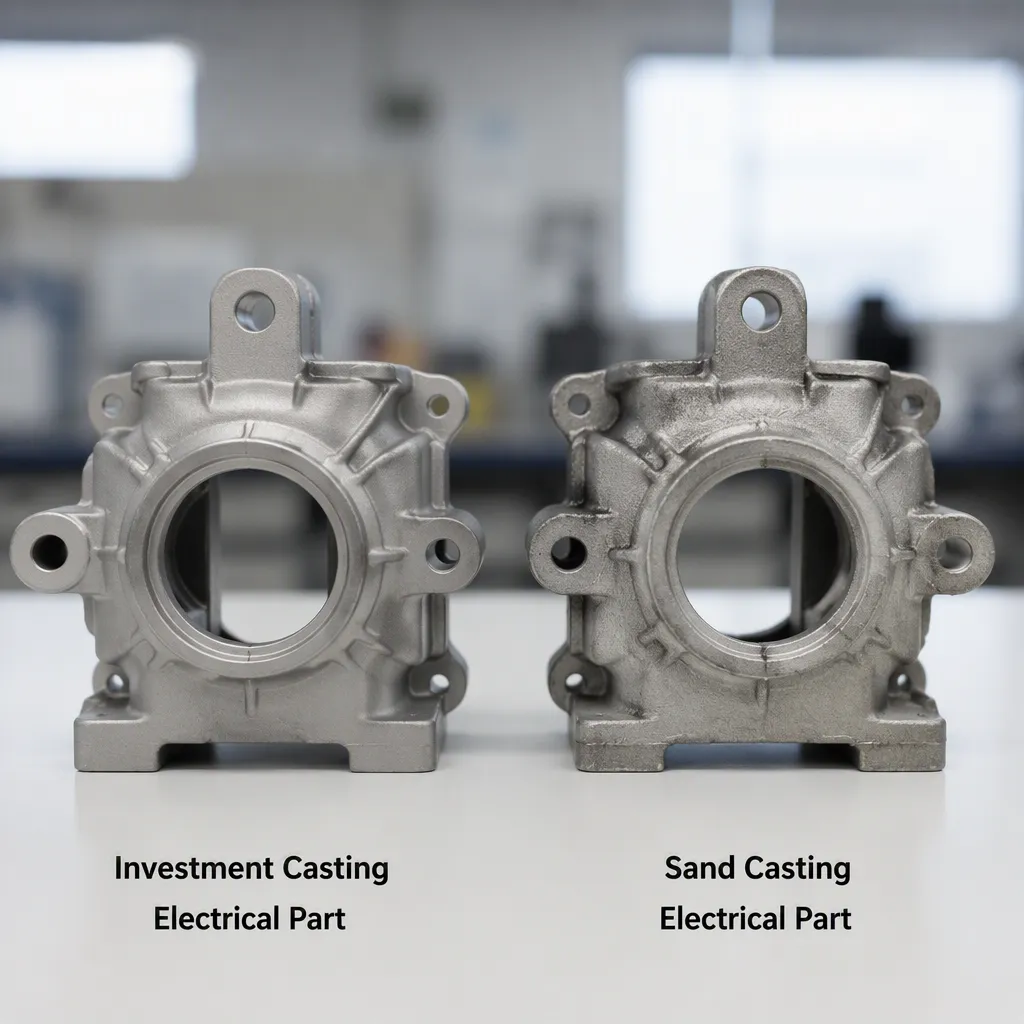
Sand casting works well for massive structural pieces, but it lacks the precision and surface quality essential for electrical components.
- Accuracy and Surface Quality: Sand casting leaves a coarse surface that requires extensive secondary machining. In contrast, investment casting delivers exceptionally smooth surfaces and tight investment casting tolerances straight from the mold.
- Material Density: The investment casting process minimizes internal porosity, ensuring maximum electrical conductivity and structural strength for high-voltage switchgear and power distribution parts.
Investment Casting vs. CNC Machining
Machining intricate electrical parts out of solid billet material yields high precision, but it results in massive material waste and long machine cycle times.
| Feature | Investment Casting | CNC Machining |
|---|---|---|
| Material Efficiency | High (Near-net shape reduces scrap by up to 90%) | Low (Excess material is turned into costly scrap) |
| Internal Geometries | Casts complex internal voids seamlessly | Heavily restricted by cutting tool reach |
| Volume Scalability | Unit cost drops rapidly as volume increases | High cost per part remains constant due to machine time |
For parts requiring hyper-critical mating surfaces, components are frequently cast to near-net shape with minimal precision machining only where needed. Combining investment casting with CNC machining optimizes manufacturing budgets for critical electrical geometries.
Machining & Finishing Services for Investment Casting Electrical Industry Parts
Vastmaterial manufactures investment casting for electrical industry parts as an end-to-end program: silica-sol lost wax casting, post-casting CNC, heat treatment, surface finishing, and inspection under one quality system. Castings leave the mold at near-net shape; in-house machining then brings mating faces, threads, and sealing planes to drawing so OEMs receive assembly-ready precision metal components—not unfinished blanks that need a second vendor.
Production capacity supports high-mix electrical hardware alongside broader industrial OEM work (stable output up to about 1.3 million components per month across casting programs), with DFM from blueprint and mold making through final finishing to shorten lead time and keep metallurgy, machining stock, and plating aligned.
In-House CNC for Cast Electrical Parts
When as-cast tolerance is not enough, Vastmaterial CNC machining services finish copper, brass, aluminum, and stainless castings in-house:
- 5-axis CNC milling & precision turning: Flats, pockets, bores, and rotational features on complex geometries.
- Drilling, tapping, boring & reaming: Terminal holes, fastener threads, and connector interfaces for switchgear and distribution hardware.
- Precision grinding: Ultra-flat sealing and contact surfaces where arcing risk and conductivity paths matter.
- Tight secondary tolerances: Critical post-cast features routinely finished toward ±0.005 mm where drawings specify (as-cast dimensional targets typically hold near ±0.1 mm class accuracy before finish stock removal).
- Cast + machine integration: The same cast-and-machine workflow used for custom brass casting with precision machining and quality assurance extends across electrical alloy families.
Alloys Cast & Machined for Electrical Duty
| Material Group | Process Focus |
|---|---|
| High Conductivity Copper | Controlled stock removal to protect conductivity paths; finish prep for silver, tin, or nickel plating. |
| Brass Alloys | High-machinability connectors, glands, and switch parts with stable thread and contact geometry. |
| Aluminum Alloys | Lightweight housings and heat-path components for electric drive systems and inverter hardware. |
| Stainless Steel | Structural and outdoor hardware with corrosion-resistant finishes for high voltage switchgear environments. |
Heat Treatment, Surface Finishing & Plating
After CNC, finishing packages prepare electrical castings for conductivity, wear, and outdoor duty:
- Heat treatment: Annealing or aging cycles tuned for conductivity and mechanical strength.
- Shot blasting & surface prep: Clean cast surfaces before plating or coating.
- Electroplating: Silver, tin, or nickel plating to raise surface conductivity and long-term corrosion resistance.
- Passivation & related coatings: Anti-corrosion treatments for stainless and outdoor power assemblies, including electropolishing and specialized protective finishes.
Inspection, Testing & DFM Support
Every electrical casting lot ships with dimensional and metallurgical verification:
- Non-Destructive Testing (NDT): X-ray and magnetic particle testing to confirm dense, void-free cast structures.
- Electrical Conductivity Testing: IACS verification for copper and brass current-carrying parts.
- CMM & in-line inspection: Coordinate measuring for complex geometries and critical electrical tolerances, supported by in-process checks on CNC cells.
- DFM & mold making: Engineering review of gating, machining stock, and tooling so cast + CNC steps stay aligned from prototype through volume runs for renewable energy, EV, and grid power programs.
Request a quote for investment casting for electrical industry parts—including CNC machining, plating, and inspection scope—by alloy family, drawing tolerances, and production volume.