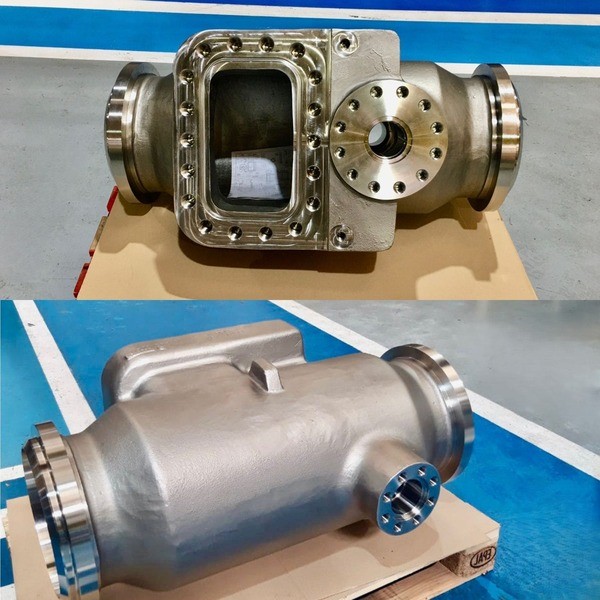
Overview
When you need complex components that demand durability, casting stainless steel is often the most efficient manufacturing route. Unlike machining from solid stock, which generates significant scrap, or forging, which is limited by design complexity, casting allows us to produce near-net-shape parts with minimal material waste. This approach drastically reduces secondary machining time and lowers overall production costs, especially for medium to high-volume runs.
At Vastmaterial, we leverage precision casting techniques to handle exacting specifications that other methods simply cannot achieve. Whether you are dealing with the extreme heat requirements of aerospace or the corrosive environments of the oil and gas industry, our casting process ensures the mechanical integrity of high-performance alloys like 347 and 17-4PH.
Advantages of Precision Stainless Steel Castings
- Design Freedom: Create intricate geometries, thin walls, and internal passageways that are impossible with forging.
- Material Efficiency: We use only the material needed for the part and the gating system, significantly reducing waste compared to subtractive machining.
- Superior Resistance: Our process maintains the inherent corrosion and heat resistance capabilities of the alloy, ensuring long-term reliability in harsh conditions.
- Scalability: Once tooling is created, unit costs drop significantly as production volume increases.
Comparison: Casting vs. Machining vs. Forging
| Feature | Stainless Steel Casting | CNC Machining | Forging |
|---|---|---|---|
| Design Complexity | High (Complex 3D shapes) | Medium (Tool access limits) | Low (Simple shapes) |
| Material Waste | Low (Near-net-shape) | High (Subtractive process) | Medium |
| Surface Finish | Good (Can be polished) | Excellent | Rough |
| Cost Effectiveness | High for production runs | High for prototypes | High tooling costs |
Casting Processes We Offer
At Vastmaterial, we align the manufacturing technique with your specific part requirements to ensure maximum efficiency and performance. We specialize in processes that balance precision, cost, and mechanical integrity.
Stainless Steel Investment Casting
Also known as lost wax stainless steel casting, this process is our standard for complex geometries and thin-walled parts. It delivers precision stainless steel castings with superior surface finishes, significantly reducing the need for secondary processing. This method is essential for high-performance applications like aerospace valves and marine hardware where accuracy is paramount.
Sand Casting Stainless Steel
When producing large, heavy-duty parts, sand casting stainless steel provides the necessary durability and size capacity. It is a cost-effective option for massive structural components where micro-level surface detail is less critical than overall material integrity. This method allows for lower tooling costs compared to die casting, making it versatile for various industrial needs.
Process Comparison: Investment vs. Sand Casting
| Feature | Investment Casting | Sand Casting |
|---|---|---|
| Primary Benefit | High precision, intricate details | Large size capability, lower tooling cost |
| Typical Tolerance | ±0.005 inch (Tight) | ±0.030 inch (Standard) |
| Surface Finish | Smooth (125 RMS or better) | Rougher texture (Requires finishing) |
| Part Size | Small to medium (Ounces to 150 lbs) | Medium to very large (Up to tons) |
| Wall Thickness | Thin walls possible (min 0.060″) | Thicker walls required (min 0.125″) |
For projects demanding exact specifications beyond standard casting limits, review our machining and casting guide to understand how we integrate CNC precision with our foundry services.
Stainless Steel Alloys We Cast
We specialize in casting stainless steel alloys tailored to meet exact mechanical requirements, from extreme heat resistance to superior hardness. Our material scientists work with a broad spectrum of grades to ensure every component performs reliably in its intended environment.
Austenitic Grades
Our austenitic stainless steel castings are chosen for their exceptional corrosion resistance and toughness. We frequently work with Grade 347, which offers superior stability at high temperatures compared to standard alloys. For projects requiring versatile corrosion protection, we utilize various 300 series stainless steel grades that balance ductility with durability for complex industrial parts.
Martensitic and Precipitation-Hardening Grades
For applications demanding high hardness and wear resistance, we supply martensitic stainless steel casting solutions. Grade 440C is a staple in our production for its ability to achieve the highest hardness of any corrosion-resistant alloy. We also specialize in 17-4PH investment casting and 15-5PH alloys (UNS S17400/Type 630), which provide an optimal combination of high strength and good corrosion resistance through precipitation hardening. You can learn more about the specific characteristics of these materials in our guide to 400 series stainless steel.
Duplex and Super Duplex Grades
We cast duplex stainless steel for environments that require higher strength than austenitic grades and better stress corrosion cracking resistance. These alloys are critical for marine and oil & gas applications where standard steels fail.
Key Mechanical Properties We Control:
- Tensile Strength: Optimized for structural integrity under load.
- Yield Strength: Ensuring parts maintain shape under stress.
- Hardness: Adjusted through heat treatment for wear-prone components.
Capabilities and Technical Specifications
At Vastmaterial, we engineer our casting stainless steel services to meet the most exacting specifications required by aerospace, marine, and industrial sectors. We focus on delivering custom stainless steel parts that require minimal secondary processing, ensuring maximum efficiency and material integrity.
Precision and Tolerance Standards
We utilize advanced manufacturing management systems to maintain consistent accuracy across production runs. Our precision casting foundry capabilities allow us to hold tight tolerances, reducing the need for extensive machining.
| Feature | Specification / Capability |
|---|---|
| Tolerance Standard | Typically ±0.005 in (per inch) for investment casting, depending on geometry. |
| Part Weight Range | From fractions of an ounce (precision components) to heavy industrial parts. |
| Wall Thickness | Capable of casting thin-walled sections for lightweight aerospace applications. |
| Surface Finish | 125 RMS (micro-inch) typical as-cast; smoother finishes available via post-processing. |
Surface Finish and Secondary Operations
We provide end-to-end solutions, meaning your parts arrive ready for assembly. Beyond the initial cast, we offer comprehensive surface treatments including plating, coating, and polishing to enhance corrosion resistance and aesthetics.
- As-Cast: Clean, standard finish suitable for non-cosmetic industrial use.
- Machined: Precision CNC machining for critical mating surfaces.
- Polished & Passivated: electropolishing and passivation to maximize the natural corrosion resistance of grades like 316 and 17-4PH.
- Heat Treatment: Solution annealing, aging, and precipitation hardening (especially for 17-4PH and 15-5PH) to achieve specific mechanical properties.
Production Volumes and Lead Times
Whether you need a single rapid prototype or high-volume production runs, our facility is scalable. We leverage our stainless investment casting process to transition projects smoothly from the design phase to full-scale manufacturing.
- Prototypes: Fast turnaround for design validation and fit checks.
- Production: Automated processes and real-time monitoring ensure consistent quality for large orders.
- Lead Times: Optimized based on complexity and alloy availability (e.g., standard 304/316 vs. specialized super duplex).
Quality Assurance and Certifications

At Vastmaterial, precision is not just a goal; it is the baseline for every project. Our approach to casting stainless steel is built on a foundation of rigorous quality management systems designed to meet the exacting specifications of high-performance industries like aerospace and oil & gas. We integrate real-time monitoring and data analytics throughout the production cycle to ensure every component delivers unmatched durability.
Rigorous Testing Protocols
We employ comprehensive in-house testing to verify that our precision stainless steel castings meet strict mechanical and chemical standards. Our testing and quality assurance protocols ensure that alloys such as 17-4PH, 347, and 440C perform reliably under extreme stress.
- Spectrometry: We conduct detailed chemical analysis to verify the exact composition of the alloy before and after pouring.
- Mechanical Testing: We validate tensile strength, yield strength, hardness, and elongation to ensure the material properties match your engineering requirements.
- Non-Destructive Testing (NDT): We utilize advanced techniques, including X-ray and dye penetrant inspection, to identify internal voids or surface defects without compromising the part’s integrity.
Traceability and Compliance
Reliability requires transparency. Our stainless steel foundry operations maintain full material traceability from the initial melt to the final surface treatment. We align our processes with global standards (ISO 9001 and AS9100 frameworks) to ensure consistency across medium to high-volume production runs. Additionally, we support compliance with major regulatory directives like RoHS and REACH, providing the necessary documentation for clients operating in regulated global markets.
Industries and Applications

We engineer casting stainless steel solutions for sectors that demand uncompromising reliability and performance. Our components are designed to withstand extreme environments, from the high pressures of deep-sea exploration to the intense thermal stress of aerospace propulsion. By leveraging advanced alloys like 17-4PH and 347 stainless steel, we deliver parts that meet the exacting standards of global industries.
Aerospace & Defense
In the aerospace sector, weight reduction and thermal stability are critical. We utilize stainless steel investment casting to produce complex geometries that maintain structural integrity under high stress. Our process delivers near-net-shape components for turbine engines and structural airframe parts, ensuring strict adherence to safety and performance specifications.
Oil & Gas and Petrochemical
The harsh environments found in extraction and refining require materials with superior corrosion resistance. We supply robust custom stainless steel parts tailored for the oil and gas sector, including downhole tools, drilling components, and fluid handling systems. Our castings resist sulfide stress cracking and pitting, ensuring longevity in sour gas and offshore environments.
Energy & Power Generation
From traditional gas turbines to next-generation energy solutions, our foundry supports critical infrastructure. We provide high-strength components for power generation, including specialized nuclear power applications where material traceability and safety are paramount. Our expertise in heat-resistant grades ensures consistent performance in high-temperature combustion zones.
Marine Hardware and Fittings
Saltwater is one of the most corrosive natural environments for metal. We manufacture corrosion resistant castings using marine-grade stainless steel (such as Duplex and 316 variants) for deck hardware, propellers, and underwater fittings. These parts offer exceptional resistance to chloride attack, reducing maintenance costs and extending service life for marine vessels.
Pump & Valve Components
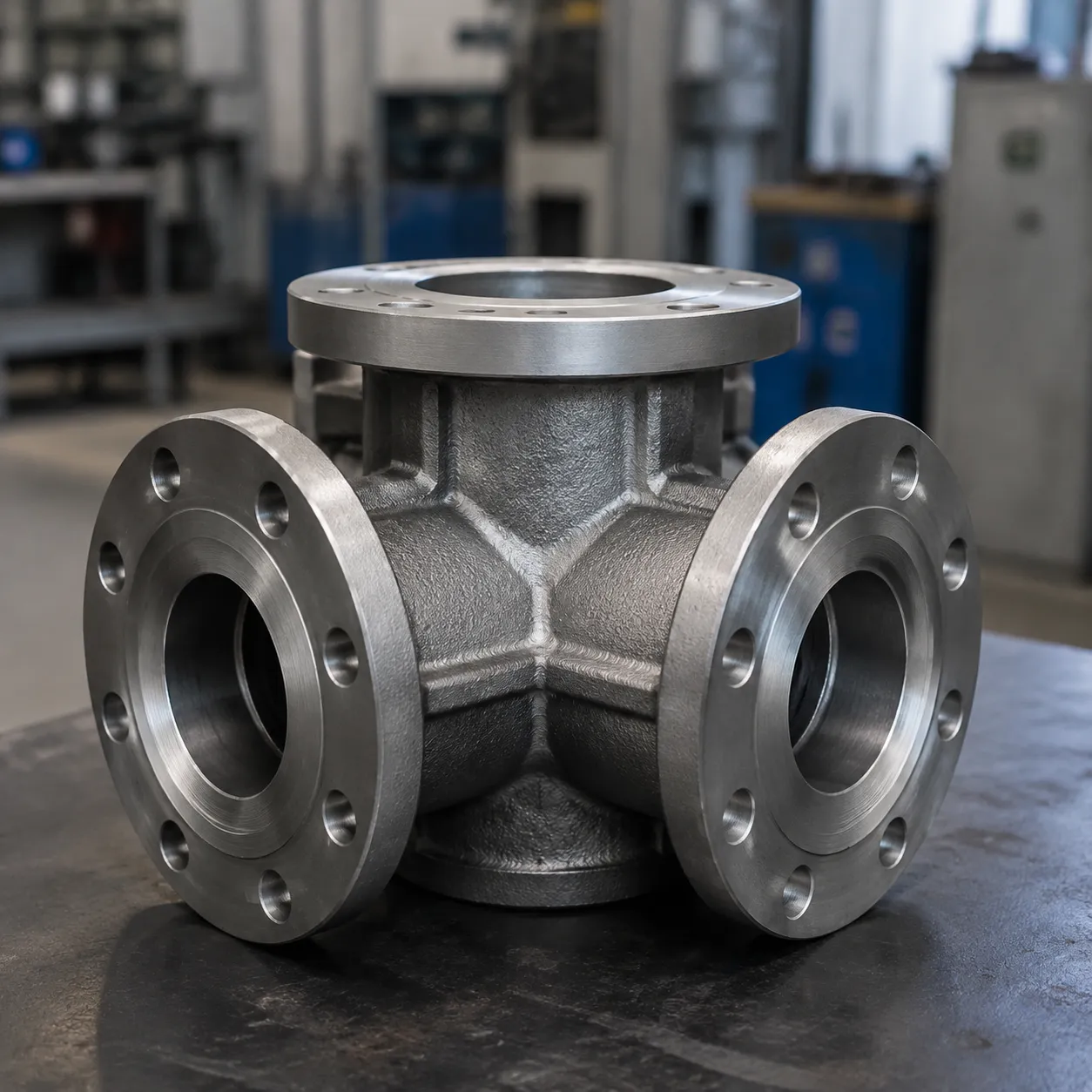
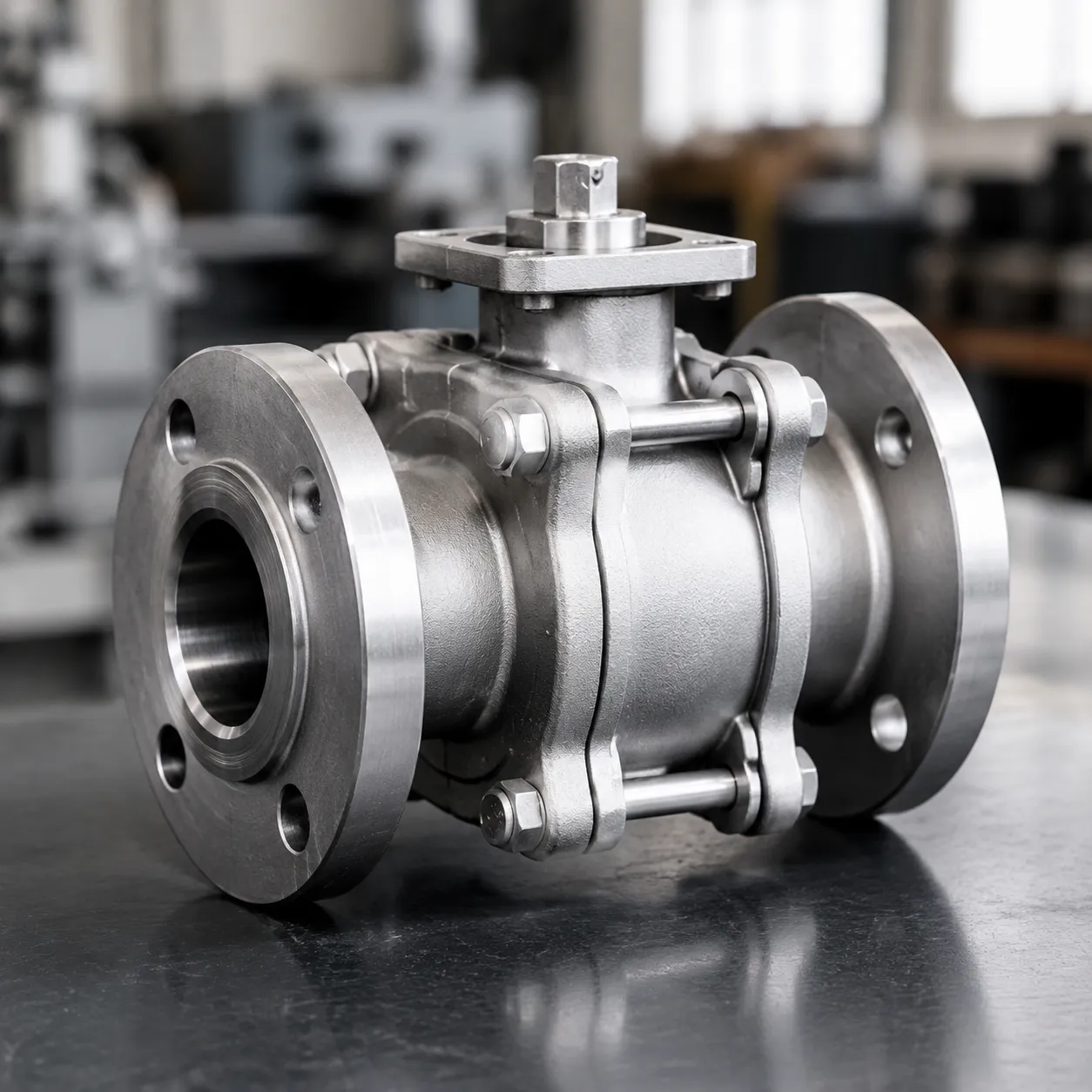
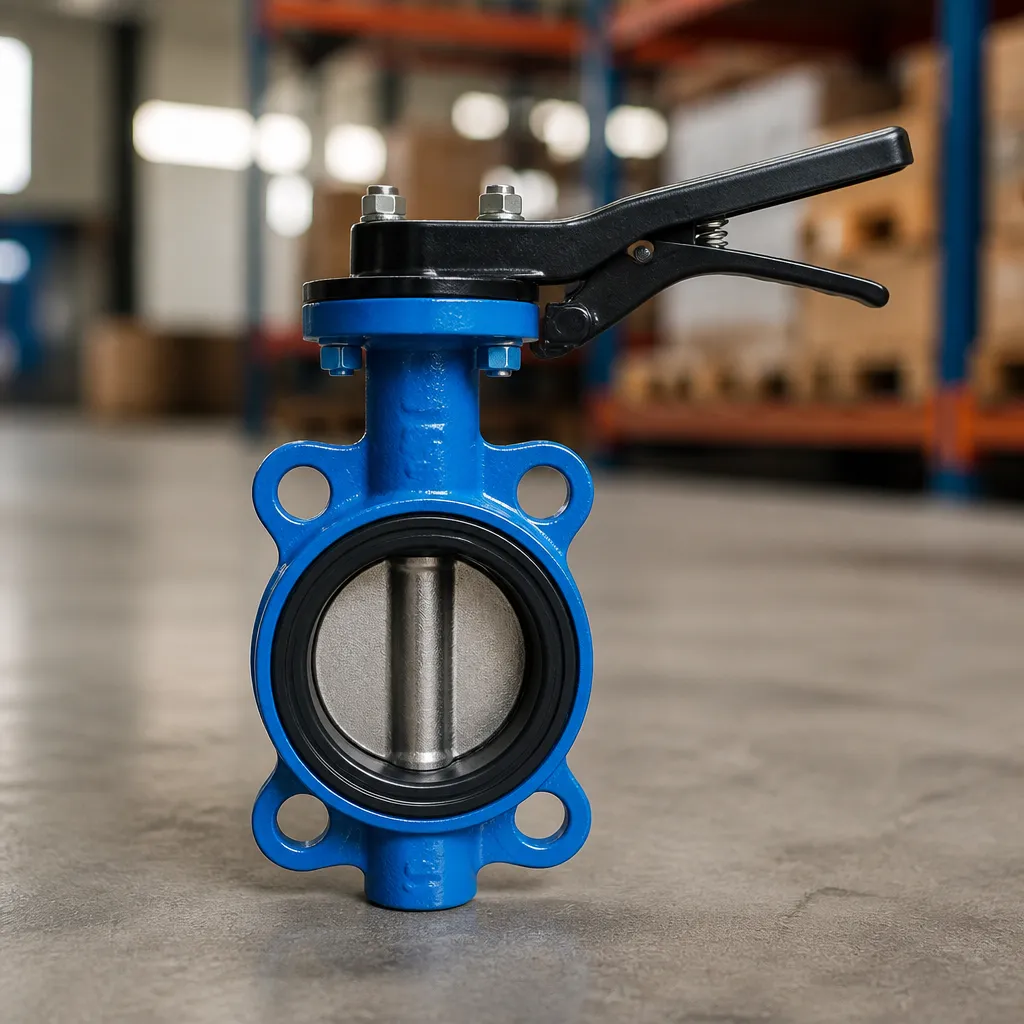
Industrial fluid handling relies on precision. We cast durable housings, impellers, and valve bodies that ensure tight seals and efficient flow control. Our precision stainless steel castings are machined to tight tolerances, making them ideal for high-pressure industrial valves and heavy-duty pump systems used in chemical processing and water treatment.
Medical, Food, and General Industrial
Beyond heavy industry, our casting capabilities extend to sanitary applications. The inherent non-reactive properties of stainless steel make it the standard for food processing machinery and medical equipment parts, where hygiene and cleanability are non-negotiable. We deliver smooth surface finishes that meet strict sanitary regulations.
Our Manufacturing Process

At Vastmaterial, we control every stage of production to ensure that casting stainless steel meets the rigorous demands of industries like aerospace and marine engineering. Our integrated approach combines traditional craftsmanship with modern data analytics to deliver parts that hold tight tolerances and superior surface finishes.
Step-by-Step Production Workflow
We follow a strict protocol to transform raw alloys into precision components:
- Pattern Creation & Wax Injection: The process begins with creating a high-precision metal die. We inject molten wax into this die to create a replica of the final part. These wax patterns are assembled onto a “tree,” allowing us to cast multiple parts simultaneously for efficiency.
- Shell Building: The wax tree is dipped into a ceramic slurry and coated with sand. We repeat this process multiple times to build a hard, durable ceramic shell around the wax.
- Dewaxing & Sintering: We heat the shell to melt out the wax (the “lost wax” method), leaving a hollow cavity. The shell is then fired at high temperatures to strengthen it for the pour.
- Pouring: We melt specific stainless steel grades—such as 347, 440C, or 17-4PH—and pour the molten metal into the pre-heated shells. This ensures the metal fills every detail of the mold before solidifying.
- Knockout & Cut-Off: Once cooled, the ceramic shell is vibrated or blasted away. The individual parts are cut from the central tree and ground smooth to remove gate marks.
Finishing, Machining, and Inspection
A raw casting is rarely the final step. We leverage our manufacturing process technology to refine the component to your exact specifications:
- Precision CNC Machining: For surfaces requiring extremely tight tolerances, we move parts to our CNC machining center. This ensures critical dimensions meet the blueprint requirements.
- Surface Treatment: Depending on the application, we apply plating, coating, or polishing to enhance corrosion resistance and aesthetics.
- Final Inspection: Quality is non-negotiable. We utilize real-time monitoring and integrated production management systems to track every batch. Our stainless steel casting process includes rigorous testing for dimensional accuracy and material integrity before shipping.
The Vastmaterial Advantage
At Vastmaterial, we streamline the entire manufacturing lifecycle to give you a competitive edge. We don’t just pour metal; we deliver finished components ready for assembly. Our facility integrates casting stainless steel, precision CNC machining, and advanced surface treatments under one roof. This end-to-end control ensures that every part, whether it’s a complex 17-4PH aerospace component or a durable industrial valve, meets exacting specifications without the headache of managing multiple vendors.
We focus on delivering value through technical expertise and efficiency:
- Integrated Capabilities: We handle everything from alloy development and pattern creation to final heat treatment and polishing. This single-source approach guarantees consistent quality across all stainless steel casting projects.
- Engineering & DFM Support: Our team provides Design for Manufacturability (DFM) feedback early in the process. We help optimize your designs to reduce material waste and lower production costs while maintaining structural integrity.
- Rapid Turnaround: We understand the pace of the US market. Our rapid prototyping services and efficient production lines ensure fast sample delivery and consistent lead times for volume orders.
- Global Reliability: We combine cost-effective manufacturing with rigorous quality assurance, giving you the pricing advantage of a global supply chain with the reliability of a trusted partner.
Success Stories in Casting Stainless Steel

We don’t just pour metal; we solve complex engineering challenges. Our team frequently partners with clients in high-stakes industries like aerospace and marine engineering to deliver custom stainless steel parts that standard manufacturing methods simply can’t match. By leveraging advanced investment casting techniques, we turn difficult designs into functional, high-performance reality.
Solving for Complex Geometries
One of our recent projects involved developing turbine components requiring intricate internal cooling channels. Traditional machining was impossible due to the part’s geometry.
- The Challenge: Creating a heat-resistant component with thin walls and hidden internal cavities.
- The Solution: We utilized precision casting stainless steel processes to achieve a near-net shape with minimal waste.
- The Result: A highly durable part capable of withstanding extreme thermal stress, delivered with superior surface finishes right out of the mold.
Achieving Tight Tolerances in Marine Applications
For a client in the marine sector, corrosion resistance and mechanical strength were non-negotiable. They needed a solution that combined the durability of 17-4PH alloy with exact dimensional accuracy. Our stainless steel casting capabilities allowed us to maintain tight tolerances of ±0.005 inches, ensuring a perfect fit for their assembly without extensive secondary machining. This approach significantly reduced their lead times and overall production costs while ensuring the hardware could survive harsh saltwater environments.
Frequently Asked Questions (FAQ)
Difference Between Investment and Sand Casting
Investment casting, often called lost wax casting, is the preferred method for high-precision parts requiring intricate details, thin walls, and smooth surface finishes. It minimizes the need for secondary machining. Sand casting is generally better suited for larger, heavier components where surface finish and tight tolerances are less critical. We help you determine the most efficient method for your specific stainless steel products based on functionality and cost.
Best Grades for Corrosive Environments
For standard corrosion resistance, 316/316L is the go-to alloy. However, for highly aggressive environments found in oil & gas or marine engineering, we recommend Duplex stainless steel. These grades provide superior resistance to pitting, crevice corrosion, and stress corrosion cracking compared to standard austenitic stainless steels.
Achievable Casting Tolerances
Our investment casting process typically achieves linear tolerances of ±0.005 inches per inch. When your project demands even tighter adherence to “exacting specifications,” we integrate precision CNC machining to ensure every dimension meets the required standard.
Minimum Order Quantities (MOQ)
We do not rely on a rigid “one-size-fits-all” policy. Our manufacturing model is flexible, allowing us to support everything from low-volume prototype runs for R&D purposes to high-volume mass production for industrial applications.
Lead Times for Prototypes vs. Production
Lead times depend on the complexity of the geometry and the alloy selected. We utilize real-time production monitoring to streamline workflows, ensuring rapid turnaround times for prototypes and consistent delivery schedules for full production runs.
Material Certifications and Traceability
Yes. We provide comprehensive quality assurance documentation, including material certifications and full traceability. This ensures that every casting stainless steel part complies with the rigorous standards required for high-stress industries like aerospace and nuclear power.