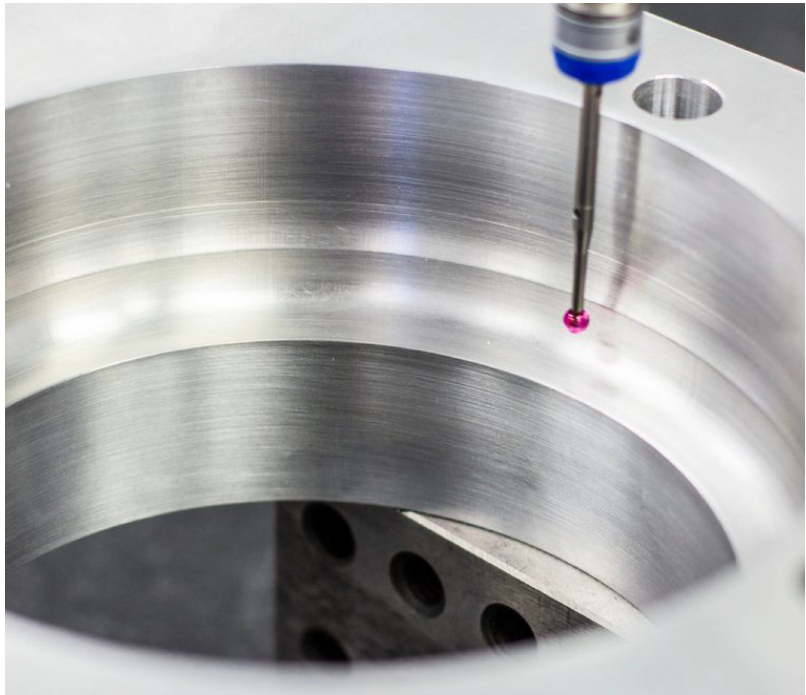
Overview
Permanent mold casting services for aluminum and copper parts with tight tolerances high strength and superior surface finish.
What is Permanent Mold Casting?
At Vastmaterial, we utilize permanent mold casting—often referred to within the industry as gravity die casting—to deliver high-integrity metal components. Unlike processes that rely on expendable sand molds, this technique employs reusable metal molds (dies), typically machined from steel or iron. We pour molten metal into these pre-heated dies, allowing gravity to fill the cavity with exceptional consistency and repeatability. This method bridges the gap between the low tooling costs of sand casting and the high production speeds of high-pressure die casting.
The Vastmaterial Advantage: Strength and Precision
Our permanent mold process is engineered to maximize component performance. By leveraging the thermal properties of metal dies, we achieve results that standard sand casting cannot match.
- Fine Microstructure and Strength: The metal mold acts as a chill, causing the molten alloy to solidify rapidly. This rapid cooling promotes a fine grain structure throughout the casting, significantly enhancing mechanical properties such as tensile strength and fatigue resistance.
- Near-Net-Shape Accuracy: We focus on near-net-shape casting to minimize waste. Our reusable molds maintain strict dimensional stability, allowing us to cast features with tight tolerances. This precision drastically reduces the need for extensive secondary CNC machining, lowering your overall production costs.
- Superior As-Cast Surface Finish: Quality starts at the mold interface. Because our dies are machined to exact specifications, the resulting parts feature a smooth, clean as-cast surface finish. This superior finish often eliminates the need for heavy polishing or grinding, ensuring your parts are ready for final application or surface treatment faster.
Material Capabilities: Specialized Alloys
At Vastmaterial, we know that the success of permanent mold casting depends heavily on selecting the right material. The metal die process exerts different thermal stresses than sand casting, so we use alloys specifically engineered to flow smoothly and solidify with minimal porosity. We offer a diverse range of materials designed to meet the rigorous demands of industries like aerospace and energy.
Aluminum Alloys: Lightweight Performance
Our Aluminum Alloy Series is a top choice for permanent mold applications. These alloys are favored for their high strength-to-weight ratio and excellent corrosion resistance. When cast in metal molds, aluminum achieves a finer grain structure, resulting in superior mechanical properties compared to sand-cast alternatives. This makes them ideal for automotive and industrial components where reducing weight without sacrificing durability is critical.
Copper & Brass Alloys
For applications requiring high electrical conductivity or exceptional wear resistance, we utilize our Copper Alloy Series, including robust brass and bronze options. These materials are perfect for heavy-duty bushings, gears, and electrical connectors. Casting these alloys in permanent molds allows us to hold tight tolerances and deliver a surface finish that often reduces the need for extensive secondary machining.
Custom Alloy Development
We don’t just rely on off-the-shelf standards. Leveraging our partnerships with leading academic institutions and industry experts, we offer custom alloy development. If your project requires specific thermal stability or unique mechanical strengths not found in standard grades, our R&D team can formulate and test proprietary blends to meet your exact specifications.
Process Comparison: Is Permanent Mold Right for You?
Deciding between casting methods often comes down to balancing production volume against tooling investment. Permanent mold casting (often called gravity die casting) occupies a strategic middle ground. It bridges the gap between the low tooling costs of sand casting and the high-volume speed of pressure die casting.
Comparison: Permanent Mold vs Sand Casting vs Die Casting
| Feature | Sand Casting | Permanent Mold Casting | High-Pressure Die Casting |
|---|---|---|---|
| Ideal Volume | Low to Medium | Medium to High | Very High |
| Tooling Cost | Low | Moderate | High |
| Surface Finish | Rough | Good / Smooth | Excellent |
| Part Strength | Medium | High (Fine Grain) | Medium (Porosity risks) |
| Tolerances | Loose | Tight | Very Tight |
Production Volume and Tooling Cost Analysis
We use reusable metal molds—typically machined from steel or iron—which require a higher upfront investment compared to sand patterns. However, these molds are durable and can withstand repeated heat cycles.
- Cost Efficiency: For production runs ranging from hundreds to thousands of units, the per-part cost drops significantly, offsetting the initial tooling expense.
- Speed: The process is faster than sand casting because the mold doesn’t need to be destroyed and recreated for every single part.
Surface Finish and Mechanical Strength Differences
The primary technical advantage of this process is the physical quality of the casting.
- Superior Finish: The metal mold delivers a cleaner as-cast surface finish, reducing the need for extensive secondary machining.
- Mechanical Integrity: The rapid cooling rate provided by the metal die creates a fine grain structure. This results in higher mechanical strength and reduced casting porosity compared to other methods. This structural integrity is essential for critical components in our manufacturing industry casting solutions, where durability under stress is non-negotiable.
Technical Specifications & Capabilities
At Vastmaterial, we engineer our permanent mold casting process to deliver components that balance structural integrity with dimensional accuracy. Unlike sand casting, our reusable metal molds allow us to hold tighter tolerances consistently, reducing the amount of stock material that needs to be removed later. We focus on delivering “near-net-shape” parts that meet rigorous industrial standards.
Weight Range and Standard Tolerances
Our facilities are equipped to handle a diverse range of component sizes, from small, intricate brackets to larger housing units. While exact capabilities depend on the specific alloy and part geometry, our process generally offers superior dimensional control compared to gravity sand processes.
| Feature | Standard Capability |
|---|---|
| Dimensional Tolerance | High precision (typically ±0.015 inch for the first inch) |
| Surface Finish | Superior as-cast finish (RMS 200-400), reducing polishing needs |
| Part Weight | Scalable from ounces up to medium-heavy industrial components |
| Repeatability | Excellent consistency across high-volume production runs |
Wall Thickness and Draft Angles
To ensure the longevity of the mold and the quality of the casting, specific design parameters must be met.
- Draft Angles: We require appropriate draft angles (typically 2° to 3°) on vertical walls to ensure the solidified part ejects smoothly from the metal die without dragging or cracking.
- Wall Thickness: We recommend maintaining uniform wall thickness (minimum 0.125 inch usually preferred) to promote even cooling and prevent shrinkage defects or porosity.
Secondary Operations: CNC Machining and Heat Treatment
We provide a complete “concept to delivery” solution. Casting is often just the first step. To achieve the final mechanical properties and mating tolerances, we integrate advanced secondary operations directly into our workflow.
- Heat Treatment: We perform treatments like T6 to significantly enhance the hardness and tensile strength of the casting. This is critical when working with high-performance materials, such as meeting specific A356-T6 aluminum alloy specifications for automotive or aerospace applications.
- CNC Machining: For features requiring extremely tight tolerances that casting alone cannot achieve, our in-house CNC machining centers finish the parts to exact specifications.
- Surface Finishing: We offer plating, coating, and anodizing to improve corrosion resistance and aesthetic appeal.
Industry Applications for Permanent Mold Casting
Our permanent mold casting services are engineered for industries that demand high integrity and repeatable precision. By utilizing reusable metal molds, we deliver components with superior mechanical properties compared to standard sand casting, making them ideal for critical applications where material failure is not an option.
Aerospace Structural Components
In the aerospace sector, the strength-to-weight ratio is everything. We produce lightweight aluminum alloy castings that maintain exceptional structural integrity. These parts feature the fine grain structure necessary to withstand high stress and fatigue, ensuring safety and performance in flight-critical hardware. Many of these raw castings move directly to our local CNC machine shop for precision finishing to achieve the tightest aerospace tolerances.
Automotive Engine and Transmission Parts
The automotive industry relies on permanent mold casting for high-volume production of engine blocks, cylinder heads, and transmission cases. The process offers distinct advantages for vehicle manufacturing:
- Thermal Stability: Essential for parts exposed to high operating temperatures.
- Dimensional Accuracy: Reduces the need for excessive machining on complex geometries.
- Durability: High resistance to wear and mechanical stress.
Energy & Power Sector
We support the energy sector with robust components designed for extreme environments. From power generation hardware to distribution equipment, our castings provide the corrosion resistance and material density required to prevent failure in the field.
Industrial Machinery and Hydraulic Valves
For industrial applications, specifically hydraulic valves and pump housings, pressure tightness is a major requirement. The rapid solidification inherent in permanent mold casting significantly reduces internal porosity. This results in leak-proof components capable of handling high-pressure fluids without compromising performance. For broader industrial needs, we also offer alternatives for high-precision industrial casting to ensure the right process fits your specific project scope.
Quality Assurance & The Vastmaterial Workflow
At Vastmaterial, we treat quality as the backbone of our manufacturing process. Our workflow for permanent mold casting is designed to ensure that every component we ship meets the rigorous standards demanded by industries like aerospace and energy. We don’t just pour metal; we engineer reliability through a strictly controlled sequence of operations.
Design & Simulation
Before any metal is melted, we start with advanced engineering. We utilize simulation software to analyze mold flow and solidification patterns. This predictive step allows us to identify potential defects—like porosity or shrinkage—before we even cut the tool. By optimizing the gate and riser design digitally, we ensure the physical casting process is efficient and defect-free from the first pour.
Tooling Production and CNC Machining
Once the design is locked in, we move to tooling. We manufacture our reusable metal molds in-house using high-grade steel to withstand the thermal cycling of the casting process. Our facility is equipped with precision aluminum casting and machining capabilities, allowing us to create molds with exceptional accuracy. This vertical integration means we control the timeline and the quality of the tooling, which directly translates to better parts for you.
Casting, Solidification, and Finishing
During the actual casting phase, we strictly monitor process parameters such as melt temperature, pouring speed, and cooling rates. The permanent mold process naturally promotes rapid solidification, which refines the grain structure of the metal. After the part is ejected, we handle all necessary finishing operations. This includes trimming, sandblasting, and any required heat treatment to achieve the final mechanical properties.
Inspection: X-ray and CMM Verification
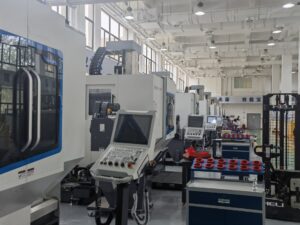
We validate every production run with comprehensive inspection protocols. Our quality control lab is equipped with Coordinate Measuring Machines (CMM) to verify that dimensional tolerances meet your exact specifications. For critical internal integrity, we employ non-destructive testing methods, including X-ray inspection, to detect any subsurface discontinuities. This rigorous testing ensures that the parts you receive are structurally sound and ready for immediate assembly.
Frequently Asked Questions About Permanent Mold Casting
What is the typical life of a permanent mold?
The lifespan of a mold depends heavily on the pouring temperature of the metal and the complexity of the part design. Because we utilize high-quality tool steel for our reusable metal molds, you can generally expect a long service life.
- Aluminum Alloys: These have lower melting points, allowing molds to last for tens of thousands of cycles, often exceeding 50,000 to 100,000 shots with proper maintenance.
- Copper & Brass: Due to higher thermal shock, the mold life is shorter compared to aluminum but still offers significant volume production before re-tooling is required.
Can you cast iron in permanent molds?
While the permanent mold process is technically capable of handling some grades of iron, it is most effective and economical for non-ferrous materials. At Vastmaterial, we primarily optimize this technique for our lightweight aluminum and high-conductivity copper alloy products. The high melting point of iron and steel can degrade steel molds rapidly, so for ferrous projects, we often recommend our other precision casting methods to ensure the best balance of cost and quality.
How does tooling cost compare to die casting?
Permanent mold casting sits in the “sweet spot” for tooling investment.
- Vs. High-Pressure Die Casting: The tooling for permanent mold (gravity die casting) is significantly less expensive. Since it doesn’t require the massive, complex steel dies needed to withstand extreme injection pressures, your upfront costs are lower.
- Vs. Sand Casting: Tooling is more expensive than simple sand patterns, but the per-part cost drops dramatically as volume increases.
If you are looking to scale up from prototyping but aren’t ready for the massive investment of high-pressure die casting, our manufacturing process using permanent molds offers the best ROI for medium-to-high volume runs.