Overview
This 4l60 cast iron valve body is a heavy-duty cast iron hydraulic housing for early 700R4 / 4L60 builds that use a mechanical governor and throttle cable instead of electronic solenoids. Housings are produced by investment casting with CNC bore and deck finish for remanufactured valve body and OEM supply, keeping early hydraulic circuits stable under heat.
4L60 Cast Iron Valve Body for Early 700R4 Hydraulic Control
Early TH700R4 units (re-designated as the 4L60 in 1990) relied on a cast iron valve body to manage hydraulic pressure. Built for early rear-wheel-drive trucks and performance cars, this setup controlled shift points using a mechanical TV cable and governor system rather than electronic solenoids. Before GM shifted to lighter aluminum, these cast iron units established the baseline for heavy-duty hydraulic calibration.
Valve Body Highlights
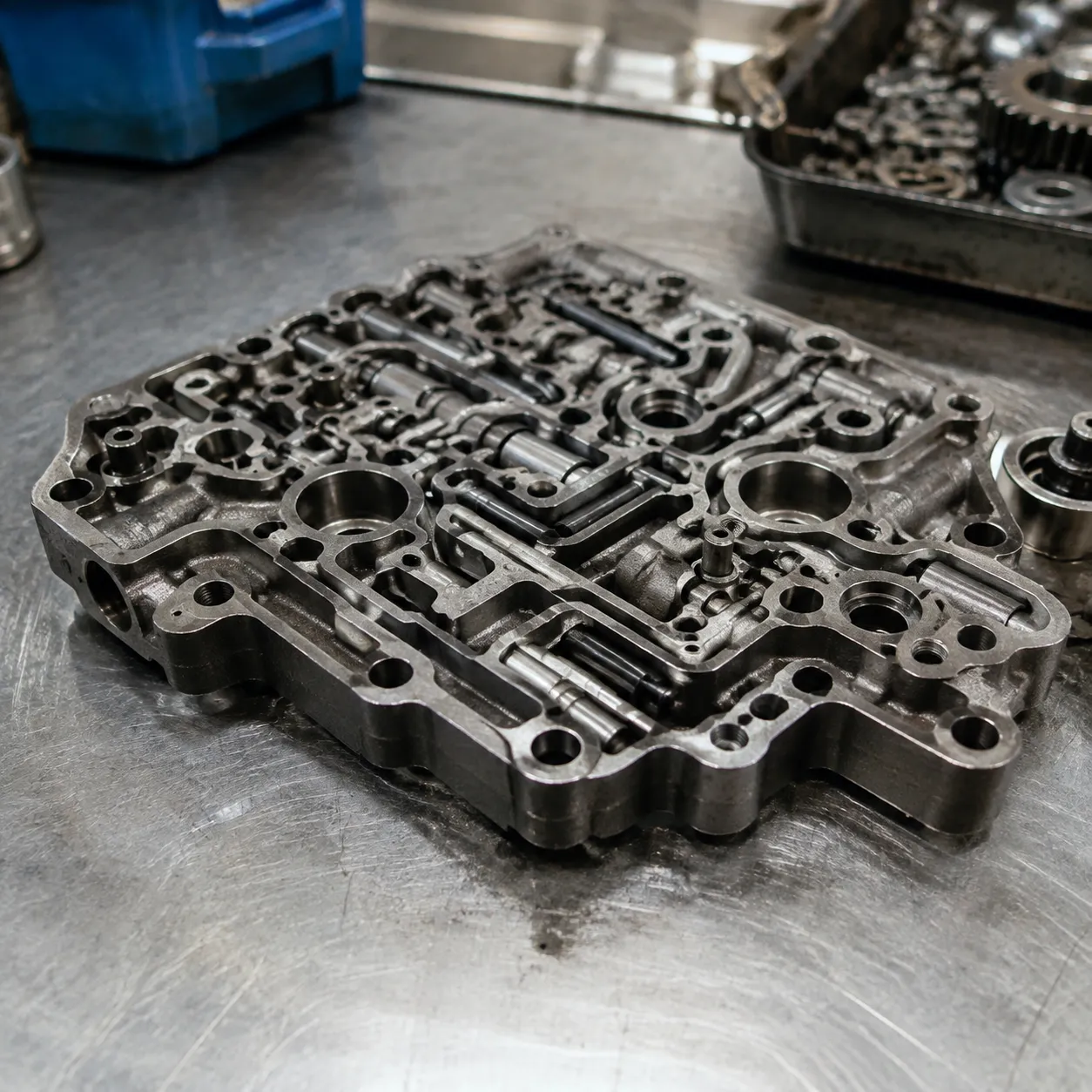
- Cast Iron Worm-Track Deck: Hero samples show a dark grey cast iron body with deep hydraulic worm tracks, multiple valve bores, and perimeter bolt circles ready for separator-plate make-up.
- Non-PWM Mechanical Circuit: Early non PWM routing supports TV-cable and governor pressure control used on classic 700R4 builds.
- Reman / OEM Ready Housing: Flat mating faces and finished bores support remanufactured valve body rebuilds or new OEM Parts programs without soft aluminum bore scoring.
Early GM TH700R4 and 4L60 Design History
Introduced in 1982, GM early TH700R4 transmissions used cast iron valve bodies before the electronic 4L60E generation moved to aluminum housings. The cast iron layout remains the correct hydraulic foundation for mechanical TV-cable calibrations on period-correct restorations and heavy-duty street builds.
Cast Iron vs Aluminum Valve Body
| Feature | Cast Iron Valve Body | Aluminum Valve Body |
|---|---|---|
| Material Strength | Superior rigidity and high wear resistance | Softer alloy prone to bore wear and scoring |
| Thermal Expansion | Low expansion rate prevents stuck valves | High expansion rate; causes hot shift slip |
| Warp Resistance | Resists warping under severe heat | Susceptible to deck surface warpage |
| Control System | Non-PWM mechanical hydraulic circuit | Electronic PWM / 4L60E valve control |
| Weight | Heavy-duty cast iron construction | Lightweight die-cast aluminum |
| Later Electronic Families | Early 700R4 / 4L60 cast iron only | 4L60E, 4L65E, and 4L70 aluminum valve body programs |
Vehicle Applications and Early 700R4 Compatibility
The early 700R4 cast iron valve body fits specific 1982-1986 General Motors platforms equipped with early-style hydraulic controls:
- GM Light Trucks & SUVs: Chevrolet C/K 10/20 series, Blazer, Suburban, and GMC Jimmy (1982-1986).
- Performance & Passenger Cars: Chevrolet Camaro, Corvette (1982-1986 early builds), Pontiac Firebird, and Caprice.
- Transmission Hardware: Matched to 27-spline input shaft setups and mechanical throttle-valve (TV) cable linkages on period GM transmission parts stacks.
How to Identify a 4L60 Cast Iron Valve Body
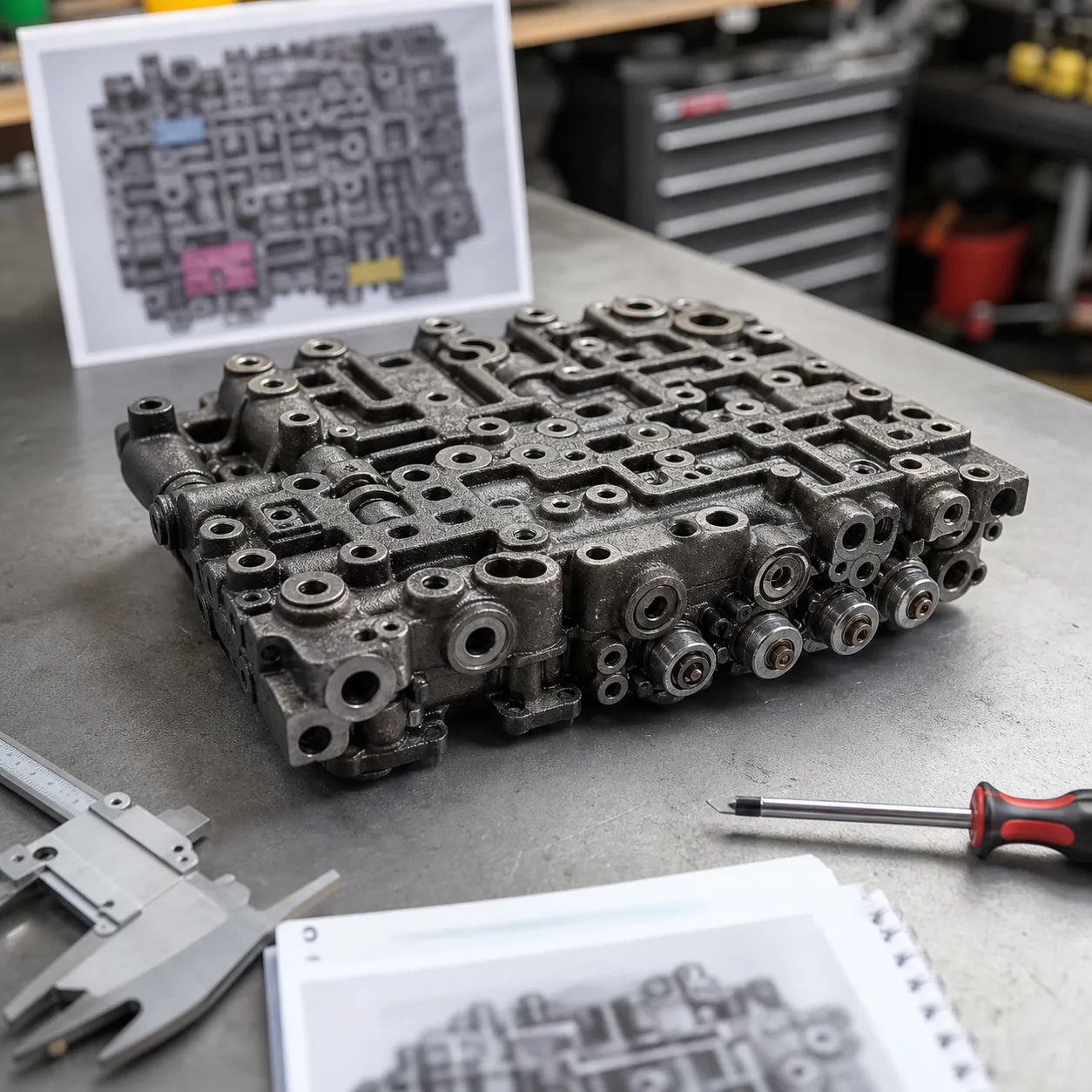
Tracking down an authentic 4L60 cast iron valve body requires checking a few physical traits before swapping components. Casting marks, fluid passages, and input shaft splines confirm correct early TH700R4 identification.
Casting Numbers and Physical Marks
- Weight and Metal Finish: Cast iron units weigh nearly double their alloy successors. Comparing structural grades such as a cast iron vs ductile iron valve body helps spot original factory castings built for high wear resistance.
- Casting Number Location: Raised casting number marks appear along the lower flat mounting surface or near the manual valve channel.
- Cable Bosses: Early cast iron designs feature distinct mounting bosses for the mechanical throttle cable and governor pressure channels, unlike later aluminum sand casting valve bodies used on electronic units.
Checkball Placement and Gasket Patterns
Gasket oil passages and checkball counts changed across production runs. Matching the correct early 4L60 transmission parts prevents fluid cross-leaks and soft shifts.
| Feature | Early 700R4 / 4L60 Cast Iron | Late 4L60 / 4L60E Aluminum |
|---|---|---|
| Housing Material | Heavy-duty cast iron | Die-cast aluminum alloy |
| Checkball Count | 5 to 7 steel checkballs | 7 to 8 checkballs |
| Separator Plate | Early non-PWM hole pattern | PWM / Electronic solenoid passages |
| Pressure Control | TV cable & mechanical governor | Electronic EPC solenoid |
27-Spline vs 30-Spline Setups
- 1982-1984 (27-Spline): Early 700R4 cast iron valve body configurations pair exclusively with 27-spline input shafts. These use smaller oil feed channels and lower hydraulic line pressures.
- 1984.5-1992 (30-Spline): GM upgraded to a robust 30-spline input shaft. These setups feature upgraded oil feed paths, refined valve springs, and distinct valve body gaskets.
- Match Hardware: Always match the install kit and separator plate replacement to the exact shaft spline count to avoid losing 2-3 shift pressure.
Casting Process and Program Specs for 4L60 Cast Iron Valve Body Parts
Haoyu supplies the housing as a precision-cast Parts program: gray cast iron bodies with investment or sand routes sized to drawing, then CNC finish on bores, worm-track decks, and separator faces. This casting-first route supports both new OEM bodies and cores used in remanufactured valve body rebuilds.
Typical Program Specs
| Parameter | Typical Range |
|---|---|
| Product | 4l60 cast iron valve body housing for early 700R4 / 4L60 mechanical control |
| Process | Investment casting for precision passages; sand or shell mold for heavier sections |
| Material | Gray cast iron (ductile iron on request for selected OEM drawings) |
| Control generation | Early non PWM mechanical TV / governor circuit (not electronic 4L60E / 4L65E / 4L70 aluminum families) |
| Finish scope | As-cast · semi-machined · finish-machined bores and deck faces |
| Supply form | New OEM casting · reman-ready core · assembly-ready housing with valve trains on request |
| Related hardware | Separator plates, checkballs, springs, and matched install kit packages |
Common Problems in a 4L60 Cast Iron Valve Body
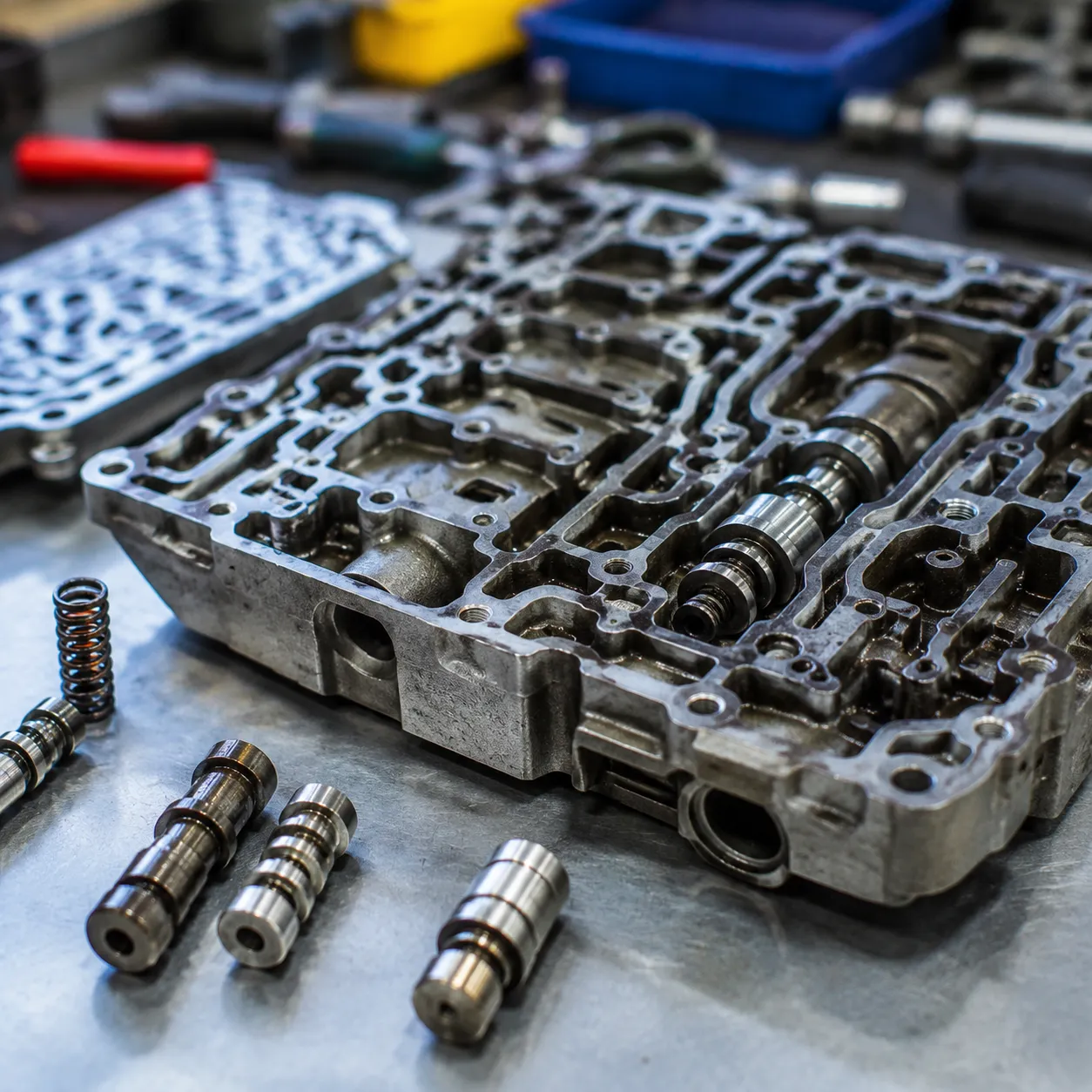
Sticky shift valves and bore wear issues
Even though the 4L60 cast iron valve body offers exceptional heavy-duty durability, varnish buildup, fine metallic debris, and degraded fluid can quickly compromise performance. Over time, micro-contaminants become trapped between the tight tolerances of the steel valves and iron bores, leading to severe transmission shift valve wear and sticky valves that fail to stroke smoothly.
Harsh engagement and delayed 2-3 shifts
When hydraulic pressure drops or valves stick inside the casting, shift timing breaks down rapidly.
- Delayed 2-3 Shifts: Usually triggered by stuck 2-3 shift valves, worn checkball seats, or improper throttle valve (TV) cable adjustment.
- Harsh 1-2 Engagement: Unregulated hydraulic spikes caused by a bound pressure regulator valve lead to harsh gear slamming.
- Internal Slippage: Cross-channel pressure loss reduces clamping force on clutch packs, risking premature friction plate failure.
Fluid leaks, warp resistance, and thermal expansion
One major advantage of cast iron over aluminum casting alloys is outstanding warp resistance and thermal stability. Cast iron resists heat distortion, maintaining a flat mating surface to prevent fluid cross-leakage between worm tracks. External leaks still occur if separator plate gaskets harden over time or if mounting bolts are unevenly torqued during service.
Rebuilding and Upgrading the 4L60 Cast Iron Valve Body
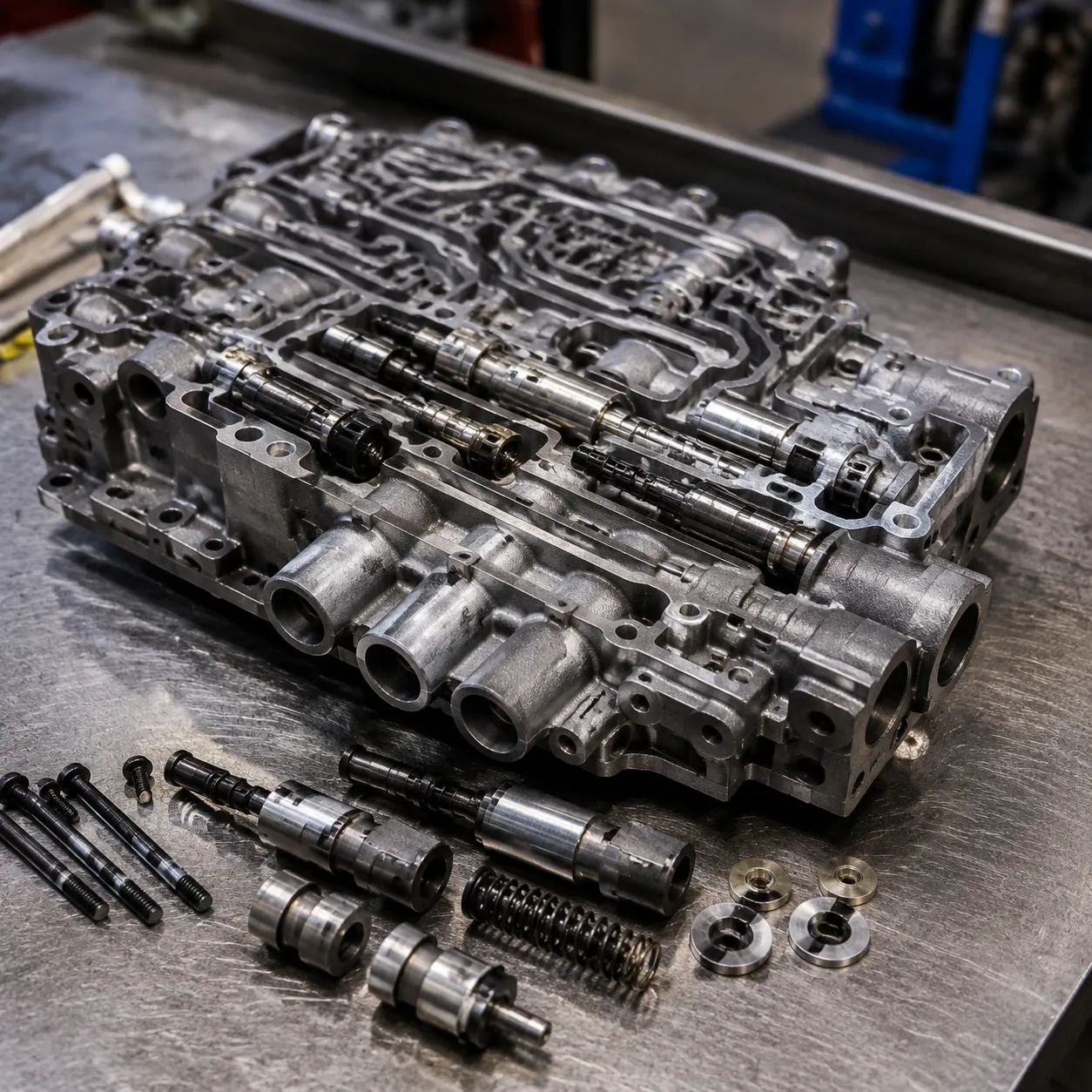
Rebuilding an early 700R4 or 4L60 cast iron valve body restores crisp shift quality and protects clutch packs from slipping. Because these heavy-duty iron housings are manufactured with durable precision casting methods, the main housing resists thermal warping and remains a reliable foundation for a complete overhaul.
Step-by-step cleaning and inspection procedure
- Complete Disassembly: Remove all retaining pins, plugs, springs, and valves. Keep each valve train organized on a clean bench in order of removal.
- Solvent Wash: Clean the cast iron housing and all steel valves using a dedicated solvent bath. Blow out all internal fluid passages with compressed air to remove varnish and metal particles.
- Bore Inspection: Inspect each bore under light for scoring or localized transmission shift valve wear.
- Drop Test: Coat each valve with clean fluid and slide it into its bore. It must fall freely under its own weight without binding.
Installing shift kits for firm shift calibration
Executing a proper 700R4 shift kit installation eliminates soft, sluggish gear transitions and reduces heat build-up.
- Accumulator Springs: Swap soft stock accumulator springs with stiffer performance springs to firm up 1-2 and 2-3 shifts.
- Plate Modification: Carefully drill out specified fluid feed holes in the separator plate to supply more hydraulic volume to the clutch packs.
- PR Valve Upgrade: Install a high-flow pressure regulator valve to boost overall line pressure and prevent slippage under heavy loads.
Replacing separator plates, checkballs, and springs
- New Separator Plate: Factory plates develop enlarged holes from steel checkballs pounding against them. Always install a heavy-duty separator plate replacement with hardened seats to prevent fluid bypass.
- Checkball Placement: Position each checkball using a reliable checkball placement diagram specific to the model year. Use a small dab of petroleum jelly to hold checkballs securely during reassembly.
- Fresh Springs: Replace tired valve springs with new color-coded springs from the rebuild kit to maintain accurate hydraulic calibration across all line pressures.
Install Kit and Separator Plate Options for 4L60 Cast Iron Valve Body
SERP rebuild programs almost always pair the housing with an install kit: gaskets, bonded separator plates, checkballs, filters, and selected valve updates. Match the kit to the casting number, spline count, and early non PWM plate pattern - not to later electronic 4L60E kits.
- Early Cast Iron Kit Scope: Separator plate with early hole map, checkballs, springs, pan gasket, and filter suited to mechanical TV / governor control.
- TCC Regulator Attention: Where the circuit uses a TCC regulator valve, inspect or update that valve during rebuild to stabilize lockup feel (common reman practice on related GM families).
- Do Not Mix Electronic Kits: Kits labeled for 4L60E, 4L65E, or 4L70 aluminum bodies use PWM / EPC passages that will not seal on early cast iron worm tracks.
Order Remanufactured or OEM 4L60 Cast Iron Valve Body Parts
We are Professional Precision Casting Service Providers supporting OEM drawings and reman-ready cores for early GM cast iron valve body programs - covering new castings, finish-machined housings, and matched custom cast iron parts packages.
| Supply Option | What Is Included | Typical Buyer |
|---|---|---|
| OEM casting | As-cast or CNC-finished 4l60 cast iron valve body housing to print | Transmission OEM / Tier suppliers |
| Remanufactured valve body core | Inspected cast iron housing ready for valve train and plate assembly | Reman plants / rebuild shops |
| Assembly-ready package | Housing + valves/springs + separator hardware / install kit on request | B2B rebuild programs |
MOQ and unit pricing follow drawing complexity, alloy, and machining scope. Request a quote with casting number, spline generation, and finish requirements.
4L60 Cast Iron Valve Body FAQs
Can You Swap a Cast Iron Valve Body with an Aluminum One?
Directly swapping a cast iron valve body for an aluminum valve body is not a simple drop-in replacement. Early cast iron designs rely on distinct hydraulic fluid routing, non-PWM torque converter lockup circuits, and mechanical throttle valve linkages that do not align with later aluminum setups used on 4L60E, 4L65E, and 4L70 units.
- Hydraulic Channel Mismatch: Channel geometry and checkball locations differ between cast iron and aluminum castings. Mixing mismatched valve bodies and plates leads to cross-leakage and total pressure loss.
- Separator Plate Differences: Aluminum valve bodies require dedicated separator plates and gasket kits that fail to seal correctly against early cast iron fluid circuits.
- Best Approach: Rebuild the original 700R4 cast iron valve body using upgraded valves and heavy-duty separator plates rather than attempting an unmatched aluminum swap.
Which Transmission Fluid Works Best with Cast Iron Valve Bodies?
Choosing the right fluid keeps shift calibration crisp and protects cast iron valve bores from scoring:
- DEXRON-VI: Fully synthetic and backward-compatible, with high thermal stability that resists fluid breakdown under heavy loads.
- DEXRON-III / MERCON: High-viscosity conventional option suitable for high-mileage units needing thicker hydraulic sealing.
- Friction Modifiers: Avoid unproven fluid additives, which can alter clutch friction and cause stickiness in the shift valves.
How Do I Know If My Early 4L60 Valve Body Is Worn Out?
Heavy thermal cycles and metal-on-metal friction eventually degrade internal valve tolerances. Watch for these clear failure signs:
- Delayed or Slipping 2-3 Shifts: Hydraulic pressure escapes around worn shift valve bores, preventing clean clutch engagement.
- Harsh TCC Lockup: A sticking TCC regulator valve causes violent torque converter clutch lockup or engine stalling at low speeds.
- Inconsistent Shift Points: Gear changes occur at random RPMs regardless of throttle cable position.
- Physical Bore Scoring: Deep scratches or ridging along the inner valve channels reveal severe internal wear during tear-down inspection.
Is This the Same as a 4L60E Remanufactured Valve Body?
No. This is early cast iron mechanical housing. Later remanufactured valve body listings for 4L60E / 4L65E / 4L70 are aluminum electronic units with PWM / EPC control and different casting numbers. Confirm material, casting number, and control type before ordering Parts or an install kit.