Choosing between gravity casting vs investment casting comes down to design complexity, surface finish standards, and order-volume economics for the mold. Gravity casting, or permanent mold casting, is a metal forming route that fills a reusable mold cavity with molten metal for medium-to-high volume structural parts, while investment casting uses the lost-wax process for intricate near-net shapes with finer dimensional tolerance. This guide compares process capability, tooling and unit-cost trade-offs, industry applications, and a practical selection checklist to help you choose the right method.
Understanding Gravity Casting and Investment Casting
What Is Gravity Casting (Permanent Mold Casting)?
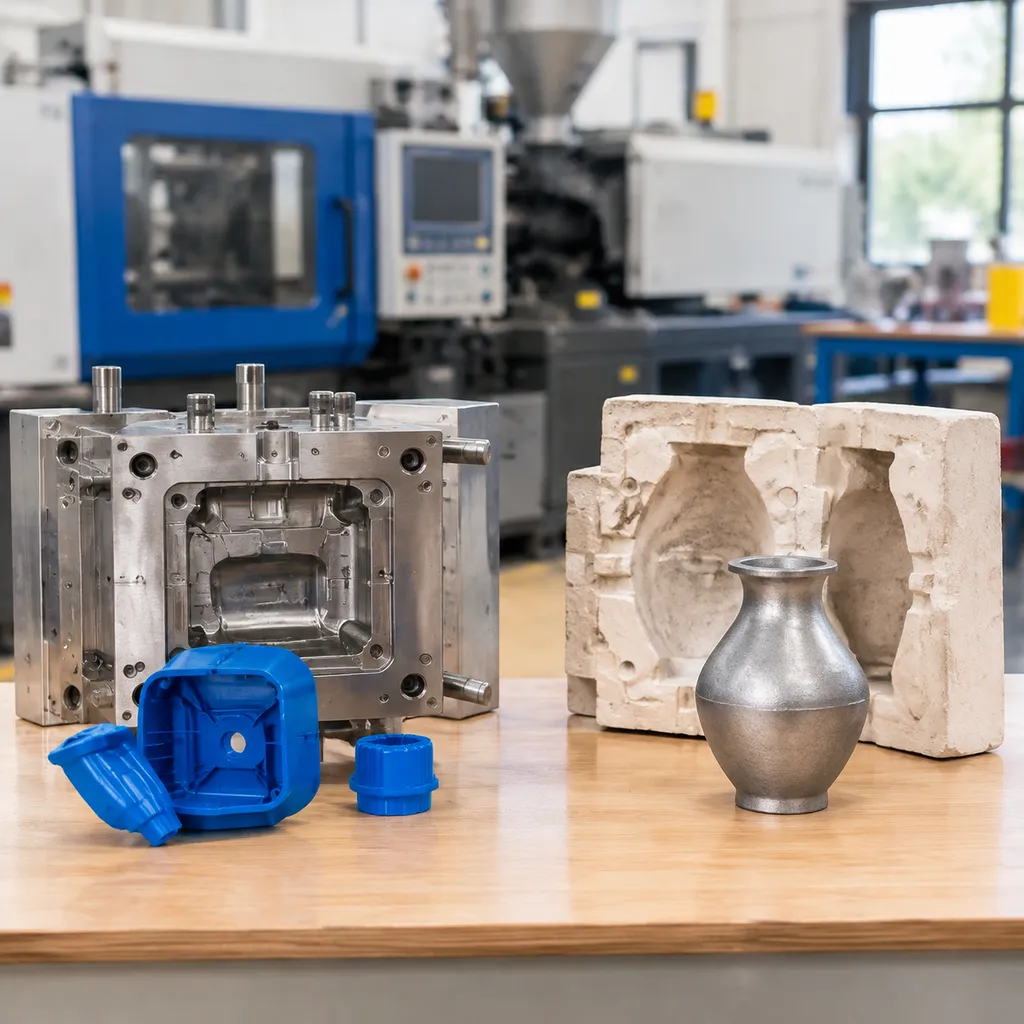
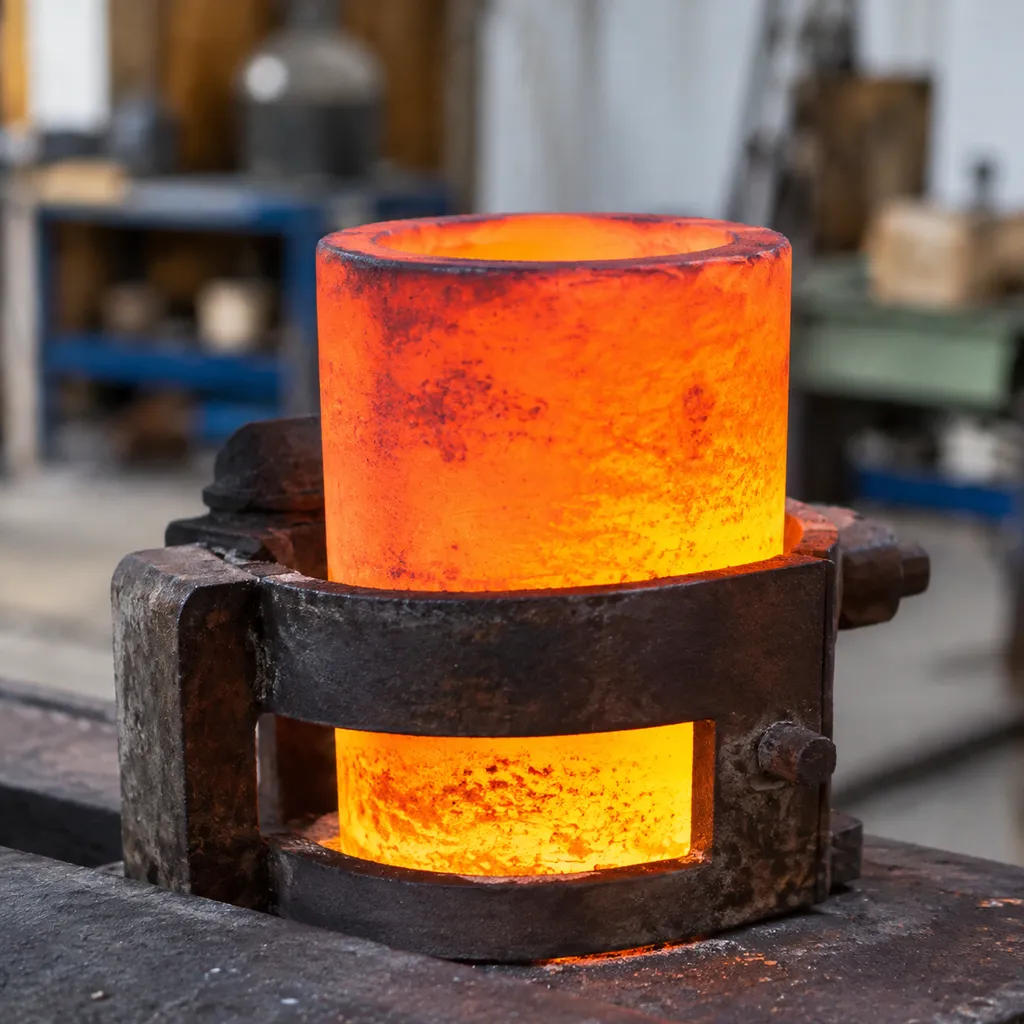
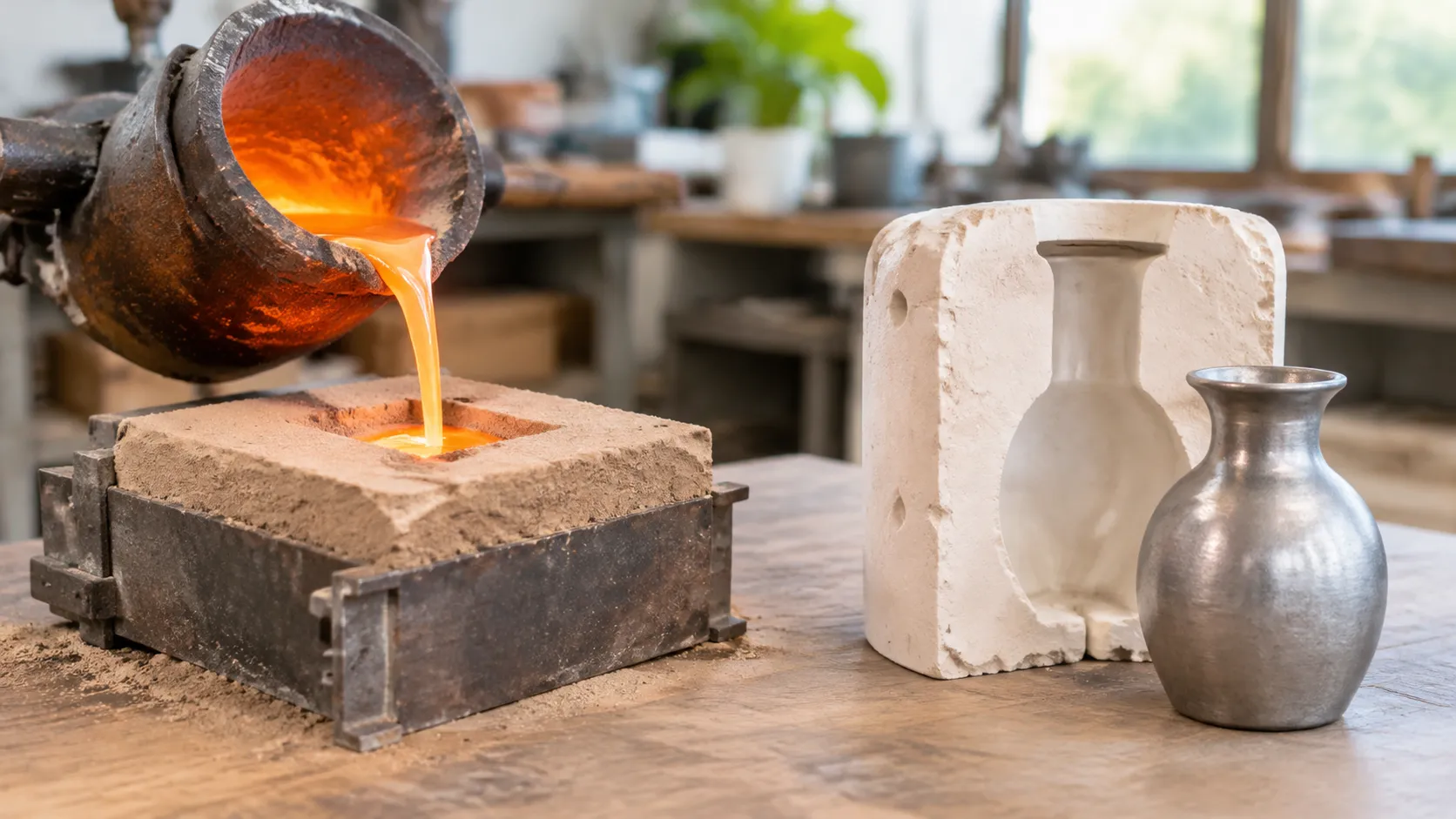
Gravity casting, or permanent mold casting, is a metal forming process that relies on gravity to pour molten metal into a reusable mold. Unlike sand casting, which uses expendable molds, gravity casting utilizes metal molds - typically cast iron or steel - which allows for higher production rates and better thermal conductivity. This method is preferred for components requiring high mechanical integrity and consistent quality.[1]
What Is Investment Casting (Lost-Wax Casting)?
Investment casting, widely known as the lost-wax process, is a precision casting method that involves creating a wax pattern of the desired part. This pattern is coated with a refractory ceramic material to form a mold. Once the mold hardens, the wax is melted out, leaving a hollow cavity that is filled with molten metal. This technique is renowned for producing intricate geometries with exceptional surface finish and tight dimensional tolerances.[2]
Key Differences Between Gravity and Investment Casting
The primary distinction lies in mold reusability, geometric complexity, and the level of precision achieved. Gravity casting excels in medium-to-high volume production of structural parts, whereas investment casting is the gold standard for complex, near-net-shape components that require minimal secondary machining.
| Feature | Gravity Casting | Investment Casting |
|---|---|---|
| Mold Type | Permanent (Metal) | Expendable (Ceramic) |
| Geometric Complexity | Moderate | Very High |
| Surface Finish | Good | Excellent |
| Dimensional Tolerance | Moderate | High |
| Primary Advantage | Cost-effective for volume | Design flexibility |
Gravity Casting vs Investment Casting Process Capabilities
Manufacturing Process and Mold Materials
Gravity casting, often referred to as permanent mold casting, involves pouring molten metal into a reusable steel or iron mold. The process relies on gravity to fill the mold cavity, making it a highly repeatable method for medium-to-high volume production. Because the mold is made of metal, the cooling rate is faster, which typically results in a fine-grained microstructure within the cast metal.[1]
In contrast, investment casting, also known as the lost-wax process, utilizes a disposable ceramic shell created from a wax pattern. This process is inherently more flexible regarding part geometry. Since the shell is broken away after the metal solidifies, there are fewer restrictions on shape complexity compared to the rigid constraints of a permanent metal mold.
Dimensional Accuracy and Surface Finish Standards
Investment casting generally delivers superior dimensional tolerance and a smoother surface finish than gravity casting. Gravity casting often leaves a coarser finish due to the parting lines required for the metal mold and the potential for sand core inclusions.[3]
When project requirements exceed standard casting precision, we often utilize CNC turning to ensure critical dimensions and surface finish standards are met. Below is a comparison of the technical specifications for each method:
| Feature | Gravity Casting (Permanent Mold) | Investment Casting (Lost-Wax) |
|---|---|---|
| Mold Material | Steel or Iron (Reusable) | Ceramic Shell (Single-use) |
| Dimensional Tolerance | Moderate | High / Precise |
| Surface Finish | Good (Requires finishing) | Excellent (Near-net shape) |
| Design Complexity | Moderate | High / Intricate |
| Cooling Rate | Fast (Fine grain) | Controlled (Variable) |
Material Compatibility and Compatible Metal Alloys
Both methods support a wide range of non-ferrous metals, but the choice often depends on the required alloy properties and the thermal limitations of the mold.
- Gravity Casting: Best suited for aluminum alloys, copper-based alloys, and zinc. Its ability to chill the metal quickly is a distinct advantage when specific mechanical properties are required from these standard alloys.
- Investment Casting: Highly versatile and compatible with a broader spectrum of materials, including stainless steel, tool steels, cobalt, nickel-based superalloys, and other exotic metals. This makes it the standard choice for components requiring high heat resistance or complex chemical compositions.
Gravity Casting vs Investment Casting Pros and Limits
Pros and Cons of Gravity Die Casting
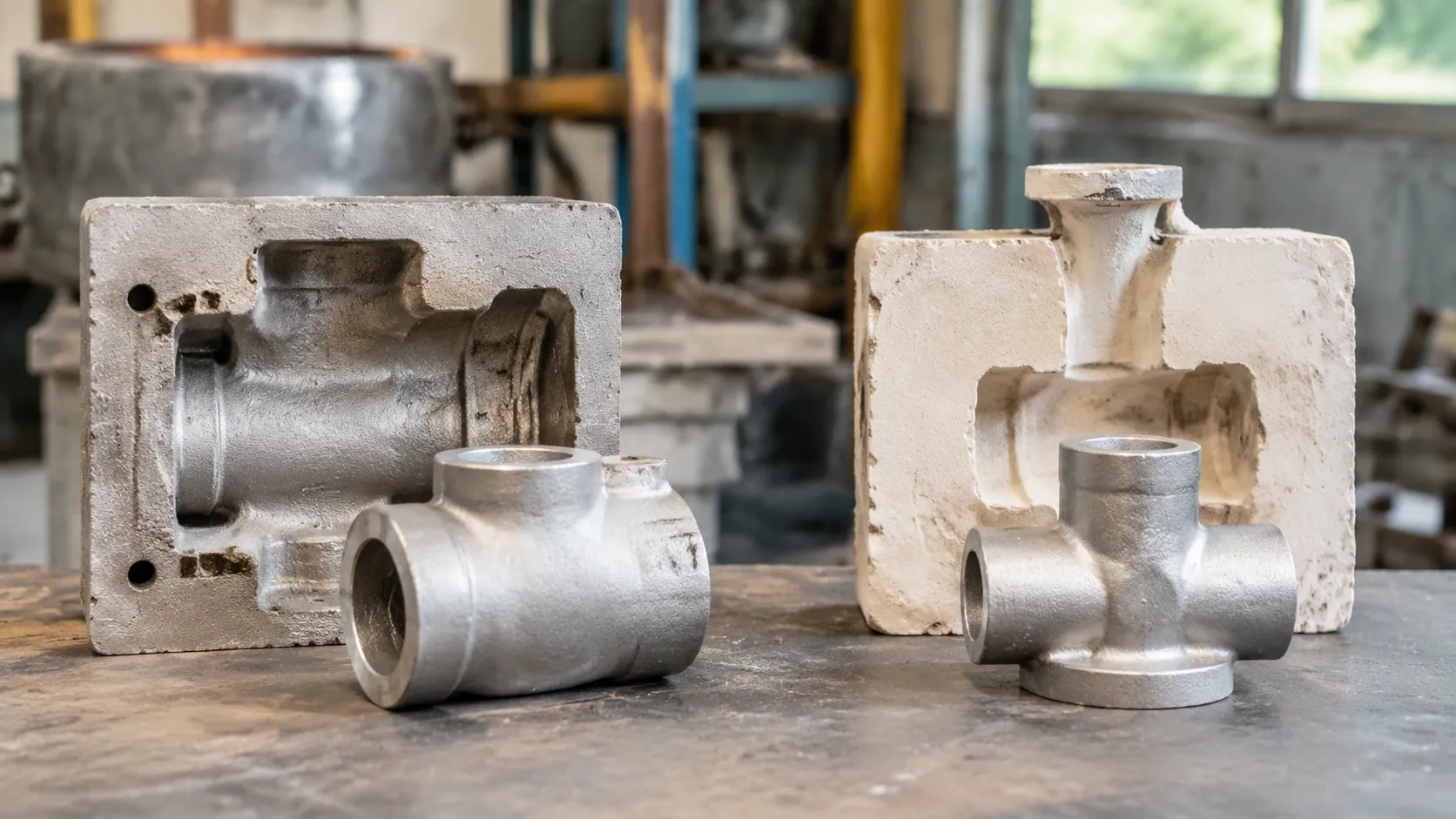
Gravity die casting, or permanent mold casting, offers distinct benefits for high-volume production. Its primary advantage lies in the use of reusable metal molds, which significantly improves cycle times and mechanical properties due to faster cooling rates. However, the method is constrained by the high initial cost of mold fabrication and limitations on part geometry. While it provides excellent structural integrity, it is generally restricted to simpler shapes that allow for easy ejection from the rigid metallic tool. Understanding the steel casting mould design advantages and disadvantages is essential when evaluating whether this method suits your specific structural requirements.
Pros and Cons of Investment Casting
Investment casting, frequently referred to as the lost-wax process, excels in producing highly intricate geometries that would be impossible with other methods. Because the ceramic mold is destroyed after each pour, there are virtually no constraints on complex internal passages or undercuts. The trade-off for this design freedom is a slower production cycle and higher per-unit costs compared to permanent mold methods. Despite these costs, the exceptional surface finish and precision often eliminate the need for expensive secondary machining, making it a preferred choice for complex components.
Design Complexity and Wall Thickness Limits
When comparing gravity casting vs investment casting regarding design constraints, the differences become clear:
Gravity Casting: Best suited for parts with uniform wall thickness and minimal undercuts. It generally requires a draft angle to ensure the part can be removed from the metal die without damage.
Investment Casting: Offers superior design flexibility. It can achieve much thinner wall sections and complex hollow features that permanent molds cannot accommodate.
Mechanical Integrity: Gravity casting typically produces denser, stronger parts, whereas investment casting prioritizes aesthetic and geometric complexity over mass production speed.
Engineers must weigh the need for complex, net-shape geometries against the efficiency and cost-effectiveness of permanent mold systems.
Tooling Cost and Production Volume in Gravity vs Investment Casting
The decision usually hinges on your total production volume and the complexity of the final geometry.
Tooling and Initial Mold Investment Costs
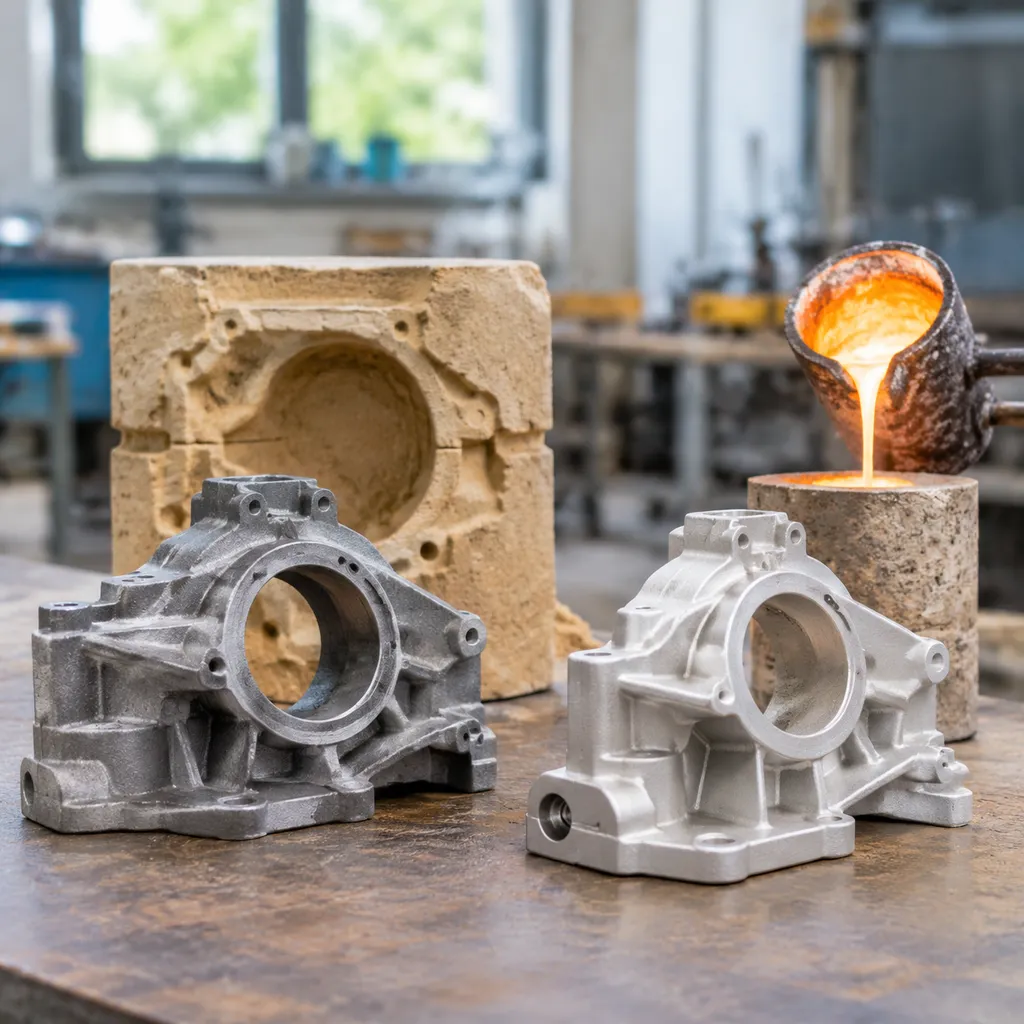
Gravity casting (permanent mold casting) typically requires a significant upfront investment because the molds are crafted from durable, heat-resistant metals like steel or iron. While the initial tooling cost is high, the molds have an extremely long lifespan, making them ideal for high-volume production runs.
Investment casting often presents lower initial tooling costs because the dies used to create wax patterns are simpler to produce. However, because each part requires a new wax pattern, the per-cycle labor cost is higher. If you are planning your budget, it is important to understand the specific variables affecting your investment mould guide regarding tooling costs and lifespan to ensure your manufacturing strategy aligns with your projected ROI.
Unit Production Costs Across Order Volumes
Your order volume is the primary driver of unit cost efficiency. Gravity casting thrives in high-volume environments where the cost of the metal mold can be amortized over thousands of parts. Investment casting is generally more cost-effective for lower-to-medium volumes or highly complex geometries where the cost of traditional machining would be prohibitive.
| Factor | Gravity Casting | Investment Casting |
|---|---|---|
| Tooling Investment | High | Moderate |
| Unit Cost (High Volume) | Low | Higher |
| Unit Cost (Low Volume) | High | Competitive |
| Production Speed | Fast | Slower |
Secondary Machining and Finishing Requirements
One of the biggest hidden costs in manufacturing is post-production finishing. Investment casting excels at producing "near-net-shape" parts with excellent surface finish and dimensional tolerance, which drastically reduces or eliminates the need for secondary CNC machining.
Conversely, gravity casting often leaves thicker walls and requires more draft angles. You should factor in additional budget for secondary operations like grinding, reaming, or CNC milling to reach the final specifications required for your end-use application. While the casting process itself may be cheaper, these necessary finishing steps can narrow the price gap between the two methods.
Application Scenarios and Industry Uses
Typical Applications for Gravity Casting
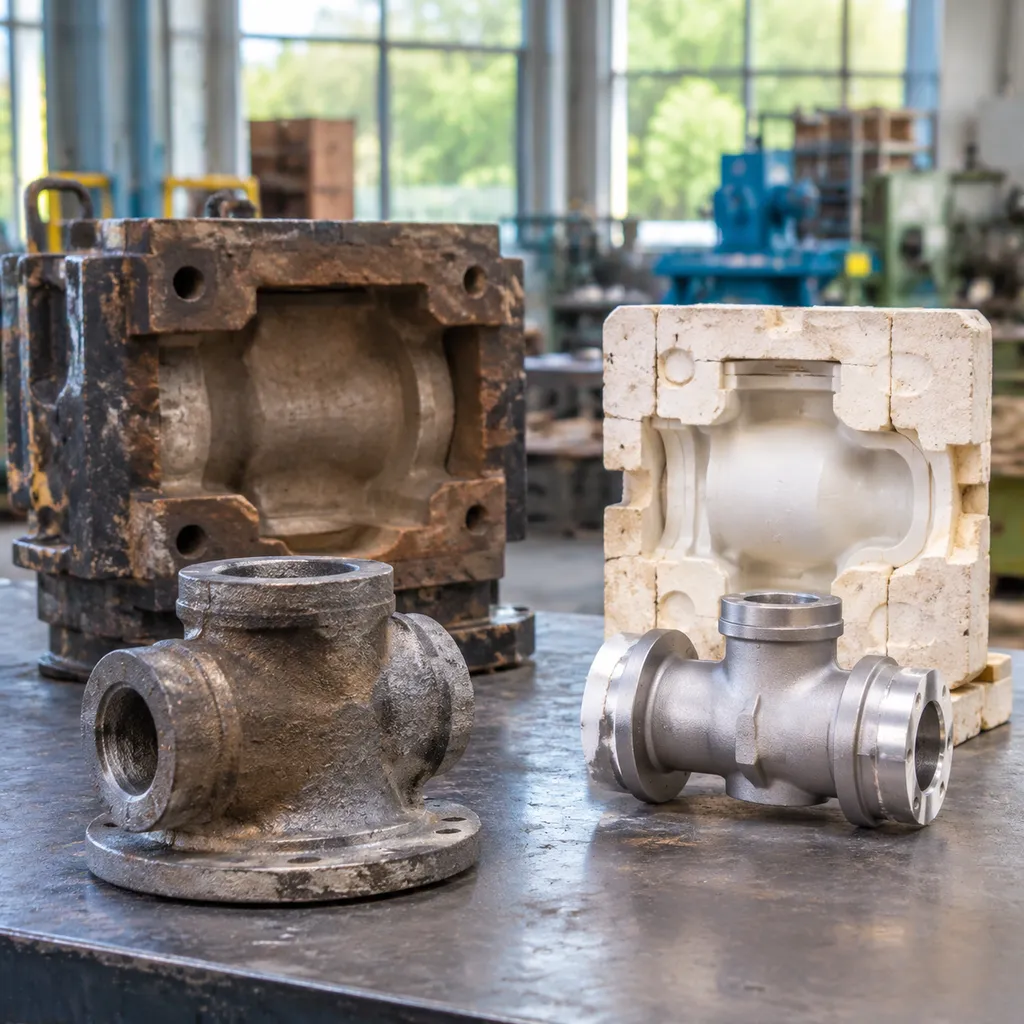
Gravity casting excels in creating robust, medium-to-high volume components where structural integrity is a priority. Because it uses permanent metal molds, it is the preferred method for high-performance non-ferrous metals like aluminum and copper alloys. Common industry uses include:
- Automotive Components: Cylinder heads, pistons, and engine blocks that require excellent mechanical properties and pressure tightness.
- Industrial Machinery: Large structural housings, engine mounts, and gearboxes that need to withstand heavy-duty operational stress, as discussed in our large steel casting solutions for heavy-duty industrial applications.
- Aerospace and Defense: Thick-walled parts that require consistent grain structures and high durability.
- Lighting and Infrastructure: Street lighting components and large decorative metal pieces that benefit from the cost-efficiency of reusable molds.
Typical Applications for Investment Casting
Investment casting, often called the lost-wax process, is the gold standard for producing highly intricate parts that would be impossible or too expensive to machine. It is favored by engineers looking for net-shape accuracy and superior surface finishes. Key industry applications include:
- Medical Devices: Surgical instruments, prosthetic implants, and dental components requiring extreme precision and biocompatible materials.
- Aerospace Turbine Parts: Complex blades, vanes, and engine components that must maintain tight tolerances under extreme heat and pressure.
- Firearms and Defense: Triggers, sights, and complex housing components that demand high-strength alloys and intricate geometries.
- Jewelry and Art: Objects requiring fine detail and complex textures that are difficult to reproduce with other casting techniques.
- Industrial Valves and Pumps: Precision flow-control components that rely on the best metal for casting to prevent leakage and ensure long-term reliability in harsh environments.
How to Choose Between Gravity Casting and Investment Casting
Key Selection Factors for Engineering Projects
Selecting the right manufacturing method depends on balancing performance requirements against economic constraints. When weighing gravity casting vs investment casting, consider these critical factors:
- Part Complexity: If the design features intricate undercuts, thin walls, or complex internal geometries, investment casting is the superior choice.
- Material Selection: High-performance, high-temperature alloys often require the specialized cobalt alloy casting process to ensure structural integrity and wear resistance.
- Production Volume: Permanent mold (gravity) casting is highly efficient for high-volume, repetitive production runs where tooling costs can be amortized over many units.
- Surface Finish: If the as-cast finish must meet stringent aesthetic or functional standards, investment casting significantly reduces the need for secondary machining.
When to Use Investment Casting vs. Gravity Casting
To streamline the decision-making process, refer to the following comparison guide:
| Feature | Gravity Casting | Investment Casting |
|---|---|---|
| Geometry | Simple to Moderate | High Complexity |
| Dimensional Accuracy | Moderate | Excellent |
| Production Volume | High | Low to High |
| Surface Finish | Good | Superior |
| Tooling Cost | High Initial | Moderate |
| Best Use Case | Heavy, structural parts | Intricate, high-precision parts |
Choose gravity casting when your primary goal is high-throughput production of simpler, robust components. Opt for investment casting when your project demands tight dimensional tolerances, intricate details, or the use of challenging, high-strength alloys. Understanding these fundamental differences between casting methods allows you to effectively optimize your manufacturing budget while maintaining the highest product quality.
References
- University of Florida MAE - Casting Processes lab notes (permanent-mold / gravity fill, dimensional accuracy vs sand) ↩
- Wikipedia - Investment casting (lost-wax / precision casting overview) ↩
- ISO 8062-3:2023 - Dimensional and geometrical tolerances for castings ↩
- Engineering Library / DOE handbook - Structure of Metals (casting bulk defects: gas pockets, shrink cavities)
- The Metal Casting - Investment casting process overview