Advanced waxes investment casting parts start with the right pattern wax system—filled or unfilled formulations, soluble cores, and controlled injection—so dimensional accuracy survives shell build and metal pour. This guide walks through wax types, key physical properties, how wax quality lifts casting yield, which components we routinely cast, and the injection plus dewaxing practices we run on the foundry floor.
Types of Advanced Waxes for Investment Casting Parts
Selecting the right wax formulation is the foundation of flawless lost wax casting. We utilize specialized advanced waxes engineered to eliminate dimensional defects, achieve smooth surface finishes, and ensure exact replication of complex component geometries.
Pattern Waxes for High-Precision Components
Our precision wax patterns rely on premium pattern wax for investment casting to achieve exceptional detail and tight tolerances. These waxes feature consistent fluid dynamics during injection, ensuring every feature of the mold cavity fills completely without trapping air or causing sink marks.
Filled vs Unfilled Wax Formulations
Understanding filled vs unfilled investment casting wax is essential for optimizing cost and accuracy based on part geometry:
- Filled Pattern Waxes: Blended with solid fillers (such as microcrystalline polymers or organic compounds) to minimize volumetric contraction. They offer low shrinkage and superior dimensional stability, making them ideal for large or thick-section components.
- Unfilled Pattern Waxes: Pure hydrocarbon blends that deliver exceptionally smooth surface finishes and effortless, ash-free burnout. They are ideal for thin-walled casting parts and intricate decorative features.
Runner and Spruing Waxes
Runner and gating wax formulations serve as the structural backbone of the wax tree. Engineered with higher strength and lower melting temperatures, these waxes keep heavy pattern assemblies rigid during shell building and drain rapidly during dewaxing to reduce shell stress.
Sticky and Water-Soluble Specialty Waxes
To create highly complex, multi-piece assemblies, specialized waxes perform critical dedicated roles:
- Sticky Wax: Functions as a high-adhesion adhesive to join patterns to the central runner assembly securely without causing thermal distortion.
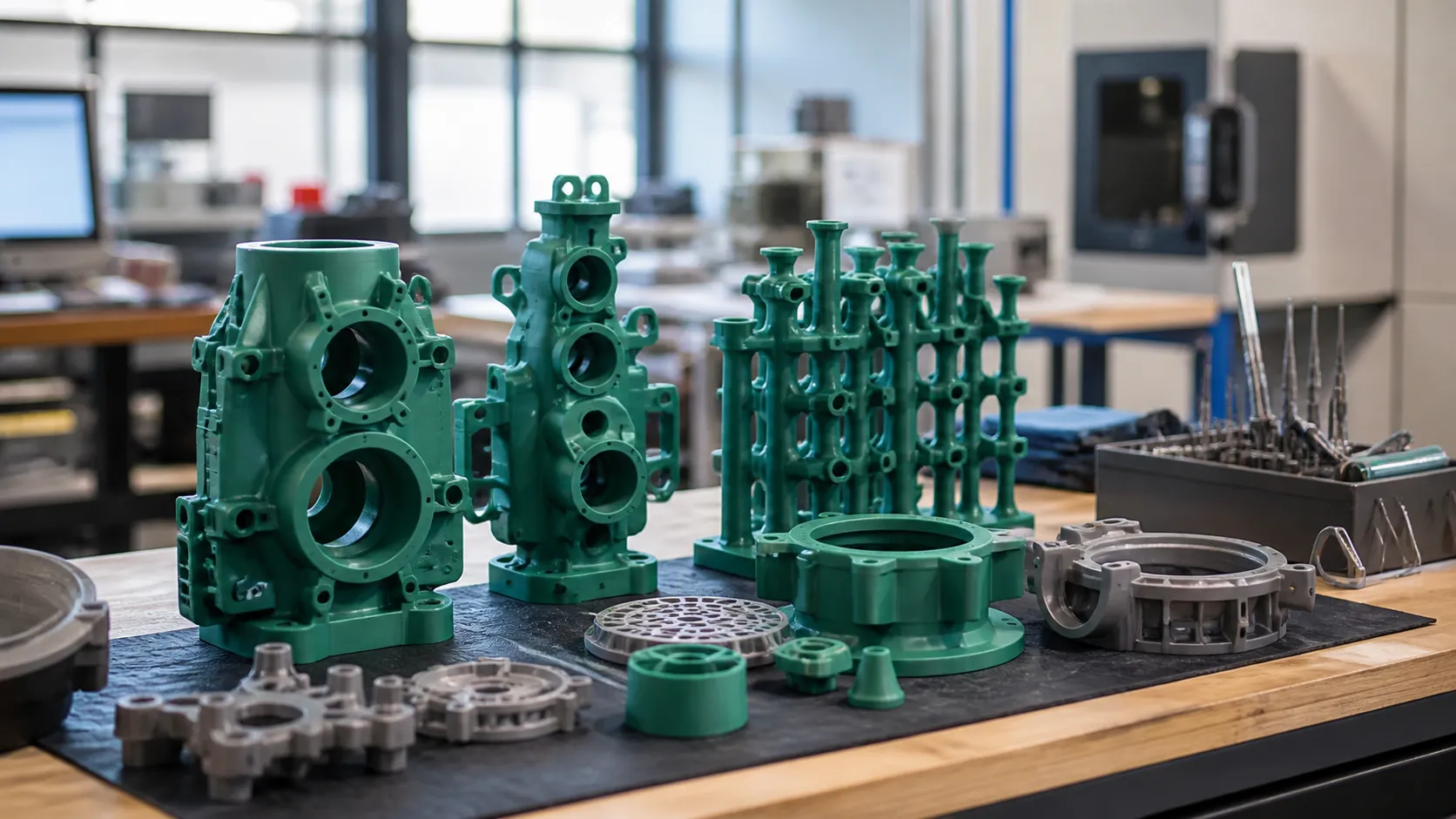
- Soluble Cores: Made from water-soluble wax to form complex internal cavities, undercuts, and blind holes. Once injected, these soluble cores dissolve quickly in a mild water bath, leaving behind precise internal passages that traditional metal cores cannot produce.
Key Properties of High-Performance Investment Casting Waxes
When producing advanced waxes investment casting parts, choosing the right wax formulation directly dictates the dimensional accuracy and surface quality of your final metal components.
Dimensional Stability and Low Shrinkage Rates
- Casting Wax Shrinkage Control: High-performance waxes feature minimal volumetric shrinkage, preventing sink marks and distortion as patterns cool inside the die.[1]
- Tight Tolerances: Exceptional dimensional stability ensures that intricate geometries and thin-walled features hold their exact shape from initial injection through shell building (investment casting tolerance).
Thermal Expansion Behavior and Melting Point Ranges
- Predictable Expansion: We select formulations with low thermal expansion to avoid stressing or premature cracking of the fragile ceramic shell during heated dewaxing.
- Sharp Melting Transitions: A distinct, well-defined melting range allows rapid, uniform liquefaction, letting the wax drain quickly without leaving tacky residues behind.
Viscosity and Flow Characteristics During Injection
- Complete Cavity Filling: Balanced viscosity at injection temperatures allows the wax to fluidly fill complex mold details without demanding excessive pressures.
- Defect Prevention: Smooth flow dynamics eliminate air entrapment, surface fold lines, and voids on the wax pattern surface.
Ash Content and Clean Burnout Properties
- Zero Residues: Premier pattern waxes burn out cleanly, leaving virtually zero ash content (typically at or below 0.05%) inside the ceramic cavity.[2]
- Inclusion-Free Castings: Completely burning off residual carbon stops surface defect formation and pitting when molten metal hits the shell. For specialized rapid prototyping workflows, leveraging clean burnout and zero ash resins applies these same strict purity standards across all pattern creation methods.
How Advanced Waxes Improve Investment Casting Parts
Advanced waxes investment casting parts require fewer corrections, protecting your production schedule and bottom line.
Achieving Tighter Tolerances on Complex Geometries
- Low Shrinkage: High-performance pattern waxes hold exact dimensions during cooling, preventing warpage.
- Intricate Detail: Advanced wax flows smoothly into ultra-thin walls and tight radii, which is essential for our precision investment casting services for complex metal parts.
Enhancing Surface Finish and Reducing Post-Machining
- Smooth Pattern Surfaces: Quality wax leaves a glass-like surface on patterns, resulting in smoother ceramic mold walls.
- Reduced Secondary Operations: Superior raw casting finishes mean far less costly grinding, polishing, and CNC machining later.
Preventing Ceramic Shell Cracking During Dewaxing
- Controlled Thermal Expansion: Specialized waxes melt at low temperatures without expanding violently against the ceramic shell.
- Zero Mold Damage: Rapid, low-expansion melting prevents internal stress and micro-cracks in ceramic molds during autoclave dewaxing.
Minimizing Scrap Rates in Precision Foundry Operations
- Clean Ash Burnout: Ultra-low ash content eliminates carbon deposits, guaranteeing pure metal fills with fewer inclusions.
- Higher Production Yields: Combining high-purity waxes with our advanced casting technology for improved foundry yield and metal purity drastically reduces scrap rates across high-volume production runs.
What Components Can Advanced Waxes Investment Casting Parts Cover?
With stable pattern wax, soluble cores where needed, and clean burnout, the same wax room supports a wide range of near-net-shape metal geometries. Below are the component families we produce as investment casting parts for OEM programs.
| Industry / program | Typical components | Wax / pattern notes |
|---|---|---|
| Aerospace & turbine | Structural brackets, housings, airfoil-related hardware, heat-resistant fittings | Filled pattern waxes for dimensional hold; tight injection control for thin edges |
| Pumps & fluid handling | Impellers, casings, diffusers, wear rings, complex wet-end geometries | Pattern wax plus soluble cores for internal passages that machining cannot reach economically |
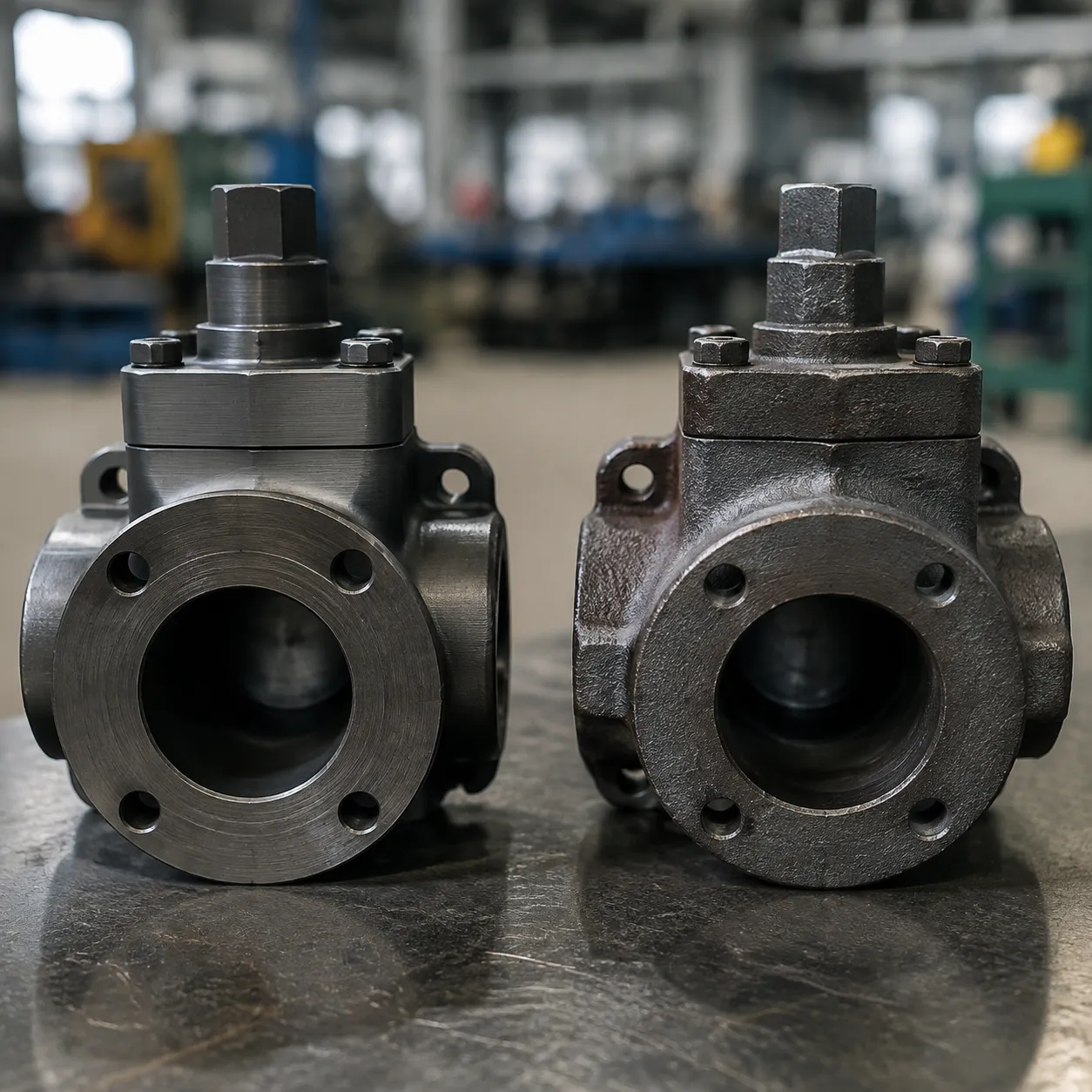
| Valves & process equipment | Bodies, bonnets, cages, stems, and pressure-retaining details | Smooth unfilled or filled blends for sealing surfaces with less grind stock |
| Electrical & thin-wall OEM | Connector housings, sensor mounts, switchgear hardware, lightweight brackets | Low-viscosity wax for thin walls; sticky wax for multi-piece tree assemblies |
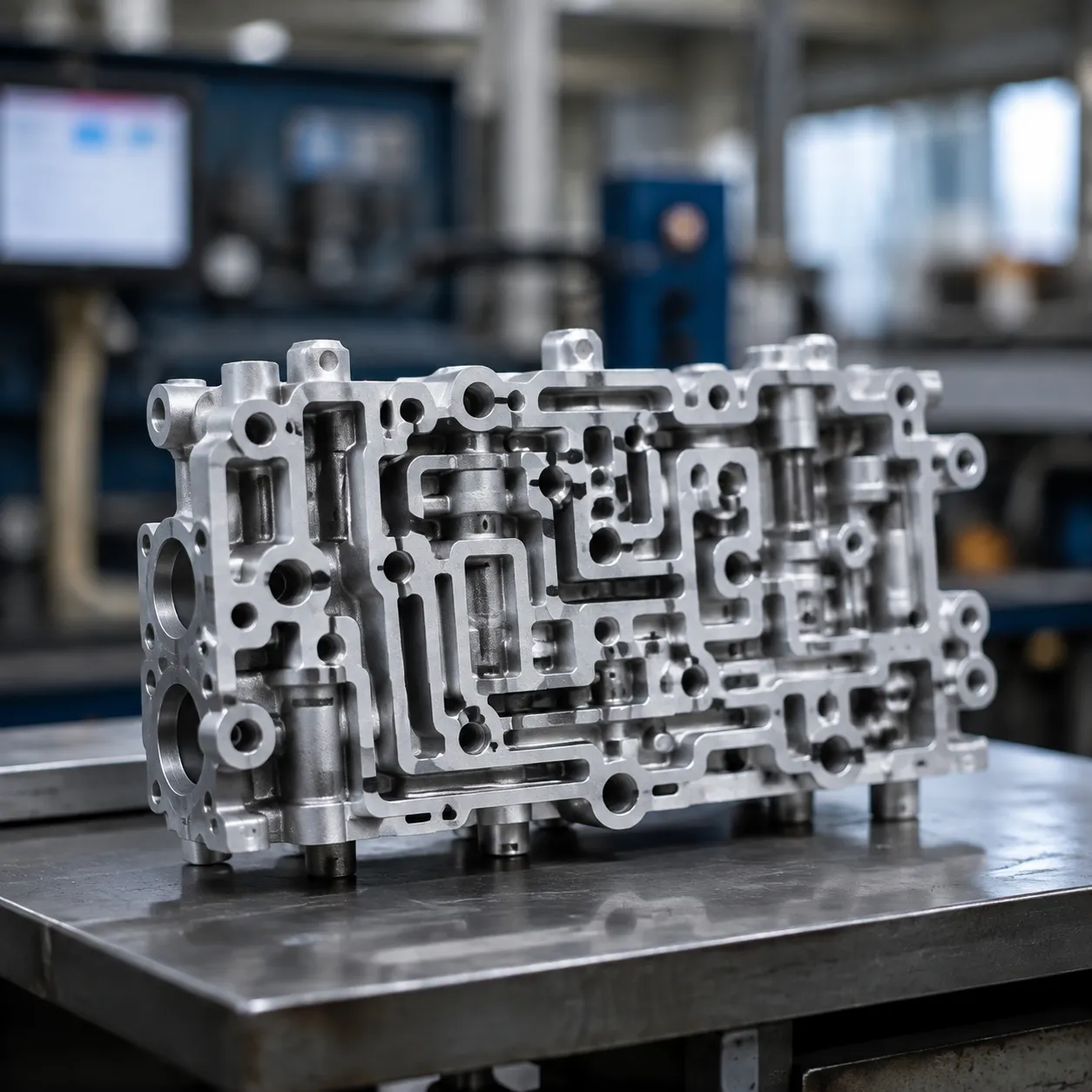
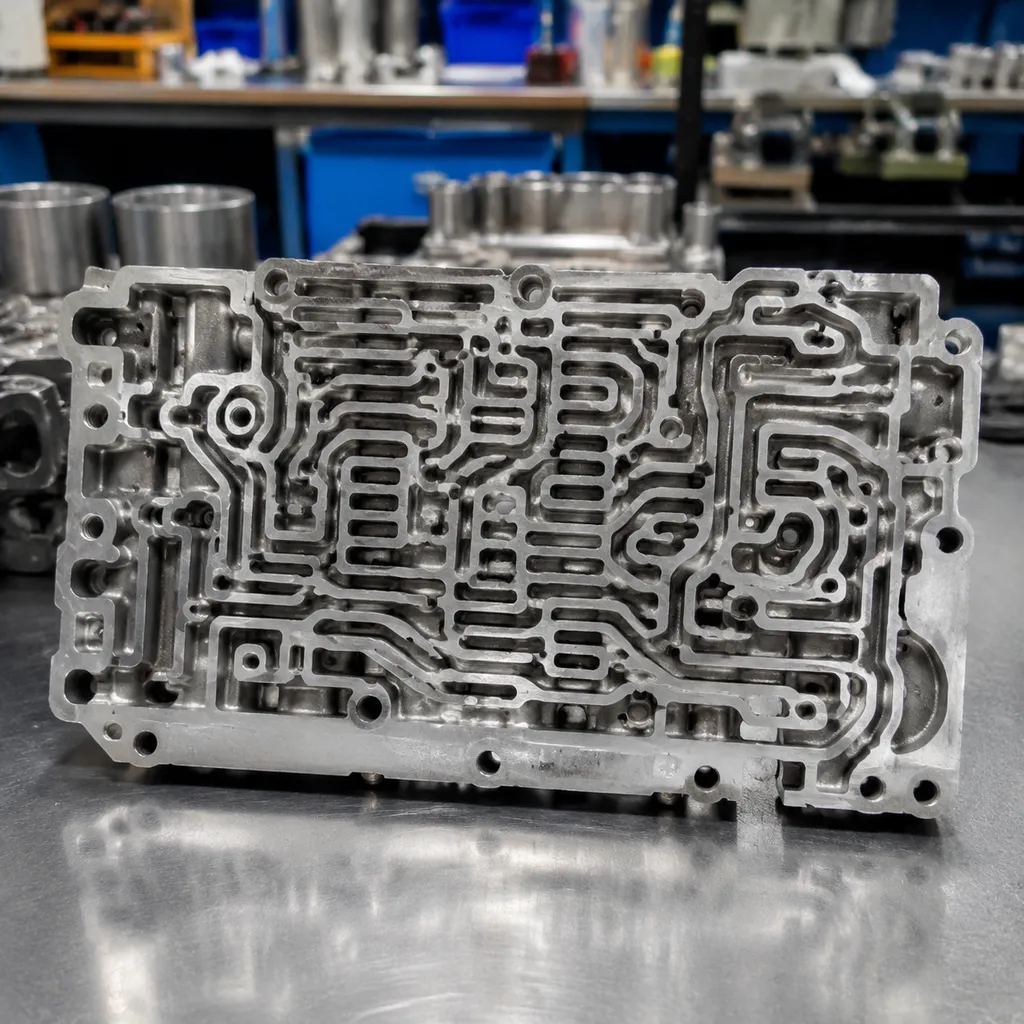
| Automotive & industrial machinery | Linkages, levers, gearbox details, hydraulic manifolds, wear parts | Auto wax press runs for repeatable density on production tooling |
Aerospace and High-Temperature Hardware
When drawings call for complex envelopes in stainless, alloy steel, or cobalt-family alloys, advanced wax patterns keep fillets, bosses, and thin ribs intact through shell build. Flight- and turbine-adjacent geometries are produced through our aerospace investment casting capability set, with wax choice locked to wall thickness and alloy pour temperature.
Pump, Valve, and Internal-Passage Parts
Impellers and wet-end castings benefit when soluble cores form curved channels before the ceramic shell is built—cutting secondary drilling and improving flow paths. We support dedicated investment casting for pumps and industrial precision casting valve geometries where sealing faces and port alignment depend on pattern accuracy.
Electrical, Thin-Wall, and Multi-Piece Assemblies
Thin-wall housings and small OEM brackets lean on unfilled pattern waxes for flow into narrow die cavities, while sticky wax locks patterns onto runners without distorting critical datums. For sector-specific envelopes, see our investment casting for electrical industry parts range—same lost wax casting route, wax recipe tuned to wall and finish targets.
Mixed-section parts get a fixed wax map before tooling: filled pattern waxes on thick bosses and heavy hubs to hold shrinkage, unfilled pattern waxes on thin walls for fill and finish, and soluble cores only where internal passages would otherwise need drilling or EDM after pour.
Optimizing the Wax Pattern Injection Process for Advanced Waxes Investment Casting Parts
Getting consistent quality in advanced waxes investment casting parts starts with mastering the injection cycle. We rely on precise process controls to turn high-performance pattern wax into perfect dimensional replicas every single run.
Ideal Temperature and Pressure Controls
- Paste-State Injection: We inject pattern wax in a semi-solid paste condition rather than a fully liquid state to minimize volumetric shrinkage and sink marks.
- Controlled Hydraulic Pressure: Low to moderate injection pressure ensures complete mold filling without causing flash at die parting lines.
- Auto Wax Press Calibration: Automated equipment continuously monitors wax reservoir temperature and injection rates for consistent pattern density.
Proper Die Lubrication and Release
- Micro-Thin Layering: Apply a minimal, atomized mist of specialty release agent to metal die cavities.
- Residue Prevention: Avoid lubricant pooling to keep surface defects off the pattern and protect subsequent shell building.
- Clean Ejection: Efficient mold release lowers friction during mechanical ejection, keeping delicate pattern features intact.
Cooling Cycles and Handling Techniques
| Phase | Key Action | Primary Result |
|---|---|---|
| Dwell Time | Hold pattern under clamp pressure inside the die | Ensures initial core solidification before mold opening |
| Fixture Cooling | Transfer fresh patterns directly into tailored cooling jigs | Prevents post-ejection sagging, bending, or warpage |
| Climate Storage | Rest parts on cushioned trays in temperature-controlled zones | Preserves tight dimensional stability before tree assembly |
Dewaxing and Wax Reclamation Best Practices
Removing pattern wax efficiently without damaging delicate ceramic shells is a critical step in producing defect-free advanced waxes investment casting parts. Proper dewaxing preserves shell integrity and maximizes material reuse across our foundry floor.
Autoclave Steam Dewaxing vs. Flash Dewaxing
Choosing the right dewaxing method depends on mold geometry and shell strength. Both techniques rapidly melt the wax surface to prevent thermal expansion from cracking the ceramic shell:[3]
| Feature | Autoclave Steam Dewaxing | Flash Dewaxing |
|---|---|---|
| Heat Source | High-pressure saturated steam | High-temperature flash-fire furnace |
| Heating Speed | Rapid equalization in seconds | Immediate outer layer melting |
| Shell Stress | Low (steam pressure counteracts expansion) | Moderate (requires robust shells) |
| Best Suited For | Complex, intricate, thick-walled geometries | Standard patterns and fast-cycle processing |
Maintaining strict dewaxing controls ensures consistent yields whether we are executing complex alloy steel investment casting services or producing lightweight components through specialized aluminum investment casting services.
Filtering and Reconditioning Used Investment Casting Wax
Recovered wax cannot go straight back into precision dies without conditioning, but properly processed wax is ideal for runner and spruing systems:
- Water & Sludge Separation: Heated settling tanks isolate water, heavy filler materials, and coarse ceramic debris.
- Centrifugal Filtration: High-speed centrifuges eliminate micro-contaminants down to strict micron thresholds.
- Property Restoration: Virgin additives are blended into reclaimed wax to restore its original melting point, viscosity, and thermal stability.
Cost Savings Through Eco-Friendly Wax Recycling
Implementing a closed-loop wax reclamation process drives significant operational efficiency:
- Material Cost Reduction: Reclaiming a substantial share of spent wax substantially lowers raw material purchasing expenses.
- Environmental Sustainability: Closed-loop processing prevents hazardous waste generation and lowers landfill overhead.
- System Stability: Dedicated reconditioned wax systems ensure predictable gating performance without compromising virgin pattern wax quality.
Frequently Asked Questions About Investment Casting Waxes
We answer these core questions every day for clients looking to optimize their advanced waxes investment casting parts and overall foundry performance.
What is the difference between filled and unfilled wax?
Filled pattern waxes contain solid filler material (like organic resins or polystyrene) to control dimensional stability and reduce volumetric shrinkage. Unfilled waxes rely strictly on pure hydrocarbon and resin blends.
| Feature | Filled Pattern Waxes | Unfilled Pattern Waxes |
|---|---|---|
| Shrinkage Control | Exceptional (minimal cavitation) | Moderate (higher shrinkage rate) |
| Ash Content | Ultra-low residue (< 0.05%) | Virtually zero ash residue |
| Primary Use | Medium-to-large precision components | Small intricate parts, runners, gating |
| Injection Flow | Controlled flow under pressure | Excellent fluid flow at low pressure |
How does pattern wax shrinkage affect final part dimensions?
Wax contracts as it cools inside the injection die. If pattern wax shrinkage control is poorly managed, the resulting ceramic shell and final metal part will turn out undersized or warped.
We offset this by precise die sizing, calculating both the wax shrinkage rate (typically about 0.5% to 1.5% linear, formulation-dependent) and the metal solidification shrinkage.[1] For ultra-precise geometries—such as those produced through high-accuracy lost wax aluminum casting services—maintaining tight wax thermal controls is essential to guarantee accurate final dimensions.
Can investment casting wax be reused indefinitely?
No, pattern wax cannot be reused indefinitely for main component patterns without reconditioning. During autoclave dewaxing, raw wax absorbs moisture, microscopic ceramic fines, and degrades thermally.
- Runner systems: Reclaimed wax is filtered, dewatered, and fortified with virgin additives to construct reliable runner and spruing networks.
- Precision patterns: Main component patterns should always use virgin or strictly reconditioned filled pattern waxes to prevent dimensional variation and ash residue defects.
Which wax type works best for thin-walled casting parts?
For thin sections and delicate features, unfilled pattern waxes with low melt viscosity offer the best performance. They flow rapidly into narrow die cavities at moderate injection pressures without creating cold shuts or trapped air pockets. When thin-walled geometries feature internal hollows, pairing low-viscosity wax with water-soluble cores ensures seamless wax injection and effortless core removal.
Ready to match wax systems and alloys to your drawings? Request a quote with geometry, material, and annual volume targets.
References
- NPL CMMT(A)245 — The Properties of Waxes used in the Investment Casting Industry (PDF) ↩
- IJCRT — A Study on Blended Wax Pattern in Investment Casting (ash content guidance, PDF) ↩
- SBJChem — Physical and Chemical Properties of Conventional and Reformulated Pattern Wax (autoclave dewaxing conditions, PDF) ↩
- Wikipedia — Investment casting (lost-wax process overview)
- Investment Casting Institute — Industry association