Overview
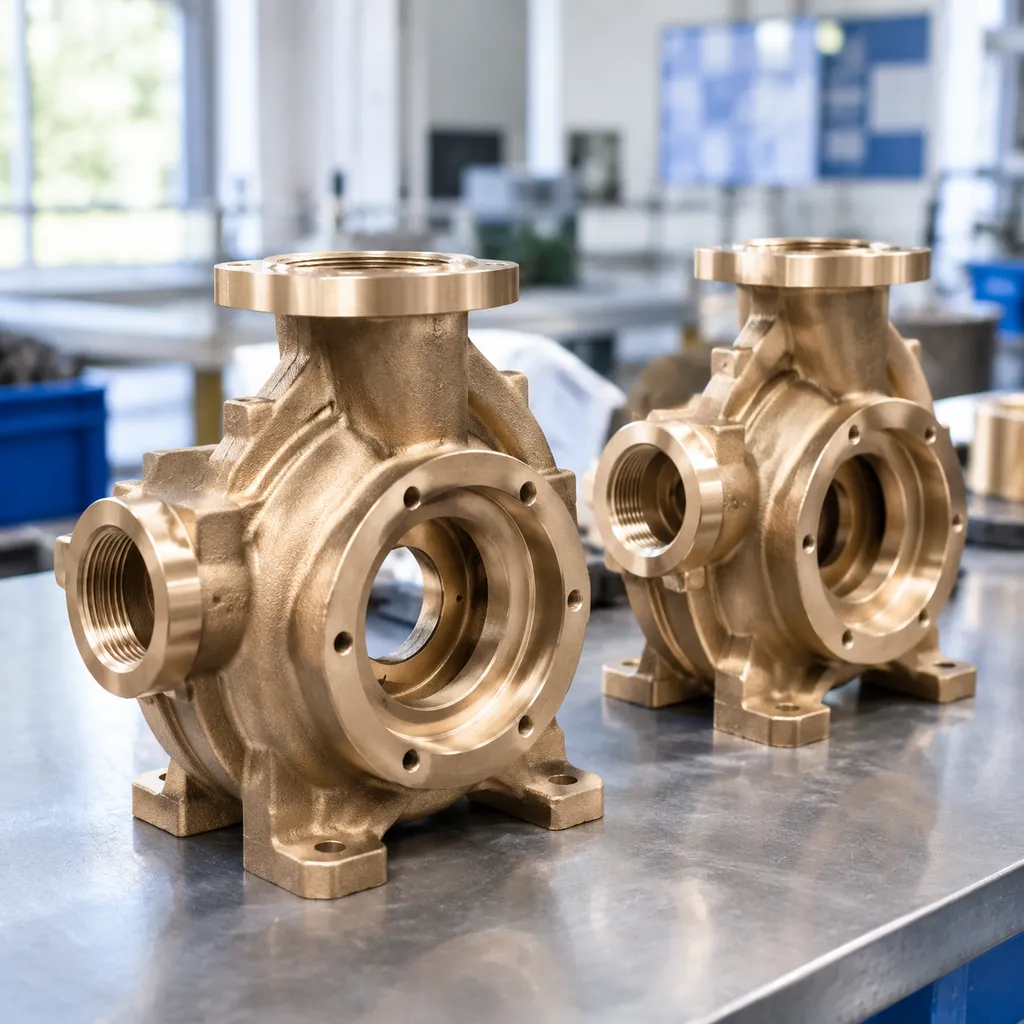
This cast stainless steel valve body is produced by investment casting with CNC machining on sealing faces, flanged ends, and actuator pads. CF8/CF8M grades deliver corrosion resistance for industrial fluid control, covering ball, gate, globe, check, and butterfly OEM body programs for chemical, water, oil and gas, and process piping service.
What Is a Cast Stainless Steel Valve Body?
A cast stainless steel valve body serves as the core pressure-retaining structure in industrial piping systems. It acts as the outer shell that houses internal moving parts, directs process media, and prevents leakage into the external environment.
Core Function in Pressure Containment
The primary role of a pressure-containing valve casting is to safely withstand internal system pressures and mechanical stresses from connected piping.
- Pressure Boundary: Holds full line pressure to ensure reliable, leak-free operation.
- Fluid Control: Features precisely shaped flow channels to optimize pressure drops and flow rates.
- Structural Support: Absorbs external thermal expansion, vibration, and mechanical loads.
Why Casting Is the Preferred Manufacturing Method
Casting - particularly investment casting - is the standard production route for an industrial valve housing due to several key advantages:
- Complex Internal Geometries: Forms intricate internal fluid passages, contours, and ports that are impossible or cost-prohibitive to machine from solid forged block.
- Material Efficiency: Reduces raw material waste, significantly lowering unit costs when using high-grade alloys.
- Design Flexibility: Allows custom wall thicknesses, reinforced stress points, and integrated mounting pads in a single, continuous pour.
- Scalability: Ensures uniform dimensional accuracy and high corrosion resistance across medium to high-volume production runs.
Primary Components Integrated Within the Cast Housing
A completed cast stainless steel valve body integrates several critical functional zones directly into its single-piece construction:
- Valve Seat Area: Cast and machined surfaces where the sealing element (ball, disc, or plug) makes contact.
- Flow Chambers: Internal flow paths engineered to minimize turbulence and cavitational wear.
- Bonnet/Cover Flange: The top opening that mates with the valve bonnet to hold the stem and packing assembly.
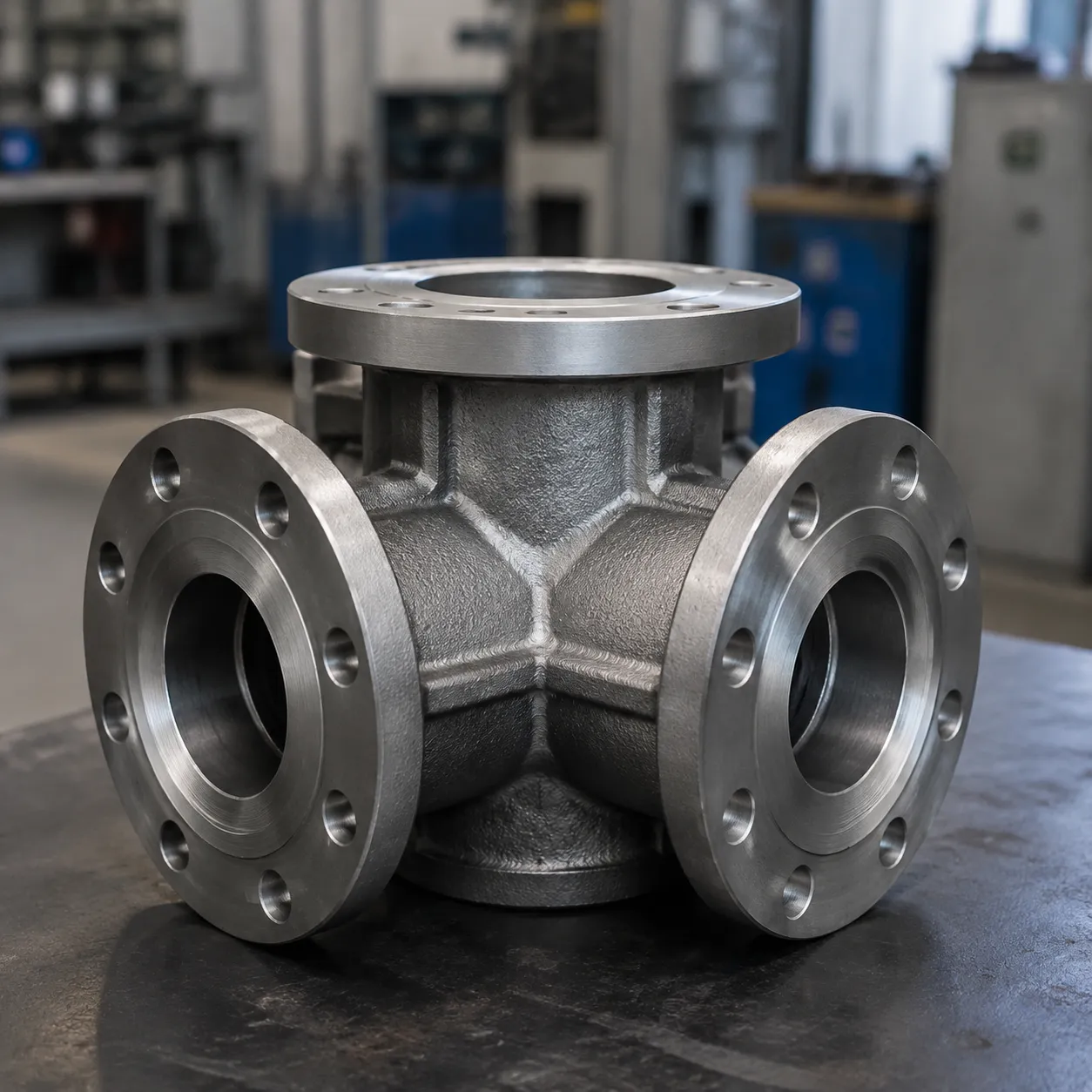
- End Connections: Cast flanged ends, threaded ports, or weld ends for connecting directly into the pipeline.
- Actuator Mounting Pads: Integrated external platforms for securing manual handwheels, gearboxes, or automated actuators.
Typical Program Specs (Cast Valve Body Parts)
| Parameter | Typical Range |
|---|---|
| Process | Silica sol investment casting + CNC machining (sand/shell for larger bodies) |
| Alloys | CF8 / CF8M / CF3 / CF3M / duplex on request / austenitic stainless steel baseline |
| Size window (investment) | Approx. 0.5" to 8" for precision bodies; larger via sand/shell routes |
| Pressure service | Class 150-600 class programs common; high pressure designs per ASME B16.34 wall rules |
| End connections | Flanged ends, threaded, socket weld, butt weld |
| Related parts | Valve bonnet / cover flange faces, seat areas, mounting pads |
Common Casting Methods for Stainless Steel Valve Bodies
Selecting the right process for a cast stainless steel valve body directly impacts structural integrity, dimensional accuracy, and overall production cost. Three primary methods cover typical valve sizes, geometries, and operational pressure requirements.
Investment Casting (Lost Wax)
For high-precision, intricate valve components, investment casting using a silica sol binder is the preferred choice.
Tight Tolerances: Produces complex internal flow passages with minimal secondary machining needed.
Superior Finish: Achieves exceptionally smooth surface finishes, reducing fluid drag and wear.
Ideal Use: Standard small-to-medium stainless steel ball valve bodies, globe valves, and check valves.
Sand Casting
When producing large-diameter industrial valves, sand casting provides a cost-effective, heavy-duty manufacturing route.
High Scalability: Accommodates massive valve housings over 24 inches or weighing several tons.
Tooling Economy: Offers low initial pattern costs for custom or low-volume runs.
Production Support: Specialized industrial molds and precision casting techniques help maintain uniform wall thickness across thick body sections.
Shell Mold Casting
Shell mold casting balances the precision of investment casting with the economy of sand casting for mid-sized valve bodies.
Enhanced Accuracy: Uses resin-bonded sand to form thin, rigid molds, yielding tighter tolerances than green sand.
Consistent Quality: Minimizes surface inclusions and dimensional drift on medium-sized gate and butterfly valve bodies.
Comparing Casting Methods
| Casting Method | Surface Finish (Ra) | Structural Density | Typical Valve Size | Dimensional Tolerance |
|---|---|---|---|---|
| Investment Casting | 3.2 - 6.3 µm | Very High (Minimal porosity) | 0.5" to 8" | Tight (±0.1 mm) |
| Shell Mold Casting | 6.3 - 12.5 µm | Medium-High | 4" to 16" | Moderate (±0.3 mm) |
| Sand Casting | 12.5 - 25 µm | Medium | 8" to 48"+ | Standard (±0.8 mm) |
Key Stainless Steel Material Grades for Valve Bodies
Selecting the right alloy for a cast stainless steel valve body directly impacts operational lifespan, pressure handling, and fluid compatibility. Industry-standard austenitic stainless steel and duplex alloys match specific working conditions:
- CF8 (Cast 304 Stainless Steel): The standard ASTM A351 CF8 valve body provides cost-effective strength and solid corrosion resistance for utility water, food processing, and general chemical lines.
- CF8M (Cast 316 Stainless Steel): Formulated with added molybdenum, an ASTM A351 CF8M casting resists pitting, crevice corrosion, and chloride attack in aggressive chemical manufacturing and marine environments.
- CF3 & CF3M (Low-Carbon Grades): Featuring a maximum carbon content of 0.03%, a CF3M low carbon valve body prevents carbide precipitation during welding, maintaining full corrosion resistance across heat-affected zones.
- Duplex & Super Duplex Alloys: Designed for extreme high-pressure services, sour gas (H2S), and harsh desalination facilities, duplex grades deliver twice the yield strength of standard austenitic steels along with superior stress-corrosion cracking resistance.
Stainless Steel Valve Body Material Comparison
| Alloy Grade | Wrought Equivalent | Core Strengths | Ideal Applications |
|---|---|---|---|
| CF8 | 304 SS | Reliable baseline corrosion resistance, economical | Water treatment, HVAC, light industrial fluids |
| CF8M | 316 SS | Excellent chloride & pitting resistance | Petrochemical, marine systems, aggressive chemicals |
| CF3 / CF3M | 304L / 316L | High intergranular weldability, no post-weld decay | Welded piping manifolds, sanitary processing |
| Duplex | 2205 / 2507 | Exceptional yield strength, high pressure resistance | Offshore oil & gas, pulp processing, high-pressure pumps |
Types of Valves Utilizing Cast Stainless Steel Bodies
Custom cast stainless steel valve body components support diverse fluid control systems with structural integrity and leak-tight pressure containment across a wide range of valve configurations.
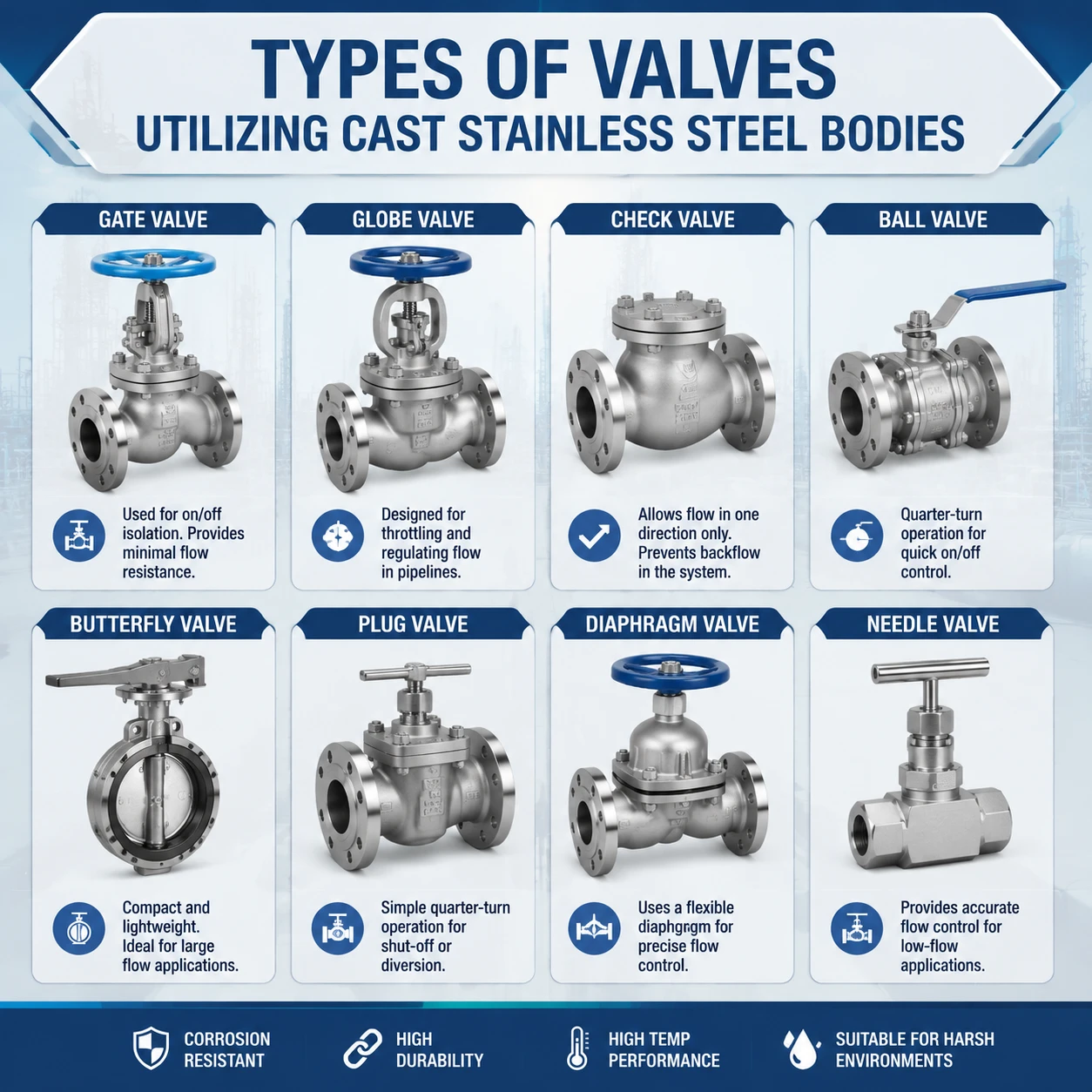
Cast Stainless Steel Ball Valve Bodies
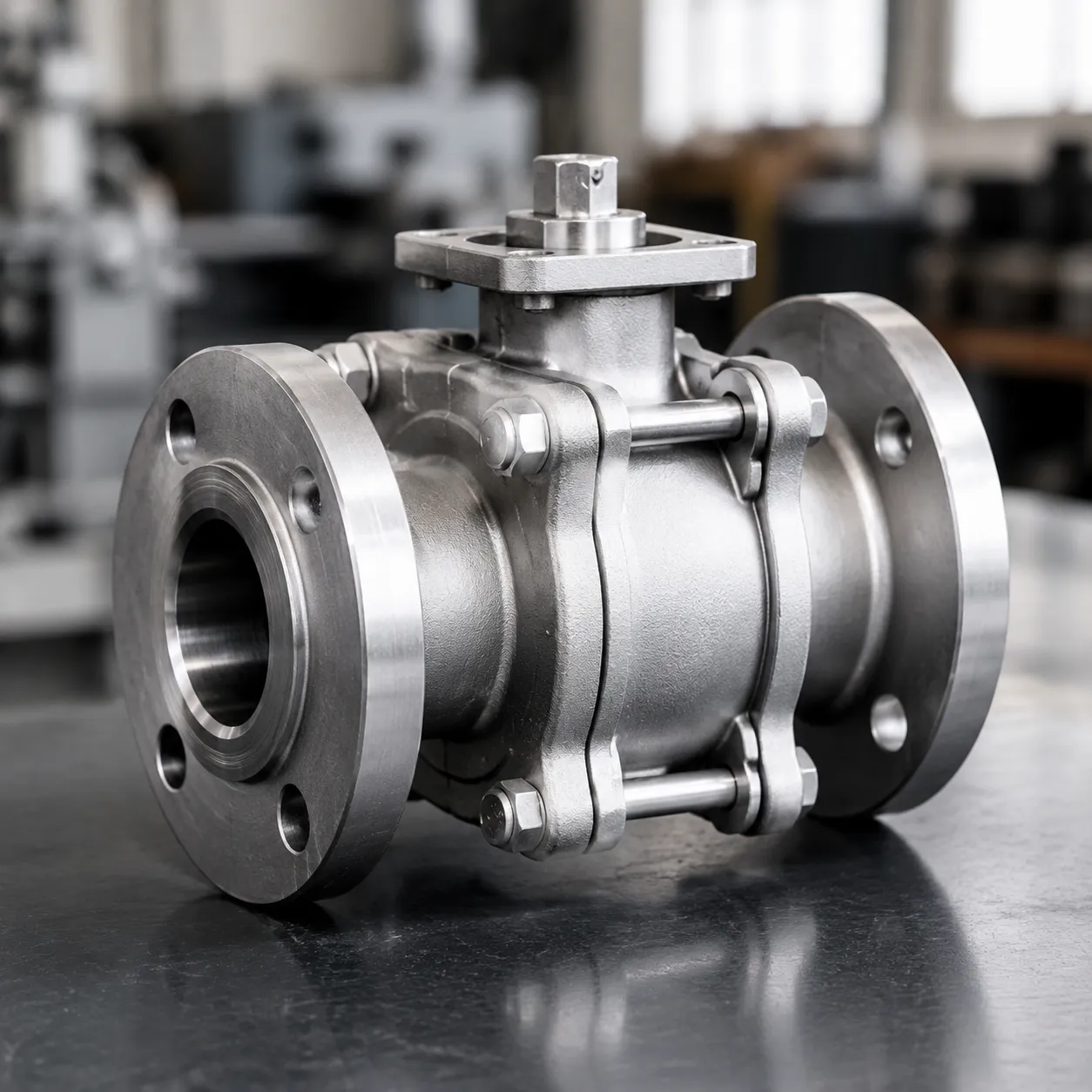
Quarter-turn ball valves require a rigid, pressure-tight shell to support frequent cycling and high inline stress. Two-piece, three-piece, and flanged stainless valve body casting designs in 304 and 316 grades cover common ball-valve programs. The hero photo for this page shows a three-piece cast stainless steel ball valve body with flanged ends, bolting hardware, and an actuator mounting pad - matching typical OEM parts for industrial fluid control. A casted stainless steel guide helps identify the ideal material grade and wall thickness for aggressive media.
Cast Stainless Steel Gate and Globe Valve Bodies
Linear flow control valves rely on heavy-duty housings to handle sustained system pressure and throttling forces:
Gate Valve Bodies: Engineered with robust wall sections and integrated valve bonnet flanges to withstand pipe stress during full-open or full-close operation.
Globe Valve Bodies: Feature complex internal flow paths. Utilizing precision investment casting valve body process yields smooth inner walls, reducing pressure drop and fluid turbulence.
Cast Stainless Steel Check Valve Bodies
Check valves automatically prevent backflow, placing dynamic mechanical stress on internal seat areas. Cast housings for swing, lift, and dual-plate check valves provide the dimensional stability needed to maintain tight seal alignment despite sudden flow reversals.
Cast Stainless Steel Butterfly and Plug Valve Bodies
Compact valve designs require tight casting tolerances to ensure proper sealing disc and plug movement:
Butterfly Valve Bodies: Produced in wafer, lug, and flanged ends configurations. Following an industry-standard casting stainless steel guide ensures minimal machining allowances and precise seat dimensions.
Plug Valve Bodies: Cast with high structural density to prevent leakage and withstand high operational torque in slurry and chemical applications.
CNC Machining Options for Cast Stainless Steel Valve Body Parts
After casting, CNC machining brings sealing faces, stem bores, thread forms, and gasket lands to drawing tolerance. For the three-piece flanged ball valve body shown on this page, flange faces and the actuator mounting pad are finish-machined while as-cast surfaces keep the investment-cast texture.
- Sealing & gasket faces: Flatness and surface finish for leak-tight flanged ends and bonnet joints.
- Stem / packing interfaces: Bore and guide diameters aligned to the valve bonnet and packing stack.
- Threads & ports: Internal threading and porting for absolute sealing compliance on instrument and body fittings.
- Dimensional reports: CMM or gauge checks against OEM drawings before shipment of valve body parts.
Pairing silica sol investment casting with CNC finish machining is the same route used on custom fluid-control bodies that need complex internal passages plus tight machined datums - without machining the entire housing from solid bar. See also investment casting vs CNC machining when choosing near-net cast vs full-machine strategies.
Key Features of Cast Stainless Steel Valve Bodies
A cast stainless steel valve body is built for long-term performance under demanding industrial conditions. Casting supports optimized flow paths and uniform wall thickness, delivering distinct physical and chemical benefits for high-demand fluid control systems.
Valve Body Highlights
- Cast-plus-machined faces: Investment-cast flow geometry with CNC-finished flanges and pads for reliable sealing.
- Corrosion-ready alloys: CF8/CF8M and low-carbon grades keep corrosion resistance in chloride and chemical media.
- Service-ready geometry: Seat areas, flow chambers, and valve bonnet interfaces cast as one housing for industrial valve builds.
Superior Corrosion Resistance
Cast stainless valve housings excel in aggressive chemical and marine environments where standard metals degrade quickly:
Pitting and Crevice Resistance: Molybdenum and chromium content forms a self-healing passive oxide film that resists localized chloride attack.
Galvanic Protection: Uniform alloy compositions minimize electrochemical reactions when paired with surrounding pipework.
Wide Temperature and Cryogenic Endurance
Whether handling superheated steam or liquefied natural gas (LNG), an austenitic corrosion resistant valve body maintains its mechanical integrity. The material resists thermal shock during rapid temperature swings and preserves its notch toughness even in deep cryogenic services.
High Strength-to-Weight Ratio
Stainless steel casting process advantages support optimized material distribution to reduce unnecessary weight while boosting pressure capacity. This design resilience provides:
Shock Endurance: Absorbs sudden pressure surges, thermal expansion, and water hammer.
Structural Stability: Prevents body distortion under heavy line loads and piping stress.
Extended Service Life in Continuous Operations
In non-stop processing lines, unexpected valve failures lead to expensive downtime. Cast stainless steel valve bodies deliver exceptional wear resistance and low maintenance requirements, drastically lowering total operating costs over years of continuous service.
Industry Standards and Quality Testing for Valve Castings
Every cast stainless steel valve body is manufactured and inspected against core global standards so pressure containment stays reliable in aggressive systems.
Key Compliance Standards
- ASME B16.34 Valve Specifications: Governs fundamental design rules, pressure-temperature ratings, wall thickness allowances, and pressure testing limits.
- ASTM A351: The primary benchmark for heavy-duty austenitic castings, covering popular grades like ASTM A351 CF8M casting and CF8.
- ASTM A743: Specifies requirements for general corrosion-resistant iron-chromium and nickel-base alloy castings.
Quality Testing & Material Verification
Comprehensive testing and quality assurance protocols throughout production help eliminate casting flaws before assembly:
| Inspection Type | Method Used | Key Benefit |
|---|---|---|
| NDT (Non-Destructive Testing) | Radiographic (RT), Ultrasonic (UT), Liquid Penetrant (PT) | Detects internal shrinkage, subsurface gas porosity, and surface micro-cracks. |
| Pressure Testing | Hydrostatic shell testing valve & pneumatic bubble test | Proves structural shell strength and valve body tightness well above working limits. |
| Chemical Analysis | PMI (Positive Material Identification) & MTR documentation | Uses handheld XRF spectroscopy to confirm exact alloy chemistries and guarantee full traceability. |
Systematic non-destructive testing valve casting practices help every housing maintain structural integrity under demanding industrial loads.
Key Industrial Applications for Cast Stainless Steel Valve Bodies
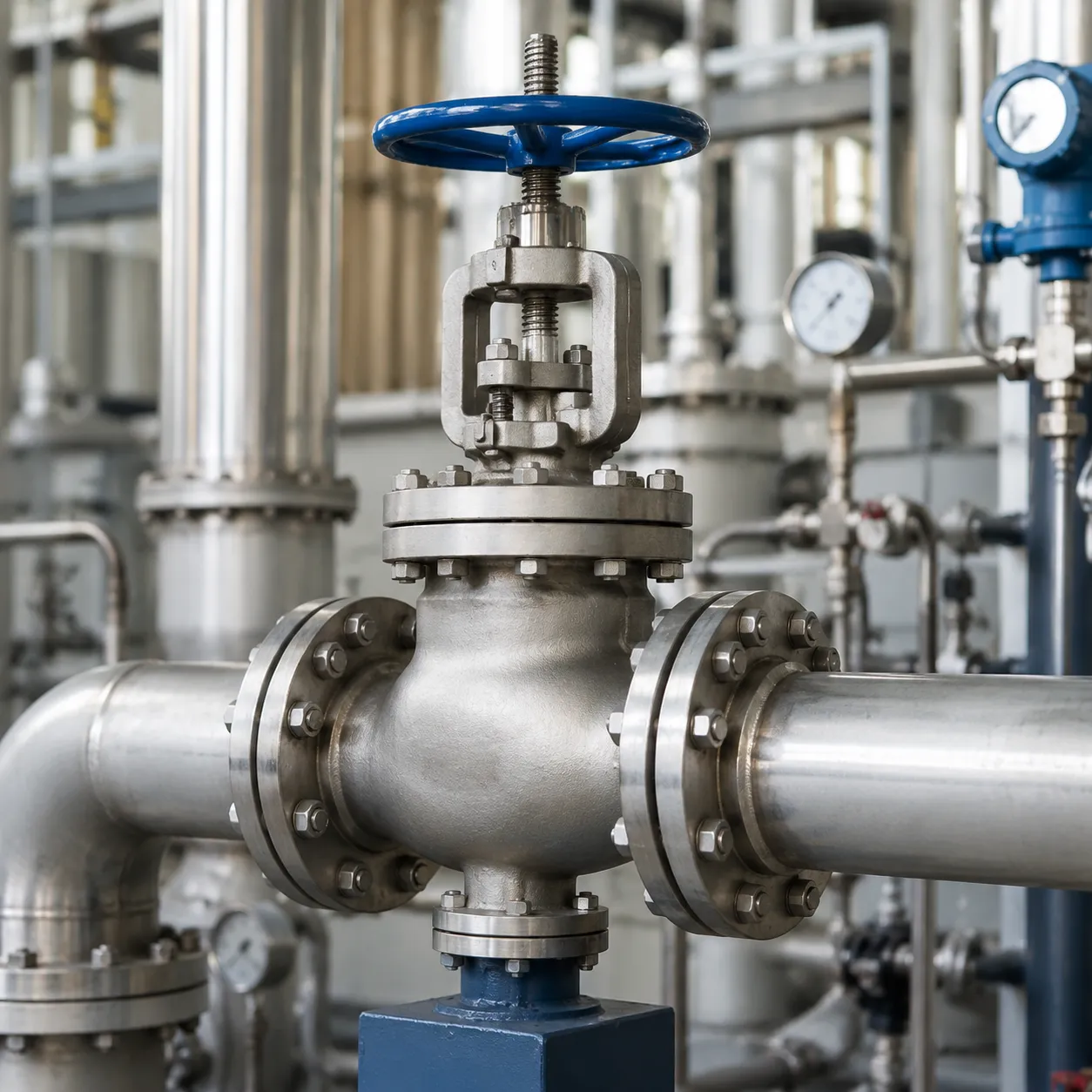
Every cast stainless steel valve body is engineered for harsh operational environments across critical global industries. These pressure-containing valve castings deliver long-term reliability and precise fluid control in high-demand facilities.
Oil, Gas, and Refining Processes
- Upstream & Downstream Pipelines: Built to handle sour gas (H2S), crude oil, and volatile hydrocarbons under high pressure.
- Thermal Resistance: Maintains structural integrity during severe temperature fluctuations in refinery hydrocracking and gas processing units.
Chemical and Petrochemical Manufacturing Lines
- Corrosive Media Containment: Resists aggressive acids, caustic chemicals, and organic solvents utilizing advanced alloy cast steel manufacturing standards and ASTM A351 CF8M casting grades.
- Leak Prevention: Maintains tight sealing and corrosion resistance to prevent hazardous leaks and chemical oxidation in continuous chemical processing.
Water Treatment, Desalination, and Wastewater Systems
- Chloride & Brine Defense: Eliminates pitting and crevice corrosion caused by high salinity in seawater reverse osmosis (SWRO) plants.
- Municipal Wastewater: Resists hydrogen sulfide gas, severe abrasion, and organic waste buildup in high-volume treatment facilities.
Food, Beverage, and Pharmaceutical Hygienic Processing
- Sanitary Design: Features smooth surface finishes that prevent bacterial buildup, fully supporting CIP (clean-in-place) operations.
- Purity Assurance: Prevents batch contamination in beverage bottling, dairy processing, and high-purity active pharmaceutical ingredient (API) lines.
How to Select the Right Cast Stainless Steel Valve Body
Selecting the ideal cast stainless steel valve body requires matching the component directly to the system's operational demands. Four core parameters guide safety, efficiency, and long service life in fluid control applications.
1. Match Material Grade to Media Corrosiveness
Analyze the chemical composition, concentration, and temperature of the process fluid:
CF8 (304): Best for general utility, water, and mild chemical services.
CF8M (316): The industry standard for aggressive chemicals, acids, and marine environments.
CF3 / CF3M: Low-carbon versions that prevent carbide precipitation during welding.
Duplex / Super Duplex: Superior choice for high-chloride media and extreme pressure conditions.
Proper stainless steel material choice and optimization balances chemical resistance with machinability and overall production cost.
2. Calculate Design Pressure and Temperature Limits
Peak system parameters should be verified against ASME B16.34 pressure-temperature ratings. While a corrosion resistant valve body holds up across broad temperature ranges, allowable working pressure drops as temperature rises. The selected pressure class must handle potential system spikes and thermal cycles without shell deformation.
3. Select Appropriate End Connections
- Flanged Ends: Ideal for medium to large piping where frequent maintenance or valve removal is required. For cast-iron butterfly programs, compare the sibling butterfly valve cast iron body.
- Threaded Ends: Cost-effective solution for small-diameter, lower-pressure instrument and utility lines.
- Socket Weld & Butt Weld Ends: Designed for high-pressure, high-temperature applications where absolute leak prevention is mandatory.
4. Factor in Wall Thickness Allowances
Determine minimum wall thickness standards based on design pressure codes, then apply an additional corrosion allowance margin. Accounting for localized wear and chemical erosion ensures the pressure-containing casting retains structural integrity throughout its intended operational life.
Inspection, Maintenance, and Preventing Defects in Cast Stainless Steel Valve Bodies
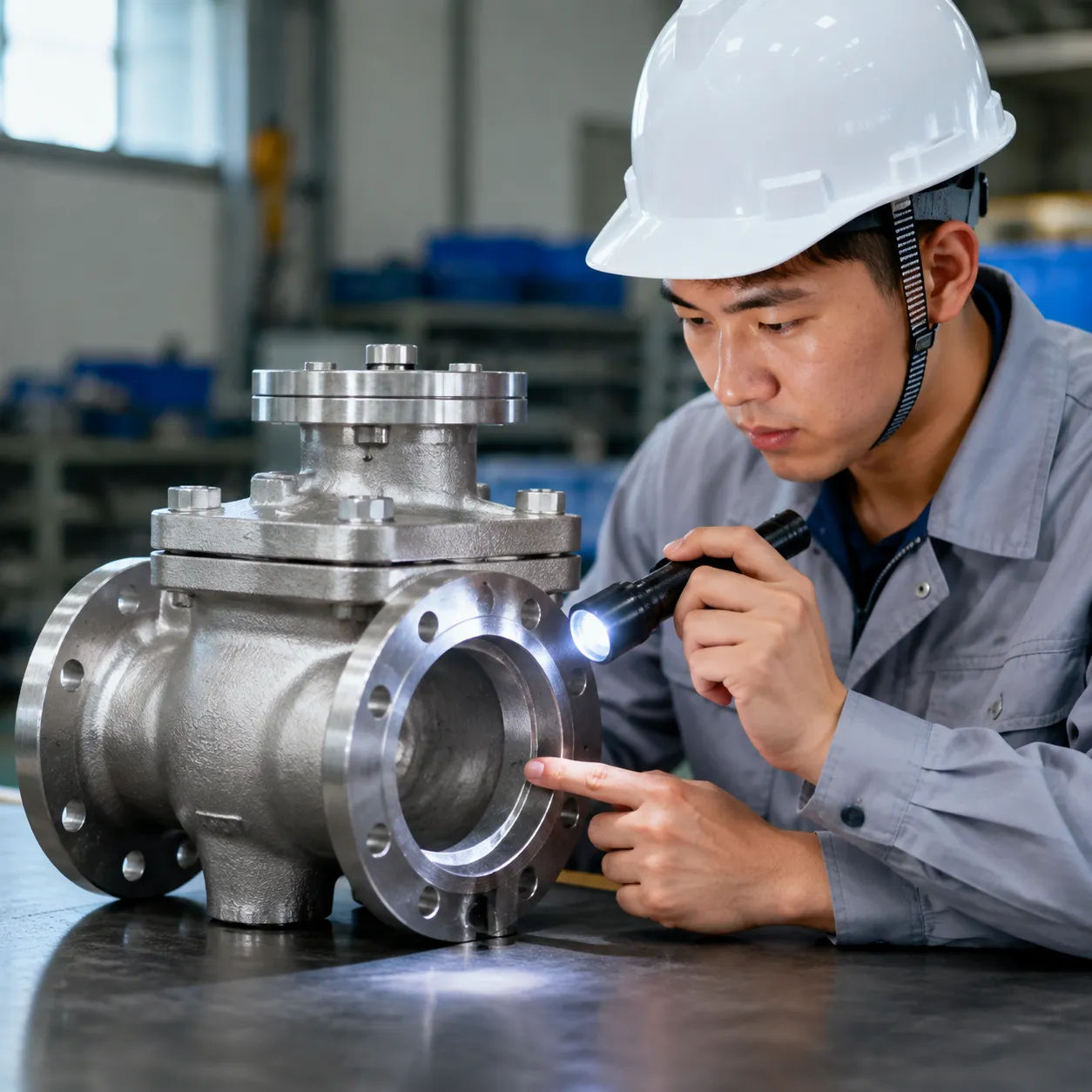
Long-term reliability for a cast stainless steel valve body depends on proactive quality control, early defect identification, and standardized field maintenance. Strict inspection protocols keep every pressure-containing housing within long-term operating demands without structural degradation.
Common Valve Casting Flaws
- Porosity: Gas bubbles trapped during pouring create micro-voids. Controlled vacuum degassing and precise mold venting reduce gas porosity.
- Shrinkage Cavities: Uneven cooling causes localized metal contraction. Optimizing riser placement and thermal gating prevents internal shrinkage voids in thick wall sections.
- Inclusions: Sand or non-metallic slag trapped inside the metal matrix weakens structural integrity. Ceramic filtration and clean melting practices ensure clean valve walls.
Rigorous quality control through precision metal casting methods helps detect and mitigate these flaws before valves enter service.
Routine Maintenance and Surface Protection
- Ultrasonic Wall Thickness Monitoring: Regular non-destructive ultrasonic testing measures internal wall wear from erosion or corrosive media, keeping the valve above ASME B16.34 minimum thickness limits.
- Surface Passivation Treatments: Chemical pickling and nitric acid passivation remove free iron impurities from the surface, rebuilding the passive chromium oxide layer for maximum corrosion resistance in chemical environments.
Guidelines for Repair Welding and Re-Qualification
- Defect Removal: Minor surface flaws must be completely ground down to sound metal and verified using liquid penetrant testing (PT) before welding.
- Qualified Welding Procedures: Repairs should use low-heat GTAW (TIG) processes with matching filler metals (such as ER316L for CF8M castings) to prevent carbide precipitation.
- Hydrostatic Re-Testing: Any field-welded cast stainless steel valve body must undergo a mandatory hydrostatic shell test at 1.5 times the rated working pressure to re-qualify its structural safety.
Order Custom Cast Stainless Steel Valve Body Parts
As a professional precision casting service provider, Vast Material supplies OEM/ODM cast stainless steel valve body parts from silica sol investment casting through CNC machining, NDT, and documented material traceability.
| Quote input | What to send |
|---|---|
| Drawings | 2D/3D, material grade (CF8/CF8M/duplex), pressure class, end connection |
| Process preference | Investment casting (silica sol), shell, or sand for large industrial valve bodies |
| Machining scope | Flange faces, stem bore, threads, actuator pad, or full finish-machine package |
| QA package | MTR/PMI, PT/RT/UT as specified, hydrostatic shell test when required |
Request a quote with drawings, alloy, pressure class, and annual volume for custom valve body parts.
Cast Stainless Steel Valve Body FAQs
Cast vs. Forged Valve Bodies
| Feature | Cast Stainless Steel Valve Body | Forged Valve Body |
|---|---|---|
| Manufacturing Process | Liquid metal poured into engineered molds | Solid metal shaped under mechanical pressure |
| Design Flexibility | Handles complex internal flow paths easily | Limited to simpler shapes; requires heavy machining |
| Cost Efficiency | Lower cost for complex shapes and medium-to-large sizes | Higher material waste and machining expenses |
| Primary Use Case | Broad industrial fluid control and corrosive media | Extreme high-pressure and severe service lines |
Standard Specifications for Stainless Valve Castings
Castings are manufactured and tested in strict compliance with globally accepted standards:
- ASTM A351: Primary standard for austenitic, pressure-containing castings like CF8 and CF8M.
- ASME B16.34: Governs valve pressure-temperature ratings, minimum wall thickness, and shell testing requirements.
- ASTM A743: Standard for general corrosion-resistant alloy castings used in chemical processing.
Preventing Porosity in Precision Valve Castings
Gas and shrinkage porosity are controlled during investment cast stainless steel valve body production through precise process control:
- Silica Sol Shell Molding: Ensures uniform heat dissipation and tight dimensional tolerances.
- Optimized Gating & Risers: Designed with simulation software to maintain continuous liquid feed during solidifying.
- Vacuum Degassing: Removes dissolved gases from the melt prior to pouring.
- NDT Verification: Radiography and ultrasonic testing verify full internal density.
Field Welding Damaged Valve Housings
Field repair welding is feasible but depends on the specific alloy grade:
- Low-Carbon Grades (CF3 / CF3M): Can be field-welded without post-weld heat treatment because they resist carbide precipitation.
- Standard Grades (CF8 / CF8M): Major weld repairs require solution annealing to restore original corrosion resistance.
- Quality Mandate: Always re-run hydrostatic shell testing after any field welding.
CF8M vs. Wrought 316 Stainless Steel
While CF8M is designed as the cast equivalent to wrought 316 stainless steel, their microstructures differ slightly:
- CF8M: Formulated for casting with 19Cr-10Ni-2Mo. Contains 5% to 20% ferrite to prevent hot cracking during solidification.
- 316 Stainless Steel: Formulated for forged or rolled products with a fully austenitic structure and slightly higher nickel content for formability.
What Valve Body Parts Are Typically Supplied?
Programs commonly supply the pressure-containing body casting plus finish-machined sealing faces. Related parts can include the mating valve bonnet interface, seat rings prepared for assembly, and actuator mounting pads - shipped as body-only OEM parts or kits per drawing.
Why Specify Silica Sol Investment Casting?
Silica sol shells deliver fine surface finish and tight dimensional control on small-to-medium industrial valve bodies, reducing machining stock while preserving complex internal fluid-control passages that are costly to machine from billet.