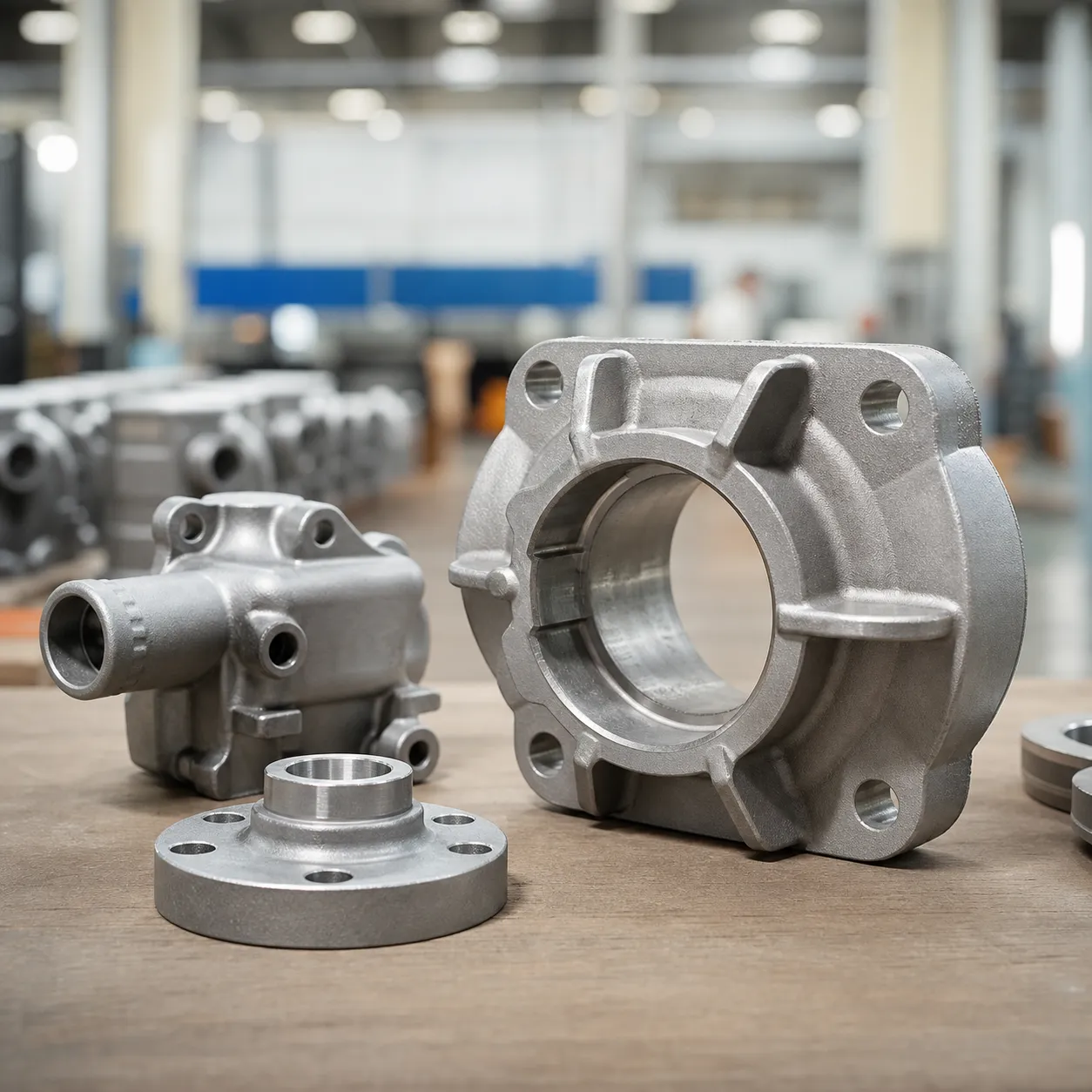
Overview
Investment Casting Parts for Demanding OEM Applications
| Process | Size Envelope | Weight Range | Tolerance | As-Cast Surface Finish | Alloy Scope |
|---|---|---|---|---|---|
| Lost wax / ceramic shell | Up to Ø480 mm × 140 mm | 0.05 kg to 100+ kg | ISO 8062-3 CT4–CT7 | Ra 3.2–6.3 μm | Stainless, superalloys, carbon & alloy steel, Al/Cu |
For alloy-family programs centered on chloride or chemical media rather than multi-industry OEM hardware, see also corrosion-resistant alloys for investment casting.
These investment casting parts support aerospace, automotive, and fluid-handling programs that need tight tolerances, near-net dimensional accuracy, and precision metal casting geometry with a durable ceramic shell route — reducing unnecessary machining and material waste versus hog-outs.
Why Choose Vastmaterial
Supply-chain risk drops when near-net-shape casting, secondary CNC, heat treatment, and surface finishing stay under one quality system.
| Core Advantage | Value Delivered to Global OEMs |
|---|---|
| Global Footprint | International logistics and localized customer support for reliable lead times. |
| Vertical Integration | Single-source execution from rapid prototyping to final CNC machining and surface finishing. |
| Near-Net-Shape Production | Complex geometries cast with extreme dimensional accuracy, drastically reducing secondary tooling. |
World-Class Quality Standards & Certifications
As an ISO 9001 AS9100 certified foundry, strict quality control protocols apply at every stage to serve high-spec aerospace, automotive, and industrial sectors.
- ISO 9001: Certified quality management across all design and casting operations.
- AS9100: Comprehensive quality system assurance for aerospace and aviation components.
- IATF 16949: Strict automotive quality management for continuous, high-volume production.
- ITAR Registration: Defense-grade compliance for military and regulated manufacturing programs.
Specifications for Investment Casting Parts
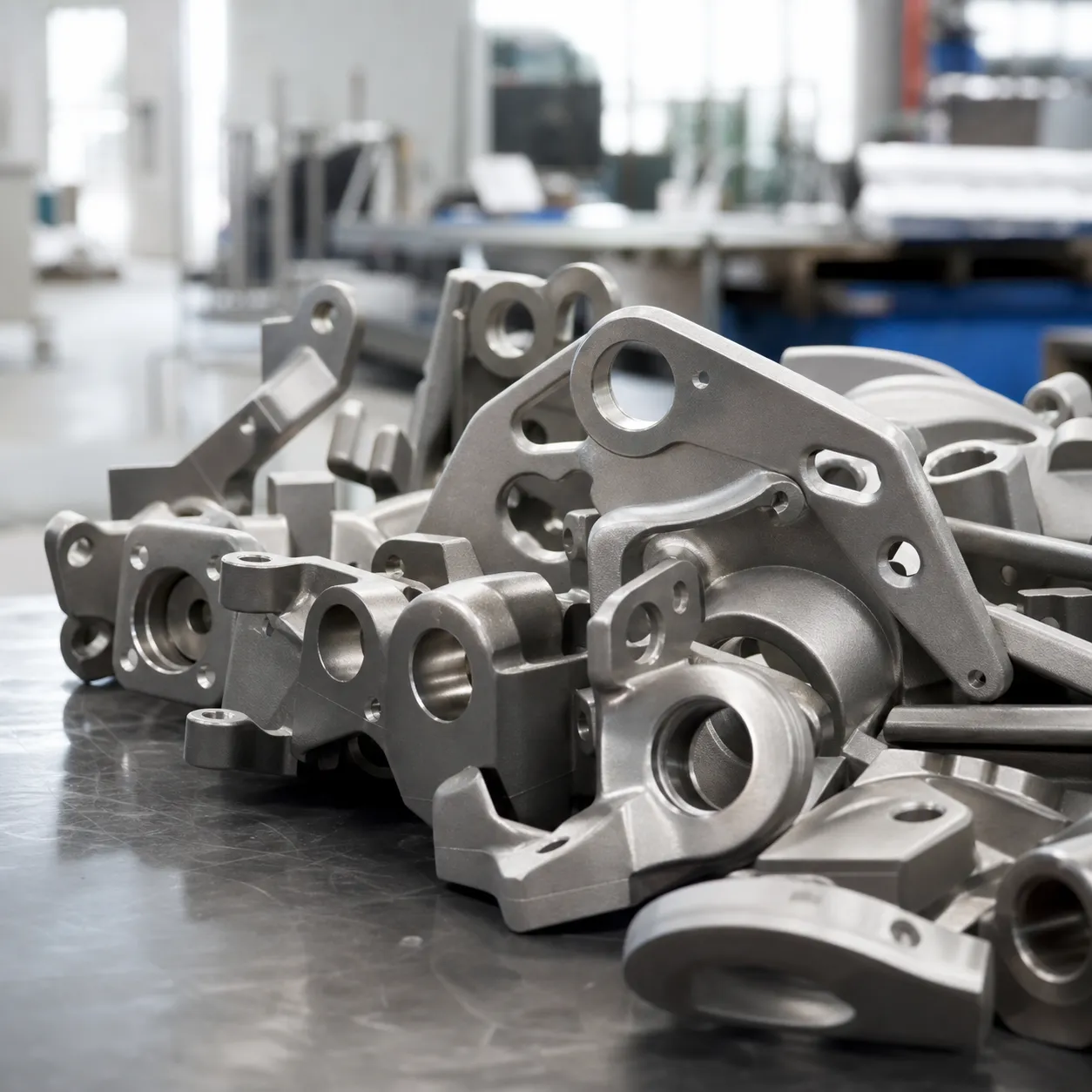
Custom investment casting parts are engineered to meet strict tolerance limits and complex geometric requirements. Production lines handle micro-components through large-scale industrial hardware, keeping exceptional dimensional accuracy across every batch.
Size Envelopes & Weight Capabilities
Whether the design needs thin wall casting features or heavy-duty structural sections, foundry equipment covers a broad manufacturing footprint. For wall-thickness trade-offs and DFM limits, see the guide on investment casting minimum wall thickness.
| Specification Parameter | Manufacturing Capacity |
|---|---|
| Maximum Dimensions | Up to Ø480 mm x 140 mm |
| Weight Envelope | 0.05 kg to 100+ kg |
| Wall Thickness | 2.0 mm – 2.5 mm typical thin-wall investment casting envelope (geometry-dependent) |
Dimensional Tolerances & Surface Finish
Tight tolerance metal components leave the shell ready for reduced post-processing. For parts operating under harsh environmental conditions or strict friction requirements, specialized surface treatment options optimize wear resistance and aesthetics.
- Standard Casting Tolerance: ISO 8062-3 CT4–CT7
- Premium Precision Tolerance: Down to ±0.003 in/in (±0.076 mm/mm)
- As-Cast Surface Roughness: Ra 3.2 μm – Ra 6.3 μm
Material Selection for Investment Casting Parts
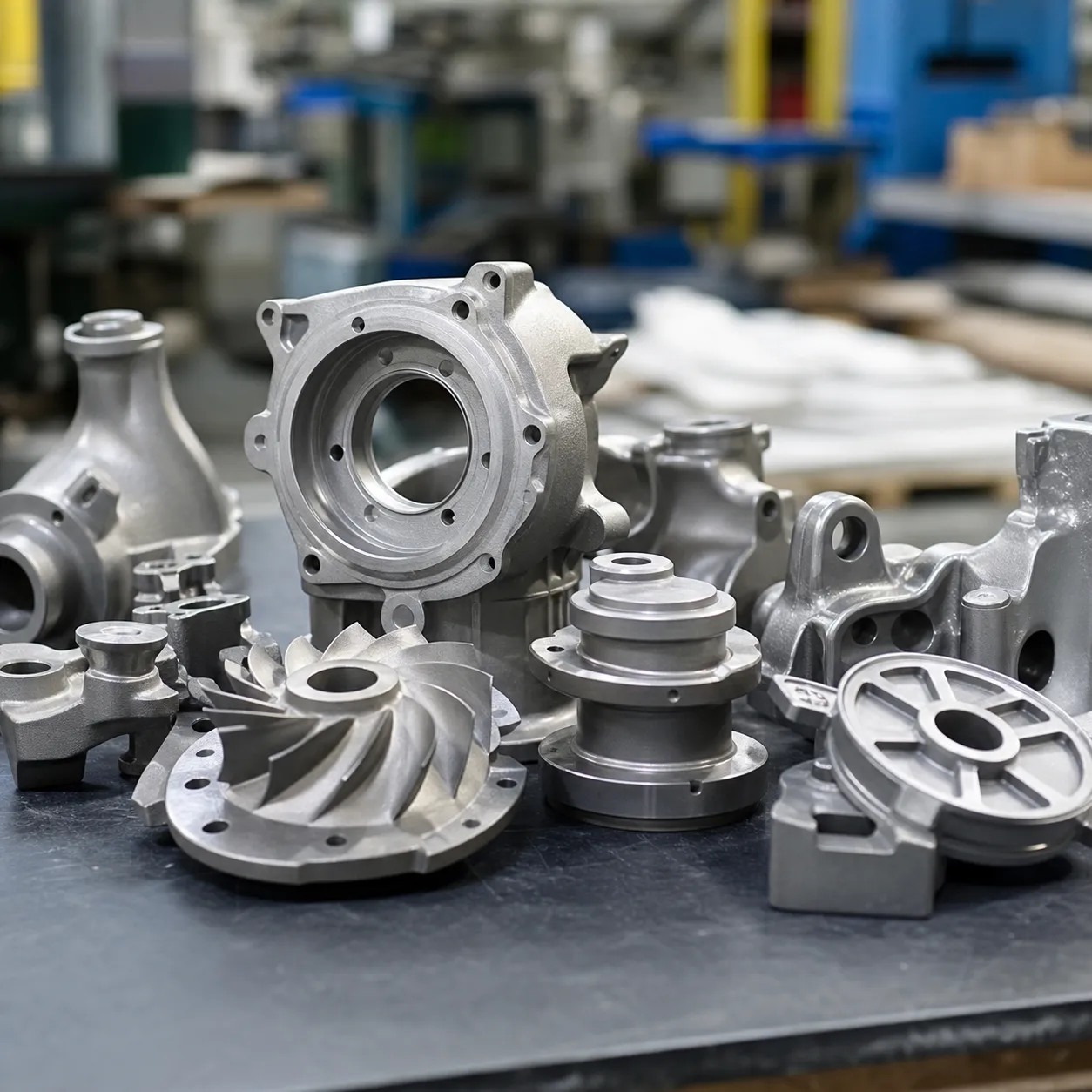
A comprehensive range of metal alloys is poured to meet exact mechanical, thermal, and corrosion requirements. Whether the design calls for extreme heat resistance or lightweight structural strength, custom investment casting parts are cast to international standards.
Stainless Steel Investment Castings
Stainless steel components deliver superior corrosion resistance, exceptional durability, and high surface quality:
316L & CF3M: Preferred for marine, chemical, and medical applications needing maximum resistance to pitting and chloride exposure.
304 & 347: Excellent all-around corrosion resistance, weldability, and elevated temperature stability.
17-4PH & 410: High-strength, precipitation-hardening grades designed for heavy-wear industrial components.
High-Temperature Superalloys
Engineered for severe thermal stress and aggressive environments, nickel- and cobalt-based alloys deliver long-term reliability:
Inconel 718: A high-temperature superalloy built for aerospace engines, gas turbines, and extreme-heat conditions.
Hastelloy: Outperforming standard steels in highly corrosive chemical processing environments.
Stellite: Exceptional resistance to severe mechanical wear, galling, and erosion.
Carbon & Low-Alloy Steels
When the application demands cost-effective toughness and structural integrity, proven steel grades are available:
WCB, 1020 & 1045: Standard carbon steels offering versatile machinability and dependable load-bearing performance.
4140 & 8620: High strength alloy options optimized for deep heat treatment, high fatigue strength, and impact resistance.
Non-Ferrous Alloys
The non-ferrous casting line delivers optimal thermal conductivity and weight savings:
Aluminum (A356 / C355): Premium strength-to-weight performance for automotive and aerospace components.
Copper & Bronze: High electrical conductivity, low friction, and excellent wear resistance for bushings, bearings, and fluid handling components.
Typical Investment Casting Parts and Component Types
SERP-facing OEM programs commonly specify the following custom metal components as investment casting parts — geometry and alloy selection follow the same lost wax / ceramic shell envelope above.
- Common rail components and other high-pressure fuel-system hardware requiring repeatable internal passages
- Rocker arms, EGR housings, and turbocharger turbine scrolls for automotive thermal cycling
- Turbine blades, nozzle rings, burner nozzles, and diffuser / turbine brackets for aerospace and industrial gas turbines
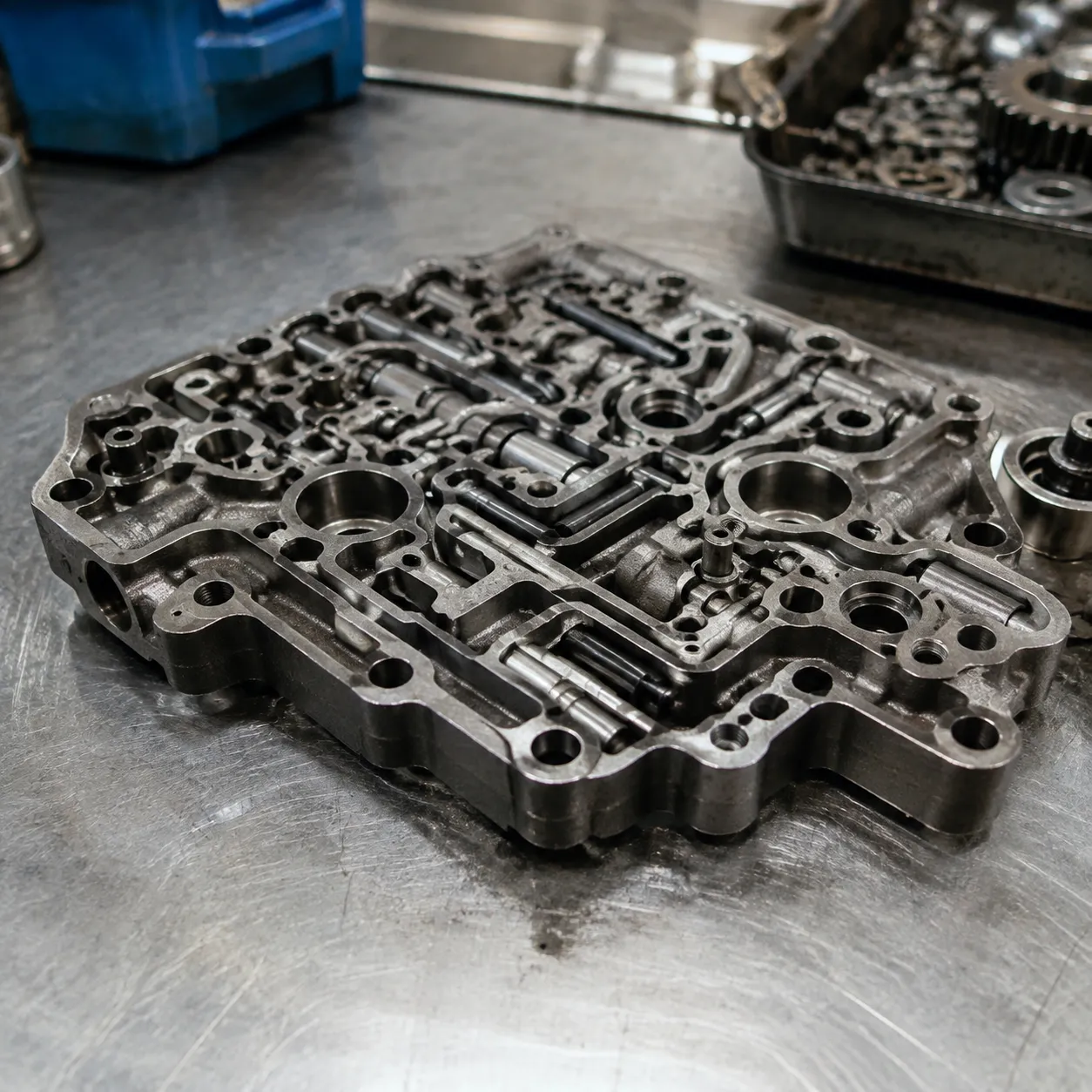
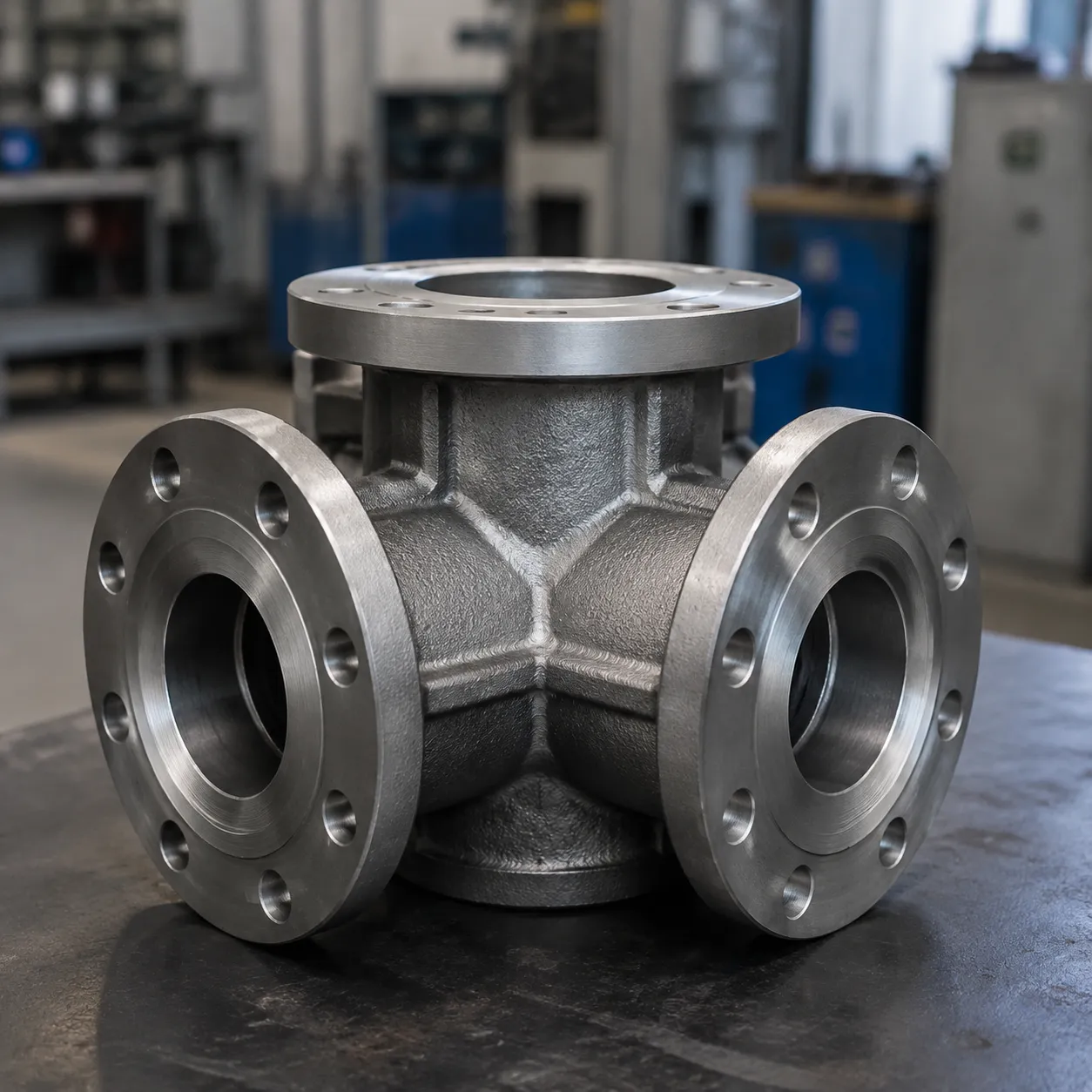
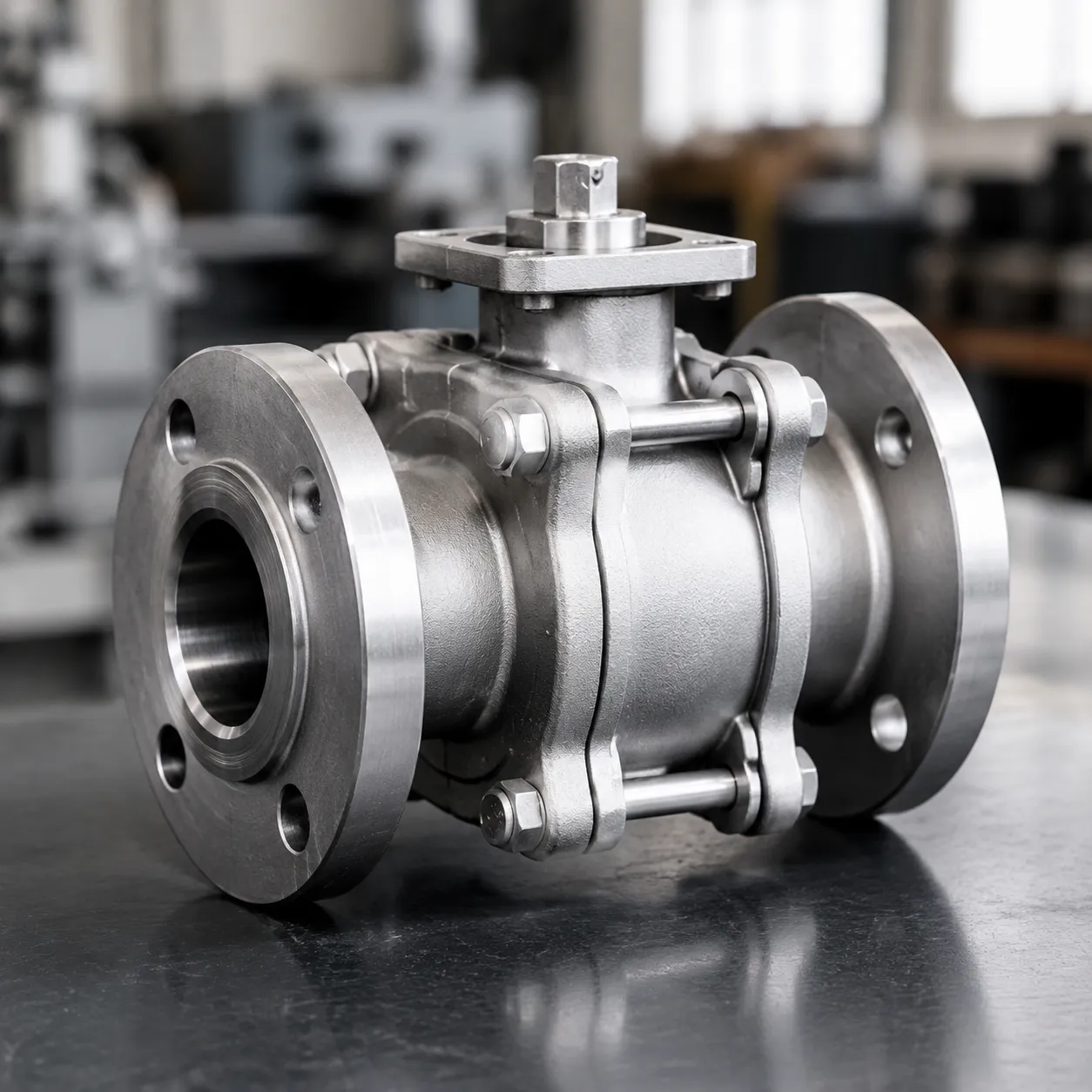
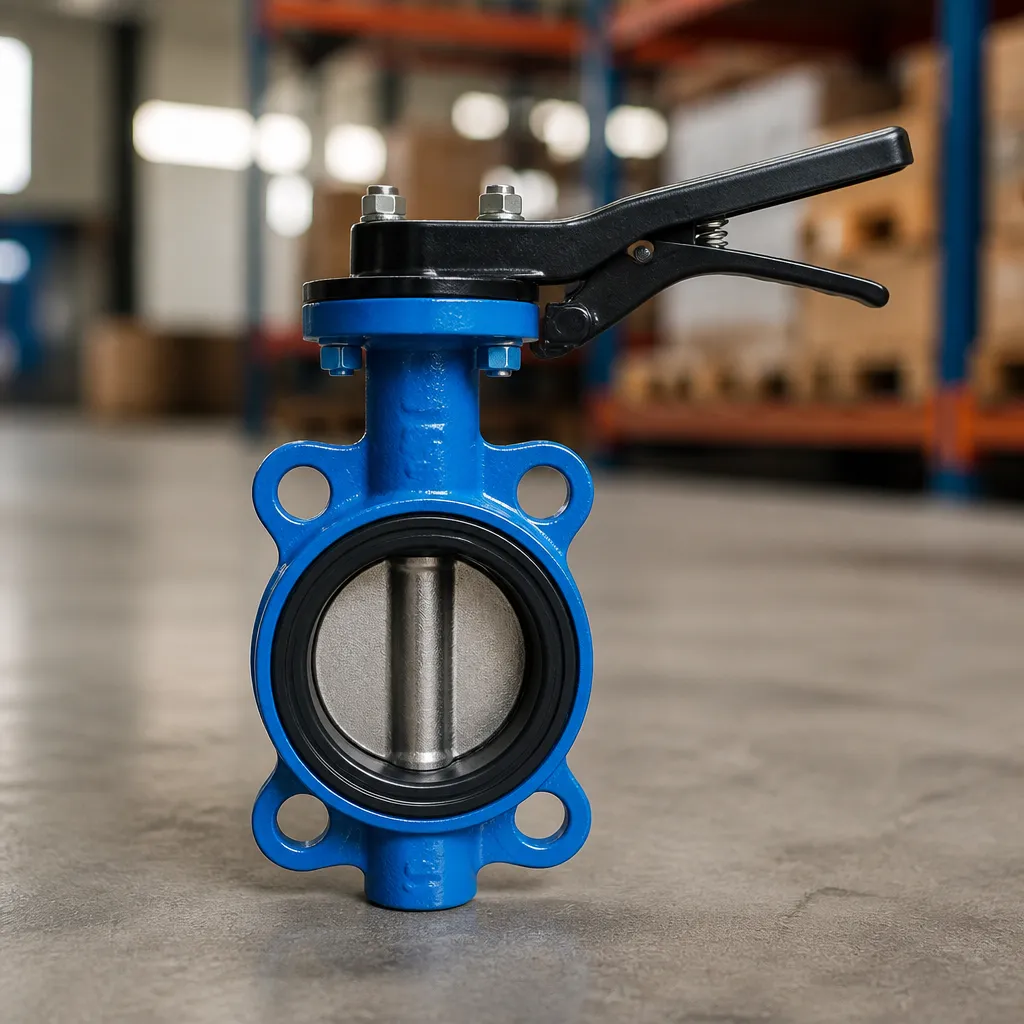
- Valve bodies, manifold blocks, pump pistons, and impellers for hydraulics and fluid handling
- Lock housings, pump bodies, and separator distributors where porosity control and as-cast surface finish matter
Investment Casting Parts Across Key Industries
Custom investment casting parts are engineered to meet strict structural, thermal, and dimensional requirements across demanding global sectors. Electrical and connector programs that need conductivity-focused alloys are covered on the sibling page for investment casting for electrical industry parts.
Aerospace & Aviation
Critical flight and engine hardware demand high strength-to-weight ratios and tight tolerances. Advanced alloy processing and aluminum investment casting routes support high-reliability components built for extreme operational stress:
Diffusers & Turbine Brackets: Built to withstand severe vibration and mechanical loads.
Lock Housings & Pump Bodies: Cast with high structural integrity and zero internal porosity.
Automotive & Commercial Vehicles
Modern drivetrain and powertrain assemblies require heat-resistant, durable metal components that lower total weight without sacrificing performance:
Turbocharger Turbine Scrolls: Designed to handle severe thermal cycling and high exhaust gas temperatures.
Rocker Arms & EGR Housings: Precision-cast for long service life under high wear and friction.
Hydraulics & Fluid Handling
Fluid power integrity relies on leak-free pressure containment and smooth internal flow channels. Specialized foundry processes produce highly dependable hydraulic hardware:
Valve Bodies & Manifold Blocks: Features intricate internal passageways with excellent surface finishes.
Pump Pistons & Impellers: Balanced for optimal dynamic flow, corrosion resistance, and high-pressure duty.
Industrial Gas Turbines & Energy
Power generation and industrial burner equipment require high-temperature alloys that survive continuous operation:
Nozzle Rings & Burner Nozzles: Poured from heat-resistant superalloys to prevent creep and oxidation.
Separator Distributors: Engineered for erosion resistance in demanding energy applications.
Advantages of Precision Metal Casting for Complex Geometries
Precision metal casting via the lost wax process is selected when complex geometry, fine detail, and repeatable surface finish outweigh the flexibility of billet machining alone.
| Factor | Investment Casting Parts | CNC from Solid / Welded Fabrication |
|---|---|---|
| Geometry | Internal passages, thin walls, organic contours in one pour | Limited by tool access and weld stack-up |
| Material utilization | Near-net shape; lower scrap on costly alloys | High scrap on hog-outs |
| Dimensional accuracy | ISO 8062-3 CT4–CT7 typical; premium ±0.003 in/in | Machine-dependent; more setups |
| As-cast surface finish | Ra 3.2–6.3 μm common | Requires secondary finishing for equivalent Ra |
| Part consolidation | Multi-piece weldments → single casting | Fixtures and weld NDT add cost |
The Lost-Wax Investment Casting Process
The step-by-step lost wax process turns complex engineering designs into high-strength, near-net-shape investment casting parts with exceptional repeatability and tight tolerances.
Tooling & Wax Pattern Injection
- Precision tooling design: High-durability metal dies tailored to exact part geometries and calculated alloy shrinkage rates.
- Pattern formation: Automated injection units inject molten wax into the tool, creating identical wax pattern replicas.
- Cluster assembly: Individual patterns are welded to a central wax sprue to build a high-efficiency tree assembly.
Ceramic Shell Building
- Refractory dipping: The wax assembly undergoes multiple dipping cycles into liquid ceramic slurry and fine stucco sands.
- Controlled curing: Each layer dries in a humidity-controlled environment, forming a durable ceramic shell around the wax cluster.
Dewaxing & High-Temperature Firing
- De-waxing process: High-pressure steam autoclaves melt and drain the wax, leaving behind a clean hollow ceramic mold.
- High-heat sintering: The hollow shells are fired in high-temperature kilns to burn out remaining organic residues and maximize thermal strength.
Precision Pouring & Solidification
- Controlled pouring: Molten metal is poured into pre-heated ceramic shells, facilitating complete mold fill even across thin wall sections.
- Material flexibility: From aluminum lost-wax pours to demanding alloy steel investment casting, controlled cooling prevents porosity and ensures uniform grain structures.
Shell Knockout & Finishing
- Shell removal: Vibratory knockout equipment and high-pressure water jets break away the ceramic shell after cooling.
- Separation & surface grinding: Individual investment casting parts are cut from the tree, gate stubs are ground flush, and components move to final inspection or secondary machining.
One-Stop Vertically Integrated Services
Every phase stays under one roof — from initial prototype design to final surface treatment. The end-to-end production model supports total quality control, shorter lead times, and lower overall project costs for investment casting parts.
Rapid Prototyping & 3D Wax Printing
Product development cycles accelerate without high initial tooling costs. Advanced 3D wax printing technology creates high-precision wax patterns directly from 3D CAD files.
- Fast Turnaround: Move from digital design to functional metal prototypes in days instead of weeks.
- Design Validation: Test form, fit, and functional performance before committing to hard production tooling.
- Cost Efficiency: Eliminate early-stage mold investments during low-volume trial production runs.
Precision CNC Secondary Machining
While near-net-shape casting drastically reduces raw metal waste, high-precision OEM applications often require ultra-strict tolerances. The in-house machine shop delivers comprehensive secondary machining services to hit exact specs.
- Strict Tolerances: Achieve tight dimensional control on critical mounting faces, fine bores, and seal channels.
- Advanced Machining Operations: Multi-axis CNC milling, precision turning, and CNC tapping for threaded features and complex hole patterns.
- Material Expertise: Dedicated tooling setups optimized for stainless steel, alloy steel, and bronze machining when cast blanks require it.
Heat Treatment Solutions
Customized heat treatment cycles maximize mechanical strength and working life around the specified metal alloy and load requirements.
- Stress Relieving & Annealing: Eliminates internal casting stress and improves post-cast machinability.
- Quenching & Tempering: Boosts structural hardness, wear resistance, and tensile strength.
- Solution & Aging Treatments: Optimizes grain structure and corrosion resistance for precipitation-hardening stainless steels and superalloys.
Surface Treatments & Electroplating
Ready-to-assemble components ship with tailored surface finishes engineered for harsh operating conditions.
| Treatment Type | Primary Benefits & Usage |
|---|---|
| Shot & Sand Blasting | Removes ceramic residue and surface scale for a clean, uniform matte finish. |
| Passivation & Pickling | Removes free iron contaminants to restore maximum corrosion resistance. |
| Electropolishing | Delivers ultra-smooth surfaces with superior micro-finish control. |
| Electroplating & Coating | Zinc, nickel, chrome plating, and powder coating for added chemical and wear protection. |
Quality Control & Testing Standards
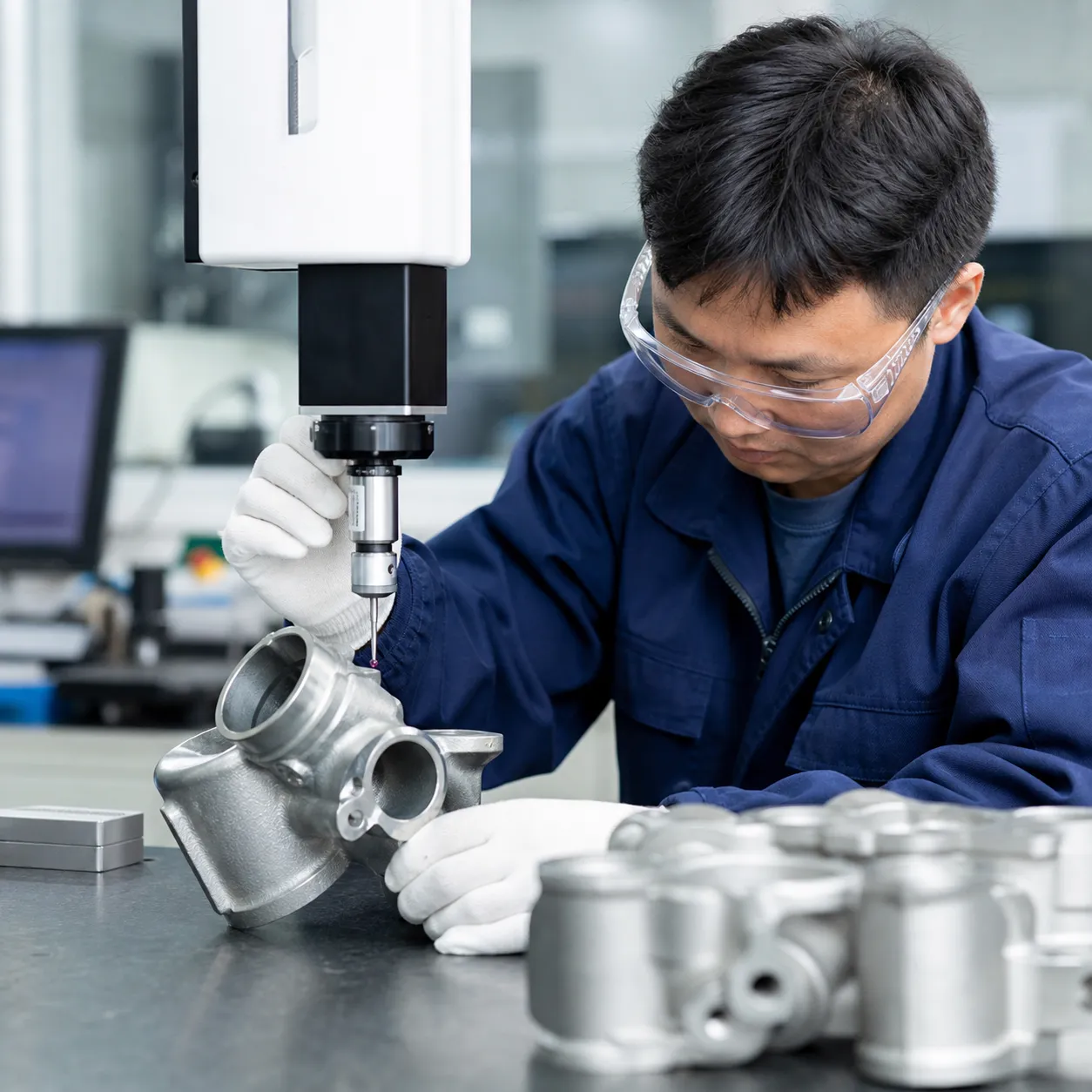
To guarantee that investment casting parts meet the strictest global industry specifications, rigorous testing and quality control protocols run at every stage of production.
Non-Destructive Testing (NDT)
Hidden flaws are caught before they impact the assembly line:
Radiographic Testing (X-Ray): Identifies internal voids, shrinkage, and gas porosity.
MPI & DPI: Magnetic Particle and Dye Penetrant inspections expose microscopic surface cracks.
Ultrasonic Testing (UT): Verifies internal structural soundness for high-stress applications.
Dimensional Verification
Extreme dimensional accuracy is secured for tight tolerance metal components:
CMM Inspection: Precise coordinate measuring machines check complex geometries against exact CAD models.
3D Scanning: Provides full-surface digital validation for rapid, flawless verification.
Metallurgical & Chemical Analysis
Exact properties of the chosen custom metal components are verified:
OES Spectrographic Analysis: Guarantees precise chemical composition and alloy integrity.
Mechanical Testing: Validates material hardness, tensile strength, and elongation performance.
Frequently Asked Questions About Investment Casting Parts
What dimensional tolerances can custom investment casting parts achieve?
Standard investment casting parts typically achieve linear tolerances within ISO 8062-3 CT4–CT7. For critical features, the precision process routinely holds tight tolerances down to ±0.003 in/in (±0.076 mm/mm). This high level of accuracy dramatically reduces or eliminates the need for initial rough machining.
Which materials offer the best performance for high-temperature casting applications?
For extreme thermal stress and high-temperature environments, nickel-based superalloys such as Inconel 718 and specialized cobalt alloy casting solutions deliver outstanding creep and corrosion resistance. Heat-resistant stainless steel grades like 310 and 347 also excel in demanding high-heat setups.
How does near-net-shape investment casting lower total machining costs?
Precision investment casting services produce complex components that closely match final dimensions straight from the ceramic mold. Near-net-shape production lowers manufacturing overhead through:
- Material Savings: Significantly reduces raw material waste, especially on high-cost alloys.
- Reduced Machine Time: Eliminates multiple roughing passes and minimizes tool wear.
- Part Consolidation: Combines multi-piece welded assemblies into a single cast component.
Ordering Information for Custom Investment Casting Parts
We are Professional Precision Casting Service Providers. Drawing packages (2D/3D), alloy preference, annual volume, target tolerance class, and required NDT level enable a firm RFQ for custom investment casting parts.
| RFQ Item | What to Provide |
|---|---|
| Geometry | STEP/IGES + critical-to-quality dimensions |
| Alloy | Stainless, superalloy, carbon/alloy steel, aluminum, copper/bronze — or performance targets |
| Volume | Prototype / pilot / annual usage |
| Finish & QC | As-cast Ra target, machining datums, NDT / CMM scope |
Request a quote for tooling lead time, sample approval, and production scheduling.