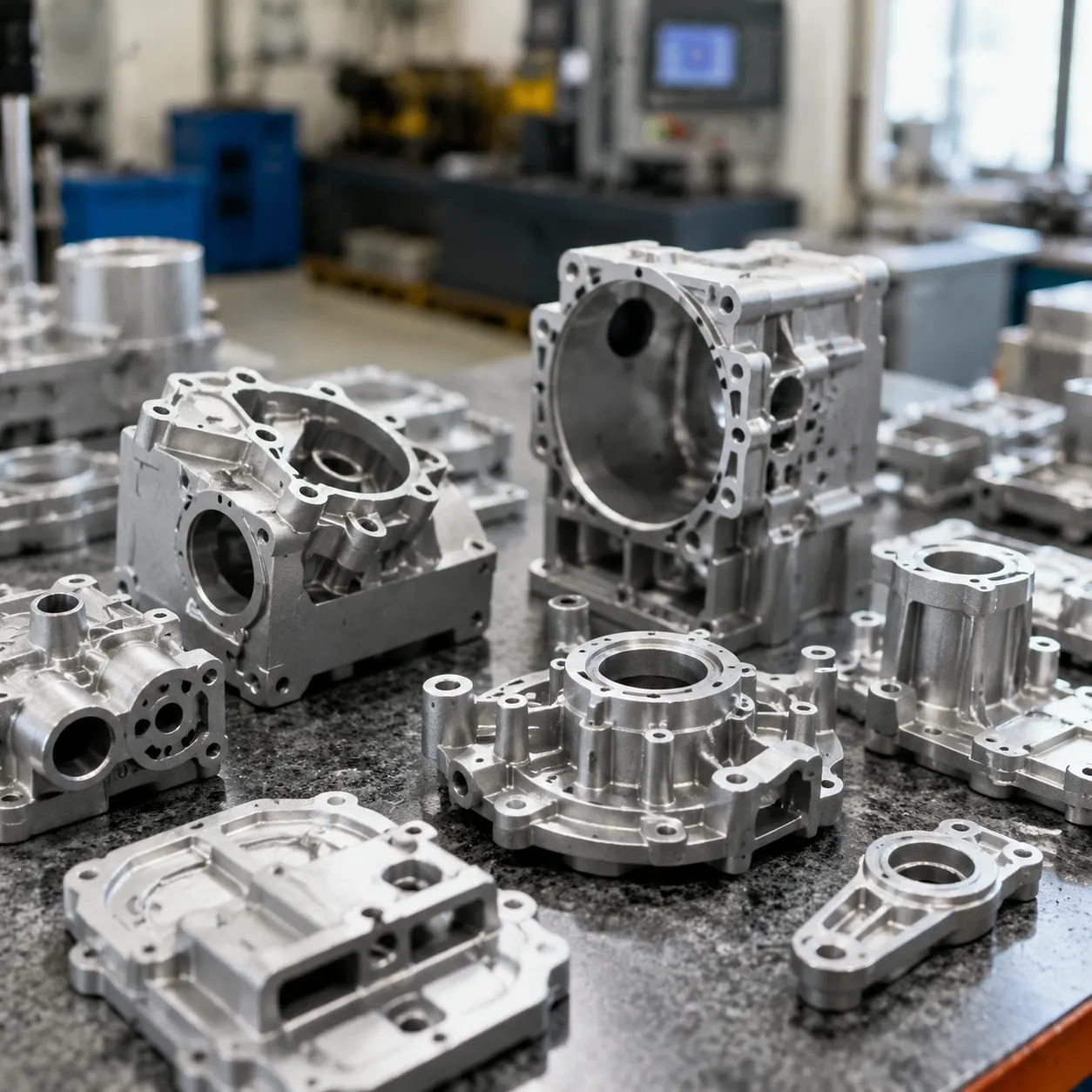
Overview
Die Cast Aluminum Alloys — OEM Supply & Alloy Selection
Die cast aluminum alloys for high pressure die casting (HPDC) include A380, ADC12, A413, B390, and 518 grades engineered for lightweight parts, corrosion resistance, and thermal conductivity. Standard production injects molten aluminum into hardened steel mold cavities at 10,000+ PSI with post-cast surface finishing and anodizing options. MOQ typically starts at 500 pcs for repeat OEM programs; alloy-specific tensile strength data and tooling quotes return within 48–72 hours.
The Precision Manufacturing Process
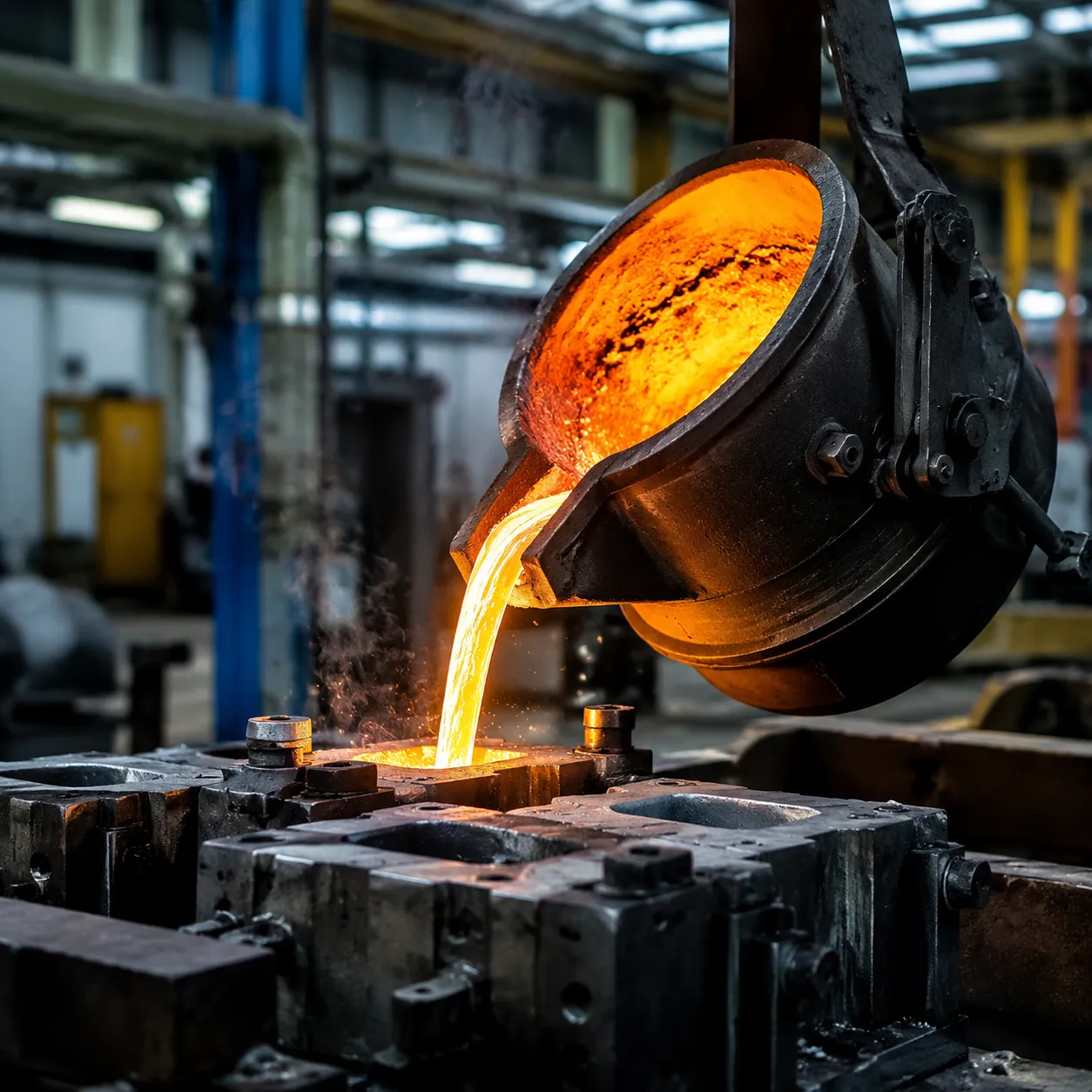
The core of high pressure die casting (HPDC) revolves around speed, pressure, and precision. The process begins by melting aluminum alloys at extreme temperatures.
- Injection: The molten aluminum is forced into a heavy-duty steel mold (or die) under immense pressure.
- Solidification: The metal cools rapidly inside the precision-engineered cavity, taking on its exact dimensions.
- Ejection: The mold opens, and the solidified component is ejected, ready for minimal secondary finishing.
This highly automated cycle allows us to produce thousands of identical, net-shape parts with remarkable consistency and minimal material waste.
Die Cast Aluminum vs. Traditional Cast Aluminum
Choosing the right casting method directly impacts part performance and production costs. While traditional methods like sand casting or permanent mold casting have their place, HPDC offers distinct advantages for high-volume, precision manufacturing.
| Feature | Aluminum Die Casting (HPDC) | Traditional Cast Aluminum |
|---|---|---|
| Production Speed | Extremely fast; ideal for high volumes | Slower cycles; manual labor intensive |
| Wall Thickness | Ultra-thin walls achievable | Thicker walls required |
| Dimensional Accuracy | Exceptionally high tight tolerances | Moderate to low precision |
| Surface Finish | Smooth, superior as-cast surface | Rougher texture; requires more machining |
Key Characteristics and Material Strengths
Die cast aluminum alloys are favored globally because they combine lightweight properties with robust mechanical performance. When engineering components for demanding environments, these materials deliver a predictable, high-strength solution.
- High Tensile Strength: Stands up to structural loads and mechanical stress without failure.
- Excellent Corrosion Resistance: Naturally forms a protective oxide layer, making it ideal for harsh environments.
- Superb Thermal Conductivity: Rapidly dissipates heat, a critical requirement for modern electronics and automotive cooling systems.
- Dimensional Stability: Maintains its exact shape and structural integrity under fluctuating temperatures and intense operational wear.
Die Cast Aluminum Alloys — Performance & HPDC Benefits
Our aluminum die casting services provide a highly efficient way to produce complex, durable components for demanding global industries. By forcing molten aluminum into reusable steel molds under immense pressure, this process delivers significant structural and commercial benefits over alternative fabrication methods.
High Strength-to-Weight Ratio
One of the biggest reasons engineering teams specify die cast aluminum alloys is their incredible strength without the structural weight of steel or iron.
- Lightweight Performance: Aluminum is roughly one-third the weight of steel, making it the premier choice for modern lightweight parts.
- Structural Integrity: Despite being lightweight, components made from these alloys withstand high operating stresses and harsh environmental impacts.
- Component Consolidation: The high mechanical strength allows us to design thinner walls and integrate multiple parts into a single, cohesive casting, reducing overall assembly weight.
Exceptional Thermal and Electrical Conductivity
Managing heat and electrical currents is a critical requirement for modern industrial components. Die cast aluminum alloys excel at transferring energy efficiently.
- Rapid Heat Dissipation: Aluminum transfers heat away from critical internal components far faster than steel or plastics. This makes it the premier material for electronic enclosures and power generation components.
- EMI/RFI Shielding: The natural properties of aluminum provide built-in shielding against electromagnetic and radio frequency interference, protecting sensitive circuitry inside the housing.
Precision, Complex Geometries, and Tight Tolerances
High-pressure die casting (HPDC) delivers unmatched dimensional accuracy, turn after turn, even at high production volumes.
- Net-Shape Manufacturing: We produce complex shapes with intricate internal details right out of the mold, eliminating the need for expensive secondary CNC machining.
- Tight Tolerances: The process holds incredibly tight dimensional tolerances consistently across production runs of thousands of parts.
- Thin-Wall Capabilities: Our advanced tooling designs allow for incredibly thin walls while maintaining structural stability, saving material costs and maximizing internal space for components.
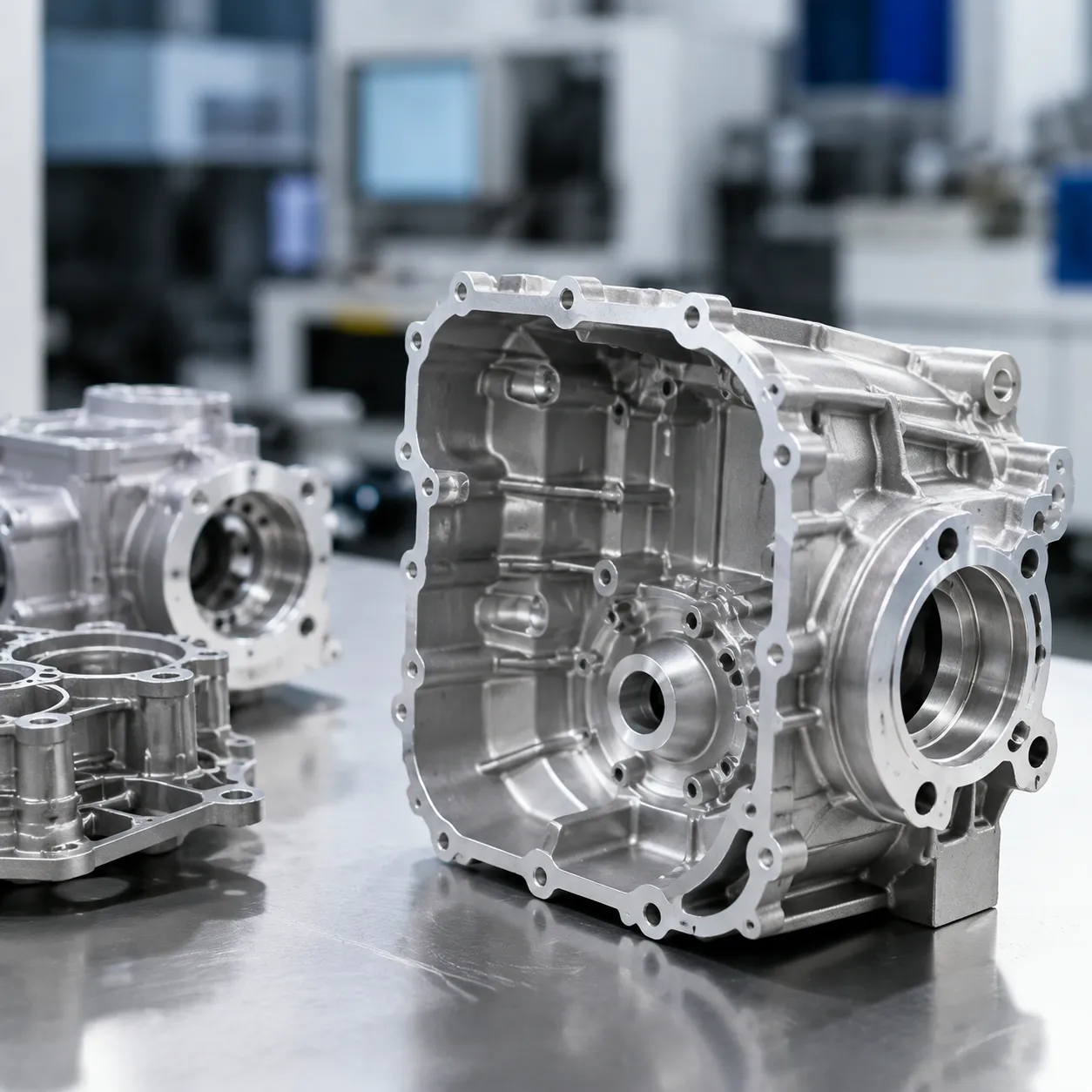
Common Aluminum Die Casting Alloys
Choosing the right material dictates the performance, durability, and cost of your final product. We work with specialized die cast aluminum alloys tailored to distinct industrial demands.
A380: The Industry Standard for Structural Parts
A380 is the undisputed workhorse of the modern high-pressure die casting industry. It offers the best balance of material properties, making it the go-to choice for structural components.
- Excellent Fluidity: Flows easily into molds, reducing casting defects.
- High Mechanical Properties: Delivers strong tensile strength and structural integrity under stress.
- Application Focus: Widely used for automotive brackets, engine brackets, and heavy-duty electronic enclosures.
A383 (ADC12): Ideal for Intricate Components
When a design requires highly complex geometries or exceptionally thin walls, A383 (often referred to as ADC12) is the ideal alternative to A380.
- Enhanced Mold Filling: The higher silicon content improves fluidity when working with molten aluminum.
- Hot Cracking Resistance: Protects complex shapes from cracking during the cooling process inside the steel mold.
- Application Focus: Perfect for intricate computer housings, specialized electronic components, and detailed hand tools — see ADC12 CNC machining aluminum parts for post-cast precision programs.
A360 & A413: Maximum Corrosion Resistance
For harsh environmental conditions, A360 and A413 provide premium protection where other alloys fail.
- A360: Offers superior ductility and excellent corrosion resistance, making it highly reliable for outdoor equipment.
- A413: Features maximum pressure tightness and exceptional fluidity due to a near-eutectic silicon mix, ensuring airtight and leak-proof performance.
- Application Focus: Marine hardware, valves, and irrigation components.
B390 & 518: High-Wear and Marine Grades
For elevated wear resistance or magnesium-alloyed marine performance, B390 and 518 extend the die cast aluminum alloys portfolio beyond standard 3xx.x grades.
- B390: High silicon and copper content delivers excellent abrasion resistance for engine blocks, brake rotors, and high-load structural castings.
- 518: Magnesium-alloyed formulation with strong corrosion resistance for marine hardware and coastal exposure.
How to Pick the Right Aluminum Alloy for Your Project
Selecting the correct grade prevents premature component failure and optimizes production costs. We recommend matching alloy grade to functional criteria before cutting die steel.
| Alloy Grade | Typical Tensile Strength | Corrosion Resistance | Fluidity & Intricacy | Primary Selection Factor |
|---|---|---|---|---|
| A380 | ~320 MPa (~46 ksi) | Moderate | Very Good | Best all-around cost and mechanical performance |
| A383 (ADC12) | ~310 MPa (~45 ksi) | Moderate | Excellent | Best for intricate, ultra-thin walls |
| A360 | ~300 MPa (~44 ksi) | High | Good | High-temperature and coastal environments |
| A413 | ~290 MPa (~42 ksi) | High | Excellent | Pressure tightness and leak prevention |
| B390 | ~330 MPa (~48 ksi) | Moderate | Good | Wear resistance and high-load applications |
| 518 | ~275 MPa (~40 ksi) | Very High | Moderate | Marine and salt-spray exposure |
The Aluminum Die Casting Process and Technologies
Manufacturing high-quality components requires a deep understanding of how die cast aluminum alloys behave under intense pressure. We utilize advanced thermal management and precise mechanical force to transform raw ingot into complex, net-shape components.
High-Pressure Die Casting (HPDC)
High-Pressure Die Casting (HPDC) is the backbone of high-volume industrial manufacturing. The process begins by melting the aluminum alloy and injecting the liquid metal into a heavy steel mold at extreme velocities.
- The Injection Phase: Powerful hydraulic pistons force the molten aluminum into the die cavity under pressures often exceeding 10,000 PSI.
- Rapid Solidification: Because steel molds conduct heat away rapidly, the aluminum freezes within seconds, creating a dense, fine-grained metallurgical structure.
- High Efficiency: This rapid cycle time makes HPDC the absolute best choice for mass-producing lightweight, thin-walled structural parts.
Tooling, Dies, and Mold Cavity Design
The success of any die cast project relies heavily on the engineering quality of the tooling. We design and CNC-machine our dies from premium, heat-resistant H13 tool steel to withstand intense thermal shock and mechanical erosion.
- Draft Angles: Incorporating a slight taper (usually 1 to 2 degrees) ensures the robot cleanly ejects the aluminum part without scraping the walls.
- Gating and Venting Systems: The paths where metal enters the mold must be perfectly balanced. Correctly placed vents allow trapped air to escape ahead of the incoming molten alloy wave.
- Cooling Channels: We drill internal water lines directly into the die blocks. Controlling the mold temperature prevents hot spots, balances shrinkage, and extends tool life.
Process Optimization and Defect Control
Controlling defects in die cast aluminum alloys requires absolute consistency across shot speeds, pressures, and temperatures. Without strict optimization, gas porosity and shrinkage voids can compromise the structural integrity of the part.
| Defect Type | Root Cause | Engineering Solution |
|---|---|---|
| Gas Porosity | Trapped air or moisture in the mold cavity | Optimize vacuum venting and adjust plunger shot speed transitions. |
| Shrinkage Cavities | Aluminum contracting unevenly as it cools | Adjust internal cooling lines and increase intensification pressure. |
| Cold Shuts | Two streams of liquid metal meeting but failing to fuse | Raise the pouring temperature of the molten aluminum or speed up the fill time. |
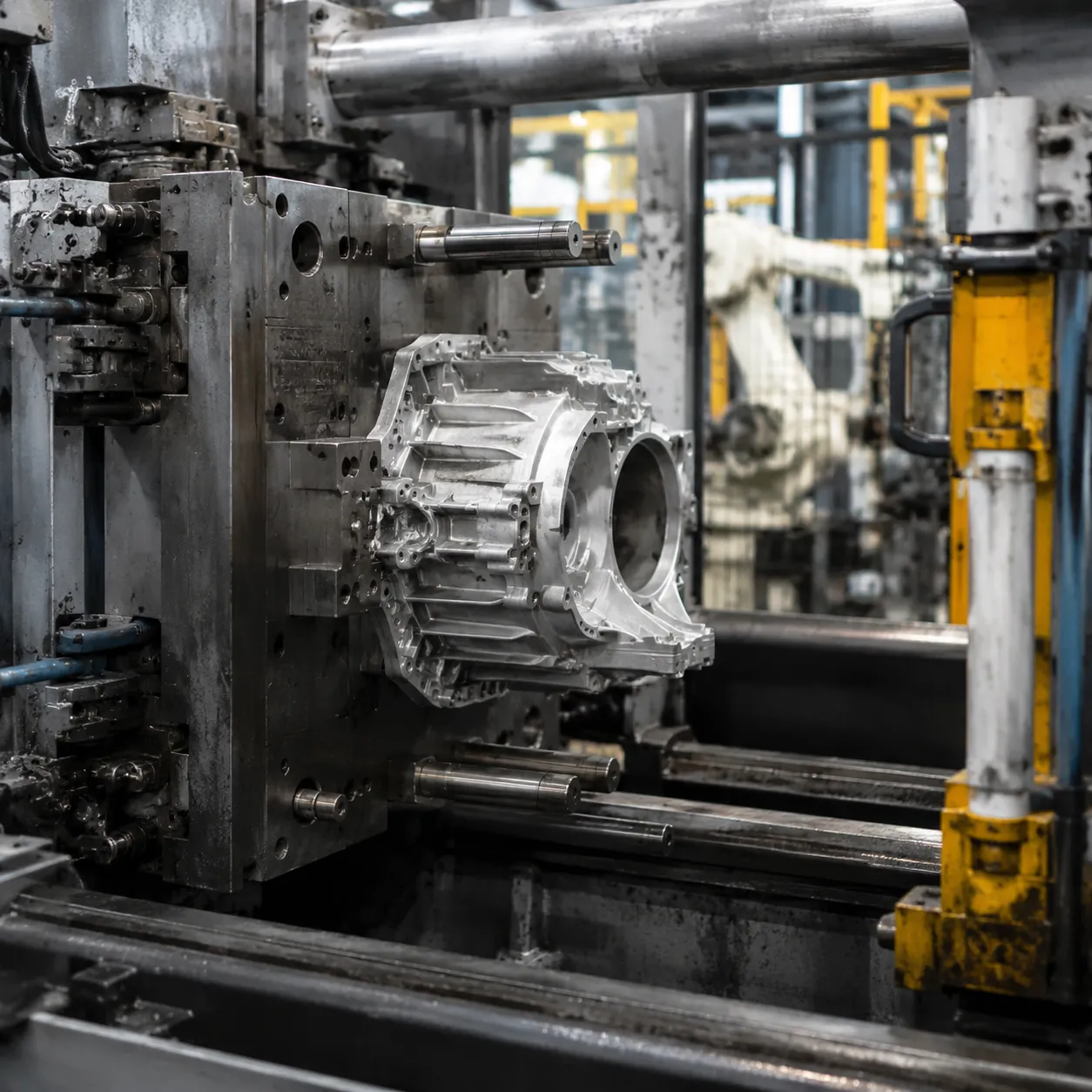
We constantly monitor real-time pressure curves and employ automated die-lubricant spraying to eliminate these variables. This rigorous process control ensures every finished component meets tight structural tolerances and maintains total leak-tightness under pressure.
Surface Finishing Options for Die Cast Aluminum
Raw die cast aluminum alloys look great right out of the mold, but applying the right surface finishing boosts durability, corrosion resistance, and visual appeal. Choosing the correct post-casting treatment ensures your parts stand up to harsh environmental demands.
Understanding the Anodizing Challenge
Anodizing creates a protective oxide layer on aluminum, but it poses a unique challenge for high-pressure die castings. The silicon content in popular die cast aluminum alloys—crucial for fluid mobility during casting—can cause cosmetic inconsistencies, dark streaks, or a dull gray finish during standard anodizing. For parts requiring a pristine decorative finish, specialized low-silicon alloys or specific hard-anodizing parameters must be utilized to achieve a uniform look.
Powder Coating and Conversion Coatings
When standard anodizing falls short, alternative coatings offer exceptional protection and color variety.
- Powder Coating: Delivers a thick, impact-resistant exterior layer that covers minor surface flaws and provides excellent UV defense.
- Chromate Conversion Coatings: Chemical films that improve corrosion protection and serve as an ideal primer for subsequent painting.
| Finishing Option | Primary Benefit | Best Used For |
|---|---|---|
| Powder Coating | High impact resistance & color variety | Automotive parts, outdoor enclosures |
| Chromate Conversion | Corrosion resistance & paint adhesion | Internal electronics components, aerospace primers |
| E-Coating | Uniform coverage in deep recesses | Complex geometries, automotive chassis parts |
| Anodizing (Type II/III) | Hard oxide layer & cosmetic color | Low-silicon alloys or controlled die-cast parameters |
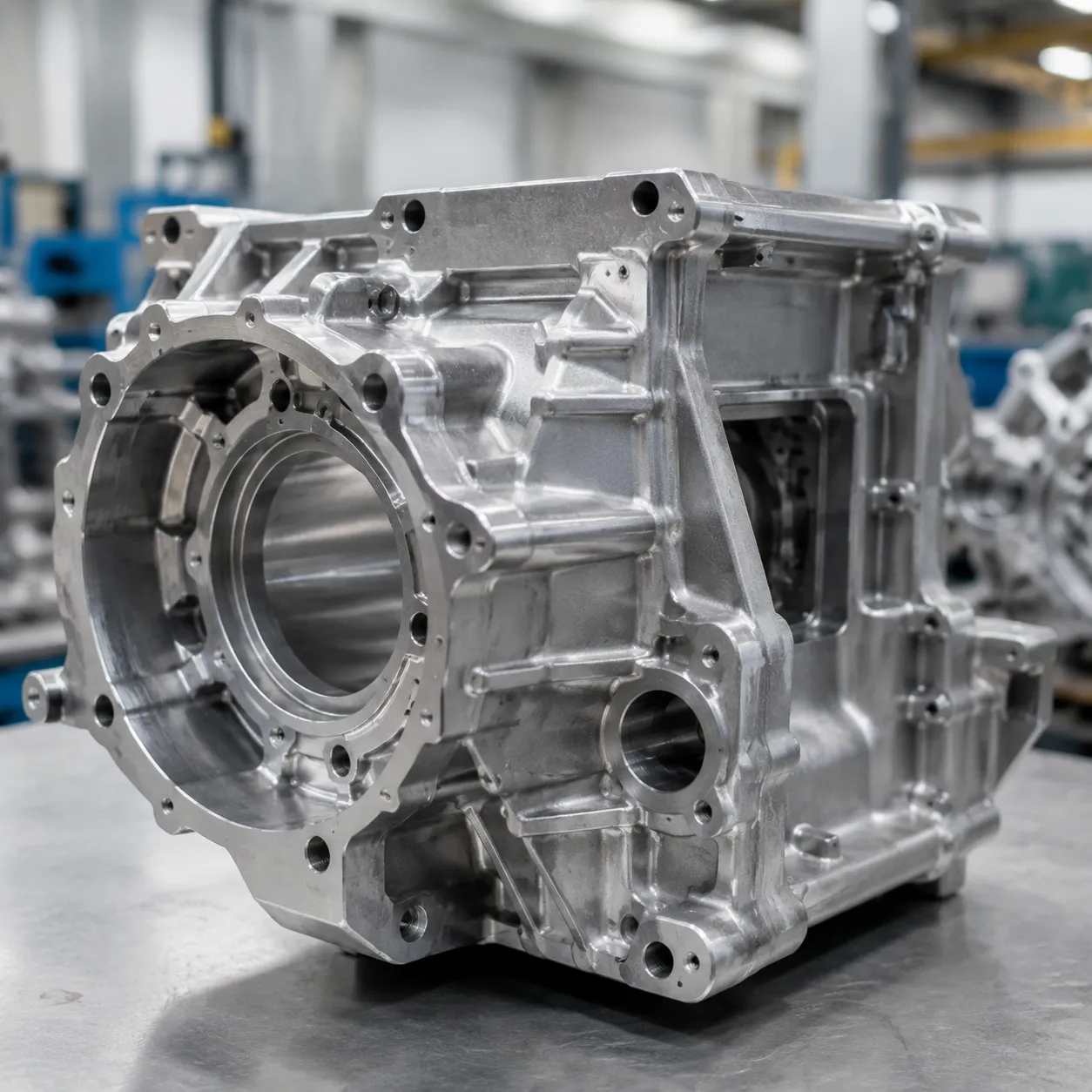
Pre-Anodizing and Secondary Surface Preparation
Achieving a flawless finish requires rigorous surface preparation. Before any coating application, parts undergo shot blasting, tumbling, or precision CNC machining to eliminate flash, gate marks, and surface porosity. Mold design that limits parting-line defects from the start minimizes aggressive secondary surface preparation and ensures a clean finish for your final components.
Die Cast Aluminum Alloys — Industrial Applications
Automotive Components and Structural Parts
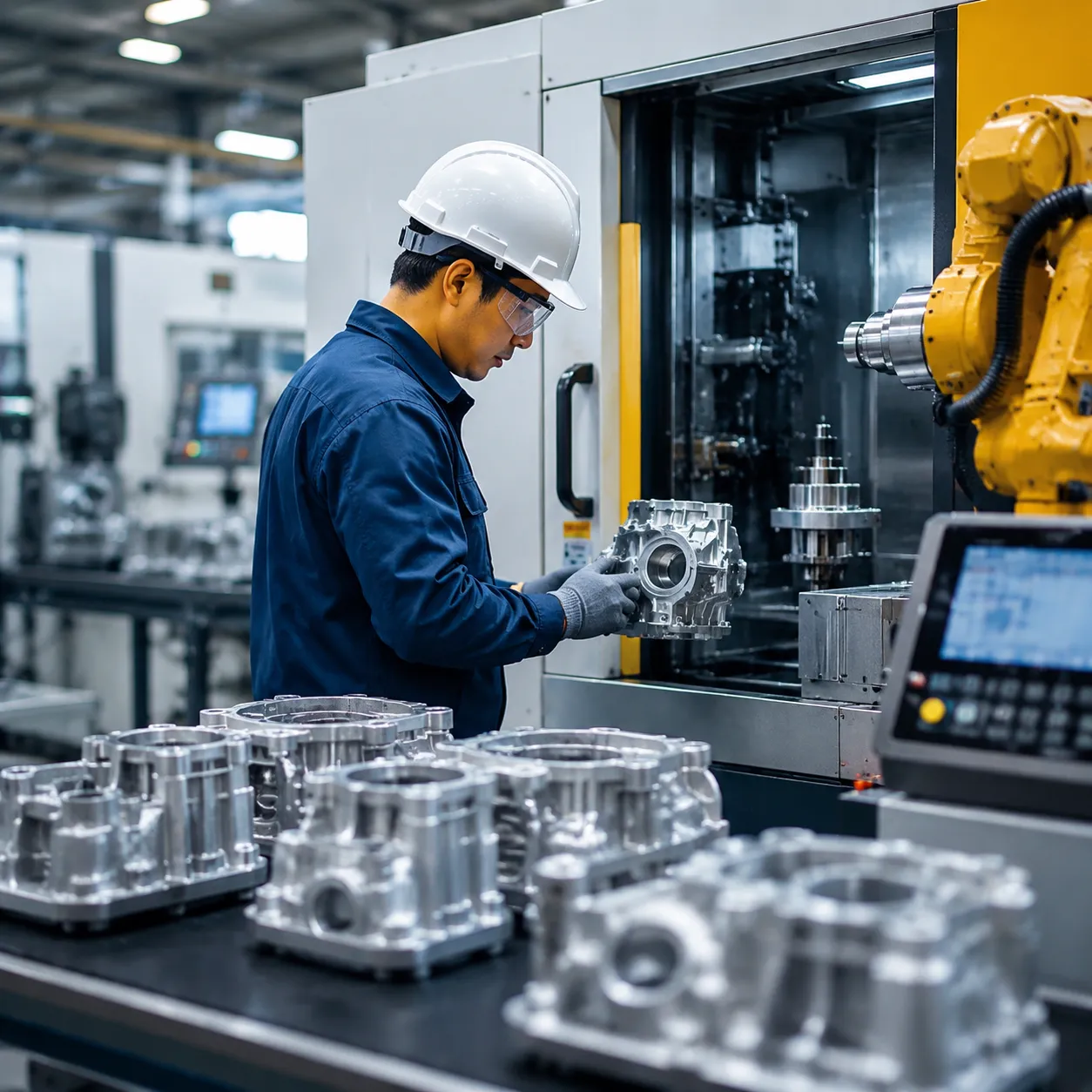
The automotive shift toward fuel efficiency and vehicle electrification demands high-performance materials. Die cast aluminum alloys are the backbone of modern lightweighting strategies, replacing heavy steel structures without sacrificing safety. From transmission housings and engine blocks to complex structural brackets and EV battery enclosures, these components offer the durability and high tensile strength required to survive rigorous road conditions. By utilizing advanced high pressure die casting, we deliver lightweight parts that directly reduce vehicle emissions and improve overall battery range.
Efficient Heat Sinks for Modern Electronics
Managing thermal dissipation is a major challenge in today's electronics sector. Because of their exceptional thermal conductivity, die cast aluminum alloys are the premier choice for manufacturing high-efficiency heat sinks and enclosure housings. These components quickly draw heat away from sensitive processors and power supplies in telecommunications gear, LED lighting systems, and computing hardware. Our specialized casting techniques allow us to produce ultra-thin cooling fins and intricate geometries that maximize surface area for optimal cooling performance.
Medical Device and Aerospace Industry Standards
Compliance and reliability are non-negotiable in critical sectors. In medical device manufacturing, die cast aluminum alloys provide the structural rigidity, lightweight portability, and corrosion resistance needed for hospital equipment housings and diagnostic imaging systems. For the aerospace market, these materials meet rigid safety standards, offering an exceptional strength-to-weight ratio for interior cabin components and electronic hardware brackets.
Sourcing Custom Aluminum Die Casting Services
Finding the Right Foundry and Manufacturing Partner
Choosing the right production partner dictates the success of your project. When evaluating a foundry, look for advanced high-pressure die casting (HPDC) capabilities, strict quality control systems, and robust engineering support. The ideal partner does not just pour molten aluminum; they optimize your designs for manufacturability, ensuring long-term production stability and consistent component quality.
Factors Influencing the Cost of Die Casting Components
The total cost of manufacturing die cast aluminum alloys depends on several critical variables:
Tooling and Dies: Initial investments in the premium steel mold represent the highest upfront cost, but high-quality tooling lowers per-part costs during extended runs.
Material Selection: Standard alloys like A380 are highly cost-effective, while specialized alloys like A413 or B390 vary based on market pricing and specific performance demands.
Part Complexity: Intricate geometries with tight tolerances require complex mold designs and slower cycle times, impacting the final piece price.
Secondary Operations: Post-casting requirements such as CNC machining, specialized surface finishing, or anodizing add directly to the production budget.
Managing the Lifecycle from Prototype to High-Volume Production
Transitioning from an initial concept to mass production requires a structured, scalable approach. We streamline this lifecycle by utilizing rapid prototyping methods to validate part geometry and fitment before cutting hard tooling. Once the design is locked in, we transition the project to automated high-pressure die casting lines, ensuring a seamless scale-up to high-volume production with absolute part-to-part consistency.
Ordering Information & Lead Times
OEM buyers use this reference to align die cast aluminum alloys programs with tooling and production schedules.
| Program Type | MOQ | Typical Lead Time | Deliverables |
|---|---|---|---|
| Sample / Prototype Casting | 10–50 pcs | 2–3 weeks | Alloy trial, dimensional report |
| Standard HPDC Production (A380/ADC12) | 500 pcs | 4–6 weeks incl. tooling | Die steel, first-article inspection |
| High-Volume OEM Run | 5,000+ pcs | Tooling 4–8 weeks · production per PO | SPC data, finishing spec |
| Specialty Alloy (B390/518/A413) | 500 pcs | 5–7 weeks | Material cert, leak-test protocol if required |
Share part drawings, target alloy, annual volume, and finishing requirements (powder coat, anodizing, as-cast). Request a quote for confirmed tooling cost and production lead times.
Die Cast Aluminum Alloys — FAQ
What is the most common aluminum die casting alloy?
Without a doubt, A380 is the absolute gold standard for global manufacturing. It offers the best balance of material properties, castability, and cost-efficiency. If your project requires high thermal conductivity, excellent fluidity under pressure, and strong structural integrity, our die cast aluminum alloy A380 services are typically the top recommendation for everything from automotive components to electronics housings.
Does die cast aluminum require T6 heat treatment?
Generally, no. Standard high-pressure die casting (HPDC) components rarely undergo T6 heat treatment because the high temperatures can cause trapped gases to expand, leading to surface blistering and structural defects. Instead, we optimize mechanical properties directly through precise alloy selection—like utilizing structural die cast aluminum alloys with high ductility—or by applying specialized vacuum die casting technologies if heat treatment is an absolute requirement for your design.
How do you guarantee leak-tightness in die castings?
Achieving zero leakage in pressure-tight applications requires strict process control from start to finish. We guarantee leak-tightness through a combination of engineered solutions:
- Optimized Mold Design: Advanced gating systems reduce internal gas and shrinkage porosity during the injection of molten aluminum.
- Real-Time Parameter Monitoring: Maintaining precise injection speeds and intensification pressures inside the steel mold.
- Secondary Impregnation: For critical components like valve bodies or liquid cooling plates, we apply vacuum resin impregnation to seal any micro-porosity permanently.