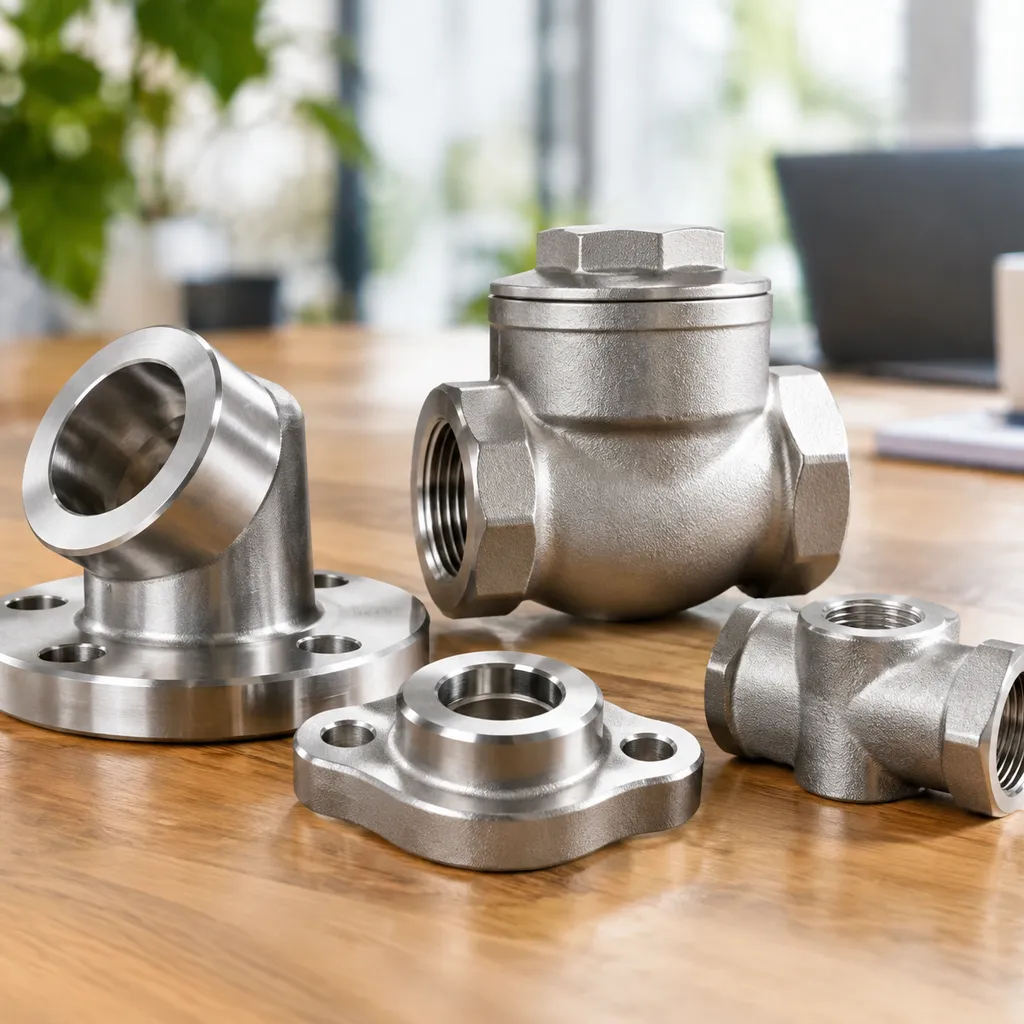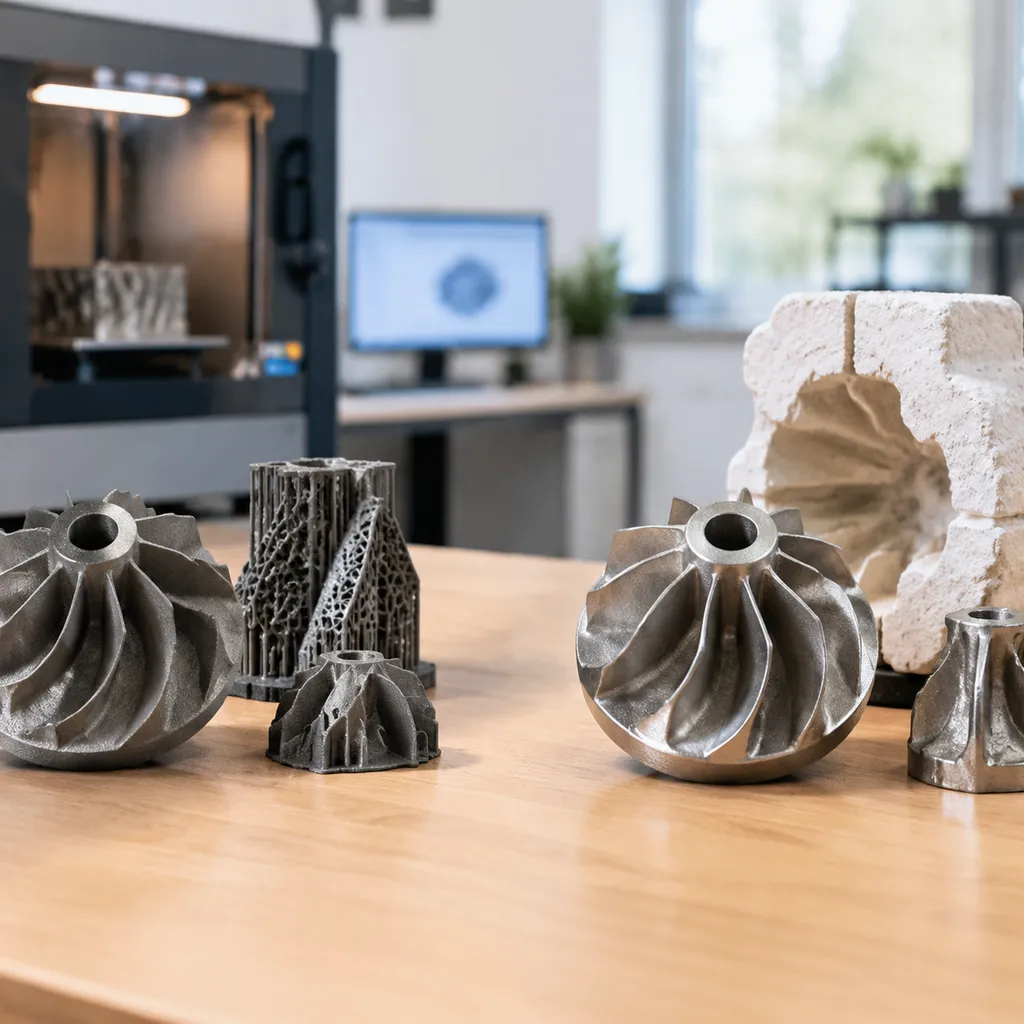
The investment casting shell temperature effect on shrinkage porosity is a primary thermal lever: mold shell preheating sets the cooling rate and thermal gradient that decide whether riser feeding can offset solidification contraction.
Balanced pouring temperature, directional solidification, and open feed paths keep molten metal flowability into final freezing zones; extremes of shell heat create centerline voids or scattered micro-shrinkage.
This article covers porosity mechanisms, shell-pouring interplay, casting simulation for preheat windows, and foundry thermal controls that reduce casting defects.
Shrinkage Porosity Mechanisms Tied to Shell Temperature
Shrinkage porosity remains one of the primary casting defects encountered in the production of high-precision metal components.[1] As professional precision casting and CNC machining service providers, we engineer every stage of the process to ensure full structural integrity. Achieving defect-free investment casting components requires an in-depth understanding of the investment casting shell temperature effect on shrinkage porosity and how thermal dynamics dictate metal phase changes.
What is Shrinkage Porosity in Castings?
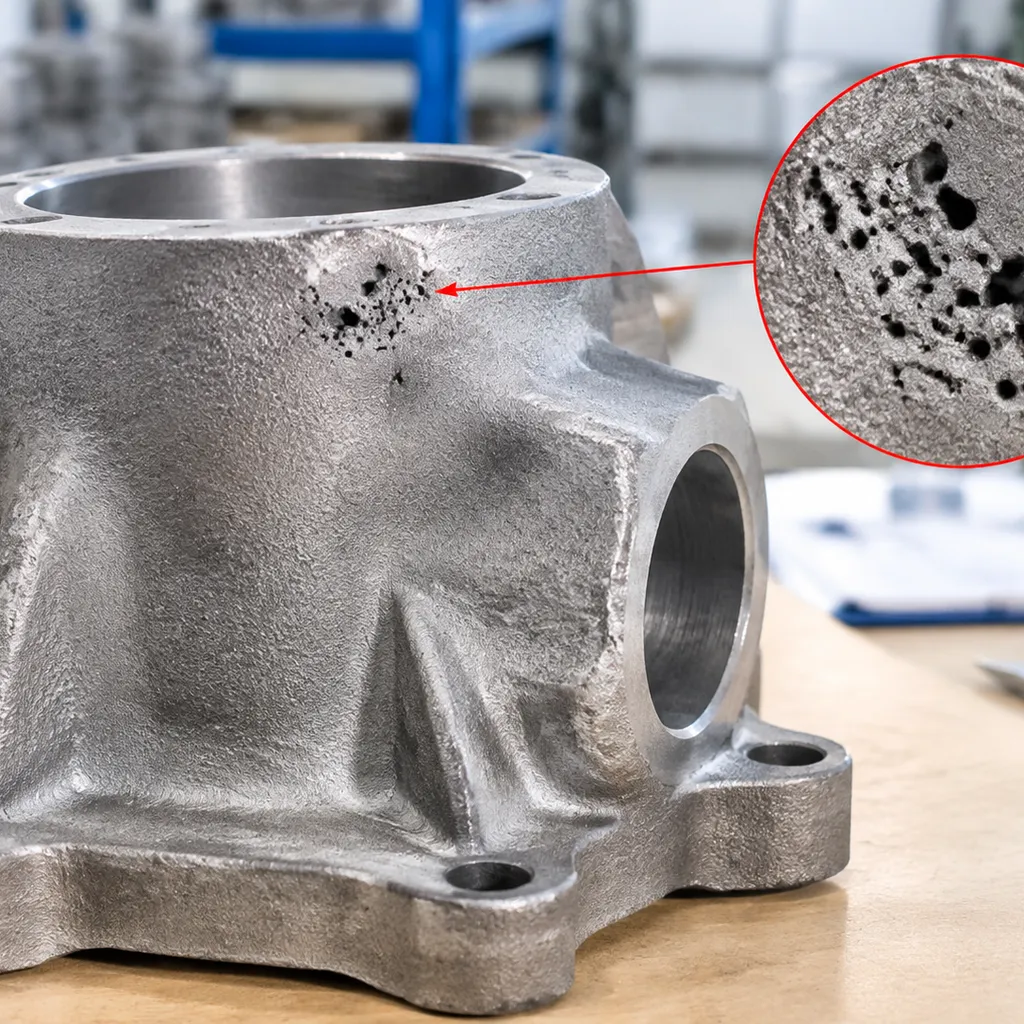
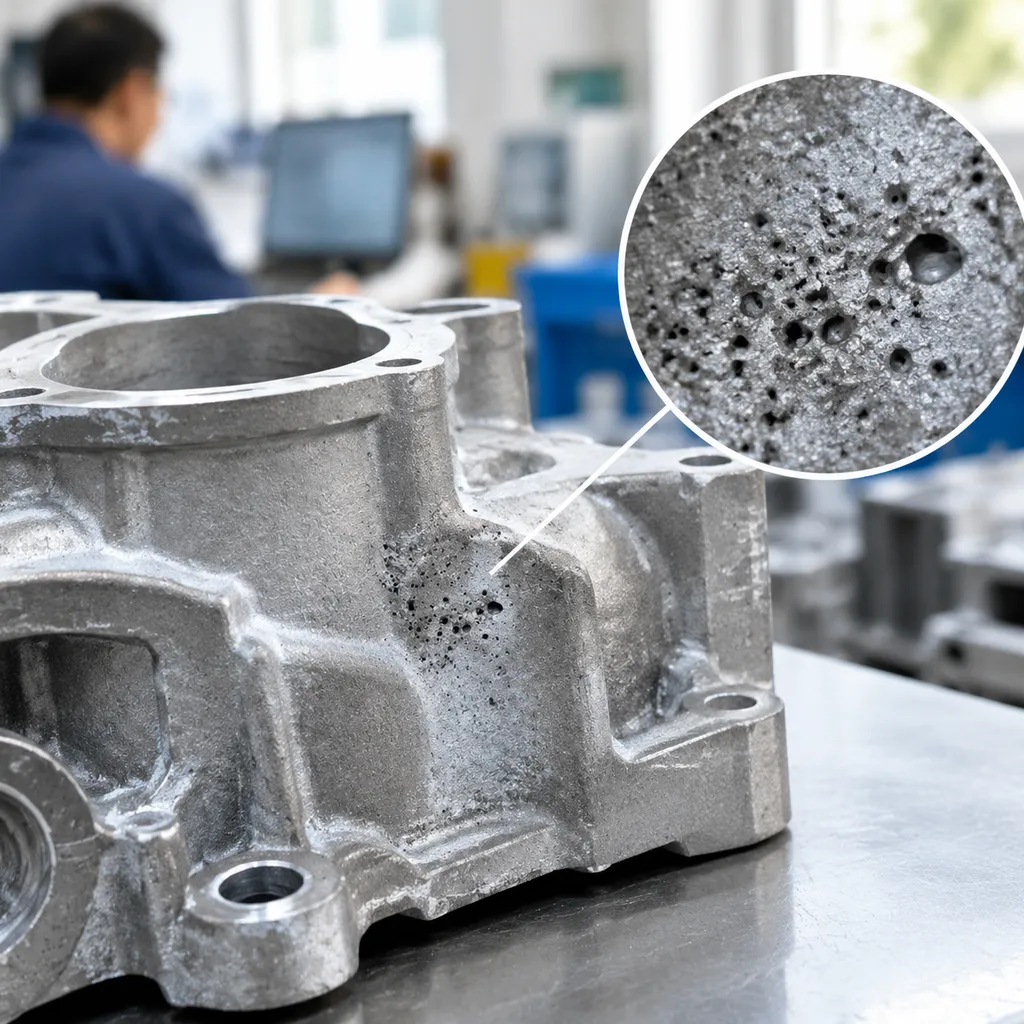
Shrinkage porosity is an internal or surface defect that forms during the liquid-to-solid phase transition. When liquid alloy solidifies, its volume contracts. If the liquid metal cannot feed the contracting areas due to localized freeze-off, void networks form.[2] The investment casting shell temperature shrinkage porosity relationship is direct: mold temperature directly influences how and where molten metal solidifies, determining whether volumetric contraction results in sound metal or internal voids.[3]
Key factors driving shrinkage cavity formation include:
Liquid Contraction: The volumetric shrinkage of the alloy as it cools to liquidus.
Solidification Contraction: The volume reduction occurring between liquidus and solidus.
Inadequate Liquid Feed: The inability of the riser feeding system to deliver molten metal into the final freezing zone.
Types of Shrinkage: Macro-Porosity vs. Micro-Porosity
Shrinkage defects manifest in distinct morphologies based on the thermal gradient and the cooling rate during solidification.
| Characteristic | Macro-Porosity | Micro-Porosity |
|---|---|---|
| Defect Size | Large voids (> 1 mm), visible to the naked eye or X-ray | Tiny voids (< 1 mm), often microscopic |
| Location | Concentrated in thermal centers, heavy sections, and hot spots | Dispersed throughout the dendritic network |
| Primary Cause | Premature gate freeze-off blocking main liquid feeding channels | Incomplete inter-dendritic feeding during the mushy zone phase |
| Typical Appearance | Large cavities, pipes, or deep centerline voids | Fine sponge-like, pinpoint, or feathery distributions |
- Macro-Porosity: These large shrinkage cavities occur when major feed paths freeze before the heavier sections solidify. They are common in poorly fed hot spots and thick-to-thin section junctions.
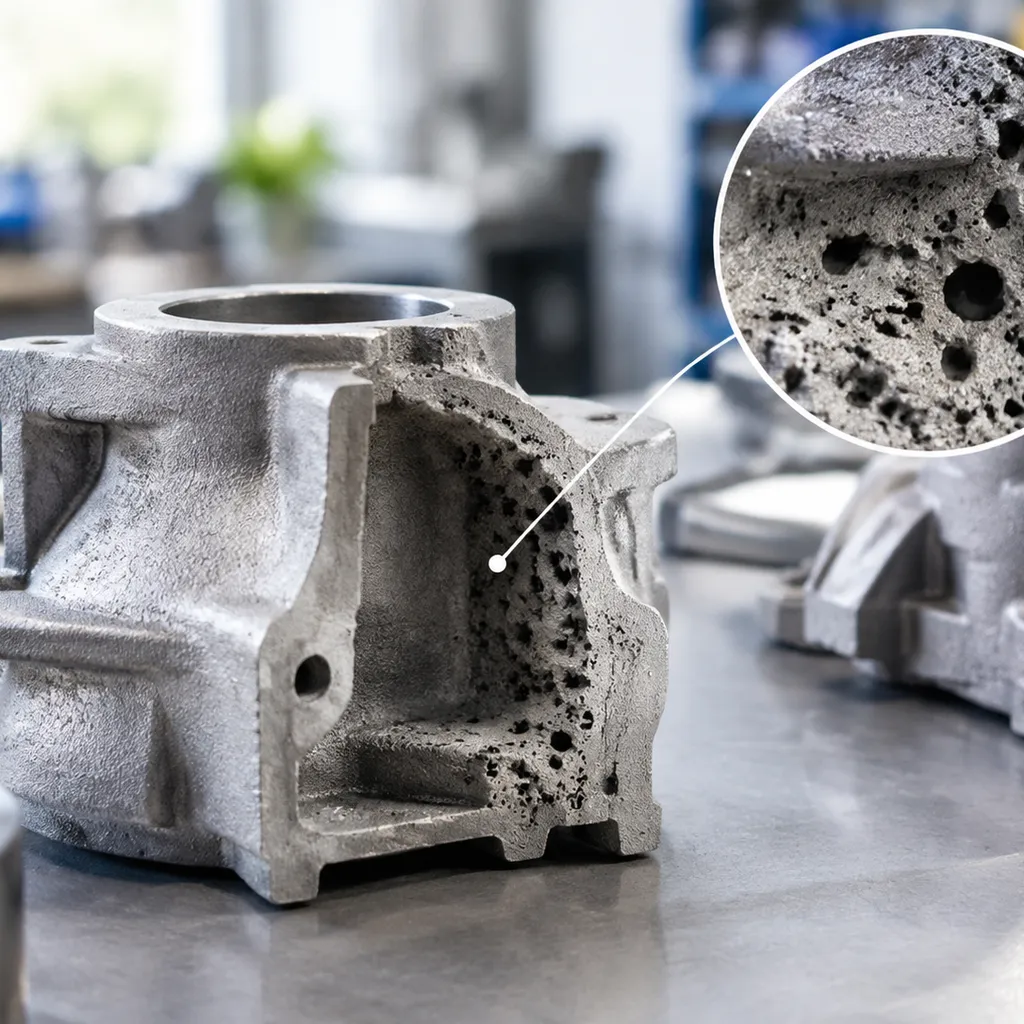
- Micro-Porosity: Also known as microporosity or inter-dendritic shrinkage, these microscopic voids develop between growing dendrite arms when the local thermal gradient is insufficient to drive feeding metal through the mushy zone.
Impact of Porosity on Mechanical Properties and Part Integrity
- Degraded Tensile and Yield Strength: Internal voids reduce the effective load-bearing cross-sectional area of the part.
- Severely Reduced Fatigue Life: Porosity cavities act as severe stress concentrations, serving as crack initiation sites under cyclic loading.
- Loss of Pressure Tightness: Interconnected micro-porosity channels destroy leak-tight integrity, leading to failure in hydraulic, fuel, and pressure-containment applications.
- Compromised Machining Quality: Hidden sub-surface voids expose porous flaws during precision CNC machining, leading to scrapped parts and delayed production schedules.
The Direct Effect of Shell Temperature on Shrinkage Porosity
Understanding the investment casting shell temperature shrinkage porosity relationship is fundamental to mastering part integrity on the foundry floor. In our work as precision casting specialists, we treat mold shell preheating as an active process control lever rather than just an auxiliary step. The temperature of the ceramic mold directly regulates how rapidly the liquid metal gives off heat, directly shifting where and how internal voids form.
Influence of Shell Preheat Temperature on Solidification Rates
The core variable governed by mold shell preheating is the cooling rate of the molten alloy. When metal enters a cold or underheated shell, the steep thermal jump forces rapid heat extraction through the mold walls.
- High Heat Extraction: A cooler ceramic shell extracts thermal energy instantly, freezing the exterior boundary layers and accelerating dendrite growth toward the center.
- Choked Feeding Paths: Fast dendritic growth narrows the pathways required for liquid metal feeding, creating isolated pockets that turn into shrinkage cavities.
- Controlled Solidification: A properly preheated shell moderates the cooling rate, prolonging the liquid-to-solid transition just enough to allow feeder metal to compensate for volumetric contraction.
Fine-tuning this balance is especially critical when running high-specification components like cobalt alloy castings, where even minor thermal inconsistencies can trap shrinkage voids inside critical load-bearing regions.
Establishing Thermal Gradients for Directional Solidification
Eliminating shrinkage porosity depends entirely on establishing a steep, well-aligned thermal gradient. Directional solidification requires the casting to freeze progressively from the thinnest, most distant sections toward the heavier sections, and ultimately into the risers.
The mold shell preheat temperature effect on shrinkage porosity shows up clearly in how this thermal gradient behaves:
- Sustaining the Feeding Channel: If the mold shell holds sufficient heat, the sections closest to the gating system remain molten longer than the casting extremities.
- Preventing Bridge Formation: Proper shell temperatures prevent premature freezing - or "bridging" - across junctions, allowing gravity or pressure to pull feed metal down into contracting zones.
- Aligning Isotherms: By carefully calibrating the shell preheat profile across varying wall thicknesses, we align the solidification front to move continuously toward the liquid reservoir.
Consequences of Excessively High vs. Low Shell Preheating
Dialing in the correct mold preheat temperature demands precision; both extremes disrupt solidification dynamics and cause severe casting defects.
| Shell Preheat Condition | Thermal Dynamic Result | Typical Shrinkage & Defect Risks |
|---|---|---|
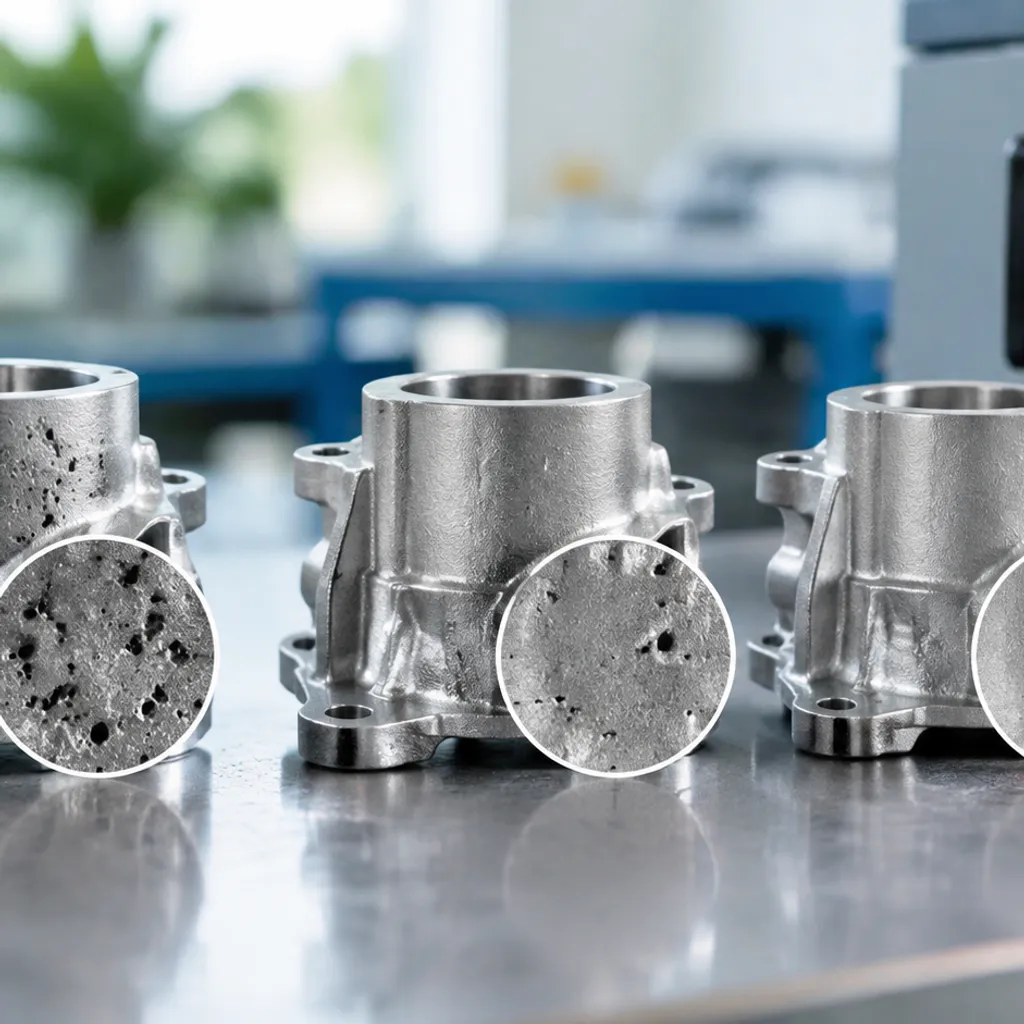
| Excessively Low Shell Temperature | Rapid, uncontrolled cooling; early freeze-off at thin walls and gates | Premature gate freezing, severe centerline shrinkage porosity, cold shuts, and misruns |
| Optimal Shell Temperature | Uniform thermal gradient; controlled cooling; open feeding paths | Progressive directional solidification, dense grain structure, zero isolated shrinkage cavities |
| Excessively High Shell Temperature | Overly sluggish cooling rate; prolonged liquid state; loss of thermal gradient | Extended hot spots, widespread micro-shrinkage, coarse grain structures, and macro-shrinkage voids at heavy junctions |
When the shell temperature is too low, the gating system freezes prematurely, starving the internal sections of liquid feed.[3] Conversely, setting the shell temperature too high eliminates the directional thermal gradient entirely. In that scenario, large cross-sections freeze uniformly from all sides without a clear feeding direction, inevitably creating scattered shrinkage cavities inside the core of the part.
Interplay Between Shell Temperature and Pouring Temperature
We evaluate the investment casting shell temperature effect on shrinkage porosity alongside pouring temperature, as neither parameter operates in isolation. The thermal balance between the incoming molten alloy and the preheated ceramic shell governs how the metal transitions from liquid to solid. When we tune mold shell preheating in tandem with pouring temperature, we control the exact rate of heat extraction across every section of the mold cavity, preventing premature freezing while averting structural hot spots.
Balancing Molten Metal Pouring Temperature with Mold Temperature
Finding the correct processing window requires matching alloy superheat with shell preheat to maintain an orderly cooling rate.[4] If both values sit too high, the overall thermal mass delays solidification, expanding the mushy zone and causing widespread shrinkage cavity formation. Conversely, running both temperatures too low accelerates cooling excessively, leading to misruns and cold shuts. As detailed in our precision metal casting guide for engineers and OEM buyers, matching these two thermal profiles establishes the stable baseline required to keep solidification orderly and defects to an absolute minimum.
Effects on Liquid Metal Fluidity and Feeding Distance
The relationship between investment casting shell temperature and shrinkage porosity directly dictates molten metal flowability and how far a feeder can push liquid metal into shrinking sections:
- Extended Feeding Window: Proper shell preheating keeps the gating system open longer, allowing effective riser feeding during critical phase transformation.
- Maintained Thermal Gradient: A calculated temperature differential sustains directional solidification, guiding shrinkage out of functional walls and into designated risers.
- Reduced Choke Points: Balanced shell temperatures prevent premature gate freeze-off, which is the primary cause of isolated centerline shrinkage porosity in complex geometries.
Controlling Hot Spots and Cooling Dynamics in Thin-Wall Sections
Castings with varying cross-sections present significant thermal management challenges. Thin walls chill quickly, demanding sufficient shell preheat to fill completely, whereas adjacent heavy sections naturally retain heat and create isolated hot spots. To stabilize cooling dynamics, we balance ceramic shell thickness, optimize gating system design, and calibrate preheating cycles. This approach ensures thin segments fill smoothly without overheating thicker junctions, eliminating the localized shrinkage porosity that compromises cast component integrity.
Predicting and Modeling Shrinkage Porosity via Simulation
We use advanced computer modeling to evaluate the investment casting shell temperature effect on shrinkage porosity directly inside a virtual environment. By running comprehensive thermal checks prior to cutting wax injection dies, we pinpoint where isolated liquid pools form and correct them before initial foundry trials.
Thermal Analysis and Solidification Modeling in Investment Casting
Solidification modeling tracks phase transitions as molten metal shifts from liquid to solid inside the ceramic mold. When analyzing components - such as when utilizing our precision stainless steel casting techniques - thermal analysis provides a clear window into internal cooling patterns.
- Isotherm Mapping: Tracks temperature drops across junctions, identifying hot spots prone to shrinkage cavity formation.
- Gradient Calculation: Evaluates the local thermal gradient to verify directional solidification toward risers.
- Cooling Rate Assessment: Monitors local solidification times to prevent premature gate freezing.
Simulating Heat Transfer Between Alloy and Ceramic Shell
Accurate simulation requires precise boundary conditions between the liquid metal and the mold wall. The interface governs how fast heat escapes into the surrounding environment, which directly impacts the investment casting shell temperature shrinkage porosity relationship.
| Simulation Variable | Model Input Focus | Impact on Shrinkage Prediction |
|---|---|---|
| Interfacial Heat Transfer Coefficient (IHTC) | Contact resistance over time | Determines how fast heat leaves the casting into the shell. |
| Ceramic Shell Thickness | Layer count and slurry composition | Controls overall thermal resistance and localized heat retention. |
| Initial Shell Preheat | Preheat furnace setpoint | Governs the initial temperature difference and cooling rate. |
Accounting for these variables clarifies the investment casting shell preheat temperature effect on shrinkage porosity across thick bosses, thin fins, and transitioning wall sections.
Optimizing Preheat Temperatures Using Casting Simulation Software
Casting simulation software allows us to test multiple preheating windows without burning furnace energy or risking scrap metal. As professional precision casting and CNC machining service providers, we balance mold shell preheating against the alloy pouring temperature to dial in the ideal process window.
- Eliminating Isolated Hot Spots: Shifting preheat targets evens out cooling rates between thin ribs and heavy hubs.
- Optimizing Riser Efficiency: Simulating feeder paths ensures feed paths remain molten until the critical casting sections fully consolidate.
- Validating Defect Criteria: Applying Niyama and criterion functions in the software predicts micro-porosity distribution, allowing us to adjust shell preheat levels until porosity risks drop to zero.[4]
Methods to Eliminate Shrinkage Porosity Through Thermal Control
Controlling heat dissipation across the ceramic mold is the most dependable way to stop shrinkage cavity formation. As precision casting and CNC machining service providers, we manage the investment casting shell temperature effect on shrinkage porosity by establishing reliable thermal gradients that keep metal liquid until feeding is complete.
Optimizing Gating and Riser Systems for Better Feeding
Proper riser feeding prevents shrinkage by supplying molten alloy directly to sections undergoing phase change contraction.[2] If the ceramic shell cools prematurely around the gates, feed channels close before the heavy sections solidify.
- Direct Feed Placement: Position risers adjacent to the thickest geometries to maintain a progressive solidification path toward the liquid reservoir.
- Gate Sizing: Match ingate cross-sections with the cooling rate of the shell wall to avoid early freeze-off.
- Thermal Mass Integration: Keep riser volume proportionate to part volume so the feed paths stay molten longer than the casting body.
| Gating Element | Primary Thermal Function | Porosity Prevention Target |
|---|---|---|
| Ingate | Regulates flow velocity and local heat input | Eliminates premature choke and gate freeze-off |
| Riser / Feeder | Serves as the final liquid thermal mass | Moves macro-shrinkage out of the finished component |
| Pouring Cup & Runner | Balances mold filling without rapid heat loss | Maintains uniform molten metal flowability across patterns |
When secondary finishing demands extreme dimensional accuracy after casting, pairing proper feeding with advanced post-cast operations like EDM machining tolerances and processes ensures critical features meet high engineering standards.
Applying Differential Shell Preheating and Local Insulation
Controlling the investment casting shell preheat temperature effect on shrinkage porosity often requires localized thermal intervention. Setting different temperature zones across a single tree prevents hot spots in thick junctions while avoiding cold shuts in thin walls.
- Ceramic Blanket Wrapping: Wrap ceramic fiber around thin sections or gating junctions to slow heat loss and maintain directional solidification.
- Zoned Kiln Heating: Orient the mold cluster inside the preheating furnace so heavy base regions absorb higher heat energy than isolated thin extremities.
- Targeted Chills: Integrate internal or external metal chills into the investment mold where rapid cooling is needed to push the solidification front toward open feeders.
Standardizing Shell Preheating Cycles and Process Controls
Consistent mold shell preheating eliminates variability across production batches. Systematic pyrometry and soak cycles ensure every casting tree enters the pouring stage within the target thermal window.
- Soak Time Verification: Maintain shells at peak furnace temperature long enough to equilibrate core and surface temperatures through the entire ceramic shell thickness.
- Transfer Speed Regulation: Transfer the heated shell from the furnace to the pouring station within a fixed second-count window to prevent uncontrolled exterior cooling.
- Real-Time Pyrometer Tracking: Measure shell exterior and cavity temperatures right before the pour to ensure the investment casting shell temperature shrinkage porosity relationship remains completely within established process limits.
Need help dialing shell preheat and pouring windows for porosity-sensitive geometries? Send drawings and alloy requirements for a process review.
References
- Wikipedia - Investment casting (lost-wax / ceramic shell process overview) ↩
- Investment Casting Institute - Eliminating Shrinkage Porosity in a Complex Casting (PDF) ↩
- Nguyen et al. - Effect of Pouring and Mold Shell Temperatures on Porosity in Complex Investment Castings of Stainless Steel 304 (J. Res. Appl. Mech. Eng.) ↩
- Hu et al. - Shrinkage Porosity and Microstructure Control via Casting Module (Harbin Institute of Technology Scholar) ↩