Choosing slm vs investment casting means deciding between tooling-free selective laser melting for complex, low-volume metal parts and traditional casting for scalable, isotropic production.
Additive manufacturing and foundry routes diverge on dimensional accuracy, microstructure and porosity risk, lattice structures and internal cooling channels, plus cost and lead-time economics.
This guide compares process workflows, mechanical properties, design freedom, break-even volumes, hybrid pattern casting, applications, and a practical selection checklist.
Process Breakdown: SLM vs Investment Casting
When choosing between additive manufacturing and traditional metal casting, the core difference comes down to how raw material transforms into your final component.
How selective laser melting builds parts layer by layer
Selective Laser Melting (SLM) is a powder-bed fusion process that produces fully dense metal components directly from 3D CAD data without dedicated tooling[1].
- Powder deposition: A recoater blade spreads an even layer of fine metallic powder across the build platform.
- Laser exposure: A high-power-density laser selectively scans the 2D cross-section of the CAD model, fully melting and fusing the particles together.
- Platform lowering: The build plate drops down by one layer thickness.
- Repetition: The sequence repeats layer upon layer until the three-dimensional geometry is fully formed.
- De-powdering: Unmelted powder is brushed away and reclaimed for recycling, leaving the solid component attached to the build plate.
How lost-wax investment casting works from pattern to pour
Traditional casting takes liquid metallurgy and solidifies it within a predefined shape.
- Tooling creation: Upfront molds and tooling dies are machined to establish the hollow cavity dimensions.
- Mold preparation: The tooling forms the sacrificial pattern or cavity framework to receive molten metal.
- Melting and pouring: Raw metal alloys are heated past their melting point and poured into the preheated mold cavity.
- Solidification: The liquid metal cools and solidifies into the final component shape, establishing an isotropic bulk structure.
- Knockout and gate removal: The mold is broken away, and the cast part is separated from the gating and riser systems.
Key workflow differences from CAD file to final part
The operational path from a CAD model to a physical part highlights the fundamental trade-offs in tooling, speed, and iteration cycles.
| Workflow Stage | Selective Laser Melting (SLM) | Traditional Casting |
|---|---|---|
| Tooling Requirements | Zero tooling; direct digital slicing from CAD | High upfront tooling required to produce molds |
| Setup Lead Time | Hours to set up build parameters | Weeks to months to machine and qualify molds |
| Forming Method | Layer-by-layer thermal fusion via laser | Volumetric fill of liquid metal into a cavity |
| Design Iteration | Immediate; update the CAD file and reprint | Costly; requires re-tooling or mold modifications |
| Material Handling | Unfused powder is sieved and recycled | Gates, runners, and risers must be cut and remelted |
Dimensional Accuracy and Surface Finish: SLM vs Investment Casting
When we compare slm vs investment casting on the production floor, surface quality and dimensional consistency determine the secondary processing workload. Both methods produce high-integrity components, but their physical forming processes yield very different surface characteristics and sizing behavior.
Achievable Tolerances and Dimensional Repeatability
- Selective Laser Melting (SLM): Builds components directly from 3D CAD data, eliminating physical mold wear and parting line shifts. It maintains tight dimensional control on intricate internal geometries, though localized thermal gradients during laser exposure require careful orientation to prevent thermal distortion.
- Casting: Delivers reliable part-to-part repeatability once the tooling is qualified. Managing baseline dimensional tolerances in metal casting requires accounting for material shrinkage during liquid metal solidification and cooling.
As-Built Surface Roughness
- SLM Surfaces: Laser powder bed fusion leaves an inherently rougher as-built texture. Unmelted and partially sintered powder grains fuse to exterior walls, typically requiring abrasive blasting or surface finishing for high-contact areas.
- Cast Surfaces: Liquid metal solidifies directly against the mold cavity walls, generally yielding a noticeably smoother surface finish straight from the mold.
Post-Processing and CNC Machining Requirements
Neither method completely bypasses post-processing. Critical mating faces, dynamic sealing surfaces, and precision bores always require secondary CNC finishing.
| Comparison Factor | Selective Laser Melting (SLM) | Traditional & Investment Casting |
|---|---|---|
| As-Formed Texture | Rougher surface finish; requires smoothing | Smoother surface directly from the mold cavity |
| Material Removal | Support structure cutoff via manual tools or wire EDM | Cutoff and grinding of gates, sprues, and risers |
| Thermal Processing | Stress-relief heat treatment to counter residual stresses | Standard heat treatments to normalize microstructure |
| Secondary Machining | CNC machining for high-precision holes and flat faces | CNC machining for locating datum points, threads, and sealing lands |
We rely on SLM when geometric complexity rules out traditional machining access. Conversely, when consistent exterior smoothness and high-volume repeatability take priority, casting combined with targeted CNC machining offers the more direct path to final tolerances.
Material Performance and Mechanical Properties: SLM vs Investment Casting
When we compare parts made by selective laser melting to traditional casting, mechanical integrity and internal structure determine which route makes sense for your application.
Tensile Strength, Density, and Fatigue Life
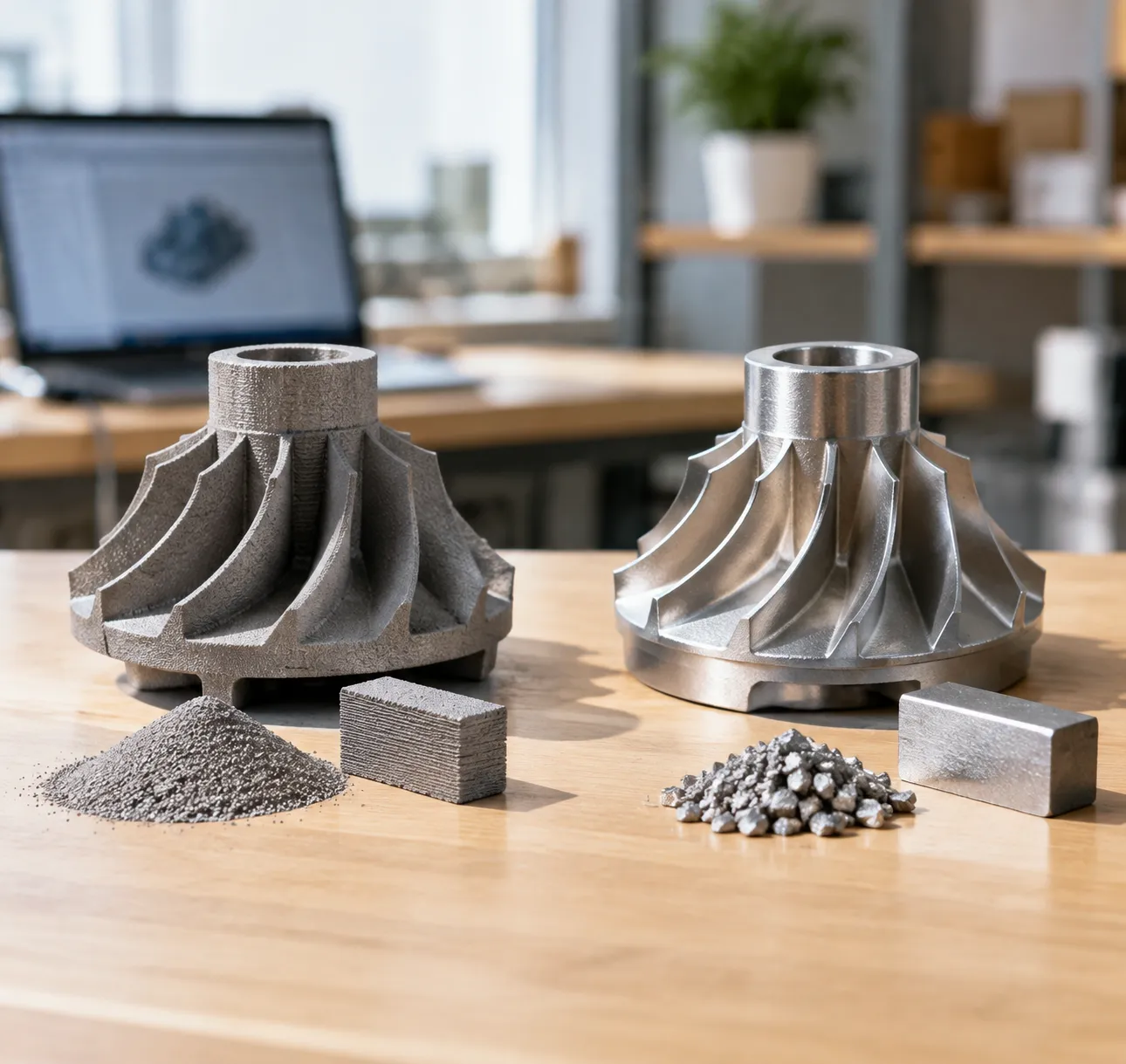
In our production evaluations, parts built with selective laser melting consistently demonstrate high material density and exceptional tensile strength straight off the build plate[2]. Because the laser melts metal powder with high energy density, the resulting solid exhibits minimal void space.
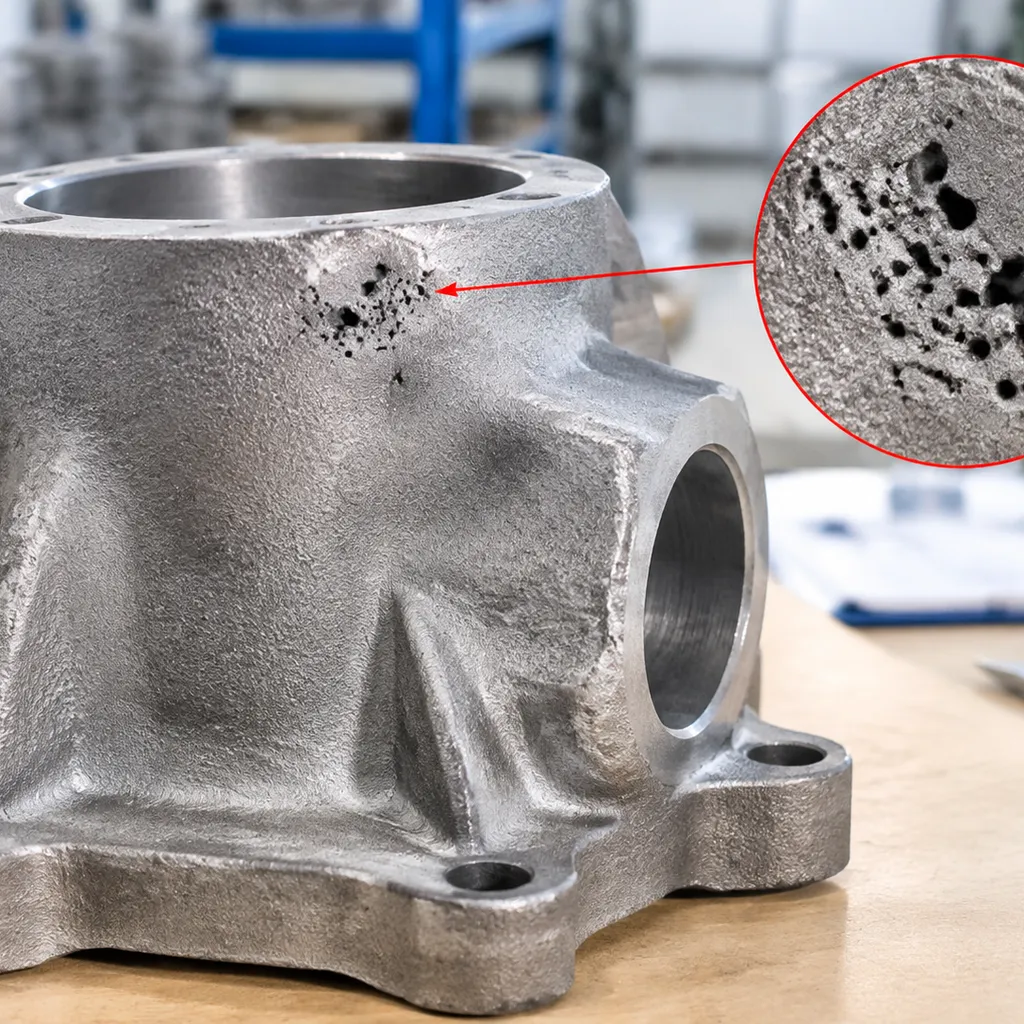
Traditional casting delivers dependable bulk strength, but cast components face a higher risk of internal shrinkage and gas porosity as molten metal cools inside the mold. While casting provides reliable performance across standardized fatigue cycles, SLM components can match or exceed cast tensile figures once internal stresses are managed.
Microstructure and Directional Behavior
The primary metallurgical difference comes down to directional alignment:
- Selective Laser Melting: The layer-by-layer thermal cycles introduce anisotropic properties[3]. Parts tend to exhibit different tensile and yield characteristics along the Z-axis (build direction) compared to the X-Y plane, accompanied by significant residual stress that requires thermal stress relief.
- Investment Casting: Molten metal solidifies uniformly within the mold cavity, creating isotropic mechanical properties. The part performs consistently regardless of load orientation, eliminating the orientation-dependent variations seen in additive builds.
Porosity Control and Heat Treatment
Neither process is entirely maintenance-free when it comes to internal defects. In SLM manufacturing, post-process thermal treatments and stress-relieving cycles are standard practice to neutralize thermal gradients and prevent micro-cracking.
With casting, controlling porosity and mold shrinkage remains the primary operational focus. If an application demands complete density without voids, cast components often require secondary operations or tightly controlled gating systems to prevent defect formation during solidification.
| Performance Metric | Selective Laser Melting (SLM) | Traditional Casting |
|---|---|---|
| Material Density | Exceptionally high density | Good density; susceptible to porosity and shrinkage |
| Mechanical Properties | High strength, directional (anisotropic) | Uniform mechanical properties (isotropic) |
| Internal Stress | High residual stress; requires stress-relief heat treatment | Low residual stress directly after cooling |
| Alloy Availability | Specialized weldable metal powders | Broad selection of standard foundry alloys |
Metal Alloy Options
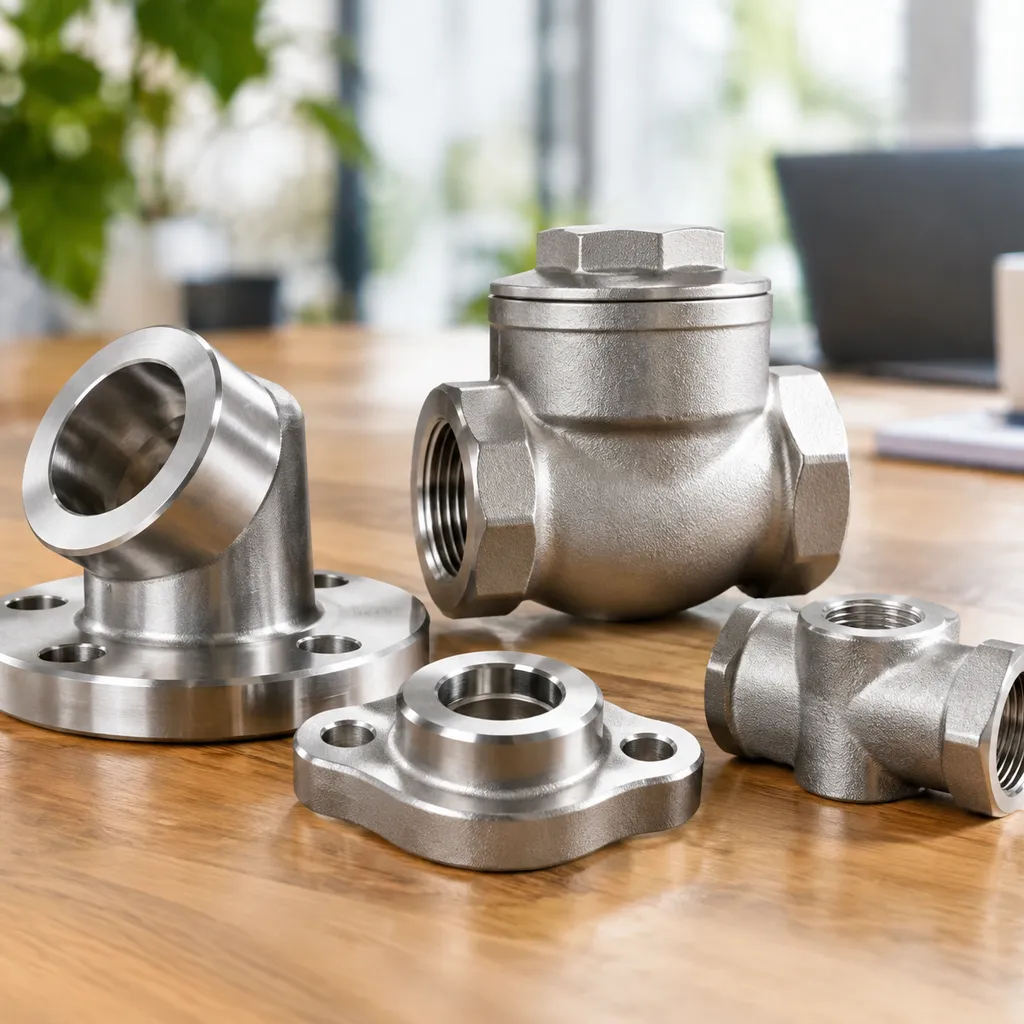
Casting remains the industry standard when you need broad material versatility. Foundries melt almost any commercial alloy system, making it simple to pick the best metal for casting based on targeted wear, thermal, or corrosion requirements.
SLM works within a more focused selection of gas-atomized powders. We typically work with alloys optimized for laser processing - including titanium, nickel superalloys, stainless steel, and aluminum grades. While the range of powders is narrower and material costs run higher, SLM achieves full structural performance without the need to pour bulk molten melt.
Design Freedom and Geometric Complexity: SLM vs Investment Casting
When we compare slm vs investment casting, the biggest separator on the shop floor comes down to physical tooling limits. Traditional casting requires molten metal to flow into a mold cavity and solidify, meaning every geometry must respect mold separation, flow paths, and metal shrinkage. Selective laser melting builds parts directly from a CAD model, layer by layer, bypassing conventional tooling rules entirely.
Eliminating Tooling Constraints, Draft Angles, and Parting Lines
In standard foundry operations, every cast design must accommodate the physical mold:
- Draft Angles and Parting Lines: Traditional casting requires draft angles so patterns and cores can release without damaging the mold. SLM builds entirely free of draft angles, parting lines, and core pull restrictions.
- Zero Tooling Overhead: Because SLM relies on a focused laser fusing powder beds, we bypass the weeks required to engineer, test, and adjust hard tooling or complex mold assemblies.
- Design Iterations: Modifying a feature in casting often requires remaking expensive tooling. With metal additive manufacturing, design changes happen directly in software between build jobs.
While specialized components such as precision investment castings provide reliable performance within moldable parameters, SLM delivers true geometrical independence for complex low-volume parts.
Designing Conformal Cooling Channels and Lattice Structures
Selective laser melting allows us to position metal only where stress demands it, unlocking geometries that liquid metal cannot achieve inside a standard mold:
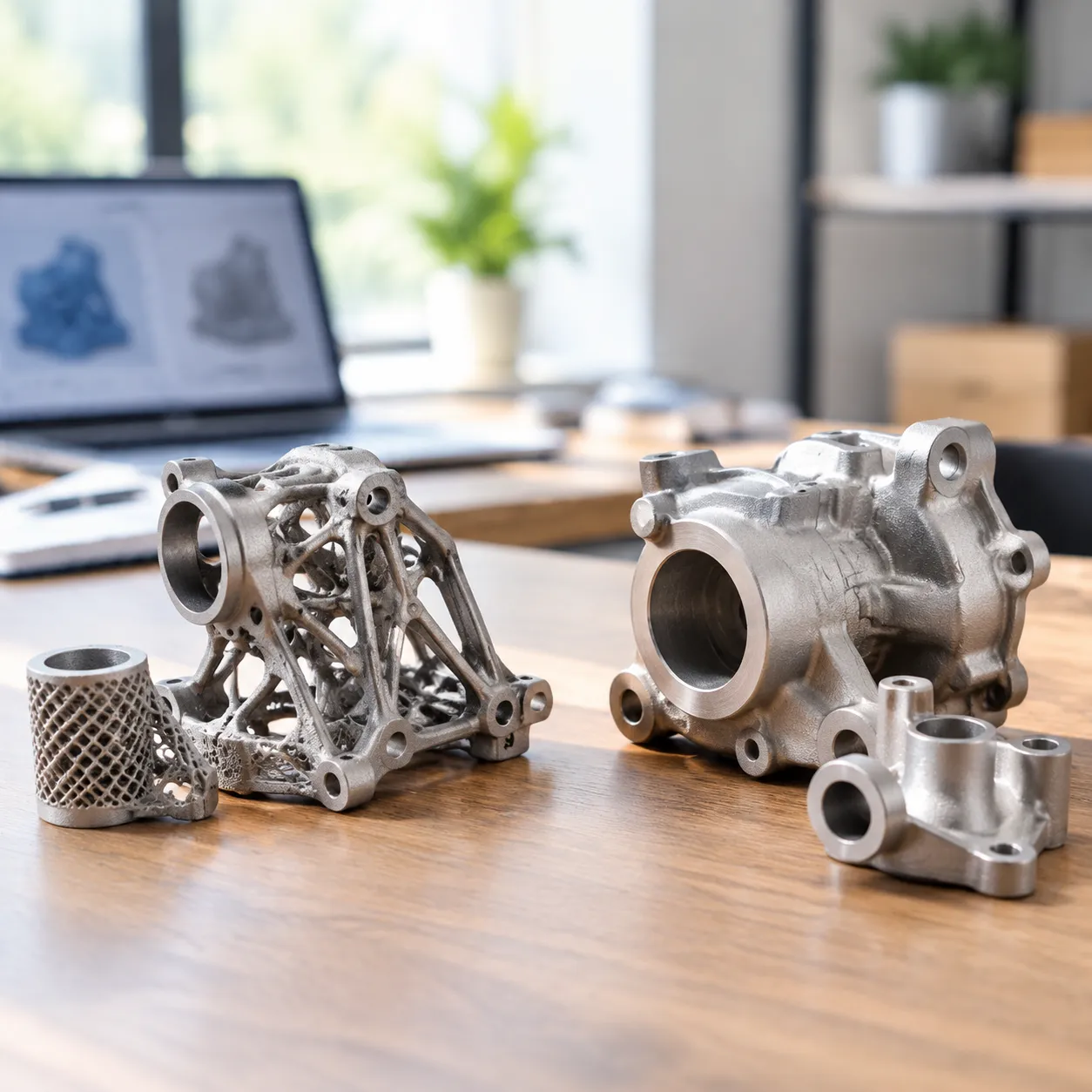
- Intricate Internal Channels: SLM can produce curved internal cooling channels that trace internal geometries directly. Casting processes are restricted by straight core pulls or removable ceramic cores that limit fluid path geometry.
- Lattice Structures and Lightweighting: We can build hollow, highly stable internal lattice networks to slash component weight without sacrificing structural density.
- Powder Evacuation: Unmelted powder drains out of internal passages, leaving clean, complex hollow chambers that molten metal cannot form without trapping air or slag.
Part Consolidation: Replacing Multi-Piece Assemblies
Traditional manufacturing often forces engineers to split complex hardware into multiple simpler cast sections, which are later joined by welding, brazing, or bolting:
| Design Factor | Traditional Casting Assemblies | SLM Single-Print Consolidation |
|---|---|---|
| Component Count | Multiple individual cast parts | Consolidated into a single unit |
| Joining Operations | Requires welding, gaskets, or fasteners | Completely eliminated |
| Leak and Failure Risks | Concentrated along joints and weld seams | Minimized via seamless monolithic builds |
| Weight Profile | Heavy due to flanges, bosses, and hardware | Optimized directly from CAD data |
By transitioning multi-part cast assemblies into a single printed component, we eliminate assembly labor, remove leak paths, and streamline production for high-complexity, mission-critical applications.
SLM vs Investment Casting Cost and Volume Break-Even
When we sit down with engineering teams to evaluate slm vs investment casting, the final decision almost always comes down to piece count and upfront capital.
Upfront mold costs vs zero-tooling setup expenses
Traditional casting requires significant front-loaded investment. Building patterns, core boxes, and custom molds demands considerable initial tooling capital before pouring the first unit. If a design revision occurs late in the cycle, mold re-cutting adds expense and schedule delay.
In contrast, selective laser melting operates entirely tooling-free. We run directly from digital CAD models, which eliminates hard tooling expenses completely. For short runs, design validation, or customized pilot batches, utilizing dedicated rapid prototyping and tooling services for low-volume production offers a much lower barrier to entry. However, the machines and powdered raw materials carry higher base costs per operating hour.
The break-even curve: volume thresholds where casting wins
The financial trade-off follows a predictable break-even trajectory based on batch size:
| Production Driver | Selective Laser Melting (SLM) | Investment / Traditional Casting |
|---|---|---|
| Tooling & Setup Expense | Zero tooling investment | High upfront tooling and mold expenses |
| Cost per Part (Low Volume) | Highly cost-effective | Prohibitively expensive due to mold amortization |
| Cost per Part (High Volume) | Remains relatively flat and high | Drops significantly as run size scales |
| Design Revision Cost | Negligible (modify the CAD file) | Expensive (reworking or rebuilding tooling) |
- Low-volume runs and custom components: SLM wins because zero tooling costs offset higher hourly machine overhead.
- Mass production: Traditional casting quickly overtakes additive methods once batch quantities amortize the initial mold expenditures across thousands of pieces, driving down the individual unit cost.
Material waste, powder recyclability, and scrap recovery
Raw material handling also affects long-term unit pricing. SLM is inherently additive, melting only the powder required to build the actual geometry. Unfused metal powder surrounding the part is collected, sieved, and recycled back into future build jobs, keeping net raw material waste minimal.
Traditional casting methods rely on sprues, gates, and risers to channel molten metal into mold cavities. While these feed systems generate solid scrap, foundries readily remelt gates and excess runners directly back into subsequent melts, maintaining practical material recovery throughout continuous production.
SLM vs Investment Casting Lead Times and Supply Agility
When delivery deadlines dictate a project schedule, the choice between additive manufacturing and traditional foundry methods comes down to tooling requirements and batch volume.
Rapid turnaround times for prototypes and low-volume production
For short runs and urgent prototypes, selective laser melting moves directly from digital CAD data to the build chamber. Because the process builds parts layer-by-layer without custom tooling, we eliminate the wait times required to build molds. When evaluating slm vs investment casting for design verification or tight development sprints, SLM delivers completed components in a fraction of the time, allowing teams to test, modify, and iterate designs immediately.
Managing foundry lead times and tooling fabrication delays
Traditional casting demands significant upfront planning. Designing, cutting, and validating the initial mold cavity introduces unavoidable delays before the first pour can even occur. While utilizing advanced casting technology for improved foundry yield delivers exceptional throughput once the line runs at scale, teams must absorb the initial lead time required to produce that hard tooling.
- SLM lead times: Zero tooling delays; direct-to-print workflow enables production to start within hours.
- Casting lead times: Tooling fabrication creates an upfront schedule bottleneck, compensated by rapid per-part cycle times once molds are verified.
On-demand digital inventory vs physical warehouse storage
The operational difference between these two technologies extends directly into inventory management:
- Digital storage: SLM enables a purely digital warehouse. We maintain the 3D model and print spare parts only when orders arrive, cutting physical warehouse storage costs.
- Physical batch stocking: Traditional casting requires large manufacturing runs to amortize high mold costs, necessitating dedicated warehouse space to store inventory for future demand.
Hybrid Pattern Printing with Investment Casting
When weighing slm vs investment casting, you do not always have to treat them as mutually exclusive. Modern manufacturing allows us to blend the design speed of additive manufacturing with the metallurgical reliability of traditional foundry pours. This hybrid strategy bridges the gap between high-cost direct metal printing and rigid conventional tooling.
Using 3D-printed resin and wax patterns for rapid casting
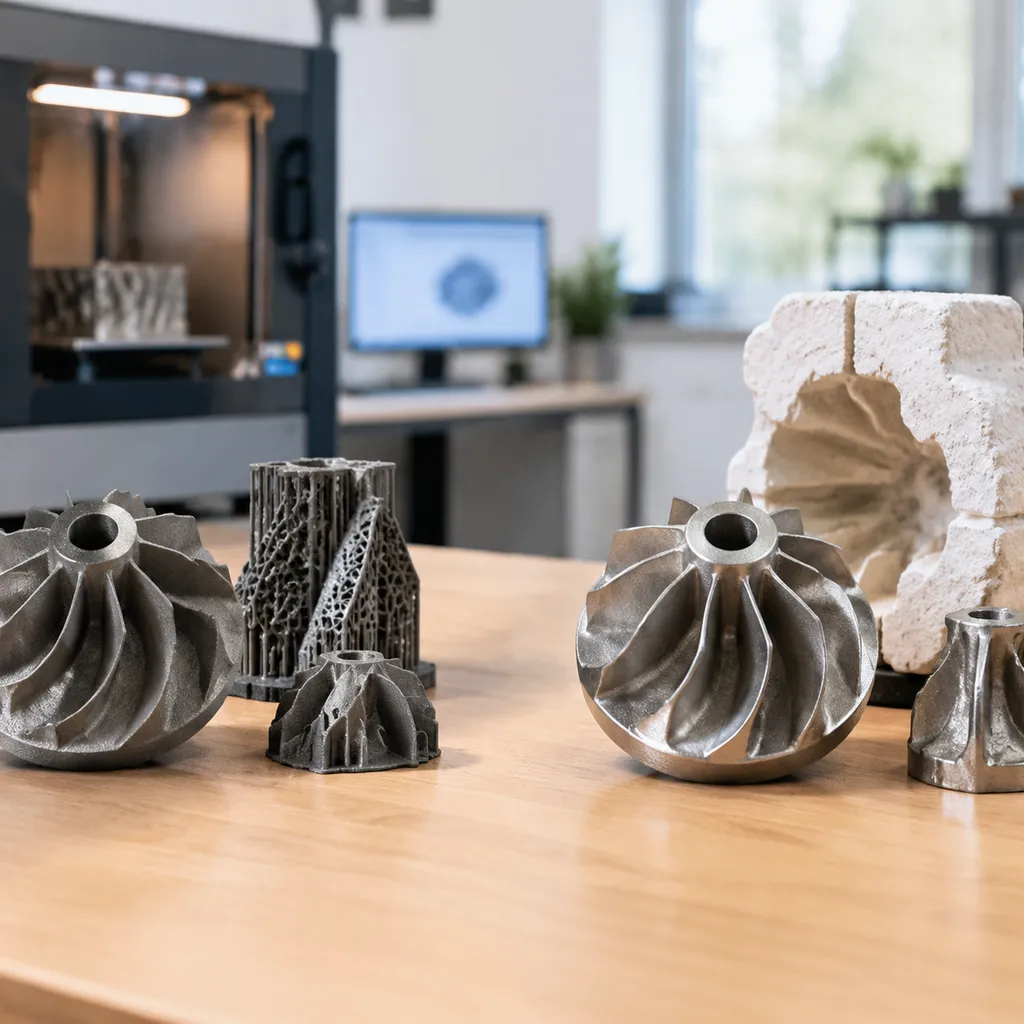
Instead of machining expensive metal dies to produce wax patterns, we can print sacrificial patterns directly from a CAD file. This approach bypasses standard tooling lead times and lets us pour liquid metal into mold cavities using well-understood foundry practices.
- Direct-to-mold speed: Patterns are produced in hours rather than waiting weeks for dedicated tooling.
- Clean burnout performance: Utilizing dedicated pattern materials - such as those covered in our casting 3D printing guide for clean burnout and zero-ash resins - ensures minimal residue in the mold, reducing casting defects like inclusions and porosity.
- Design validation: We verify complex geometries, draft requirements, and fit before committing to permanent molds.
Slashing upfront mold costs for bridge tooling and low-volume runs
Traditional casting requires significant upfront capital for hard tooling, making small batches prohibitively expensive. Direct metal additive manufacturing like SLM eliminates tooling entirely, but machine time and metallic powders carry high raw-material expenses.
A hybrid setup cuts these upfront barriers:
- Zero hard-tooling expense: Eliminates the initial financial barrier of machining durable metal molds for short-run jobs.
- Affordable low-volume production: Provides a sensible middle ground for pilot runs, replacement parts, or bridge production while permanent tooling is manufactured.
- Rapid design iterations: Engineering modifications only require an updated digital file, saving thousands in mold rework costs.
When to combine additive manufacturing with traditional foundry pours
We recommend combining additive patterns with traditional casting when your project faces specific volume, geometry, or material constraints:
| Project Factor | Hybrid Casting Approach | Direct SLM Printing |
|---|---|---|
| Alloy Requirements | Best when you need broad, conventional alloy options | Limited to specific, weldable metallic powder grades |
| Part Dimensions | Excellent for medium-to-large components | Constrained by additive build chamber volume |
| Material Structure | Delivers familiar isotropic cast properties | Dense structure, but prone to residual stress |
| Production Scale | Ideal for 5 to 100 parts before committing to hard tooling | Most cost-effective for one-offs and ultra-low volumes |
By pairing additive pattern making with traditional pouring methods, we retain the broad alloy selection and isotropic properties of cast metal while sidestepping the long lead times and high initial investments of conventional tooling.
SLM vs Investment Casting Applications by Industry
When evaluating slm vs investment casting, real-world application demands dictate which process wins. We look at production volume, regulatory hurdles, and design complexity to make the call.
Medical Implants: Porous Structures vs Cast Prosthetics
- Selective Laser Melting (SLM): Ideal for patient-specific implants and orthopedic devices. The powder bed process builds complex, porous lattice structures directly into the component, promoting bone ingrowth without secondary coatings.
- Traditional Casting: Remains the standard for high-volume, uniform prosthetics and surgical tool handles where standardized geometries and isotropic mechanical reliability are essential at a lower unit cost.
Aerospace Engine Components: Weight Reduction vs Proven Alloys
- SLM: We use metal additive manufacturing to eliminate assembly joints and produce lightweight parts with internal cooling channels. It cuts mass quickly for specialized low-volume flight hardware.
- Investment Casting: Critical engine housings and structural structural frames still rely heavily on traditional casting due to its established track record and massive range of certified metals[4]. For an overview of compatible foundry metals, review our alloy guide for high-performance alloys and precision casting.
Automotive and Industrial Equipment: Custom Parts vs Scaled Production
- SLM for Low Volumes: We rely on SLM for rapid prototyping, functional testing, and specialized motorsport components where design changes happen weekly and tooling delays are unacceptable.
- Casting for High Volumes: Standard automotive brackets, pump bodies, and heavy industrial mounts go straight to traditional casting. Once the mold is built, casting delivers unmatched per-part cost efficiency and rapid cycle times for large batches.
Decision Matrix: How to Choose Between SLM and Investment Casting
Choosing between metal additive manufacturing and conventional foundry methods comes down to matching your production realities with each process's core strengths. When we weigh additive builds against established foundry methods - similar to evaluating the difference between forging and casting for heavy-duty components - the primary trade-offs always center on geometry, batch size, and tooling investment.
Evaluating Project Volume, Geometric Complexity, and Budget
We evaluate the trade-offs between SLM vs investment casting and traditional foundry processes by weighing three core constraints:
- Production Volume: Selective Laser Melting (SLM) requires zero tooling, making it cost-effective for one-off prototypes, customized components, and small batch sizes. Traditional casting involves significant upfront mold costs, but it drops the per-unit cost dramatically once you reach high-volume mass production.
- Geometric Complexity: SLM builds directly from metal powder using a laser, allowing for intricate internal cavities, consolidated assemblies, and organic geometries that cannot be pulled from a physical mold. Casting remains limited by mold geometry, draft angles, and the need to extract patterns or parts.
- Budget Allocation: SLM concentrates costs in raw materials and machine run time, avoiding high initial capital outlay. Casting front-loads your expenses into mold and tooling fabrication, providing massive economies of scale once production ramps up.
| Decision Factor | Selective Laser Melting (SLM) | Traditional Casting |
|---|---|---|
| Optimal Volume | Low volumes, prototypes, custom parts | High-volume production runs |
| Tooling Investment | Zero tooling cost | High upfront mold and tooling costs |
| Design Freedom | Complex internal structures, unconstrained shapes | Constrained by mold extraction and geometry |
| Part Size Capability | Best for small-to-medium complex parts | Highly suited for large, heavy components |
| Material Flexibility | Specialized metal powders | Broad selection of standard metal alloys |
| Mechanical Profile | High density; potential anisotropy and residual stress | Isotropic properties; susceptible to porosity and shrinkage |
Selecting the Right Method Based on Delivery Deadlines
Lead times dictate manufacturing strategy as much as part geometry. When delivery schedules are compressed, the setup path determines your choice:
- Short Deadlines and Rapid Iterations: SLM builds directly from a CAD file. Without the need to machine, test, and adjust physical molds, we can manufacture functional metal parts in a matter of days. This makes SLM the ideal path for urgent engineering changes and fast functional testing.
- Scheduled Mass Production: Traditional casting carries long upfront lead times because producing, inspecting, and qualifying hard tooling takes weeks or months. However, once the molds are operational, casting pours parts at speeds that additive layer-by-layer systems cannot match for large orders.
Step-by-Step Selection Checklist for Engineering Teams
Use this quick checklist to determine whether to specify SLM or traditional casting for your project:
- Assess the Batch Size: If the run is under a few dozen parts or requires individualized customization, select SLM. If you need thousands of identical components, casting is the cost-efficient choice.
- Inspect Part Geometry: If the component features sealed internal channels, complex lattices, or lightweight consolidated walls, select SLM to bypass mold limitations.
- Calculate Upfront Capital: If your budget cannot absorb high initial tooling expenses, choose SLM to fund parts on demand. If you have tooling capital to invest for a lower per-unit cost, select casting.
- Confirm Material and Mechanical Needs: If your application requires a widely available standard alloy or completely isotropic structure, choose casting (factoring in potential porosity risks). If you require high density and can accommodate post-process heat treatment for residual stress relief, choose SLM.
- Review Surface Finish and Secondary Operations: Plan for post-processing in either route. SLM requires support structure removal and machining to improve rough as-printed surfaces, while castings require gate and riser removal despite a generally smoother as-molded finish.
Frequently Asked Questions: SLM vs Investment Casting
To help you make the right call between additive manufacturing and traditional foundry methods, we have answered the most common engineering and sourcing questions below.
| Question | Selective Laser Melting (SLM) | Investment / Traditional Casting |
|---|---|---|
| Mechanical Strength | High density; risk of residual stress and directional properties. | Isotropic strength; risk of internal shrinkage and porosity. |
| Cost Sweet Spot | Low volume, prototypes, and highly complex custom designs. | Medium to high volumes where mold tooling costs amortize. |
| Surface Quality | Rougher as-built texture; needs support removal and machining. | Smoother as-cast finish straight from the mold. |
| Material Costs | Higher raw material expense (fine metallic powders). | Lower raw material expense with broader alloy compatibility. |
Is SLM-printed metal stronger than investment cast metal?
SLM produces parts with exceptionally high density and solid mechanical performance, but the layer-by-layer laser fusion creates internal residual stresses and directional variations in strength[2]. Because of this, we frequently post-process printed components with heat treatments to balance internal stresses.
In contrast, parts produced through the investment moulding process offer uniform, isotropic mechanical properties throughout the geometry. However, cast components carry an inherent risk of internal defects such as porosity and shrinkage during solidification, which must be managed during quality control.
At what production volume does investment casting become cheaper than SLM?
SLM wins on cost when production runs are small. Because 3D printing requires zero tooling or physical patterns, you avoid upfront mold expenses entirely, making it ideal for rapid iterations and short-run production.
Casting requires significant upfront investments in hard tooling and mold cavities. However, once that mold exists, the per-part production cost drops drastically. For medium to high-volume manufacturing, precision investment casting services for complex metal parts quickly beat SLM on unit economics because the initial tooling expense amortizes across thousands of identical units.
Can SLM completely replace investment casting?
No. SLM is an alternative manufacturing route, not a wholesale replacement for traditional foundry techniques. While SLM excels at producing intricate internal channels, lightweight structures, and highly customized geometries without tooling, it cannot match casting for:
- Mass production economics: Casting produces high quantities at lower unit costs.
- Large component sizing: Casting handles massive parts that exceed common additive build envelopes.
- Wider alloy options: Traditional foundries melt a broader range of established commercial alloys compared to the specialized powder formulations available for lasers.
What is the difference in surface finish between SLM and casting?
Cast components deliver a consistently smoother surface finish right out of the mold cavity, requiring post-processing primarily to cut away gates, risers, and parting seams.
SLM components have a noticeably rougher as-printed surface texture caused by partially melted metal powder particles adhering to the part walls. Additionally, metal prints require mechanical cutting to eliminate built-in support structures, followed by standard CNC milling or grinding on critical functional faces.
Are materials for SLM more expensive than casting alloys?
Yes. SLM relies on specialized, gas-atomized metal powders with tight particle size distributions, making the raw stock substantially more expensive per pound than standard foundry ingot or scrap.
While SLM helps balance this cost by recycling unfused powder from the build chamber to minimize waste, traditional casting remains far more cost-effective regarding raw alloy consumption and bulk metal purchasing.
References
- Wikipedia - Selective laser melting (SLM / powder bed fusion overview) ↩
- Dejene et al. (2023), Materials - Critical Review of Comparative Study of Selective Laser Melting and Investment Casting for Thin-Walled Parts (PMC open access) ↩
- NIST - Additive Manufacturing (process overview and measurement science)
- Investment Casting Institute - Industry association overview